The musings of the Pastor from Good Shepherd Lutheran Church, Regina SK

Welcome. If you're a member at Good Shepherd, welcome to more thoughts and discussion of the week that was, and some bonus thoughts throughout the week. If you're not a member, welcome, and enjoy your stay. We are happy that you're here.

If you like what you see here, consider joining us for worship at Good Shepherd Lutheran Church. Sunday mornings, at 8:30 and 11:00. You can also follow us on Facebook.

Monday, March 14, 2016

Clutter

What's up with the clutter, and where does it come from?

I mean, that's a solid question, right?  It's a solid question to ask, because it seems to plague us no matter where we are, or what we do.  We seem to have a perpetual problem with this, no matter who we are or where we're from.  And the problem with clutter is that it is things of no importance, no value, that takes over and monopolizes.  Clutter is the stuff that we voluntarily bring into our lives that takes up space, spills over the bounds that we'd set for it, and takes over. 


But the thing about clutter is that it, as said before, takes over.  It's of no value, and it gets in the way.  None of us want it, it doesn't improve anyone's life, so why is it so ubiquitous, and why oh why does it take over so harshly?  Well, these are the things we bring in, the things that we have around, that we genuinely believe are going to be of value someday.  We can't toss them out because we spent money on them, or because they may come in handy later, or because we can't just waste them.    It becomes such an issue that we are going to face, the notion that we have added a million little pieces to our lives that don't help, that don't make anything better, and that actually get in the way of us doing what we want. 

It's the lack of value that makes things into clutter.  Countertops consumed by papers, basements swarming with broken toys, bedrooms crammed with clothes that either don't fit or are out of style, this is the life that we are choosing day by day, and something that we may want to be rid of, but to do so, the first thing to confront is the person who brought all that into your home. 


Yes, the clutter is what we bring in ourselves.  We fill our houses full of tat, we cram them full of gubbins, and there's nobody else who brings that in for us.  So given that that's the case, what do we want to do about it?  Well, step one is to admit that you have a problem, as you must do with all problems.  And in this circumstance, we turn, as we often do, to St. Paul, who writes to us in his holy Epistle to the Philippians:

Indeed, I count everything as loss because of the surpassing worth of knowing
Christ Jesus my Lord.  For his sake, I have suffered the loss of 
all things, and count them as rubbish, in order that I may gain Christ
and be found in him.

...One thing I do, forgetting what lies behind and straining forward to what lies ahead,
I press on towards the goal for the prize of the upward call of God in Christ Jesus.

Whatever you may think of Paul, you must admit that he has this together.  He has worked out how to cut through the spiritual clutter that he's had clogging him up for a long time.  Who was Paul, after all? A Pharisee of Pharisees, a Hebrew of Hebrews, from the tribe of Benjamin, circumcised on the eighth day, someone who had invested himself in the Hebrew ethos for a long time, and had advanced quite far in it.  However, as tends to be the case, the mark of a bright person, a smart person, a wise person, is that they can admit when they are wrong, and can make better choices in the future.

Sometimes, the best way forward is the way back.  Sometimes the best way to advance is to distance yourself from and to get rid of what has led you to this state.  Sometimes, the best way to have what you want is to get rid of what you don't.  Think of the physical clutter, and think of the kind of space it occupies in your home.  You brought it in, and you don't want it, and it stands between you and what you do want.  So why not just, you know, get rid of it?

That's what the Pharisees in the Gospel reading found so hard to do, they found it so impossible to distance themselves from their bad decisions, their ignoring of God and his messengers for so long.  You've heard people say 'I'm spiritual but not religious?' Well, these guys were religious but not spirirtual!  They were so religious that they had forgotten about God altogether, had blotted Him from their minds, and were just plain not that interested in Him, so focused were they on their own righteousness.  Every time a prophet would come from God, that prophet would have a message for the people to return to the Lord their God, to repent, to rend their hearts and not their garments, and the good people of the Old Testament would reject that message, and turn their backs on the man who would dare to tell them that they weren't perfect.  They resisted, rejected, and insisted that they were doing a great job, and don't worry about it.  And they'd added so much spiritual clutter to their lives that there was no space for God in their hearts.  And clutter it was, too.  Their own self-righteousness, their own self-worth, the layers and layers that they'd added for themselves over every surface, making sure that there was no space to be found for the Lord their God.

Jesus comes to strip the clutter away.  All that stuff that you think and believe makes you fantastic, all that stuff that you have sticking around that you sincerely believe makes you great and wonderful, all that is clutter.  It's worthless.  It is, as Paul says, rubbish.  It gets in the way. And the more of it you accumulate, the less space there is for anything else.  But the great thing about the season of Lent is that the focus on what is important sharpens.  Gone is the decor, gone is the clutter, gone is any sign of what may get in the way, and instead, all we see is the cross of Christ, looming large, and hovering over everything we do.  The Cross of Christ that, at the end, is what really matters. 

Paul says in his letter to the Corinthians that he resolved to know nothing while he was with them except Christ and him crucified.  If you will, this time, this lenten period is our time for spiritual spring cleaning, to refocus ourselves, to refine that vision, to focus on what is important, to dispense with all the rest of the spiritual clutter that we have going on, and to focus on the cross of Christ, where the work of redemption is done.  All that other stuff, it's rubbish.  Let Jesus sweep it away.  And as Lent continues, we rest not on our own righteousness, our own worthiness, our own clutter that we've added for all this time, we recognize that our hope, our salvation, rests purely on the cross of Christ.  We know nothing else save Christ and him crucified. 

The current trend in decluttering is minimalism, that is, the less you have, the less there is to clean.  In our spiritual lives, occasionally, it's good to get some minimalism in there too.  To know nothing but Christ, and him crucified.


Monday, February 29, 2016

Stuck in a rut

This winter was exceptional in Saskatchewan.

Wait a minute.  Was?  Surely, it's february still.  How is pastor Jim saying that we're talking about the winter like it's in the past tense?  Well, true believers, that's been the year that we've had.  We've had a quite exceptional winter, to the extent that it sort of never showed up.  This entire winter has been a long series of thinking about plowing streets, and instead allowing God to plow them for us every time it snows.  Seriously, it snowed yesterday, and the snow is almost all gone already.  This must be what winter is like in the United States.  Like, you need a scarf and that's it.


This is unusual, you understand.  Unusual to the point of being downright strange. We're not used to there being little to no snow, and to there being warm temperatures and the like.  It's not what we're used to in the slightest; but here it is anyway.  And with this being the way things are, it's worth us having an incredibly brief discussion about winter driving, and about being stuck in ruts.  For on our street in Regina Sk, it's on the 'do not plow' list, which is great in this weather, but sort of junky in an average winter, where more plowing is required.  Now, what are ruts?   Glad you asked.  Ruts are the parts worn down into the path, road, whatever you're driving on, that gradually grind the road down into a new path that is difficult to get out of.  For you see, the ruts that we make are the paths that we form for ourselves, that other people form along with us, and they make it incredibily difficult to deviate from that course.


On our street, I suppose on our last street, we had ruts in the wintertime.  Deep, icy ruts.  They were fine if you just wanted to drive in a straight line down the street, but if you wanted to do anything fancy like turn into your driveway, well, it was straight up impossible.  The little bitty Honda Fit that we drive proved itself to be incapable of mounting up and over the ruts.  So frequently, we would sail clear past the intended destination, and continue down the street, realizing that turning the wheel was doing nothing.

This is what happens with us and sin. This is where we are as sinners, trapped in the patterns that we have made for ourselves over decades. The same paths we go over again and again, those paths are the ones that become ruts over time, and in becoming ruts, inform where we will end up going from now on.  This is how things were in the time of Ezekiel, too.  Ezekiel was sent as a watchman to the house of Israel, to stand and to warn, to let them know that they were in the process of making for themselves ruts that they would be incapable of getting out of.  What were their ruts?  Well, they were into iniquity and evil ways.  They were deep into taking by robbery, murder, turning their backs on God, and avoiding any of the righteousness of our Father God. And how did this happen? Not all at once, to be sure.  Not all at once, but bit by bit, starting with thoughts, moving on to words, and going on to deeds.  And like with ruts in the road, which also get formed bit by bit, our spiritual ruts don't get formed all at once, nor do they get formed by just us.  We tread that path, and so do all sorts of other people, and as we go along together, it becomes incredibly difficult to get out of those ruts.  Thoughts, words, deeds, over a long enough period of time, those ruts will form the destiny of the people of Israel, who will inevitably be unable to get out of those ruts that they had made for themselves.  After a long enough time of making ruts for yourself, you will find yourself sailing right past the destination that you want, and towards where everyone else is going.

Going with the flow, going along to get along, following the crowds, that's getting into the ruts, and getting into them hard.  Moving from those ruts was essentially impossible for them.  No matter what warning that Ezekiel was going to give to them, they were going to end up in the ruts that they'd been following for a long long time. Ezekiel begged and pleaded with them to turn from their ways, to turn from their wickedness, to save their lives by turning out of their ruts, but they were not able to do so.  They could not.  It was a perpetual problem for them, as it is a perpetual problem for us.  You know your life, and you know your patterns, you are well aware of who you are and who you have made yourself into over a long long period of time.  If it were as simple as you just deciding to do something different, to decide to go another way, wouldn't you have done so by now? 

This is the conundrum as Christians, that we know what the right thing to do is, we are aware of the commandments, the statutes of God, what he would have us do, and yet we continue to drift right by, whether it be in ruts of our own making, or those that have been made by others that we have fallen into.  Either way, we end up cursing ourselves, saying 'the good I want to do is what I miss, but the rotten I want to avoid, that's what I keep on doing!'  Yes.  It's been a problem from the time of Paul until now.  Those of us who seriously think on this topic ask ourselves, if we want to be good and righteous, if we want to live for something and to do meaningful things, if we want to be kinder, better people, why do we keep on missing that target?

Well, ultimately, we end up in those ruts, and turning our steering wheels desperately, as Ezekiel asks us to do, to turn from our sin.  But those deep ruts compel us, no matter how hard we turn the wheel, to keep on going straight.  So if turning our wheels once we're in a rut doesn't do too terribly much, what is the solution?

Jesus talks about this in the New Testament, in the Gospel reading, where he tells us about the parable of the landowner, and the vinedresser, where the landowner says to his employee, 'look, this fig tree has given us no fruit.  Cut it down and throw it away.  Why should it take up the ground like that?'  Great question?  Why bother watering and nurturing a tree that is unproductive? Of course, the tree doesn't go out of its way to be fruitless, as one of the main purposes of the tree itself is to bear fruit.  But if the tree has stalled out, has had a bad season or two, and has gotten infertile over time, it can't just snap out of it.  We forget pretty quickly that all the plants that we use now have been tamed by us, molded and shaped, to produce what we want them to.  Have you ever had wild strawberries? Or wild blueberries?  they're quite different from the varieties that we have cultivated for ourselves over centuries, getting the most out of them that we can.  And these plants, they require maintenance from us if they're going to do the thing that we want them to do.  In other words, the tree, the fig tree that is growing in the parable that is not producing anything on its own, so it has to be worked on.  The owner of the vineyard is right to say that it should cut it down if it is producing no fruit on its own, but the vinedresser, the gardener, says 'wait.  Hold on.  Let me dig around it, fertilize it, take care of it, then if by next year it has done nothing, then you can cut it down.' 
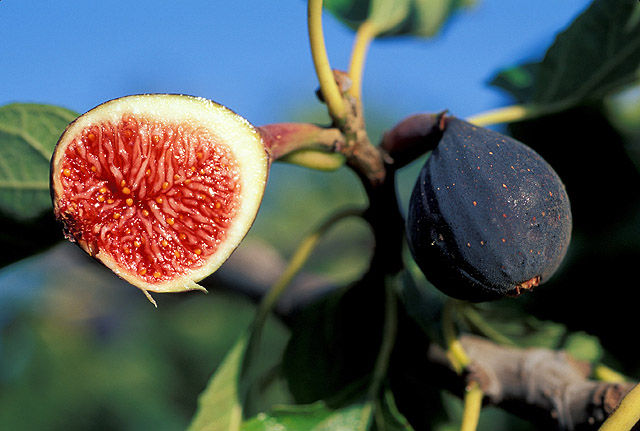


The patience of Christ can be seen.  Not only the patience of Christ, but also his realization that this is his job to do.  He is here to work on us, to bring us out of the state that we were in and towards where he would have us be.  The vinedresser is the one who works on the spent trees, those that have not borne fruit for a long time, those like you and me, who are not performing to the level that we need to perform. And if it were up to us to just grit our teeth, try harder, to do better, and get it together, then there would be no future for us.  But Christ is well aware that that is his job, his work.  He is the one who will do the work, to dig, to fertilize, to ensure that he can do whatever he can to coax fruit out of the plant.  He knows that the axe is at the root of the tree, of that there can be no doubt. It may very well be our desire to wish that it wasn't the case, to hope and to dream that it would not be this way.  It may be our fervent desire to wish with all our hearts that there was no axe at the root of the trees, that everything is fine and that there is nothing to worry about, but it just isn't true.  We know deep down that we aren't producing the fruit we should, and that there is no need for God to continue to give us resources of time and space where we continue to produce nothing.  Knowing all that, then why do we not follow the advice of Ezekiel, and turn away from our evil?

Well, the question in and of itself is wrong, really.  It comes down to not what we turn away from, but what we turn towards.  The promise that Jesus gives in the Gospels is that if we chase out an evil spirit and leave the space swept and garnished, then all that happens is that the evil spirit returns with seven worse than itself.  This is the eventual end ot this discussion, unless we replace that evil spirit, those bad habits, those ruts, with something worthwhile and good.  Unless we replace them with something that we need, that will keep us on the right track.  Unless we replace them with Christ.

In Lent, we have the opportunity to turn our eyes towards Jesus, to focus on him and what he brings to us.  We have the opportunity and the ability to focus more on the Lord of the Bible, and on his words and deeds. He is the author and pefecter of our faith, the Alpha and the Omega, the beginning and the end.  He is the one who, though he was tempted sorely, did not give in, who lived a perfect life on our behalf, and finally died to set us free.  And his words that echo throughout history are still heard by us today, whispered through the pages of the scriptures 'follow me.'  Follow him where?  Follow him all the way to the cross, and see the source of your salvation.  Follow him to the cross, and see his life poured out for you.  It is there that you can see the work of watering and fertilizing that Christ does, through the water and the blood poured out for you. Follow me, says Jesus, follow me where I lead. Fix your eyes on me, and go where I go.  Take my yoke upon you and learn from me, for my yoke is easy, and my burden is light.

Around this time of year, we usually ask ourselves if it's worth our while to shovel driveways anymore.  Even if there is snow now, there's a good chance that it will be gone shortly, since God clears my driveway far more effectively than I can.  All I can do is to move the snow around, but when it melts, it is gone.  In this image is found the escape from our ruts.  If we want to, we can try to push through them, to smash through the buildup of snow and ice.  We can dig and scrape just to get by. Or, we can follow the one who, as he does every spring, sets us free from the ruts and ice.  We can follow in the way of the plow, promising to clear our way.  We can follow Christ, fixing our eyes on him, and growing in him.  


 This is what is promised in Lent, not that we obsess over our misdeeds, but that we repent, that we turn from our sinfulness, and turn towards Christ.  He will tell you where he wants you to go, and that is to the cross, where in Christ, you are made into a new creation.  Behold, he tells you, I make all things new.  And all things includes us.  As winter turns to spring, we think about turning to Christ, and we remember that for all those times that we have failed to turn to him, where we have turned to ourselves and turned our backs on him, when we think about the axe at the root of the tree, we remember that though we are faithless, he remains faithful, for he cannot deny himself.  That ever-patient gardener is there, being faithful to that barren tree, and whispering to it 'Grow.  Produce fruit.  Find your growth in me.'

Monday, February 22, 2016

Belly God

The reading from Philippians that we had for Sunday was about how 'their gods are in their bellies.'  This is a bit of a conundrum, a bit of an issue, and we have to ask ourselves what on earth it is all about?  How are we to understand the idea that the god of human beings is in our bellies?

Well, as usual, this isn't a literal thing, that is to say that any of us believes that there is a real, legitimate divine being, and it is our tummies.  That doesn't make any sense.  But what it might mean for us, is that our god, the thing we worship, the thing we hold to high standard, the thing by which we measure everything else, that god is at the core of us.  And we become the measure of all things.

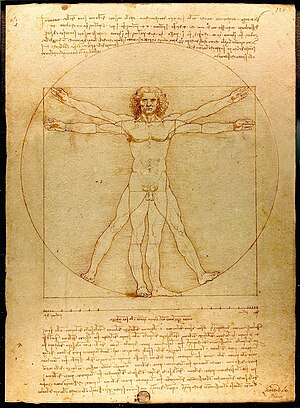
The Vitruvian man.  Man as the measure of all things.


Don't believe me?  You should.  You should believe me because there is something inside all of us that views our own vantage point as the final arbiter of right and wrong.  The Old Testament is full of this sort of activity, by the way.  It's full of the people of Israel who did what was right in their own eyes, which is almost always the barometer that we still use today.  The Old Testament reading from Sunday was all about the prophecy of Jeremiah, and the subsequent reception of that prophecy.  Now, the reading on Sunday didn't get into it, but what was it that Jeremiah said?  He said to the people who were coming to listen to him: 'Thus says the Lord: If you will not listen to me, to walk in my law that I have set before you, and to heed the words of my servants the prophets whom I send to you urgently - though you have not heeded - then I will make this house like Shiloh, and I will make this city a curse for all the nations of the earth.' 

It's a stark warning from Jeremiah, to change thy ways or perish.  To move from the way that you have been going, and to turn aside from your evil or to face the cup of God's wrath and everlasting condemnation.  But the people who were listening to Jeremiah had a different opinion of how things were supposed to be going.  The people who were listening to Jeremiah had a different idea of what the world was all about, and what the word of God was all about.  Their perception was that they were doing fine, they were doing a great job, and that Jeremiah should stop talking about how they weren't, thank you very much.  Their perception was that they were right, and any criticism of that should be met with extreme anger and potential bloodshed.  After Jeremiah speaks out against them, the people in the temple seize him, and say to him 'You shall die! Why have you prophesied in the name of the Lord, saying "this house shall be like Shiloh, and this city shall be desolate without inhabitant?'"  The sentence of death is going to fall against Jeremiah just for speaking God's word ostensibly to God's people.


Not much changed after that.  The Gospel reading deals with Herod seeking Jesus' life once again, with Herod seeking to have Jesus put to death, for Jesus' view and activity.  This should be no surprise either, given that Herod, that fox, had John locked up in prison for the crime of daring to speak out against Herod's relationship.  This chaining up of God's prophets is nothing new, whether it be among the people of God or not; nobody wants to hear the word of God's judgment against their many and various sins. Jesus is quite plain about what is at stake, too, agonizing about Jerusalem, saying that he had wanted to gather Jerusalem together as a chicken gathers her brood under her wings, but they were not willing.

This is one of those many things that is in the Bible because it is, and continues to be true.  In fact, perhaps it has never been more true.  Think for a second about something that happens later in the book of Jeremiah, where king Jehoiakim has a scroll read to him that contains words of God's judgment against Israel and Judah.  and every time they read through a few columns , Jehoiakim would take a penknife, and cut off the part that was just read, and casually toss it into the fire.  And neither the king, nor any of his servants who heard all these words, was alarmed, nor did they tear their garments.  Ho-hum, because when push comes to shove, we don't really care too terribly much about the word of God if it disagrees with what we have already decided is right.  If we are already doing what is right in our own eyes, then prophecy from God is not going to change that.

Today, the word of God is treated much the way Jehoiakim treated it.  Though it exists, though it is distributed, though it is read, it is largely ignored when it does not agree with what we have already decided.  It's not as though this is a problem for the outside nations, no no no, it's a problem within the church.  Many of us, good, Bible Believing Christians, will have to run up against this, where the word of God will speak out against our relationships, or our activity, or our inactivity, or our sloth or opulence, and at that point, we have a choice.  We can treat it like Jeremiah's peers, launching into a tirade against the messenger for daring to share the message.  We can treat it like Herod, locking it away so it can no longer speak.  Or we can treat it like the disciples.

In John 6, Jesus tells the massive crowd who has followed him up until now 'For this reason, I have told you that no one can come to me unless it is granted by the Father.'  At that, many of his disciples turned back, and no longer followed him.  And in a heartbreaking, poignant moment, Jesus turns to look upon the twelve, and asks them 'And you?  Do you wish to leave too?  Peter's response is beautiful.

Lord, to whom can we go?  You have the words of eternal life.

A moment so beautiful that it is part of our liturgy.  In that moment, Peter encapsulates the way we need to feel and behave about the word of God.  We aren't going to agree with it all the time, we aren't going to like it all the time.  It isn't always going to sound good to our ears, or wonderful in our minds.  It isn't going to be the sort of thing that we are delighted by, but none of that matters if it's true.

The Christian faith is worth nothing if it is false.  If the notion of the resurrection of the dead and the life everlasting is a big lie, then the Christian faith promises nothing, and we of all people are most to be pitied.  But if it is true, if Jesus is the Christ, the Son of God, then it doesn't matter how palatable his words, how easy they are to hear.  What matters is that they are true.  And if they are, then they are of paramount importance.   

So what are you, average Christian schlub, supposed to do with the words that you hate.  The words
you disagree with?  What are you supposed to do when you run up against the scroll full of words you don't want to hear, what are you to do with the prophets who speak out against you?  Do you want to shut the book and continue believing the comfortable lie that can and will lead to destruction?  Or do you want to embrace the truth, as painful and hurtful as it is?  Do you want to hold fast to the bare honesty of who you are, and why you are in the situation you are in?  Do you want to observe and look at the true portrait of yourself, not matter how ghastly it is, and upon seeing it, fall wholly and completely on the work of Christ to save you from it.

Ultimately, there are only two paths forward. The first is to double down on the lie, to assert as much as you can, no matter what else happens, that you've been right the first time, and you'd rather be dead than wrong.  Or, you can embrace the truth, hold fast to the words of Christ that, like a surgeon's scalpel, slice through us with precision, but also remove our sickness.

It's interesting that even though the Pharisees tried to silence Jesus, to put an end to his meddlesome preaching (given that a lot of it was agaisnt them) by having him killed.  Surely, that would put a stop to his pestering.  But in doing so, in having him killed, they ironically gave him his greatest pulpit of all, giving him a platform from which to speak his greatest sermon.  The words of Christ spoken from the cross accompany the work that he does, fulfilling his entire minstry at the mount of Calvary, where he spoke to anyone who would listen that it is finished.   All the sin, all the shame, all the disgrace of a vile, unbelieving people, slow to listen, quick to ignore and run, all that sin was taken upon Jesus, at the cross, and died with him there.  

Your job as an individual Christian, then, is to let the word of God speak in its fullness.  You don't have to agree with all of it, nobody does or ever will.  But you need to know and to be well aware that it is right, and you, when you disagree with it, are wrong.  And when that happens, realize that it was for those moments where you want to close the book, to kill the prophets, to run out from under the wings of the father hen, it is for those things that Jesus died. 

Tuesday, February 16, 2016

Why lent?

So, why lent? 

That's a question, isn't it?  It's a question at this time of year, because, well, of course, lent is a season of voluntary deprivation, of sackcloth and ashes, of going without, of being mournful and penitent, and there's nothing saying you have to.  There's nothing declaring that you absolutely must go without the things you enjoy, instead people tend to do it on purpose.  But why?  What's the benefit of being sad and dejected?

Well, the service changes at this time of year.  The service changes, and as it changes, it has a different character.  We sing fewer songs of joy, we have less rejoicing.  We are less enraptured with the sentiments of ebulliant pleasure, and more focused on the cross of Christ and his inevitable death.  There are lots of beautiful moments in the scriptures, about love and beauty, moments dealing with delight and joy, and we purposefully purge all these from our worship services, and from our lives, over the course of lent.  Why would we do this?


It all has to do with the ol' hedonic treadmill.  If you're not familiar with this concept, it's the concept that tells us that we, as human beings, adjust very quickly to new happiness, and internalize it as normal, moving on from it with extreme rapidity.  That thing that you thought was going to make you happy forever, you forget it pretty quickly.  The new car, the new house, the marriage, the new membership in the church, the new shoes, the cute outfit, all of that sort of slips away, and you move onto a new target.  It's one of the saddest things in life, and it breeds perpetual dissatisfaction.  This is why, even though you were all on fire for your church when you first joined up, you loved the worship, you loved the atmosphere, you loved the people, but after a while, you grew to not care about any of it anymore.  You grew tired and bored with it, and you wanted to move on, to a new church, to a new high.  It happens, as I say, with pretty much everything.  You get absolutely used to how things are, and you forget about the happiness that the original thing gave you, even if nothing whatsoever has changed in the meantime. 

So what to do?  Just be resigned to permanent dissatisfaction?  Is that the fate of human societies, to continue pushing forward with that outward urge, until there is nothing yet?  Are we doomed to continue to gobble until everything is gone, until there is nothing left of our homes and families and relationships, or is there a better way?  There is a better way, you know, the way of lent.

In lent, you deprive yourself of something for a while, whether it be giving up chocolate or coffee, or whether it be giving up the praise and adoration that is part of the worship service.  Whatever it is, going without something sharpens you.  It sharpens your faith.  Hopefully, you will give yourself a thorn in the side, all the better to impel you to a sharper faith.  When all our needs are met, when we are doing fine, then we have a way of forgetting how good things are. We want to look around, we want to wander, we get dissatisfied.  But if we move through a lenten period of deprivation, if we live without something and refocus our attentions elsewhere, if we do that, then we will be surprised at what will happen.  What happens is a sharpening of our faith, of our observances.  In Lent, you have the chance to ask where you are spending your time, what it is on.  What are you consuming, what are you making part of your life that is driving a wedge between you and God, between you and your family, between you and the person that God has told you in his word that he wants you to be?  What is that, and can you go without it.  If it's something worth giving up, you will be reminded on a daily basis, often in a very visceral way, about the sufferings of Christ.  You will be reminded on a daily basis about what it was that Christ had to go through, and the fact that it's a voluntary deprivation means that you will understand the sufferings of Christ all the more.  Becuase you could end your suffering, your deprivation at any time, you could walk down to the store and buy all the chocolate there is, that's getting close to understanding the suffering of Christ.


When Jesus walks down off the mount of transfiguration, and towards his death, he knows that he could walk back up that hill at any time, and far beyond it.  There is nothing holding him captive in jail that he could not walk away from.  If you've read the story of Jesus after his resurrection, you'll know that even doors and barriers are as nothing to him. The only thing stopping him from walking way from the nails, the whips, the crown of thorns, the bloody sweat, the laughter and mocking is his own will.  The only thing stopping you from breaking your own lenten vow is that you want to continue it.  Your weak and imperfect will, your will that can only give up one thing, if that, your will that, when giving up chocolate for 40 days will be constantly thinking about it, if that's your will, then the sufferings of Christ that he took upon himself for you will begin to mean something.  You will grow to have a new appreciation of the sacrifice you take for granted for most of the year.

Secondly, though, lent brings something else.  The service, the worship service that you have grown accustomed to for your life, it may seem boring and drab.  It may seem everyday, and commonplace.  And it may seem as though you don't need it, because it doesn't bring that same high as it used to.  In effect, it may appear to you as though the worship of Jesus is just going through the motions.  You only get that high at Christmas and Easter, and after a while, you only show up for Christmas and Easter.  But if you move through the valley of Lent, you'll realize that the character of the worship service, the prayer and praise of Jesus your Lord, that's Easter, and every Sunday is Easter.  The prayer, the praises, the loud shouts of exultation, the glory and amens, all that happens every week, because Sunday is the day that Jesus rose from the dead, and therefore we worship him on that day.  We bring him praise and thanksgiving, remembering the crucifixion and the empty tomb, on a weekly basis, and moving through Lent makes you realize that. 

It's like the topography of this great province, Saskatchewan.  You could live your entire life up on the plains of Regina, and be mournful of the fact that there are no mountains, there are no hills, there's no change in elevation whatsoever.  You'll become wistful about the idea of hills, of mountains, of cliffs and towering heights.  And that lasts until you go to Fort Qu'Appelle.  For there, in the Fort, you go down into the beautiful, picturesque valley.  You descend, and experience the majesty of the beautiful valley.  But when you go back up, when you ascend, and crest the top of the plains, that's when you realize that there was a massive topography change and you were at the top all the time..  It's not about trying to get higher than an average Sunday morning, it's about realizing that where you were, in a Sunday morning worship service, remember the resurrection of Jesus, was the highest point of all. 

How do you discover that fact?  By cresting that valley, by getting over the descent, by coming out of Lent, and realizing that normal was, and always has been, spectacular.  Hopping off that hedonic treadmill is so powerfully good for you, bringing you to a state where you realize that what God gives to you in a worship service has always been wonderful, and good for you.  In a strange sense, then, enjoy Lent.  No, that's wrong.  Endure Lent, so that you can enjoy common time, the time of the church, and the Easter that is found in every Sunday.

Monday, February 1, 2016

Wedding crashers.

The epistle reading we had from Sunday is the reading that most often comes up at weddings.  It talks about love, which is always a popular topic at weddings, don't you know.

But every once in a while, when I'm presiding over a wedding, I feel like the priest from Spaceballs, who says in no uncertain terms 'Excuse me, I'm trying to conduct a wedding here which has nothing to do with love!  Please be quiet!'


The reason I'm so tempted to say all this is because the weddings tend to get clouded by feelings.  I know, I know, that's a ridiculous thing to say, but bear with me.  Feelings are something that we tend to feel governs us, guides us, and propels us forward.  But we also feel as though they're something over which we have no control.  Your feelings are just something that happens to you.  All you can do is to watch it happen, and watch things spiral out of control. You get together because of your feelings, but if you're captive to them, then what do you do when the feelings change?  Nothing?

So, the question that 1 Corinthians attempts to answer is 'what is love,' and it does so by running down the list of what love is, and what it does.  And by now, you know the reading well enough.  Love is patient, love is kind, it bears all things, believes all things, hopes all things, and endures all things.  And this is all well and good of course, but when you have this reading as part of a wedding, everyone nods and giggles, and focuses on love quite a bit.  But beyond that, there isn't much of a knowledge of what that will entail in the future.  Oh sure, we all love love, don't get me wrong, but beyond that initial senstaion, that initial feeling, what is love, really?

We find that from a different epistle, from 1st John 4, which says 'beloved, let us love one another, for love is from God, and he who loves is born of God and knows God, for God is love.'  Perfect.  God is love.  That means that, in math terms, God = Love.  No problem there, except for the big and glaring one, which is that all that we have done is to compare one abstract concept with which we have little practical familiarity with another abstract concept with which we have little familiarity.  And this lack of famliarity with what this is acutally all about breeds sin.  I'll explain.

Because there is no real-world application of what love is in 1st Corinthians, you get the situation in which you have a marriage, both of whose members sincerely believe that they are the patient and kind ones, and that the other party is messing it all up.  They believe that they are trying to hope all things, believe all things, endure all things, etc.  The other party is the one who is mucking it all up.  And how do you arrive at this conclusion?  Typically in the manner that things go in this short cartoon about a turtle.  This comic in which someone is detecting a problem with their relationship and something is going wrong, but it seems to be all going wrong with the other person.  That other person, the guy glowering behind his desk, when all his nice wife is trying to do is to work on her relationship.  And how does she work on the relationship?  By trying to work on the relationshp, not by working on things with her spouse, as though the relationship was something that existed externally from either of them.  You have him, her, and then the relationship, which you ostensibly could work on without working on things with the person himself.  And that's a disaster waiting to happen.


Which leads us to Christianity, and the Christian difference.  And what is the Christian difference, really? Well, the first syllable ought to tell you.  The difference is Christ.  In Christ, you finally have something that breaks you through the theoretical, through the abstract, and into the real.  Into the practical.  If we take the earlier proposition from John as true, that God=love, and also the proposition from the first chapter of the Gospel of John, that Jesus=God, then we have Jesus = Love.  And Jesus is God incarnate.  Jesus is God incarnate, he is the very living God who we have had a hard time understanding until just now.  Jesus shows us in what he does and who he is who God is, and what love is.  And it's not what we would expect it to be.  It's not based on a feeling.  It's not based on how Jesus is feeling, rather it's based on what he does, and his commitment to us. 

When the Bible talks about love, it doesn't talk about it as a feeling that either we or God are captive to, rather it talks about it as a commitment, an obligation, something specific that God has determined to do for us.  You see this very clearly in his covenants that he makes with humans, most especially in the Hebrews.  When God makes a covenant with the Hebrews, he does so by going through his commitment to them, rather than their obligations to him.  When he makes a deal with Abraham, he does so by laying out his obligations, by setting forth his plans for what he has in mind to do, and then asks Abraham to respond to that promise by working through a visible response to that covenant.  And God follows through on his obligations no matter what he's feeling. No matter his feelings or opinions towards us, he intends to follow through with his commitments to us. 

Now, that's how love works.  You see it working like that with Jesus Christ in the Gospel reading for Sunday, where he casts out demons and heals, where he restores Peter's mother in law, where he stays up late into the night working with people, and then when he withdraws by himself, and the people come and find him, he tells them 'I have to go and do more of this with more people.'  Why?  Because we were so loveable?  Or because he was committed to us. 

God = Love.  Jesus = God.  So then Jesus is patient and kind.  He does not boast, he is not proud, he does not insist on his own way.  He is not irritable or resentful.  He does not rejoice at wrongdoing, but rejoices with the truth.  Jesus bears all things, believes all things, hopes all things, endures all things.  That's what Jesus is all about, and that's what he does not just in that reading, but in all his life and work.  In Jesus, you get to understand love, and you get to understand |God, and what God's understanding of love is.  When Jesus talks about love, he does so by saying this:

Greater love has no man than this, that he lays down his life for his friends.  You are my friends.

That's the understanding that God has of love, not that he feels a certain way, but that he promises to do a certain thing.  He commits to something, and knows that love doesn't mean working with someone as long as you feel a certain way, but working with someone no matter how you feel. Jesus loves us, loves us greatly, whether he's feeling it or not, and I'm sure most of the time, he's not.  But he doesn't think about love only as a noun.  He thinks about it as a verb.  And to love, you need to love someone.  You can't love in a vacuum.  It's like any sentence, really.  You need that subject, verb and object.  If you're going to love, you have to love someone.  Your relationship box can't exist without loving and caring for the person in it.  You can't try to paint over the problems without working with the other person. 

In other words, God = Love, Jesus = God, Jesus = Love, and his love is expressed not in how he feels, but in what he does and his commitment to us.  It's worth considering that Jesus shows his love for us on the cross, showing that there is no greater love that this, that he lay down his life for his friends.  And at the moment where we might be tempted to see that he had been pushed outside of our relationship box, that we had jammed him out of there, instead of begging and pleading to be let back in, he tore the curtain down through his blood.  That's what love is.  And instead of giving us an impossible standard, the Christian faith gives us something far better.  It tells us, as always, to seek first the kingdom of God, and to be reminded of what he has done for us.  And our love for one another flows from that, as it has to.  It has to flow from that spirit of forgiveness and renewal that Jesus brings.  Our love for one another is rooted in the truth of Jesus, who loves, who forgives, who stays with us not just out of sunk time and cost, but out of hope for the future.  Once that curtain between him and us has been torn down through his blood, then we can see clearly to wrench down the curtains between one another.  To quote the holy scriptures one last time, we love because he first loved us.  

Sunday, January 17, 2016

water into wine

It seems like I'm taking Garth's name in vain a lot.

He and I were discussing the matter of Christ our Lord turning water into wine, and Garth mentioned that it seemed likely to him that the miracle that Jesus effected was not to turn water into wine, but instead to move it.  To move wine that was somewhere else to where the water was, and then to move the water to that location.


It's an interesting thesis, and since Garth knows slightly more about physics than I do, I'm prepared to believe the possibility of the thing. But if the concept of the great switcheroo is true, then the question remains, what happens to the water?

The traditional understanding of the miracle would tell us that it just vanishes, that it is replaced as though through a conjurer's trick, with wine.  But whichever way you slice it, whichever way you think about how these things work, it's worth considering the nature of the wine, both good and bad. For you see, in the story of the Wedding at Cana, something happens, which is that a wedding is getting started, and everything seems fine.  Everything seems fine until the party begins to run out of wine.  All of a sudden, the burgeoning party that seemed so promising now only seemed to promise to grind to a halt, as any good party would without some dutch libations.  So, the folks putting the party on began to realize that their party was going to run out of good times, and they had nothing left to offer.  Doubtlessly, they'd already served all the wine they could, and so they had to serve their guests with something amounting to nothing at all.  This is troublesome, and would not only reflect badly on them as hosts, it would get the marriage off on the wrong foot.  So Mary goes to Jesus, and says to him 'they have run out of wine,' and Jesus, after an initial persuasion, goes to assist.  But his assistance is the stuff of legend. In his assistance, Jesus does the impossible, and serves the people at the wedding wine where there was no wine before.  So where's the water?  Where's the bad wine?  What happens to that?


Well, it's an interesting question, because the water disappears, and the party continues, and Jesus serves the best wine after everyone was convinced that it was all gone, and all opportunities were gone as well.  And this is what happens with us in our lives, too, which is that we have a way of thinking about our lives, our trajectory, and how it is all leading to collapse eventually.  We figure that we're on the road to death, and that nothing can change that.  Death is inevitable, but so is gradual cooling.  The gradual cooldown of the universe, in which everything gets cold and eventually dead.  There is no new energy, and so the only state of things is to get worse.


That's why this passage works so well as a wedding reading, and no, not just because there's a wedding in it, but because that's how people view the trajectory of marriages.  I remember the day that I was married, my wife and I stopped for a milkshake at a local Calgary eatery, and while we were going through the drive thru, our obviously 'just married' car attracted attention, and some teenagers cried out 'you're making a huge mistake!'

I shrugged that off at the time, but it's obviously stuck with me.  Why would some random teenager, who knows nothing about my relationship, my wife, or our future together, be prepared to make a judgment based solely on the fact that we were married when we weren't before? Well, because the idea is that it's all downhill from here.  Diminishing returns style, you're always going to be feeling worse as time drags on. Your best day of your marriage will be the first day, and then after that, 'each day's a little better than the next.'  Sad, but that's the way we've been conditioned to think about, well, pretty much everything.  Possessions, relationships, hobbies, it's all at its absolute best the minute you start, and then after that, all you can do is chase that high. It's never going to be as good ever again.

And this law of diminishing returns dogs us and drags us down.  It pulls us aside from where we believe, sincerely, that we should be.  It calls into question everything we do, and leaves us dissatisfied with the way things are.  We look at our world, we look at our surroundings, and say to ourselves 'well, I guess this is as good as it gets. This is your life, good to the last drop.  Doesn't get any better than this.  This is your life and it's ending one minute at a time.'  Left with that reasoning, why wouldn't you join a particular club that I'm not allowed to talk about?  Life has nothing to offer, so you may as well rage, rage against the dying of the light.

But there's another option.  Another option that is just hinted at in Cana, where Jesus gives us a promise, a promise that is good not only for our relationships, but also every aspect of our lives.  What is it in our lives that is lacking?  What has gone cold? What is it in your life that you have give up on, what relationship have you lost hope in?  What segment of your life is tinged with regret, and pondering over the idea of 'too late,' or 'this is just the way things are?'  That's not the promise of the scriptures, though.  That's not the promise of the scriptures at all. That's not the promise that Jesus brings you, rather, he gives you the opposite.  He speaks these words to you.


We as Christians tend to limit this to the resurrection, that Jesus can bring everyone back from the dead.  But I ask you, which is harder?  To reanimate dead tissue and to resume cellular respiration, or to put a slightly bruised relationship back together?  So why do we want to limit God?

Why do we want to limit God. We think it's strange when Jesus initially resists his mother's plea for help, saying 'woman, what does this have to do with me?' but that's the same statement that we make as well.  When we are in flagging relationships, or when we are pressed against the wall of complete collapse, we look at the possibility of involving Christ our savior, and say 'what does this have to do with him?'  Sure, my relationship is failing, or my faith is falling apart, or I haven't spoken to my sister in years, but heck, what does that have to do with Jesus?

If his response to his mother gives you pause for concern and comment, if you've read through the Gospels and said to yourself 'he should help!  That's totally in his wheelhouse,' then I ask the same question to you, why would you look at anything you have going on, and say to yourself 'gosh, what does that have to do with Jesus?'  Good question.  And the answer is the aforementioned quote - he makes all things new.  That's his job, which is to restore, to rejuvenate, to make fresh and new and pure and, well, into the good wine that you thought you'd run out of years ago.  How does all this happen? 

I promised that I'd come back to the relocation of the water, and here's where it comes in.  I'm not sure about the water, but I do know about the bad wine.  The wine that Jesus makes for those in Cana is good wine, better than any of them have ever had before.  It's the best of all wine, to be sure, and can't be overstated.  But the bad wine that everyone was expecting, the wine that you can only eat after everyone's had enough to drank already, well, that shows up, you know.  It shows up at the cross, where the real good wine is served.  Lots of folks have no problem with Jesus being a good moral teacher, or a fine example for us all, or someone for us to look up to, and if that's your view of Christ, then you'll come to the cross at calvary, and figure that there, the suffering Lord, that's when we have a bit of a problem with the great human teacher.  When he's on the cross, nailed to it and dying, when he's being lanced through with a spear, it seems like we're going to have to drink the bitter and the sour.  It seems like it's all going to be vinegar for those of us in our faith.  The Christians, the followers of Christ, have had their best wine, and now they're going to have nothing but vinegar.  But who drinks the vinegar?  Christ does.  He takes the vinegar for us.  On the cross, the one who changed water into the best wine that any of them had ever had, he's immobile, isolated, can't quench his own thirst, can't move to scratch an itch or wipe his brow.  That Christ is the one who is thirsty, and asks for a drink, and drinks the vinegar.  And then he bows his head, and gives up his spirit.

And at that moment, the best wine was served; not to him, but to us.  The wine that transcends death, the wine that makes all things new, the wine that broke death and restored us to life and communion with God.  That wine was served at that moment, and continues to be served in Holy Communion, where the body and blood of Christ are offered for us.  If you need a reminder for all five of your senses that Jesus can make all things new, come to the altar, take his body and his blood, and realize that in there, he is serving you the best wine now.

Monday, January 11, 2016

The inside of the cup

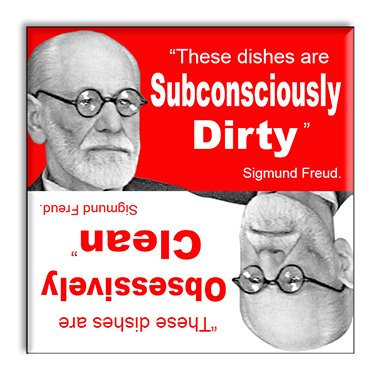
I want to begin by making sure that we all know what I'm talking about.  If you have a dishwasher in your home, sometimes you can't tell if the dishes are clean or dirty.  Why is that?  Because they all go into the dishwasher upside down.


They go in upside down because if  you put them right side up, then they'll fill full of water, and be useless to you except as a way of collecting dirty water.  That's it.  Now, if everything is upside down, and the dishwasher is full, how do you tell if it's clean or dirty on the inside? 

Good question.  Probably some of you have fancy dishwashers from the future, where it can sense if it's clean or dirty, and will sound some sort of klaxon if you try to remove a dirty dish, but for those of us with turn of the century dishwashers, you can't tell just by looking which dishes are clean, and which are dirty.  The stock pots, the saucepans, the cups, the bowls, they're all upside down, and impossible to distinguish clean from dirty just by giving them a glance.  The outside is always pristine.


That's the situation with humanity, you know.  That's how we are as people, which is that we all look fine on the outside.  The outside of the cup, the outside of the bowl, it always looks fantastic, clean as a whistle.  And human beings, we're all hiding behind a thin veneer of respectability.  We all look great from the outside, very few of us look genuinely terrifying, not many of us are immediately identifiable as a dreadful person, that sort of thing, so we've mastered the art of cleaning the outside of the cup, and of the bowl, and making sure that it's plenty presentable.


So, in order for you to see what is clean and what is dirty, you have to open the dishwasher, and pull out one of the cups, and look inside.  If it's still marked and filthy, then you know for sure that this is a load of dishes that needs to be done.  But you can only tell by looking.


But there's another snag, which is that sometimes, when you run your dishwasher, things dont' get clean.  There are certain things that, like, never get clean.  Eggs in a frying pan is a good one.  If you fry or scramble eggs in a frying pan, there's a real slim chance that it'll come out clean, you know.  But you try anyway, thinking that this will be the time in which things are different. This time, things will be clearly different, so not to worry.  And when you run the dishwasher, the same thing happens as always, which is that the egg stubbornly clings to the pan, and you're left with egg slightly more baked on than before.  So what do you do?  You run it through the dishwasher again.  Which doesn't change anything.  Unless you do something different, that egg is going to be stuck on that pan forever. 

So, you have a couple of choices, really.  You could decide to just keep on running the pan through the dishwasher, and saying that the pan is just like that now.  It's an egg pan, both made of eggs, and made for it.  You can say that with cups, bowls, plates, whatever, that this cup is just like this now, and that's all there is to it. 


Your other option is to do the only thing that will actually make that item clean, and that is to handwash it.  Take the plate, or the cup, or the bowl, or the frying pan, or whatever, and clean it manually.  Wash it clean by hand, because running it through the diswasher won't do anything after a while.  This brings us to baptism, baptism in which we focus on Christ's baptism, as well as ours.  Jesus, upon his baptism, goes down into the baptismal waters, echoing the Old Testament reading where he promises that when we go through the waters, he will be with us.  This is good news, precisely because of what it represents.  After all, what is handwashing if you're not willing to put your hands into the water to clean the vessels?  If you're not willing to get your hands wet, then you may as well just use the dishwasher, but it won't clear off the problem.  Christ descends into the depths to ensure our cleanliness, because he knows another dishwashing principle, which is that you can't clean something without making something else dirty. 

Jesus descends into the depths of baptismal waters to take the sin that washes away from us onto himself.  In the same way as your hands become stained by beets, or your washcloth becomes clogged with bits of egg and crumbs, the sin has to go somewhere.  Just like food refuse, it doesn't go anywhere.  It doesn't disappear.  It just has to be attached to something else, and that something else is Christ.  Luther's small Catechism states that it isn't water that effects this amazing miracle of rebirth of the spirit, washing clean of sins, and generation of faith, but rather water in conjunction with the word of God.  It's the same with doing dishes, which is that it's not water alone that effects any sort of cleanliness, it's water combined with soap, with a cloth, with scrubbing that removes the dirt.  Water in conjunction with the word of God, that is spoken at baptism, and was also physically present in the waters of baptism, too.  Our confidence stems from the fact that Christ has been in the waters, and emerges from the waters of his baptism with our sins clinging to him.  Meanwhile, we are washed clean indeed.

How clean?  Good question.  Good question asking about the cleanliness of us as human beings.  For you see, clean has different definitions.  I can't find it right now, but there was an excellent commercial for the swiffer a number of years ago, in which a drill sergeant yells to his troops 'You call this clean enough?'  Inspection got tough for those troops, I assure you.  And there are different standards of cleanliness that abound in our world.  Parents have different standards from their children for example, as we do for our children.  When our boys wash their hands, we've been known to send them back as their hands aren't even slightly damp.  When they brush their teeth, they're sometimes sent back due to the tooth brushing exercise lasting about five seconds total.  When they go to clean their rooms, we have to remind them, however subtly, that cleaning their room is more than just tossing everything onto or under their beds. And pretty much all children are like this, you know.  This is just how they do. 


So too, do we have different standards of cleanliness from God.  We look at ourselves, and say that we're good enough.  In the same way that a child, when washing a cup or a bowl, would say 'eh, good enough,' even though there is still food clinging to it.  They'd be tempted to say that it was good enough, close enough, clean enough for us to work with.  And they'd be wrong. The grown adults would insist on cleaning it again, making sure that it was suitable for them to use to eat from.  To paraphrase the scriptures, if the son makes you clean, you will be clean indeed. 

How does baptism work?  Not just as a physical washing of dirt from the body, but as a washing clean of our sins.  Whose sins?  All of ours.  And the well known idea of having to clean the inside of the cup is even more important as we consider a fairly divisive issue, that of infant baptism.  There are a great number of churches that don't baptize infants, that have you wait until you're a certain age before you can be baptized in their churches.  In the Lutheran church, we baptize babies all the time (we have one coming up this week, actually).  Why do we baptize babies?  We do so because of what the Bible tells us baptism does, which is to wash away our sins, and to make us clean.  Now, this applies to us as adults, as teenagers, as people whose sins are obvious, and are well known to them and to everyone else.  But we believe that even babies need to be washed clean of their sins.

At this point, many of you may sputter and protest, and may claim that babies don't have any sins, and therefore have nothing to forgive.  It does us little to talk at this point about whitewashed tombs, but it is still useful to talk about cleaning the inside of the cup.  For you see, from the outside, the babies of this world look pristine, look perfect and tiny and wonderful, and seem to have zero problems whatsoever, just like a new mug just removed from its box.  But if you were to get a mug for Christmas, as I'm prepared to believe that many of you did, what do you do with it as soon as you get it, and before you use it?  You wash it.  You wash it first, and after washing it, to get rid of anything that might be on it, then you can use it.

This is why we baptize babies, you know.  Because they have a sinful inclination, which is why you don't need to teach them to lie, steal, to be selfish or rude, they have a natural proclivity towards such things.  They have sins and marks and a sinful nature on them that you won't discover for years to come.  Why do we baptize them, it is to have Christ wash them clean of their sins, of their sinful nature even, to ensure that they are clean as he would demand.  Every time you wash a mug, or a cup, or a bowl, you are bringing it back to the state when it was at its cleanest.  Not when you first got it, but right after when you first washed it.  We as confessing Christians, every time we confess and are forgiven, spiritually we return not to the point of our birth, but the point of our baptism.  Part of our insistance on remembering our baptism as often as we do, is to recall that our God is a God of precedence, and if he forgave us and washed us clean of all our sins once, he can and will do so again.