I asked this question on Sunday morning, and everyone, by and large, said the same thing. I asked those who were present on Sunday morning that, as Christians, what is the most well known, often quoted passage in the scriptures? What is it that people keep on talking about, and would consider to be the most important, relevant verse in the Bible.
Pretty much everyone said 'John 3:16.' Good point . That's the one, right? The one that we all know, take to heart, and have internalized. As a Christian, even if you've memorized nothing else, you've memorized that one. You've figured it out, you've internalized it, and you can repeat it, chapter and verse. But that's for all the Christians in the house. If you're a non-Christian, what is the most important verse in the Bible, perhaps the only one you've committed to memory? Matthew 7:1. For those who are churchy, you might not be able to pluck Matthew 7:1 out of the air, so I'm going to assist you, albeit briefly. "Judge not, lest ye be judged."
I would say that more non-Christians, atheists, people like that, would know this verse, and would be able to pull it out of a holster fairly rapidly. And this verse is used to hamstring any condemnation, heck, any mentioning of sin whatsoever. If you point out sinfulness in someone else, if you point out sinfulness in the world, if you assess things and come to the conclusions that things shouldn't be going they way they are, whether in a big or small way, you will be hit with Matthew 7:1. Judge not, lest ye be judged.
Now, that verse is used to basically silence any or all criticisms of anything ever. If you pipe up with something, people will respond by saying 'doesn't your book say something about not judging?' And they'll treat it as though you, as a Christian, would be sinning gravely by bringing anything up. The image presented of the perfect Christian, then, is one who would gaze upon the sins of the world with a placid, calm, and philosophical face, never seeking to curb any type of behavior, no matter how corrupt. That sounds nice to the modern world, but unfortunately, it stumbles right away when you consider the reality of the Old Testament reading that we had on Sunday. The Old Testament reading that we had on Sunday gives you the complete opposite conclusion. Instead of the classic agnostic position that says that Jesus wants you to say nothing whatsoever in the face of sin, deception, destruction and desolation, we instead hear all about how you are required to speak up when you see deceit, when you see destruction, when you see sinfulness that leads to death, you are required to speak up in order that you might save the souls of your listener. God has placed us in a position that we don't really want to be in - as watchmen on Israel's wall. We are there to call out problems, issues, difficulties and sins as they arise. Not only does that passage tell us that we can, it tells us that we ought to do so. To refuse to deal with sinfulness is to shirk our duty, and to consign people to everlasting condemnation - and their blood is on our hands. That's heavy, you know. It's heavier than we want it to be, especially since most of us bought into the concept delivered to us that the best Christian is a mute one.
So what's a Christian to do? Well, if you believe in what you say you believe in, then you have some circles to square. You have some dogs to cat. Scripture interprets scripture, in case you didn't know, and with scripture interpreting scripture, you have to believe that you are a watchman on Israel's wall, but also that Christ told you to judge not lest ye be judged. How can both those things exist simultaneously? Quite easily actually.
If you want to know your sinfulness, if you want to know your need for a savior and what it is that Jesus died for specifically, then I invite you to take one simple step to tell you exactly what that is. Go thou to your brother, sister, husband, wife parent, child, whatever, and point out their sinfulness. If you do that, I can absolutely guarantee with 100% certainty what will happen next. They will immediately fire back at you with a sin of your own. If you tell someone that they chew too loudly, they'll tell you that you're a cheap date. If you tell someone that they need to load the dishwasher better, they'll tell you that you're shiftless and lazy. There is no faster way to have your own sin pointed out to you than to point out someone else's.
It's almost as though Jesus knew what he was talking about.
Let me put it to you this way. The Gospel reading that we had for this morning was all about repentance, repent or perish being the heading for the chapter. And we all essentially took that, glossed it over, and moved on, precisely because we genuinely can't see our own sins. We take it for granted that we ought to examine ourselves before holy communion, we ensure that we confess our sins at the appropriate time in the service, but honestly, we don't use the ten commandments of God and the words of Christ to evaluate our thoughts, words and deeds as we ought. And so when it comes to confess our sins, we can't think of any to confess. But when Jesus speaks, he tells us to be careful when we judge because when we do, that same measure will be applied to us. If you point out someone else's sins, they will point yours out in no time at all. And you're going to have the same temptation that the rest of us will, right? To explain your sins away, to pretend they're not a problem, to try to make the case that you don't really have a problem, it's not a sin when you do it, or to then snap back at the person again by pointing out their sins again. It's your temptation the same way it is mine, of course. But here's the deal. Your job is to stop running, and to embrace the issue all over again.
You're a watchman on Israel's wall, but so are other people as well. And if you've got the job of pointing out their sins, of indicating and isolating those sins, then you're going to for sure have people point out your sins as well. And that means that you, as a Christian, have the opportunity and the duty, of living out your faith. When someone presents your sins before you, in an attempt to get you to see that beam in your eye, your job is not to run from that, but to embrace it. Your job is to be thankful and grateful that now you know what you have to be forgiven. If someone, another watchman on the wall of Israel, dares to bring up your sins, to mention them, all you need to do is to quit running, and quit hiding. You need to stand firm in what you believe, and when someone says to you 'oh yeah, well you're lazy and a drunk,' that's when you need to come clean, to cop to the charges, and to say 'yes. And I shouldn't be. And that is what I need to confess, for that is my sinfulness that I have to deal with, work through, and have Christ take it to the cross.'

If you can't do that, then what is Lent for? What is the purpose of the Lenten season if all it is is a vague, perfunctory statement that you're a damnable sinner who can't think of a single damned sin? And if all you do is to make excuses, obfuscations and deflections when your sins are brought up, then congratulations, you're essentially a Pharisee. But if, for example, you're able to look your sin straight in the eye, to embrace the call of the watchman, to understand that it is there for your benefit, then all of a sudden, the faith that you take so lightly begins to coalesce into a reality in your life. That pain that you feel when someone points out to you even the slightest thing you do wrong, that raw scrape you feel when a nerve has been hit, that's what Christ comes to take away. He come to forgive, to spare you from the weight of your deeds and misdeeds.
So, in summation, judge not lest ye be judged, for with the measure you use, that same measure will be applied to you. That doesn't mean that you can't talk about sinfulness, according to the scriptures you have to. What it does mean, though, is that you are going to open yourself up to a careful, thoughtful analysis of your own sins. And your job is to embrace it. Your job is to say to the world that you are not perfect, and that you have a lot to be forgiven. So bring it on, and your sins will be revealed to you; then you can take them to Christ, and have him take them away.
The musings of the Pastor from Good Shepherd Lutheran Church, Regina SK
Welcome. If you're a member at Good Shepherd, welcome to more thoughts and discussion of the week that was, and some bonus thoughts throughout the week. If you're not a member, welcome, and enjoy your stay. We are happy that you're here.
If you like what you see here, consider joining us for worship at Good Shepherd Lutheran Church. Sunday mornings, at 8:30 and 11:00. You can also follow us on Facebook.
Monday, March 25, 2019
Thursday, March 14, 2019
Precious snowflakes
Have you ever noticed that all snowflakes are different?
This fact is often used as a short form for a number of other things, but more often than not, to discuss the uniqueness of the human person. That is, just like no snowflake is exactly like another, so too are we all different, and individual. This goes significantly deeper than you think it is, you know. It goes deeper because, on a cosmic level, you have to understand that the extreme unlikeliness of you being conceived, you being born, and all of a sudden, you figure out that you are actually much more different from every other human being than snowflakes are from one another. There are really only 35 different forms of snowflakes, they differ much more on a molecular level. So too, there's really only one way that human beings are put together (two legs, two arms, a head, etc). Sure, there are minor differences, but you get my point. Just like snowflakes are unique on a molecular level, though, we are all unique on a spiritual level.
So when it comes to the cost of a soul, they should fetch a pretty fine price. They should fetch a high price because each of them is a one-off. There is only one of each, and that's all. All economics is based on scarcity, you know. Absolutely all of it. Things are only expensive because they are rare. Anything that is hyper-common has no value whatsoever, precisely because it is common. That's why nobody can ever charge for air, for example, because it is everywhere, unless you're in a situation where it isn't. Then it is worth a lot.
Think of it this way - There is only one of you, your soul is completely different from anyone else's, and even if you were to be cloned, as identical twins are essentially clones of one another, you would be different on a spiritual level. You can see this with identical twins. Although they are identical physically, they are operating on a different level emotionally, spiritually, what have you. So given that your soul has uniqueness that even snowflakes do not, it stands to reason, from an economic sense, that it should be worth a lot. An awful lot.
The legend of Faustus, being the prototype for a lot of other soul-selling narratives, has the brilliant doctor selling his soul to the devil, with Mephistopheles doing his bidding for seven years. He wagered that in those seven years, he would be able to wring all the enjoyment out of life that he could, so that eternity in hell with Satan and all his little wizards would be tolerable. Well, Mephistopheles had to grant him an awful lot, because Faustus, being a man of his time, understood what a human soul, his soul, was worth, and he wasn't willing to part with it easily. It commanded a hell of a price for the devil to get, because people really weren't willing to part with immortality and paradise unless it was for a very very high price. Now, contrast that with the going price for souls these days, and I would hope you'd agree that the bottom has fallen out of the soul market. These days, you have to wonder what it is that people are willing to essentially sell their souls for. What price is the right price for them to lose their eternal salvation. Is it seven years of amazing love, power and cash? Or is it upvotes?
For you see, these days, the average person doesn't want to rock the boat at all. The average person is in no mood to stand out spiritually. The average person doesn't want to make ripples in the water in the slightest. And so the average person who fears the disapproval of man more than the wrath of God, will sell their souls out completely just to avoid any momentary discomfort here on earth at all. No social anxiety, no even mild tsk-tsking, no semblance of any kind of disapproval from the masses in the slightest. We want to go along to get along, you know, and so when push comes to shove, and the prospect of people thinking that we are operating outside the norm shows up, we pull back almost immediately. Forget the seven years of power and prestige, all the devil needs to do now is to say 'forsake your faith, or I won't like you anymore.' And like suckers, we go for it.
Essentially, if we had any concept of how valuable our souls were worth, how they aren't just a thing we have, they're a thing that we are, then there's no way we would sell them as cheaply as we do. But we have either forgotten, or we never really knew, and so we are willing to give them away for nothing. We will sell them for a mess of pottage, if you will, simply to avoid even the possibility of momentary discomfort, exactly as Esau did. And if we're willing to sell for nothing, the devil is quite happy to pay that much.
And that brings us to the season of Lent, and to the wandering of Jesus in the wilderness. For 40 days he fasted and prayed, for 40 days he was alone. At the end of the 40 days, the devil arrived in the wilderness and made him some promises, by way of some temptations. The devil showed up and said to him that he would supply all of Jesus' needs of body, safety, and prestige. He would give to Jesus all the attention that the world would not supply, he would give to Jesus all the power that the world would deny him. All this would be given to Jesus by the prince of this world, if Jesus would just turn aside from his quest, and follow him. But Jesus resisted him.
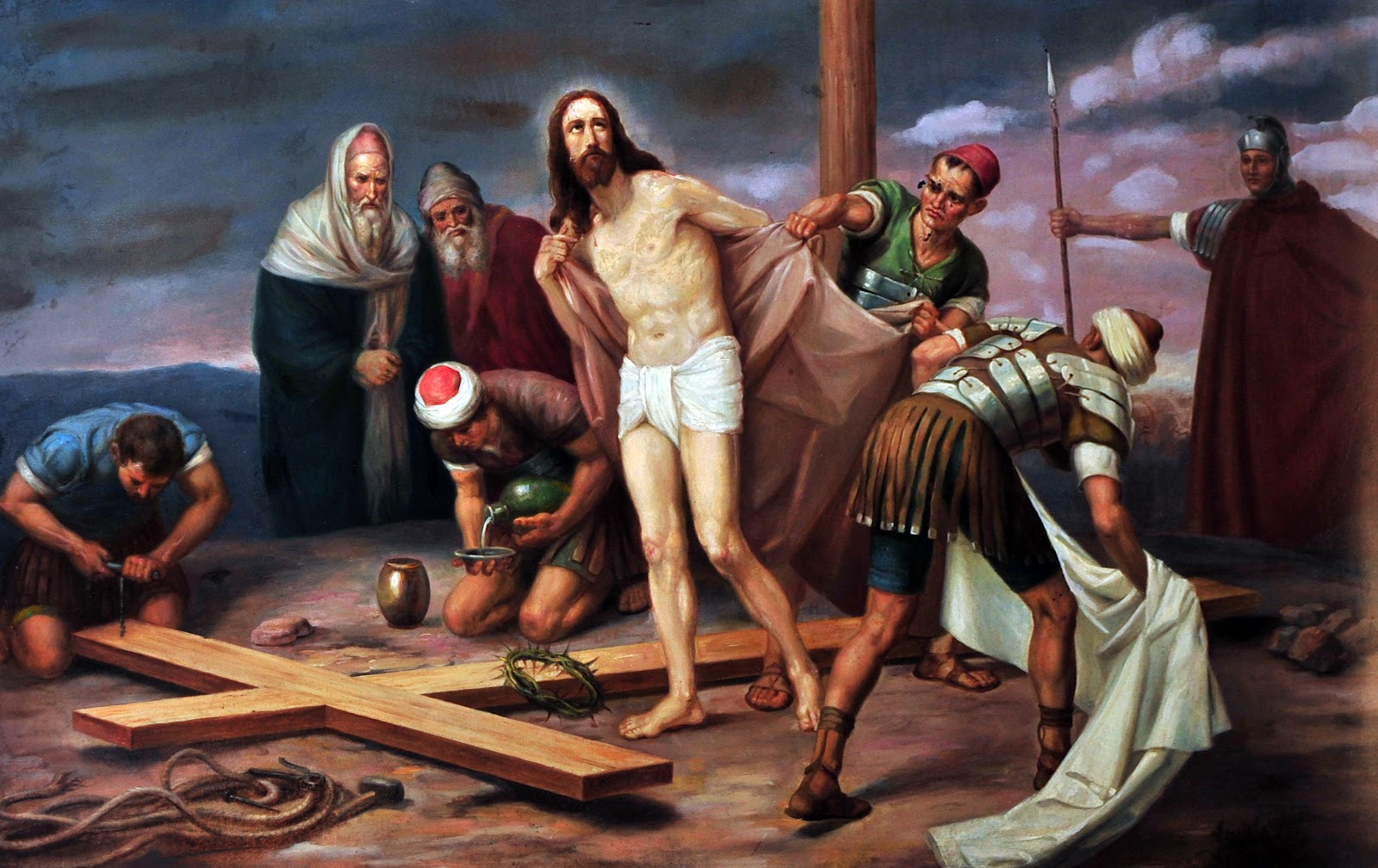
Jesus was willing to pay the price. Not just the price of being dismissed by his followers and deserted by his friends. Jesus was willing to go further than you or I would, by giving up his clothes, his freedom, his safety and his life. He was willing to pay the ultimate price, pay it in blood, because he knew how much this was all worth. He knew how much your soul was worth. And he was willing to do whatever he had to do to save it. In many ways, the story of lent is not so much the question of whether or not we sell Jesus short, but whether we sell ourselves short. What is your immortal soul worth? If the devil were to show up and ask you to haggle, would you demand top dollar, or would you sell it for lentils? What is eternal salvation worth? Would you suffer all, even death, rather than fall away from it, or would you shrink away to avoid any cost at all? Well, Jesus is well aware of how frail we are when it comes to this. He is aware that the spirit may be willing, but the flesh is most certainly weak. And he knows that when it comes to value, we are always tempted to ask too little for what we have.
But he is willing to outbid the devil, you know. He is perfectly willing to pay more than the devil does. Again, we're going to look at this in economic terms for a moment. Think of it this way, in a capitalist way. Your soul is on offer, but now it's not a transaction, it's an auction. And you know how an auction works, right? In an auction, you get to figure out not how much something is worth according to its sticker price, you get to figure out how much something is truly worth. Everything that exists is only worth what someone will pay for it. If nobody will pay for it, then the item in question has no value whatsoever.
Now, here we get into what the Gospel of Jesus Christ is all about. It's about the value of your soul. That soul that you take very lightly, the soul that is undervalued by us. God bless us ,we take this very lightly indeed, only truly understanding the value of a thing after it is gone and wasted.
This is the almost was situation of the prodigal son, the one who wasted his precious inheritance on wine, women and song. The horrifying idea that you have undervalued that inheritance so powerfully, and would only want it back when it is long long gone.
You would give that soul away, blow through that inheritance on essentially nothing. And the devil, because he doesn't have to, will only give you what he has to. He will take your soul for whatever bargain basement that you will offer it up for. He'll take whatever he can, and will give you only what he has to. And in this auction, the highest bidder will take the prize. But the devil will only offer what he has to, in order to secure the deal. But Christ offers the highest price, a price higher than the devil can. The devil, even if he is trying to outbid Jesus can't do it, because Jesus offers up the highest price in creation. There is no price higher. If the devil was only offering you what he thought you would sell for , then you'd sell for rock bottom; likes and upvotes. But he's not offering you a price, he's in an auction against the blood of Jesus Christ, the source of forgiveness and grace, the thing that pays the cost for the sins of the whole world.
And really, this is what lent and Easter are all about. They're about the reality of the offer of Jesus Christ to pay for the sins of the whole world with something that cannot be outbid. The one perfect sacrifice from the one perfect penitent. The offering up of the blood of the Lord, the God of creation to redeem creation. And no matter how much the devil offers, he literally can't offer up more than that. It's always good to remember that your salvation rests not in your hands and how highly you value your soul, but in the hands of Jesus, who can pay infinitely more than any of us can.
Tuesday, March 5, 2019
Sticks and stones
Moses didn't get to enter the promised land, you know. After leading the stiff-necked people of Israel through the wilderness for 40 years, Moses climbed a mountain overlooking the promised land, where he was able to drink it all in with his eyes, and it was there that he died, and was buried in an unmarked grave. The great prophet of Israel, dead and buried. God had made Moses a promise while he was in the wilderness, which was that because of his sin, Moses would not enter the promised land, and would die before he could enter it. Such is the price of sin, you know.
Now, even though you may know that, part of what I wanted to impress on all of you is how small the offense was that got Moses banned forever from the promised land. What was it that was so severe that Moses did to get him barred, and barred justly from the land that God had promised to his people?
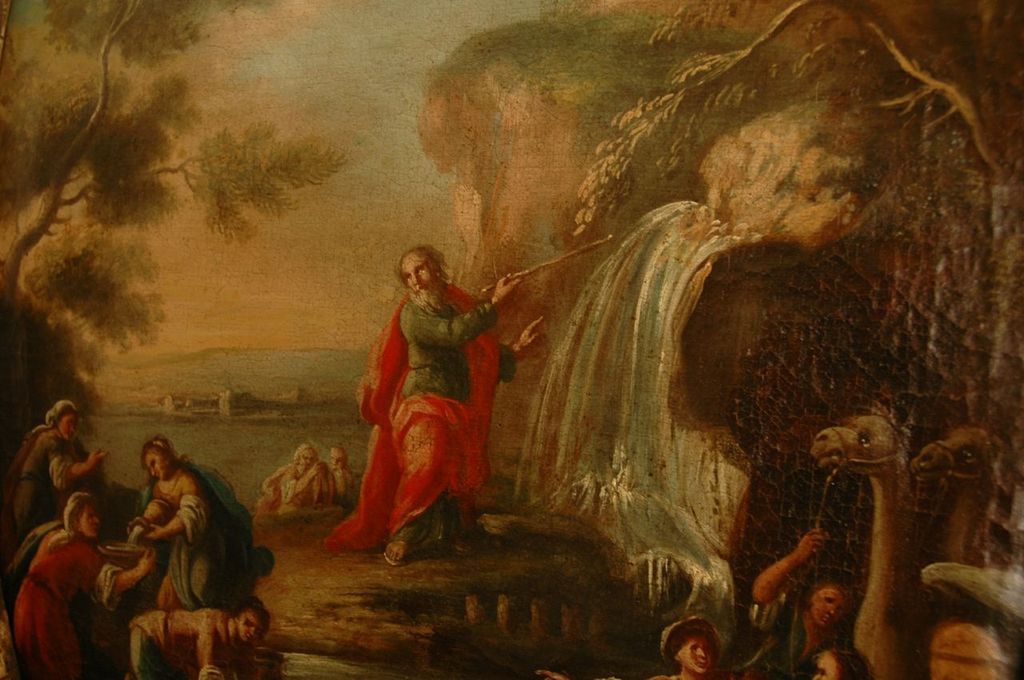
He struck the rock with a stick. No really, that's what he did. Numbers 20 tells us exactly how that proceeded, where Moses is commanded by God to speak over the rock, but instead, Moses chooses to strike the rock with his staff, and water gushes forth from it, and all the people drink. God told Moses to do something very specific, and Moses chose to do something else. Almost as though Moses believed that he knew better than God the whole time.
For those of you paying attention, this is an absolutely common theme throughout the scriptures. It begins with our first parents, Adam and Eve, who are absolutely real people, and who were given real instructions by the Lord their God to avoid eating from the tree of the knowledge of good and evil. True to form as a human being, Eve, upon being tempted by the serpent, said to him, "God said we aren't even allowed to touch it," which absolutely wasn't true. But she added more steps, as we as humans are wont to do.
We do this because we want to rationalize our decisions, and we are the only creatures that can do this. We can rationalize our behavior by adding more steps, and dropping out earlier ones. We can make new agreements that supersede old covenants. We can fool ourselves into thinking that what God really wants is for us to do what we want to do, for God is a dottering old man who only wants you to be happy. He doesn't care about good or evil, right or wrong, all he wants is for you, yes you, to be happy.
But that's not true. None of it is true. That's not how any of this works. When God commanded to Moses to speak over the rock but not to strike it, he was going out of his way to show his power and dominion to the Israelites, who, as discussed above, are a stiff-necked people, and who rebelled against Moses constantly. God wanted Moses to show and demonstrate that it was God himself who was in charge of all of this, not Moses and his magical trickery. But Moses assumed that he knew better that God himself, and decided to rap the rock twice instead of just speaking over it. And he was barred from the promised land for it. Moses, the great prophet, whom nobody had seen anyone like before or since in Israel, was barred from the promised land for striking a rock.
Does it seem harsh? Maybe, I suppose. But here's the thing - disobedience to God is enough to get you barred from the promised land, barred from paradise, barred from the whole Scheer. We constantly think about how good people go to heaven, bad people go to hell, right? We keep thinking about how Hitler is in hell forever, and that the rest of us are basically okay, without realizing that disobedience to God's word is sufficient, it is enough, it is plenty to cast Adam and Eve out of paradise, Moses out of the promised land, and you out of heaven. And if God's command to speak over a rock is disobeyed by Moses striking it, what on earth do you expect God is going to do with a people who change his laws and commands far far more than that.
The modern church, as you know, is as corrupt as you please. I'm sure this isn't news to you, but think about it for a second. God's word is clear, it is not hard to figure out or to work through. It's not as though God's laws are needlessly complex, but we do like to rationalize them away. We do like to look at God's laws as though they were complex, and needed our big brains to sort them out. We like to look at God's laws about human sexuality, life and death, theft, robbery, obedience, and to say that these things are holdovers from a time in which people weren't so smart, and needed to be protected from themselves. Now that we're here, and we're so smart, and we don't need God to tell us what to do anymore. And I ask you, with God as your witness, who is more likely to be giving you that advice? God, who said his word wouldn't change, and who said he would be the same yesterday, today and forever, or someone else?
Moses changed God's rules in a very tiny way, and that was enough to keep him from the promised land. What do you think there is waiting for us when we change God's laws in a big way? What is waiting for us when we take God's very clear words, and change them in a quite monstrous way? What is waiting for us when we disregard, dismiss, or otherwise discard the clear commandments of God in favor of what we feel like doing, and assume that God will back those decisions up? Could God justly bar us from paradise? Absolutely.
But this last Sunday was the Sunday of the transfiguration. And with it being the Sunday of the transfiguration, it's easy to miss a lot of details when you see Christ transfigured to be bright like the sun, dazzling white like lightning. It's easy to miss all the other details when your savior is revealed in his glory. But a detail that I don't want you to miss is that in that moment, Moses is standing there, with Jesus and Elijah, in the promised land. He finally made it. After being justly barred from the promised land, he is finally there. His story didn't end with his death, after his skin had been destroyed, yet with his eyes, he beheld Christ, and stood in the promised land. What a redemption story! Justly barred from the promised land, after having led Israel through the wilderness for 40 years, Moses finally stands in the promised land, and stands there with Christ. The law bringing stands in that space with the law keeper. I want you to think about the people from the scriptures who want to find their way back to paradise, to regain it, if you will. People whose sin and disobedience has kept them away, far away, from paradise. Think about why they are kept from paradise, and how much effort they expend into trying to make their decisions good and God pleasing, when in reality they are neither. And think about how we behave, you and I. Think about what we do, how we conduct ourselves, and how desperate we are to convince ourselves that we are doing the right thing, and that our actions in the real world are just a slight, minor deviation from what God has commanded. And then think about Moses, who stood on the mount of transfiguration alongside Jesus.
Standing there alongside Jesus is the most important part. What was it that Jesus said to the oft-misunderstood thief on the cross? 'I tell you the truth, today you will be with Me in paradise.' Emphasis mine, but hopefully you'll get the picture here, that you will be with Christ. Where he is. For only Christ is able to break death, only Christ is able to ascend into heaven, only Christ is able to be an heir of the permanent promised land, and Moses's presence with him at the mount of transfiguration is a wonderful testimony to the forgiveness of sins and righteousness that Christ provides. This isn't a theoretical or an abstract for you to muse over, rather it is a practical moment. Practical feet on the practical ground. A few sets of them, too. Elijah, who was taken up to heaven in a whirlwind, Jesus who is the son of God, and Moses, barred from the promised land now standing in it. Because of Jesus. That's what forgiveness and justification look like, you know. It looks like people who had sinned, who had added to or subtracted from God's command, people who are justly barred from the promised land standing in it.
And that's one of the best things to be revealed at the mount of Transfiguration.
Tuesday, February 26, 2019
What did he mean by that?
Okay, folks, I'm about to drop something heavy on you, which for you Lutherans, should be pretty straightforward. After all, we believe that 'Is means is' in regards to the Lord's supper, that the body and blood of Jesus Christ are truly present in with and under the bread and wine. And if you can grasp that, that the body and blood of Jesus are truly present at the altar because he said they would be then the next step should make sense as well. Ready?
Turn the other cheek means turn the other cheek.
Is means is, turn the other cheek means turn the other cheek, etc. The thing about Jesus and his words is that we all grasp them until we get too smart. Then we get to thinking that the words of Jesus Christ can't possibly be understood, they are too multi-leveled, after all. There are tons of ancient near eastern customs, practices, and so on that help to illustrate exactly why when someone strikes you, you should hit them back. And we tend to fall into the same patterns that our first mother did when confronted with the Devil, that monstrous demon from the dim mists of time. For when the Devil spoke to Eve about the forbidden fruit that she craved, he began by saying
"Hath God really said....?"
The deception began there, by attempting to get Eve to question what God had said. God had told our first parents not to consume the fruit of the tree of the knowledge of good and evil, but Eve's deception began by asking what did God mean by that. Now note that the command of God in the garden wasn't hard to understand. "Don't eat that, it's bad for you" is a command so simple that we could give to children, and in fact, frequently do. Don't eat that, don't touch that, don't do that, simple things that we tell children, and we expect them to listen to and to understand. And they by and large do, until they become reasoned enough to begin to question your commands, and to ask what it is that you really meant by what you said. And it is far easier for us to say that if we mean what we tell our children, then perhaps God means what he says when he says it to us.
The best person to listen to in relation to this issue is, of course, Dietrich Bonhoeffer himself, that most wonderful of pastors who put himself in harm's way, who stood up to Hitler, who sacrificed himself and all that he had for the benefit of those around him. And when he talks about cheap grace, we should really take him seriously, given that he is definitely prepared to put his money where his mouth is. Which he absolutely did. At any rate, when he discusses these words from Christ, and our modern understanding of them, he says this much.
"We in our sophistry differ altogether from the hearers of Jesus' word of whom the Bible speaks. If Jesus said to someone 'leave all else behind and follow me; resign your profession, quit your family, your people, and the home of your fathers.' then he knew that to this call there was only one answer - the answer of single-minded obedience, and that it is only to this obedience that the promise of fellowship with Jesus is given. But we should probably argue thus: 'Of course we are meant to take the call of Jesus with absolute seriousness, but after all the true way of obedience would be to continue all the more in our present occupations, to say with our families and to serve him there in a spirit of true inward detachment.' If Jesus challenged us with the command 'Get out of it,' we should take him to mean 'stay where you are but cultivate that inward detachment.' Again, if he were to say to us 'be not anxious,' we should take him to mean 'Of course it is not wrong for us to be anxious, we must work and provide for ourselves and our dependents. If we did not we should be shirking our responsibilities. But all the time we ought to be inwardly free from anxiety.' Perhaps Jesus would say to us 'Whosoever smiteth thee on the right cheek, turn to him to other also,' We should then suppose him to mean 'The way to really love your enemy is to fight him hard and hit him back.' Jesus might say 'Seek ye first the kingdom of God,' and we should interpret it thus, 'Of course we should have to seek all sorts of other things first; how could we otherwise exist? What he really means is the final preparedness to stake all on the kingdom of God.' All along the line, we are trying to evade the obligation of single-minded, literal obedience."
-Dietrich Bonhoeffer, 'the cost of discipleship,' Grace and obedience.
These words of Bonhoeffer are humbling, but only because they point back to the words of Christ. And the funny part of it all is that we like to pretend that there must be another interpretation to these words from Christ, he must have meant subverting power structures, or being metaphysically nonviolent, or Christian anarchism, or blahbitty blah, and bloobitty blooh. In other words, Jesus of Nazareth meant anything except what he said.
But if we believe that, that's not Christianity anymore, folks. That's another kind of religion in which you are trying to justify yourself. And if you know your scriptures, you will know that every time someone tries to justify themselves, Jesus shuts them down too. As Christians, we have to understand that the Devil hasn't changed how he operates, you know. He continues to operate the same way he always has, by whispering to you and I 'Hath God really said?' designed to have us change the word of God to fit what we are already doing. And look, I know why the temptation for the sophistry is there, I really do. I know why it's there because when I look at the word of God from this Gospel passage, I don't want it to apply to me either. I don't want to lend to anyone who asks, I don't want to turn the other cheek, I want Jesus to tell me to look out for number one. But when I consider the Gospel of Christ, I come face to face with a realization, which is that I find in these words commands that I don't want to adhere to in relation to other people, but commands I want people to adhere to in relation to me. It's not as though I would look at these words and say that they are bad for humans to follow, in fact quite the opposite. I want everyone else to do them all the time! What a great world that would be! But I don't want to follow them myself. And nor does anyone else. And there's the rub.
We can all look at this passage and agree that these things should be done, no problem. But the difficulty comes in understanding that these aren't just rules for other people, they're rules for us too. That's the issue more than anything else you know. And the trouble overall is the fact that these things are good and right and should be obeyed by everyone, yet we all tend to believe that they should only apply to other people, instead of us. That's how slavery works, you know, because we can believe that us owning other people is okay, but other people owning us would be a great moral ill. That's how theft works, that if you steal from Metallica, that's fine, but someone stealing your Metallica albums from you would be a crime. You have to understand that these things aren't different. They only seem to be different because they're happening to you.
Hopefully now we can get to some kind of clarity here, which is not that the law of God is bad for people, but only that it's hard for us. It's not that we think that it is unreasonable, on the contrary we expect the people that we see around us to follow it, and we act as though they will. We expect people to forgive us, to respect our property, to give without asking for anything in return, that kind of thing, but we remain perpetually surprised when almost everyone seems to act as though they are the exception to the rule. But none of us are. This is why the scriptures tell us that all have sinned, and fallen short of the glory of God: because none of us are actually all that good at keeping up with these commands. And this is precisely why the perfection of Jesus Christ takes centre stage, you know. It does so because of what Jesus does. He doesn't come to abolish the law, nor to make it easier. He comes to fulfill it, and that's different. So far, we've been talking about how we can tell that the law is good for other people to follow, and Jesus just goes one step further - he knows that the law is good for everyone to follow. But unlike the rest of us, he doesn't stop there; he actually fulfills the law, lives it out perfectly. He does what should be done, and we can see him living it out in the pages of the scriptures, Jesus prepared to live out what he advises us to do himself.
This passage from the Gospels, where Jesus reminds you of what is expected by us from other people, he is also giving us an idea of the lengths to which he will go to fulfill that law for us. Do these things sound difficult to the point of impossibility for us? Sure they do! Are they the right thing to do? They sure are! And that's why they exist within the wheelhouse of the one and only perfect human being to have ever lived, who will take on these things, and accomplish them fully. With examples.
For instance, when Jesus says to love your enemies and do good to those who hate you, he lives it out in this moment:
When Jesus says that if someone takes your cloak, do not withhold your tunic either, he puts that into practice in his own life:
All I want you to understand is that when Jesus speaks about what good and evil are, he's not purposefully exaggerating, nor is he talking about some strange middle eastern custom that secretly means to do whatever you want to do in the first place. He is telling you in language so plain and straightforward that children can understand it. Don't want to do it? I understand that, because nor do I . But Jesus did not come to abolish the standard, but to fulfill it. That's his role, and it's extremely serious. He doesn't come to make a hard rule easier to follow, he comes to keep the rule, and to offer up his obedience to us. We are people who live in the shadow of the cross, where the perfect penitent made the perfect sacrifice. The rules that we think are important for others to follow are still there and still remain. We now get to live in a world where the perfect life was lived on our behalf. We acknowledge that there is a good standard, we repent that we do not live up to it, and we give thanks that the perfect life was lived for us, so that when God looks upon us, he sees only Christ's righteousness.
Turn the other cheek means turn the other cheek.
Is means is, turn the other cheek means turn the other cheek, etc. The thing about Jesus and his words is that we all grasp them until we get too smart. Then we get to thinking that the words of Jesus Christ can't possibly be understood, they are too multi-leveled, after all. There are tons of ancient near eastern customs, practices, and so on that help to illustrate exactly why when someone strikes you, you should hit them back. And we tend to fall into the same patterns that our first mother did when confronted with the Devil, that monstrous demon from the dim mists of time. For when the Devil spoke to Eve about the forbidden fruit that she craved, he began by saying
"Hath God really said....?"
The deception began there, by attempting to get Eve to question what God had said. God had told our first parents not to consume the fruit of the tree of the knowledge of good and evil, but Eve's deception began by asking what did God mean by that. Now note that the command of God in the garden wasn't hard to understand. "Don't eat that, it's bad for you" is a command so simple that we could give to children, and in fact, frequently do. Don't eat that, don't touch that, don't do that, simple things that we tell children, and we expect them to listen to and to understand. And they by and large do, until they become reasoned enough to begin to question your commands, and to ask what it is that you really meant by what you said. And it is far easier for us to say that if we mean what we tell our children, then perhaps God means what he says when he says it to us.
The best person to listen to in relation to this issue is, of course, Dietrich Bonhoeffer himself, that most wonderful of pastors who put himself in harm's way, who stood up to Hitler, who sacrificed himself and all that he had for the benefit of those around him. And when he talks about cheap grace, we should really take him seriously, given that he is definitely prepared to put his money where his mouth is. Which he absolutely did. At any rate, when he discusses these words from Christ, and our modern understanding of them, he says this much.
"We in our sophistry differ altogether from the hearers of Jesus' word of whom the Bible speaks. If Jesus said to someone 'leave all else behind and follow me; resign your profession, quit your family, your people, and the home of your fathers.' then he knew that to this call there was only one answer - the answer of single-minded obedience, and that it is only to this obedience that the promise of fellowship with Jesus is given. But we should probably argue thus: 'Of course we are meant to take the call of Jesus with absolute seriousness, but after all the true way of obedience would be to continue all the more in our present occupations, to say with our families and to serve him there in a spirit of true inward detachment.' If Jesus challenged us with the command 'Get out of it,' we should take him to mean 'stay where you are but cultivate that inward detachment.' Again, if he were to say to us 'be not anxious,' we should take him to mean 'Of course it is not wrong for us to be anxious, we must work and provide for ourselves and our dependents. If we did not we should be shirking our responsibilities. But all the time we ought to be inwardly free from anxiety.' Perhaps Jesus would say to us 'Whosoever smiteth thee on the right cheek, turn to him to other also,' We should then suppose him to mean 'The way to really love your enemy is to fight him hard and hit him back.' Jesus might say 'Seek ye first the kingdom of God,' and we should interpret it thus, 'Of course we should have to seek all sorts of other things first; how could we otherwise exist? What he really means is the final preparedness to stake all on the kingdom of God.' All along the line, we are trying to evade the obligation of single-minded, literal obedience."
-Dietrich Bonhoeffer, 'the cost of discipleship,' Grace and obedience.
These words of Bonhoeffer are humbling, but only because they point back to the words of Christ. And the funny part of it all is that we like to pretend that there must be another interpretation to these words from Christ, he must have meant subverting power structures, or being metaphysically nonviolent, or Christian anarchism, or blahbitty blah, and bloobitty blooh. In other words, Jesus of Nazareth meant anything except what he said.
But if we believe that, that's not Christianity anymore, folks. That's another kind of religion in which you are trying to justify yourself. And if you know your scriptures, you will know that every time someone tries to justify themselves, Jesus shuts them down too. As Christians, we have to understand that the Devil hasn't changed how he operates, you know. He continues to operate the same way he always has, by whispering to you and I 'Hath God really said?' designed to have us change the word of God to fit what we are already doing. And look, I know why the temptation for the sophistry is there, I really do. I know why it's there because when I look at the word of God from this Gospel passage, I don't want it to apply to me either. I don't want to lend to anyone who asks, I don't want to turn the other cheek, I want Jesus to tell me to look out for number one. But when I consider the Gospel of Christ, I come face to face with a realization, which is that I find in these words commands that I don't want to adhere to in relation to other people, but commands I want people to adhere to in relation to me. It's not as though I would look at these words and say that they are bad for humans to follow, in fact quite the opposite. I want everyone else to do them all the time! What a great world that would be! But I don't want to follow them myself. And nor does anyone else. And there's the rub.
We can all look at this passage and agree that these things should be done, no problem. But the difficulty comes in understanding that these aren't just rules for other people, they're rules for us too. That's the issue more than anything else you know. And the trouble overall is the fact that these things are good and right and should be obeyed by everyone, yet we all tend to believe that they should only apply to other people, instead of us. That's how slavery works, you know, because we can believe that us owning other people is okay, but other people owning us would be a great moral ill. That's how theft works, that if you steal from Metallica, that's fine, but someone stealing your Metallica albums from you would be a crime. You have to understand that these things aren't different. They only seem to be different because they're happening to you.
Hopefully now we can get to some kind of clarity here, which is not that the law of God is bad for people, but only that it's hard for us. It's not that we think that it is unreasonable, on the contrary we expect the people that we see around us to follow it, and we act as though they will. We expect people to forgive us, to respect our property, to give without asking for anything in return, that kind of thing, but we remain perpetually surprised when almost everyone seems to act as though they are the exception to the rule. But none of us are. This is why the scriptures tell us that all have sinned, and fallen short of the glory of God: because none of us are actually all that good at keeping up with these commands. And this is precisely why the perfection of Jesus Christ takes centre stage, you know. It does so because of what Jesus does. He doesn't come to abolish the law, nor to make it easier. He comes to fulfill it, and that's different. So far, we've been talking about how we can tell that the law is good for other people to follow, and Jesus just goes one step further - he knows that the law is good for everyone to follow. But unlike the rest of us, he doesn't stop there; he actually fulfills the law, lives it out perfectly. He does what should be done, and we can see him living it out in the pages of the scriptures, Jesus prepared to live out what he advises us to do himself.
This passage from the Gospels, where Jesus reminds you of what is expected by us from other people, he is also giving us an idea of the lengths to which he will go to fulfill that law for us. Do these things sound difficult to the point of impossibility for us? Sure they do! Are they the right thing to do? They sure are! And that's why they exist within the wheelhouse of the one and only perfect human being to have ever lived, who will take on these things, and accomplish them fully. With examples.
For instance, when Jesus says to love your enemies and do good to those who hate you, he lives it out in this moment:
When Jesus says to turn the other cheek when someone strikes you, he lives it out here:
When Jesus says that if someone takes your cloak, do not withhold your tunic either, he puts that into practice in his own life:
All I want you to understand is that when Jesus speaks about what good and evil are, he's not purposefully exaggerating, nor is he talking about some strange middle eastern custom that secretly means to do whatever you want to do in the first place. He is telling you in language so plain and straightforward that children can understand it. Don't want to do it? I understand that, because nor do I . But Jesus did not come to abolish the standard, but to fulfill it. That's his role, and it's extremely serious. He doesn't come to make a hard rule easier to follow, he comes to keep the rule, and to offer up his obedience to us. We are people who live in the shadow of the cross, where the perfect penitent made the perfect sacrifice. The rules that we think are important for others to follow are still there and still remain. We now get to live in a world where the perfect life was lived on our behalf. We acknowledge that there is a good standard, we repent that we do not live up to it, and we give thanks that the perfect life was lived for us, so that when God looks upon us, he sees only Christ's righteousness.
Monday, February 11, 2019
Casting a net
We have great sports here in Saskatchewan. Great sports indeed. It's a sportsman's paradise out here, with lots of most amazing animals to catch. Deer, moose, elk, and innumerable fish. And it's the fish that I want to talk about today.
Fish are eminently catchable out here, mainly because we have thousands of lakes, and the lakes have thousands of fish, and it's a match made in heaven for the amateur or even pro sportsman.
But fishing out here in the wilds of Saskatchewan is, well, it's angling, really. It's angling because you catch fish one at a time. One by one. And the skill at rod and reel fishing is that it's a battle of wits between you and a fish. Now, you'd think that this would be a very easy situation for you to handle, big smart human vs pea-brained fish, but the skill that goes into this fishing experience is that you're trying to fool the fish. You're going out of your way to deceive it, to trick it into biting down on that tasty tasty hook. You can't just sidehack your way out of this, you have to make your hook enticing, you have to make it something that the fish is going to want to bite down on, but it'll never bite down on a hook just hanging there by itself. You have to put bait on it, trout marshmallows, or little swimmers, things like that, that will hide or disguise the hook so that the fish will choose to bite down on it. And you're genuinely trying to get the fish to choose to bite down on your hook, overriding its will and tricking it into eating your hook. That's the skill, that's the strategy.
This is contrasted with the efforts at fishing that Zebedee and sons were doing. Simon and Andrew, James and John, they were fishermen, professional ones at that, and their whole work was grabbing fish from the lakes, and pulling them ashore for consumption. Because unlike today, if you wanted a tasty fish, you were really going to want to eat a fish that was caught that day. Sure, you could dry fish out, but realistically, fresh fish were only good the day that they were dragged from the depths. And Peter and Andrew, James and John, they'd been fishing all night, and had pulled up zero fish. At that moment, Jesus walks by on the shore, and tells them to continue fishing, to let down their nets for a catch. They dismiss him partially, and for good reason. After all, what does this carpenter know about fishing? Do you really mean, thou son of a carpenter, that you know more than we do about fishing? For shame, really. You make the table, and we'll put the fish on it, that kind of thing. Simon is more diplomatic than that, and elects to, essentially, humor Jesus 'Master, we toiled all night and took nothing. But at your word I will let down the nets.' He does, and when they let their nets down, they enclosed such a large number of fish that the nets are close to breaking.
This great miracle is the revelation of Jesus to these fishermen, the first of the disciples called to the service of Jesus Christ. They understand that he is the Lord when he has mastery over these elements. And as usual, when they are bringing the masses and masses of fish aboard, when they are dragging fish on board the boat so numerous that the nets are breaking, and the boats start sinking, they aren't just giving Jesus the thums up, they're not thrilled nor delighted. They're terrified. They understand the magnitude of what they have seen, they understand that what they're looking at is the power of Christ manifested in the world. And even though it had the result that they said they wanted, they were still, as the Authorized version would say, 'sore afraid.'
This is why when something majestic or miraculous happens, Jesus has to go out of his way to say 'Do not be afraid.' He has to tell them not to be afraid, not to be startled, not to be bothered nor disturbed, but they still are. When encountering the majestic power of the Lord, they are frightened, even though they understand that they do want this. They want to see God, to encounter and to approach him, but they are terrified when they do see him, because the presence of God is mighty and terrifying for sinful people. We sinful people cannot stand in the presence of God himself, his majesty is overwhelming. And every time he manifests his divinity, every time he is clear and shows himself, people are rightly afraid.
And when we evangelise, this is what we are trying to accomplish. We are trying to get people to bite down on the hook because there is no way that they would bite down on the hook of the Gospel unless they were tricked into it, right? Jesus tells the four fishermen at this moment that 'from now on, you will be catching men.' And we, as people living in the great commission, we are still working on this today. We are still called to evangelise the world, now perhaps more than ever. We are called upon by Christ to continue to bring the Gospel to a lost and fallen world, and we seem to think that if were to present the power of Christ in its full majesty, that no fish would ever bite down on it. So we feel as though we have to conceal that mighty power. We feel as though we have to hide the hook, right? If we're fishing for people, we have to bait the hook. We have to deceive that people that we are evangelising, to hide the Gospel in social justice or in community. We have to hide the Gospel in potlucks or teas, stashing it behind groups and gatherings. We don't present people with the naked Gospel, for knowledge that there is no chance in this world or the next that anyone would bite down on that hook if that is all that it was. And we're probably right! The Gospel is so other worldly that none of us would ever choose it. The Gospel of Christ is so other-worldly, telling us that the world we are living in is perishing, that God cares for us and wants to bring us from destruction. The Gospel tells us to be in the world but not of the world, and that the world around us is falling away. This is not a message that you have to hide, though, it's a message that the human heart is designed to need.
Now, I know what your temptation is, to try to hide the Gospel, or to conceal the hook, to try to cut holes in the net to make it not so hard for the fish, but here's the deal, which is that the Gospel of Jesus Christ is exactly what the human heart craves, what it wants, and what it needs. To swap it out for other things to make it more palatable just makes it work less well. God's word does not return to him void, you know. It accomplishes the purpose for which it was sent.
So, to recap, the hard part of evangelism has been done for you. The net exists already, the word is already there, the Holy Spirit is already at work. All you need do is to know the net, be able to use it, and then go where the fish are. It seems so simple, but evangelism is simple. It's as simple as sharing the word of God, scattering the seed, casting out the net and letting the word of God do the work for you. That's what it's there to do, you know.
Monday, February 4, 2019
Fulfilled
The Bible is like every other book: There will be parts you like, and parts you don't.
It is unlike every other book, however, in that the parts you don't like are the parts you really should be reading.
This is how the scriptures work, you know. I know that you can go through the Bible, reading what you like, seeing what you want to see, and being perfectly comfy with that so far, that works. But the problem with the Bible is that you're going to find a lot there that you don't like. There's going to be an awful lot in the Bible that you won't care for, and that you will resist. You won't like to see great swaths of the Holy Scriptures, which is why you think to yourself that you have the luxury of skipping these things. But when Jesus was walking around in the flesh, people didn't have the luxury of skipping those passages: Jesus is the word. He is the passage.
When the people of Christ's time wanted to skip the passages that they didn't care for, they did so by taking Jesus out to the top of a cliff, and trying to toss him off. They were so angry with what Jesus had to say and who he is, that they moved in their minds to murder. They wanted to end this topic of conversation 100%, and instead of just closing the book, they wanted to throw it away, and to stop it from ever being read ever again. Thus the trip to the top of the cliff. Thus the proposed murder.
Now, you can always tell when Jesus is saying something important or impactful, and you can do so by checking the reaction of the Jews that he is speaking to. When they get mad, Jesus has said something important. Now, this shouldn't be a surprise to you, because there is nothing new under the sun. That is, you should be well aware that we have been instructed to only say things of little to no import. That is, you're allowed to talk about the style pages, movies, the weather, sports, that kind of thing. But you're really REALLY not supposed to talk about things that matter. Your conversation is never supposed to get you to the point where people, whether close family or strangers, get worked up, agitated or involved. You know, involved to the point that they care.
But here comes Jesus and does what we say we want him to do - he speaks truth to power. And that's good, right? We want him to speak truth to power. We want him to drive out the moneychangers from the temple, we want him to be in charge of history, we want him to restore justice and to convict those that we dislike. But that's not the business that Jesus is in. He's not in the business of convicting people way over there. He's not in the business of making sure that you are well taken care of and that he is going to despoil the people that you hate. That's exactly what an idol is, you know. And the number one sign of idolatry is that the god that you have made up hates the people you hate, and loves the people you love. If your god seems to favor you an awful lot, if he seems to be a tribal god who seems to love your tribe, who seems to hate your tribe, then you have to ask yourself where that God came from. Is he the one who made heaven and earth? Is he the one who formed and fashioned all of creation? Or is he the product of the people that he seems to care an awful lot about.
For you see, Jesus Christ is the Lord and God who is in charge of everything, who made the entire universe and everything in it. And because he exists outside of humanity, external to it, he isn't going to say things that we always like or agree with. Quite the opposite actually. Jesus holds to an external standard of right and wrong against which all other things are measured. And more than anything else, his standards don't change when they become unpopular. This is bigger news than we think it is, especially since today, since we have dispensed largely with the idea of an external right and wrong, we believe that we can, with ease, change and alter what right and wrong are, using only the passage of time for justification. But the shocker is that Christ's righteousness, being external, doesn't depend on changing times, or, more importantly, on being the right kind of people. In fact, quite the opposite, as Jesus himself points out in the Gospel reading. He points out to the Jews who are listening to him that there were plenty of gentiles in their days who were given blessings by God over and above the Jews at the time. The Jews expected God to like them because they were them. They didn't expect the opposite, which was that God is interested in righteousness that fits the external form of righteousness that he brings. It's not about where you were born, what your background is, how well you fit the fashion of the time, or anything like that. Rather, it requires you to be perfect, just as your heavenly father is perfect.
And if you're not perfect, well, you have troubles.
Now, the way the Jews of the time, and the way most of us have squared that circle is to say that we can just redefine perfect to be whatever we are currently doing. That is, we define moral based on our behavior, rather than changing our behavior to fit our morality. This just leads to us calling immorality moral after long enough, not because it is moral, but because we do it. And that's a massive problem, because it doesn't lead to any actual righteousness at all, and quite the opposite. The only other solution is to approach the Lord with your lack of perfection, and throw yourself on his mercies. And that's what the examples from the Old Testament did that Jesus brings up. There is right and wrong, good and evil, and the activity doesn't become good or evil based on the person who does it. This is a hard teaching, harder still for the churches today. For here's the absolute truth - membership in a church is no guarantee that you're on the right side of things you know. And if, when you read that, you're tempted to toss rocks, or to throw someone of a cliff, well, welcome to the world of that 1st century synagogue.
Ultimately, it's up to us to work out and to determine that the word of Christ applies no matter what. Our place in any particular part of the world, our place in any particular church may just lead us to the unfortunate space in which we worship God with our lips but our hearts are far from him. We desperately need a level of revival that revives our own consciousness, where we realize and recognize that these words of Christ apply to us on an individual level, and that no institution can believe for us. It's up to us to believe as individuals, and to be forgiven as individuals. And once we understand that, then we find a group of like minded people who seek salvation as much as we do.
And that's what the church actually is.
Monday, January 21, 2019
The good stuff
John 2 tends to be categorized as a wedding reading, which is quite unfair. I mean sure, it has a wedding in it, but that doesn't mean that it itself is a reading only for weddings. Just like with the whole Bible, all scripture is God-breathed, and useful, so limiting this one particular reading to one circumstance isn't really fair.
So, if the reading that has a wedding in it isn't just for weddings, what does the first of the miracles that Jesus performs, the first of his miracles in which people believe in him say to and about us today? Well, let's say for the sake of argument that today isn't your wedding day. I know, it might be, you may very well be checking my blog right before you get married, but let's say that it isn't your wedding day. Let's say that you aren't someone who, today, is too terribly interested in making sure that there is enough wine available at a particular feast. You're more concerned with your day-to-day. And what is your day-to-day like? If you're like the rest of us, it probably involves a bit of the old 'going through the motions.' It probably involves a bit of the running your engine in idle, of getting stuck in particular ruts. And that doesn't just apply to driving in the winter in Saskatchewan, you know. That applies to how you live your life. For your habits become your destiny. It's a tired old saying by now, but you have to understand that your habits are formed and forged a day at a time, and people like you and I, we tend to get stuck in a certain way of thinking, living, and behaving. And the thing about getting stuck in ways of living is that we experience diminishing returns, and we also think about things in terms of sunk costs. That is, things are at their best when they get going, but because we've been doing things for quite a while now, we don't feel as though it would even be possible to stop, or to change.
But that's where the reading about Cana becomes more important than you'd expect. That is, at the wedding of Cana, in Galilee, they run out of wine. And when Jesus is approached by his mother, she does what you would expect. She looks at him and say 'they have no more wine.' Simple, direct, and too the point. And this is where the diminishing returns kick in, you know. You should know that according to the Holy Bible, 'wine gladdens the heart,' making it not essential for a wedding reception, but a darn fine idea, and a wonderful way to have a party, a gathering, that people want to attend. The idea is to have a warm, happy gathering in which people are having a good time, and enjoying one another's company. They'd all had a bit of wine already, their hearts were already glad, and nobody wanted this to stop. And when things are going well, you don't want them to stop. When your heart is glad, when there is promise, when things are going well, you don't want anything to change. But things do change. You get stuck in patterns. Things get old, they wear out, and all of a sudden, the charmed life that you were living in has become a cage and a prison, hemming you in on every side. That's shockingly bad news, and it happens to all of us. We are all victims and prisoners of what should be a fairly easy problem - that if something is going wrong, we should change and alter it.
Well, the despair that seeps in to the average life is one in which the devil himself is happy to rejoice. He wants you to give up and surrender. He wants you to quit. He wants you to pack it in, and be content with your life the way it is right now. He wants you to look at your sinfulness and shrug, and say 'well, this is who I am. This is what I'm all about. I thought that wasn't going to be the case, but I guess it is.' More than anything else, he wants you to surrender and give in to the way things are. They'll never change, they will never be any different, things wear out and break down, relationships disintegrate, people drift apart, it's all so inevitable. We have the good wine at the beginning, it gladdens our hearts and makes us happy, we are in bliss and joy, but then the good wine runs out, and the drudgery begins.
Well, welcome to the world we live in. And welcome to the Gospel of Jesus Christ. Welcome to the Gospel of Jesus Christ that is all about renewal, and rejuvenation. It's about the ability to start again no matter how deep into the game you are. It's all about how your past does not have to define your present, nor your future. You don't have to settle for the law of diminishing returns for a lifetime. Rather, the best wine can be served at any time. Your open-mouthed shrugging at the issues at hand where you look at the situations you find yourself in, and say 'well, I guess I'm in this situation for good now.' No you're not. The diminishing returns that you are so sure of, the state and situation that you find yourself in, those things aren't permanent, you know. They're not forever. The devil wants to dishearten you, wants you to think about these things as being in your past, and that you can't get a hold of them ever again, that there is a green umbrella you can never get back, but that's not true, you know. As Christian people, you need to know that there is no such thing as too late. There is no such thing as over, and no such thing as done. All those verses that are so popular, verses about being restored and not growing faint, about strength being renewed like that of eagles, all of that has to do with this, and with the reality of drinking the wine that Christ brings, which is the best wine.
How to get this wine? I'm supremely glad you asked. I'm glad you asked, because this is the real ticket about how the Christian faith really works. Right before Jesus turns water into wine, Mary talks to the servants and to the steward of the feast, and says to them 'do whatever he tells you.' There, it's that simple. The way that the spiritual wine Christ brings is accessed is through that same simple advice. Do whatever he tells you. That's the prescription to your woes. Now, before you accuse me of works righteousness, of being a pietist, I want to remind you that I'm a Lutheran Christian. And as a Lutheran Christian, I'm all in on the virtues of 'sola scriptura.' Scripture alone. Only Scripture is the source and norm for ethics, for faith, and for our religious and secular lives. And with this being the case, if the advice that Mary gives is to do whatever Jesus tells us to do, what would that look like?
Well, here's the breakdown, according to the red letters of the Bible, the actual words of Jesus Christ:
1 - Believe in him whom he has sent (John 6:29)
2 - Repent and believe the Gospel (Mark 1:15)
Yes, there are a lot of other things, to be sure, but here's the core of the situation. The core of the situation is to repent of what has happened, and to be forgiven. You also have to believe that Christ can do what he promises to do. With all of this, if you can do it, then the magic of the Gospel of Jesus coalesces into form. Repentance is a wonderful gift, because it lets you look at your life accurately, without lying or deception, and to say ' you know, things aren't exactly where I want them to be. I think I'd like them to be different.' That's a simple sentence, to be sure, but to do that requires an almost superhuman effort to look at things with any kind of honesty. We all want to be right, obviously. We all want to be good ,and we want to be correct. We want to be righteous and holy, that desire is planted within us, but how do we get there? How do we get the good wine of holiness? The usual approach is to say that the good wine isn't worth having. so we're perfectly happy to drink the bad wine, the cheap wine, or no wine at all. We all want to have good wine, but we have figured out that the fastest way to get to it is to pretend that the wine we are drinking right now is the best wine of all. And it isn't. You have to admit that the wine you're drinking isn't the wine you want. The wine you have and the wine you want are different things. And so what you're looking at is Christ, obviously, the one that allows you to change what you are doing, and to leave behind what you have done. Everything else will lash you to the bad wine, you know, will force you into thinking that the bad wine that you're drinking is the wine you always wanted. You will be bound to your mistakes and errors forever, and continue swilling the plonk from now until the day you die.
But Christ bids you to repent. To repent and to believe. To put the past behind you and bury you. To marry your repentance with the promise of a new tomorrow, of the idea and the knowledge that there is no such thing as too late, and no such thing as over. This is the great gift of the faith: that those of us who are bound and broken by the weight of our bad decisions that we have never been able to admit were bad, can instead rise up and say with confidence that these are things we wish to leave behind us. We thought we had the good wine before, but the good wine can always be served now.
Subscribe to:
Posts (Atom)


.jpg)