The musings of the Pastor from Good Shepherd Lutheran Church, Regina SK

Welcome. If you're a member at Good Shepherd, welcome to more thoughts and discussion of the week that was, and some bonus thoughts throughout the week. If you're not a member, welcome, and enjoy your stay. We are happy that you're here.

If you like what you see here, consider joining us for worship at Good Shepherd Lutheran Church. Sunday mornings, at 8:30 and 11:00. You can also follow us on Facebook.

Tuesday, November 28, 2023

Buried

 The parable of the talents, as I may have mentioned before, is so deeply ingrained into our collective psyche, that the use of the word 'talent' to mean skill or ability came directly from this parable. Before this, talent referred to a weight. 

A talent weighs 129 pounds,14 ounces. Pretty heavy if you think about it. And that's a weight of a precious metal. Imagine the level of trust you would have to have in someone to give them 5 talents of almost anything. In Canadian dollars, a talent of copper is valued at $655.90 . 5 talents of copper is worth $3,279.50. That's a lot of money, and that's not a particularly valuable metal. Silver will clock you at almost $62 thousand dollars per talent, gold at $3.7 million. Per talent. This is a lot to invest, no matter how you slice it. The man going on a journey is entrusting his servants with a lot. An awful lot. 


The expectation from the master is that the servants would, you know, do something with the resources with which they were entrusted. The idea is not that they should sit around and be idle with it, but rather that there is work to be done and that the talents they were given should be put to good use. 

But that's a lot of money to be playing around with, especially when it isn't yours. Investing always carries risk. I know you have to have money to make money, economics 101, but truly investing in a proposition that can go down is risky. And if you're playing with money you can't afford to lose, can you afford to risk it? That's the question that all the servants had to ask themselves, and 2 out of 3 decided to take the chance. They rolled the dice, made investments, and not just recouped the money, but essentially doubled it. That's what the master had in mind. But when he comes to the third one, the one who was given the least, that third one took the resources and buried them. That way, when the master comes back, he'll get back exactly what he put in.

Now, here's the issue. It is the temptation in the heart of us all to take the talent and bury it. And I'm not talking about money anymore. I'm talking about the things God has entrusted you with. Believe it or not, and I hope you do, you are made completely unique. That is, there has never been another you, nor will there be another one. You are one of a kind. And just like a talent is a weight measurement without any clear composition of material, so too could a talent that you have be anything. But God has entrusted everyone with a talent, you know. Absolutely everyone. All of us have at least one talent that God, in his ineffable wisdom, has entrusted us. He has given you and only you the makeup that forms you into who you are, and he has given that to you for a reason. 

Think about the nature of humanity according to Scripture - You are God's workmanship, created by him to do good works, which he has prepared in advance for you to do. You have been put into this world with the talents that you've got in order that you might do something with them. But the thing is, by and large, we don't think about our talents as being worth very much, or being very useful. There are people all around you who have skills, talents, abilities far more than you could ever possibly hope to keep up with, and they're real useful. The five talents, the two talents, they have a lot they can do, and are doing. And then there's you. One talent. It's not worth much. What are you supposed to do with that? Just take it and bury it? Probably. 

But the thing is that that talent has been entrusted to you for a reason. Because you are the only one who can do anything with it. Nobody else can use your skills or talents, nobody else can do anything with what has been entrusted to you. It's been entrusted to you, you know. Something amazing that happens with us as Christians, is that we have been uniquely equipped and placed to minister to and to work with matters of eternity. The people who you deal with on a regular basis are eternal, they are people for whom Christ died. Therefore, by definition, what you do with them matters. It's of eternal consequence. And what that means is that you have been given time and space in which to operate and to engage in matters that are of crucial importance to you and to them. 

Tuesday, November 14, 2023

yeah, but what's the point?

 I try my best to not spend more time traveling to a place than I'm going to spend at the place. Like if you're going to drive to Saskatoon from here, you'd better spend more than 6 hours in Saskatoon, otherwise what's the point? It becomes a sink, and I'd rather not drive all the way to Saskatoon, eat at Fuddrucker's, then drive back. Harder and harder to justify all the time.


Now, let's say that it's a sink proposition, but involving earth itself. Imagine if you knew for absolute certain, no doubt whatsoever, that there was an asteroid approaching earth that we could collectively do nothing about. No last minute reprieve, no space cowboys, no Armageddon, no nothing. Just the knowledge that things were going to wrap up in about a week and a half. What do you do? 

Well, the first thing people would do would be to stop planning for the future. All done with that. No planting, no watering, no gardening, nothing. People would probably spend all the money in their bank accounts, but who would be around to take the money? People would spend time with family and friends as much as possible, but why bother being kind and generous to strangers? May as well eat all the fatty and salty food you want, given that your waistline is about to get atomized. And so on and so on. 

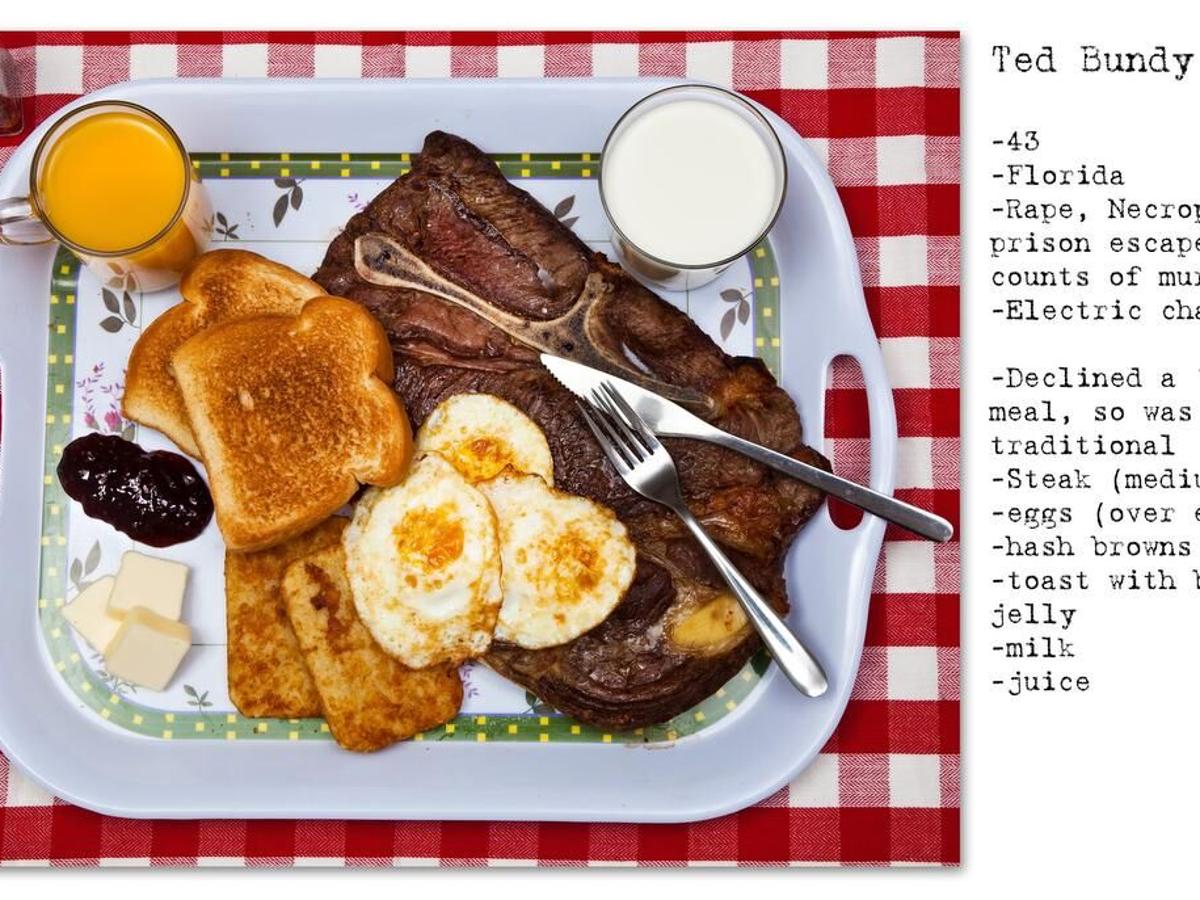
If you knew for sure that the entire world and all human beings who had ever lived were just going to get fossilized, then why bother being brave or noble or helpful or charitable or any of it? If you don't believe that there is a God or paradise or anything, then it wouldn't make sense to do any of that at all. Because as time grows short, you may as well focus more and more on yourself, and tickle that lizard brain with whatever you can. Drink, do drugs, and the fewer and fewer long term consequences that there are, the less it's going to matter. That's why very very few last meals that prisoners order are healthy. May as well get a giant bucket of Kentucky fried chicken, if there's not going to be a tomorrow to worry about. 


But for the Christian, the outlook changes completely. If you know that time is running out, then you have a limited time indeed to do anything good. Not that paradise will be bad, you understand - it'll be paradise. By definition. But if it's paradise, then your bravery and generosity will not be needed. Not that they're not good things, but they're good in opposition to the badness that we have here on earth. If you believe in paradise as a place where the tears are wiped away from every eye and the sun will not strike you by day nor the moon by night, all that, then you won't have to take care of people in the same way you do here. Here is where you have to be good and generous, here is where you have to do what is right and true. Here is where your neighbor needs your help because here is where he is cold, lonely and miserable. He won't be in paradise. But he is here. 

If you knew for sure that Christ was going to return in a week, you would, hopefully, be all the busier leading up to that than you would otherwise, because he both commands it, and because this is a limited time affair. Heaven is forever, but your opportunity to be brave or noble or to sacrifice yourself or anything like that is really quite limited. Hebrews 10 discusses how we should encourage each other towards good deeds, and to not neglect meeting together especially now as the day of his return is drawing near. That was two thousand years ago. Christ still hasn't returned. Does that mean that Paul, Peter, James and John were all wrong in assuming that the return of Christ was imminent? Or does it mean that all Christians must live as though the return of Christ was right around the corner. 

If we believed that the return of Christ was both soon and inevitable, then we would likely behave differently. Spread the gospel more, be more charitable to people, work harder to feed and clothe people before judgment day and the end of everything. In both scenarios (asteroid and return of Christ) the world ends and it's all over. But for the Christian, even if the world blinks out of existence, the people that inhabited it are still around, and are, in fact, eternal. 

The world's gonna end either way. You know it and I know it. And you have a couple of ways that you can look at that information. Either the world ends and everything you did was completely inconsequential, or the world ends and how you treated people is of desperate, eternal consequence. Surprisingly enough, even people who have no faith in God tend to behave more towards the latter being true than the former. It's probably a good idea every once in a while to think about why that is. 

Tuesday, October 31, 2023

New Coke

 Remember New Coke?


I would imagine that more of us remember the idea of New Coke more than remember New Coke. That is, certain things seep into consciousness so that you 'remember' them whether you remember them or not. Books and movies work like that too, certain books are things that we all feel like we've read since they're so culturally prevalent. Movies too. You don't need to see 'the sound of music' or 'star wars' at this point to have seen them, if you see what I mean.

And New Coke fits that bill too. New Coke was when the coca-cola corporation reformulated their, uh, formula, in order that they may compete better with pepsi and associated drinks. The formula was altered to be New Coke, and was instantly hated by the public. It was so hated that the old coke formula came back, and was rebranded as Coca-Cola Classic. And New Coke wouldn't be seen again until its relaunch in 2019 as a Stranger Things tie-in novelty. It actually sold briskly due to the nostalgia factor.

I bring up New Coke because it was, and is, a cautionary tale. Coca-Cola is the number one selling soft drink in every country in the world apart from Scotland. There, they drink Irn Bru. So if Coca-Cola is so popular, if everyone seeeeeeems to like it okay, then what is the benefit to changing the formula. Or, to put it another way, what would the possible benefit be of changing it?

Let's talk about God's holy church: God's church is something that, like Coca-Cola, cannot be improved by adding anything or reworking the formula. You're not going to make Coke, or Ghostbusters, or Psycho, or the scriptures any better by adding your cool new spin to it. All it's going to do is to make things worse. But over time, the church, as it tends to do, added more and more to life and doctrine. And when it did, it made things worse. Demonstrably. 

Here's my go to point - celibate clergy. Now, if you were to ask a Roman Catholic, they'd say that Saint Peter, Simon Peter, was the first pope. They would also say that Priests, Bishops, Cardinals, and especially the Pope, are supposed to be celibate. But Peter was absolutely married. Jesus healed his mother-in-law, Paul wrote about how Christians have the right to a believing spouse, as Peter did. So why can clergy not be married? New Coke. We know what the scriptures said, we just want to add something to it, and by doing so, make it worse. Roman Catholics may disagree with me, but I would posit that bucking the trend that Saint Peter first exemplified has brought nothing but trouble into the church. Why are you doing it? Did Christ give direct instruction for clergy to remain unwed? Did God reveal it in scripture? Did Paul write on the topic favourably? Quite the opposite, actually. So why do you feel the need to New Coke it?

Frequently, what I tend to find is that the arguments people have against the church are arguments largely against what we did to it, not what the content of the scriptures actually are. Or, to talk about my rather tortured metaphor, people dislike New Coke, they all do, but not Coca-Cola Classic. 

The rush to return to Coca-Cola Classic was because everyone hated New Coke. And the Protestant Reformation was a return to Church, Scripture Classic. What Martin Luther brought forward wasn't anything new, quite the opposite. He just wanted to go back to what already worked, what was positive, what was of God, and to abandon all the changes that really didn't work. It's not going forward, it's going backwards.

 And when we talk about the spirit of the reformation still now, part of what we're doing is to discuss the necessity to have every generation pull the scriptures back from where they've been concealed by us, and to discover it anew. Not by looking at the doctrine and adding new spin to it, but in doing the phenomenal nature of pulling the word of God forward, and finding it again. That's the reformation spirit - finding out how good Coca-Cola Classic was from the beginning.


Tuesday, September 5, 2023

Grace

What I like about the scriptures is that they're inflexible in what they say. There's something about the Lord Christ, which is that he doesn't walk anything back. Nothing at all. Unlike the rest of us, he says what he says and stands by it hard. He isn't the type to say what he says and then walk it back and apologize. Instead, he says what he says and leaves us with it.

This is unlike everything else that we have. Consider the constitution of the United States, a country in which I don't live. That constitution was written by the men of the day, some of whom owned human beings. It seems so foreign to us now that the nation to our south was one where humans could be owned, but that was outlawed by a constitutional amendment, the 13th one, in 1865. That was where the US Government declared that owning people was to be, from now on, illegal in the United States. 


This is a matter of some interest because the constitution of that country, and most others, is a document like magic mud - both solid and liquid depending on what's happening to it. It's set, but malleable.  But it can be changed, if people move on, then you're going to be in a world in which the way in which things were done no longer helps, you know? If this were impossible, then people who owned people a long time ago would be able to have their actions define the future in perpetuity. If you're an American citizen, you don't have to let what people did a long time ago dictate what you are allowed to do now, you can say that things change, and you can walk stuff back.

But Christ doesn't. His words stand, no matter what we do or say or believe. For the words of Christ, and the words of scripture which are the same thing, don't change based on how much we change or develop. And that's hard for us to get our heads around. Usually, we change laws and so on to fit what we're doing right now, or what we want to be doing at any given moment. Usually something becomes moral once we begin doing it, and things that were outlawed for a long time can become permitted in a moment.  But we don't get to change the Bible, nor the words of Jesus Christ. Those things stay the same in season and out of season. And that means that we get to choose what to do with passages like we had on Sunday, where we hear about how we are to treat one another. Now this was in Paul's letter to the Romans, and the romans had some pretty unusual ideas according to us, things like using urine as mouthwash, and feeding the dead.  You'd think with a society that wacky, that you could by and large ignore most of what they say about life and such. You'd think so, but you'd be wrong. 

As a Christian today, you're living a couple of thousand years after Paul wrote his words, but most people would find it hard to argue too much with his words today. In reality, not much has changed in the two thousand years since he wrote them. That is, we don't feed the dead a lot these days, and we tend to use scope or whatever, but the material function of humanity is much the same as it always has been. You have friends, you have enemies, you have to navigate a world in which you have both at the same time. Not everyone is going to like you too much, you're not going to like everyone, and you're going to have to deal with that fact, like it or not. 

By and large, we believe that we are supposed to be good and kind. And that's a thing that gets said a lot, a sentiment expressed constantly, and if it were the case that we were supposed to be good and kind, and everyone believed in us being good and kind, why are things in the state that they're in? All we're doing is saying be good, be better and so on, but we can rarely pull that trick off. Rather, we all have the best of intentions, but something gets in the way - that thing tends to be other people. L'enfer c'est les autres, as Sartre would say, or in English, Hell is other people. The main difficulty in being good, kind and better is that you're going to run into real human beings. And those human beings tend to want to do things that you don't want them to do. If you could be good in a vacuum, if you could love in a vacuum without having to be good to people, or to be kind to people, you'd be set. But people aren't like bricks or butter or anything - they're people. And most of our rhetoric is about being nice without any practical advice on how to pull that off. Which means that by and large, we have an idea where we should be better, yes, and then when we can't because people are rotten and seek their own way, then we default to treating them as toxic people, and avoiding them. Cut that negativity out of your life!

So what that does is to reduce our human being interaction into a very small world. Love people, but only those who are safe to love, and that's a problem, because nobody is safe to love, really. And then we have as our capacity only to love those who we haven't found out are scumbags yet. But we will. Over a long enough period of time, everyone will let you down and disappoint you, if you eventually let them. The only ones who won't are the ones who die before you can find out. But everyone else, from the people with whom you live to the people in your neighborhood, will bother and upset you. Will you cut them down, or will you be good to them.

Ah, but you don't feel like being good to them, do you? They're toxic and bad and narcissistic and whatever else the buzzwords to describe sin are. Well and good, and that's extremely true. But what do you do with them if God tells you to love them? Well, Paul tells you what to do - 'If your enemy is hungry, feed him. If he's thirsty, give him to drink. In doing so you will heap burning coals upon his head.' Friend, you're called to love those who are difficult to love. Sometimes you'll feel like it, and then it's really easy for you to be good to them. Sometimes you won't want to, and then you can be encouraged by God to heap burning coals on their heads like scripture tells you to. 

But you know that you're supposed to be good to one another. The world tells you to be kind, Christ tells you to be good, and though it's hard, you are called to love your enemies. How do you begin to grapple with that? To understand the level of grace that was given to you in Christ. That is, if you understand properly what was given to you through Christ, then you'll be far more willing to be good to those around you. It's hard for us to love one another if we believe that we are good, and that when things don't go well, they're the problem of everyone around us. But if we understand ourselves as forgiven people of grace, then it's far far easier to love those who are hard to love. Because you understand yourself as hard to love too. You can find yourself as someone who is loved by God in spite of your self obsession, not because of it. And once you get that, then other people are far harder to fight on that topic.

Tuesday, July 18, 2023

Sow what?

 The parable of the sower is one of those interesting parables which you don't have to work too hard to interpret. Why, you may ask? Because unlike a lot of other parables, the interpretation is in the text. It's one of those passages where the meaning isn't up to a whole lot of quibbling. The text tells you what the text is about.

So why do we act as though the text is complicated?

We do this because we do not wish for the text to mean what it says. This is part of what it means when Jesus says 'anyone who will not receive the kingdom of God like a little child will never enter it.' As children, when God forbids, we fearfully consider the consequences of breaking his word. When God commands, we consider what he prompts us to do, and try to act accordingly. And when God tells you what his parables mean, children tend to take that meaning as it is printed. But eventually you grow up, you put childish things away, and you begin to look at the scriptures in a new light. 

And what you find yourself doing is being too smart for the scriptures to mean what they say. You do the thing where you say 'oh gosh. Jesus Can't POSSIBLY have meant that.' You reasons for doing so are rarely because you've gotten deep into the text. Your reasons are almost always that Jesus tells you not to do what you want to do, and therefore you have a choice. Change what you do, or try to change what Jesus says. As children, we are encouraged to change our behavior. As adults, we tend to change what Jesus said. That's the automatic response.


So when it comes to the parable of the sower, it clearly says that some of the ground is inhospitable to the seed that is scattered. Some of the ground is too trodden down, or full of weeds, or rocky or what have you. Jesus bothers to explain why that is, what those various things mean, but it seems strange for us to say that all this ground is clearly hospitable to germination. It isn't.

It's very difficult to be universalist when considering this readings, given that some of the soil just isn't conducive for the growth of the seed that is scattered. Jesus clearly says that there are people, that there is soil, that will not be up for the word of God to take root and grow. You can wish that wasn't true, and I wish it wasn't true either. But that doesn't stop it from being there. 

So what to do? I'm not prepared to surrender the point, given that I know that "God desires all men to be saved and to come to a knowledge of the truth." If that's the case, then what do we do with the unfertile ground?

Think about any field you've ever seen, either one that is filled with crops and is being fruitful, or one that is lying fallow for a while. Think of your garden outside of your house, or even something as simple as a window box. Think of it, and ask yourself how maintenance free it actually is. Is that space something that can be left completely alone? Or is it something that requires work? And even more than that, is work that has to be done on that garden plot something that you do once only, or do you have to do it multiple times? 

If you weed your garden plot, you don't just weed it once ever. And you can't respond to criticisms of weeds being in your plot by saying 'I weeded it last year!' Weeds come back. New stones get revealed. The quality of the soil ebbs and flows, but cannot be left to its own devices. Bad soil must be improved. Good soil must be maintained. 

Anyone who would read the parable and say that it is unfair, given how there seems to be some soil that is good and some bad, seems to forget that Christ is not just an arbiter of right and wrong. His primary work is not judge, but redeemer, and sanctifier. It's not as though he arrives on the earth as he who scatters the word then leaves the soil to its own devices. He's not just the sower. He's the gardener too.

We see in another parable how there is a question about a tree that is not bearing any fruit. The request from the landowner is to chop it down - why should it use up the ground? But the gardener doesn't spring into action and chop the tree down, no no. Instead, he says 'let's tend it, let's water it, let's fertilize it, and give it another year.' 

In the divine service, part of what happens is that we confess, and are forgiven. And we're confessing our cares, our worries, our lack of depth or seriousness, that kind of thing. And Christ forgives. He makes new. He breaks up the path, picks the rocks, pulls the weeds, all that sort of thing. You're not good soil based on you hearing the word, you are made and kept as good soil by the work of Christ. That's his work, friends, that's what he does. To scatter the seed, and tend the soil. Sure, it goes bad, goes fallow, but that's why we go back and confess over and over again. To be restored. 

Tuesday, June 6, 2023

Who is the Trinity?

 Who is God?

A classic question, and one that the Christian answers (hopefully) by saying that God is Father, Son and Holy Spirit, the Holy Trinity. Yes, that's a correct answer, but it's also a slightly confusing answer for someone who didn't grow up swimming in that water.


What I mean by that is that a fish doesn't know it's wet. And a lifelong Christian doesn't know that he or she is a Christian. They know that they're a Christian, yes, obviously, but they don't conceive properly of a universe where Christian principles aren't taken for granted. Thus, they sort of sputter when asked to explain the Trinity. Three in one and one in three, yes, but what does that mean? It's very difficult for anyone to explain this without using analogies that fall apart. The shamrock, the egg, the person who can be at the same time father son and employee, all that. They all break down, because, well, the Trinity is something completely external to us. Not just external to us, external to the observable universe.

Given that the Trinity is external to us, and to the universe, the most useful place to start talking about it is where it intersects with the reality that we can observe. And what is that most pronounced space? 

Who is God?

Well, who are you?

You're someone who exists, if you're reading this. If you're looking at this page, we can agree that you're here. And thanks for reading, by the way. So how'd you get here? One may say that we are a product of our times, we're a product of things that happened by accident, whatever. Whether you believe that we are a product of natural processes, or a product of God's infinite creation process, you're here. Now, in the church, we would say that we were made, and made by God. We tend to respond well to the notion that we were created by the majesty of God. too. There is a principle in philosophy called the 'anthropic principle.' It simply suggests that not only does the universe exist, but that we are in a position to see, observe, and catalogue it. Something happened.

Something. Could be anything, but at this point, given a lack of abiogenesis, a lack of proof of aliens from space seeding life and so on, given the lack of anything like that, the proposition of creation by the Lord God makes as much sense as anything else, so why not? We would say we are created, we would say that we are fearfully and wonderfully made. That's good so far. If you're here, let's just say that the something that brought you here could be God. Why not. 

So you were made. But something went wrong. You were made with a conscience, a moral compass if you will. And forgetting the Bible, or your religion or anything like that, just your own standards of how people should behave, you break those standards that you would set for other people fairly regularly. That is, you know what you should do, and you don't do it. Even according to your own principles. And you also have things that you should do that you aren't. On a regular basis. Again, according to your own principles. That's a problem for the long term, as well as the short. And if you don't believe me, then go out into the world and witness a world full of graffiti and locked doors and security systems and guards designed to keep things on lockdown because, well, people can't be trusted. Good thing too, because if people were allowed free roam to look at and take whatever they wanted, well, they'd take everything. And you know this, given that you lock your house and car and garage and bicycle and everything else. You don't leave any of those things unsupervised, because you know that someone would take them. The people that might take them aren't monsters though. They are thieves, but they don't think of themselves as being bad people. Think of the thief on the cross, who insisted that Jesus should save himself and them. And understand that in the same way as these people don't think of themselves as bad people, so too do you not think of yourself as a bad person. You were short with your wife, but you're not an angry person. You didn't return that wallet, but finders keepers. You scanned the nectarines as though they were bananas at WalMart, but they factor that sort of thing into the prices right? 

But those are all things you wouldn't want someone to do to you. Those are things that you would be very offended if they happened to you. You'd be affronted, bothered and angry. As you should be. But those things that you do are transgressing the moral law of the universe, of God, and of your own standards. That's the bad news. But you have a curious way of thinking of yourself - you don't behave the way people should behave, but you think of yourself as being a basically good person. The only way to square that circle is to release the misdeeds you've done, so that although you do bad things, you can still be seen to be a good person. Which is how you see yourself, and how you want to be seen by everyone. You're a person who has been made, and now you're a person who has done bad things but is still a good person. That's the work of the second person of the Trinity, Jesus, the word of God made flesh. The word of God that takes the law of God, and gives you his salvation. 

But of course, that's all esoteric philosophy right? The problem by and large with philosophy is that it exists in textbooks and theory. It's not really all that practical, or to quote Aliens 'it's very pretty, but it doesn't really get us anywhere now does it?' The human condition is by default to be 'spiritual but not religious.' That is, to have an idea about a God out there somewhere, but to have no real conception of him as a person or as personal. But through the Holy Spirit, you can actually believe. You can believe the most important words that are spoken in scripture, in the liturgy, certainly by your pastor "For You." Without that work of the Holy Spirit, the Bible's just a book, God is unknown and it's all closed down. But you're probably a person who believes, so there's something that happened to make that book real, those words real, all that. And that's the work of the Holy Spirit.

So who is God? Who are you? You're someone who has been created, was redeemed, and believes in that. If you wonder about the Trinity being too complicated, don't start with God. Start with you.

Tuesday, May 23, 2023

Like a roaring lion

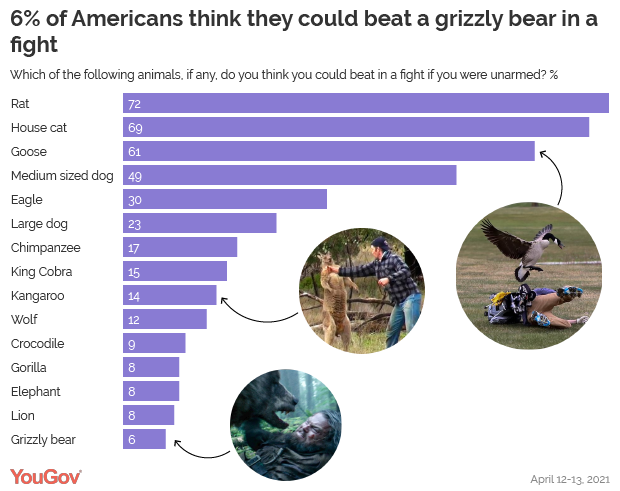
Not too terribly long ago, a YouGov poll came out which asked the big questions. It asked, reasonably enough, which of the following animals you think you could beat in a fight.  An unarmed fight, Mano a Mano, so to speak. The animals are : Kangaroo, Eagle, Grizzly Bear, Wolf, Lion, gorilla, chimpanzee, king cobra, elephant, crocodile, goose, rat, house cat, medium sized dog, large dog. As you may guess, most people were confident in their chances against a rat. That size difference would come into play really early, I guess. But things fall apart a bit as you continue to read, where you find that 61% of American men think they could beat a goose (still believable), 30% of American men think they could beat an eagle (highly unlikely), and 17% of American men think they could beat a chimpanzee. Unarmed.


No you can't.

Those 17% of men are delusional. There isn't one man in a thousand, possibly one man in a million who would stand a chance against a chimpanzee unarmed. The injuries they cause are immediate and horrific, and anyone thinking that he can just go toe to toe with one is delusional. Shockingly, only 14% of men believe they could beat a kangaroo, which is odd, given that we have literal video evidence of a regular guy winning in a fist fight with a Kangaroo, and as far as I can tell, no evidence whatsoever of a human being winning a bare knuckle brawl against a chimpanzee. 

So what would lead these gentlemen to this conclusion? Truly, a lack of humility. You overestimate your abilities, and you way way underestimate the abilities of a chimpanzee, which is perfectly capable of tying your neck in a knot. I'm not even going to include a link to chimpanzee caused injuries, but they're not pretty.

In that survey, 8% of american men and 2% of British men believe that they could beat a lion in an unarmed fight. That number is really zero percent. But you know who would be happy with that overconfidence? The lion would. 

Truly, the lion would relish the idea of easily killed food showing up and posturing, trying to start something. The lion would be thrilled if you showed up and started swinging at it. After all, most prey runs, hides, swims or flies away, and the lion has to chase it. Most prey has worked out by now that a lion will make you go away pretty quickly, and you don't really want to try tangling with it. But that 8% is a godsend. A very tasty godsend. 

We are enjoined by the reading from 1 Peter to humble ourselves, and to be realistic with ourselves. We are told to humble ourselves in the presence of the great shepherd of the sheep, for good reason. The reason given is that there is a roaring lion prowling around seeking whom he may devour. Friend, do you fancy your chances in an unarmed fight against a roaring lion? Sure, you don't. Hopefully you're not in that 8%. Hopefully you're in the 92% of people who know that a lion would devastate you very very quickly indeed. That's why you take precautions, of being where lions aren't, of avoiding them and arming yourself. That's why you, if you were to be in the area where they are, would travel with someone experienced and armed themselves. If you go out into the savanna with chest puffed out daring the lion to fight you, it'll destroy you right away. 

If you know that about the lions, you should also know that about the devil. The devil is a roaring lion, prowling around, seeking whom he may devour. He's very interested in dragging you away, and removing all trace of you. If you are full of yourself, if you believe that you are the 8%, the devil is happy for you to try your luck. And I would wager that the numbers for people who believe that they could take on the devil is far far higher than those who believe they could take on a lion. Lion numbers are 8%, devil numbers have got to be around 40%, or even higher. Humans vs the prince of darkness, and humans believe that  they can win. Part of the reason that church attendance is down, that observance is reduced, is because people legitimately don't believe that there is a risk. They believe that they can overcome the devil and all his works and all his ways with their own force of will. 

But a great deal of what we acknowledge is that from the beginning until now, the serpent, the dragon, the lion are things that overwhelm us when we fight them alone. When it's just us, with our plucky attitudes and dismissal of any danger at all, we get destroyed rapidly. And that hubris and overconfidence is what the devil wants. What he doesn't want is for you to be careful, cautious, prudent, and humble. He doesn't want you humbling yourself and being obedient to the great shepherd of the sheep. He would much rather that you trust you own strength. But humble yourself, understand who you are, who the devil is, and who Christ is, and you will find yourself, rapidly, in a space of protection. Why do we get baptized, why do we take the Lord's Supper, why are we in worship at all except to acknowledge that we are people who cannot free ourselves, who cannot protect ourselves, and who are incapable of fighting against the one who wants to destroy us. But Jesus has overcome the devil already. He insists on calling himself the shepherd because he knows how much we need his help and assistance, and how helpless we are on our own. But with Christ, with his weapons and experience, with his skill and strength, we can make a stand against the evil one.