The musings of the Pastor from Good Shepherd Lutheran Church, Regina SK

Welcome. If you're a member at Good Shepherd, welcome to more thoughts and discussion of the week that was, and some bonus thoughts throughout the week. If you're not a member, welcome, and enjoy your stay. We are happy that you're here.

If you like what you see here, consider joining us for worship at Good Shepherd Lutheran Church. Sunday mornings, at 8:30 and 11:00. You can also follow us on Facebook.

Monday, February 1, 2016

Wedding crashers.

The epistle reading we had from Sunday is the reading that most often comes up at weddings.  It talks about love, which is always a popular topic at weddings, don't you know.

But every once in a while, when I'm presiding over a wedding, I feel like the priest from Spaceballs, who says in no uncertain terms 'Excuse me, I'm trying to conduct a wedding here which has nothing to do with love!  Please be quiet!'


The reason I'm so tempted to say all this is because the weddings tend to get clouded by feelings.  I know, I know, that's a ridiculous thing to say, but bear with me.  Feelings are something that we tend to feel governs us, guides us, and propels us forward.  But we also feel as though they're something over which we have no control.  Your feelings are just something that happens to you.  All you can do is to watch it happen, and watch things spiral out of control. You get together because of your feelings, but if you're captive to them, then what do you do when the feelings change?  Nothing?

So, the question that 1 Corinthians attempts to answer is 'what is love,' and it does so by running down the list of what love is, and what it does.  And by now, you know the reading well enough.  Love is patient, love is kind, it bears all things, believes all things, hopes all things, and endures all things.  And this is all well and good of course, but when you have this reading as part of a wedding, everyone nods and giggles, and focuses on love quite a bit.  But beyond that, there isn't much of a knowledge of what that will entail in the future.  Oh sure, we all love love, don't get me wrong, but beyond that initial senstaion, that initial feeling, what is love, really?

We find that from a different epistle, from 1st John 4, which says 'beloved, let us love one another, for love is from God, and he who loves is born of God and knows God, for God is love.'  Perfect.  God is love.  That means that, in math terms, God = Love.  No problem there, except for the big and glaring one, which is that all that we have done is to compare one abstract concept with which we have little practical familiarity with another abstract concept with which we have little familiarity.  And this lack of famliarity with what this is acutally all about breeds sin.  I'll explain.

Because there is no real-world application of what love is in 1st Corinthians, you get the situation in which you have a marriage, both of whose members sincerely believe that they are the patient and kind ones, and that the other party is messing it all up.  They believe that they are trying to hope all things, believe all things, endure all things, etc.  The other party is the one who is mucking it all up.  And how do you arrive at this conclusion?  Typically in the manner that things go in this short cartoon about a turtle.  This comic in which someone is detecting a problem with their relationship and something is going wrong, but it seems to be all going wrong with the other person.  That other person, the guy glowering behind his desk, when all his nice wife is trying to do is to work on her relationship.  And how does she work on the relationship?  By trying to work on the relationshp, not by working on things with her spouse, as though the relationship was something that existed externally from either of them.  You have him, her, and then the relationship, which you ostensibly could work on without working on things with the person himself.  And that's a disaster waiting to happen.


Which leads us to Christianity, and the Christian difference.  And what is the Christian difference, really? Well, the first syllable ought to tell you.  The difference is Christ.  In Christ, you finally have something that breaks you through the theoretical, through the abstract, and into the real.  Into the practical.  If we take the earlier proposition from John as true, that God=love, and also the proposition from the first chapter of the Gospel of John, that Jesus=God, then we have Jesus = Love.  And Jesus is God incarnate.  Jesus is God incarnate, he is the very living God who we have had a hard time understanding until just now.  Jesus shows us in what he does and who he is who God is, and what love is.  And it's not what we would expect it to be.  It's not based on a feeling.  It's not based on how Jesus is feeling, rather it's based on what he does, and his commitment to us. 

When the Bible talks about love, it doesn't talk about it as a feeling that either we or God are captive to, rather it talks about it as a commitment, an obligation, something specific that God has determined to do for us.  You see this very clearly in his covenants that he makes with humans, most especially in the Hebrews.  When God makes a covenant with the Hebrews, he does so by going through his commitment to them, rather than their obligations to him.  When he makes a deal with Abraham, he does so by laying out his obligations, by setting forth his plans for what he has in mind to do, and then asks Abraham to respond to that promise by working through a visible response to that covenant.  And God follows through on his obligations no matter what he's feeling. No matter his feelings or opinions towards us, he intends to follow through with his commitments to us. 

Now, that's how love works.  You see it working like that with Jesus Christ in the Gospel reading for Sunday, where he casts out demons and heals, where he restores Peter's mother in law, where he stays up late into the night working with people, and then when he withdraws by himself, and the people come and find him, he tells them 'I have to go and do more of this with more people.'  Why?  Because we were so loveable?  Or because he was committed to us. 

God = Love.  Jesus = God.  So then Jesus is patient and kind.  He does not boast, he is not proud, he does not insist on his own way.  He is not irritable or resentful.  He does not rejoice at wrongdoing, but rejoices with the truth.  Jesus bears all things, believes all things, hopes all things, endures all things.  That's what Jesus is all about, and that's what he does not just in that reading, but in all his life and work.  In Jesus, you get to understand love, and you get to understand |God, and what God's understanding of love is.  When Jesus talks about love, he does so by saying this:

Greater love has no man than this, that he lays down his life for his friends.  You are my friends.

That's the understanding that God has of love, not that he feels a certain way, but that he promises to do a certain thing.  He commits to something, and knows that love doesn't mean working with someone as long as you feel a certain way, but working with someone no matter how you feel. Jesus loves us, loves us greatly, whether he's feeling it or not, and I'm sure most of the time, he's not.  But he doesn't think about love only as a noun.  He thinks about it as a verb.  And to love, you need to love someone.  You can't love in a vacuum.  It's like any sentence, really.  You need that subject, verb and object.  If you're going to love, you have to love someone.  Your relationship box can't exist without loving and caring for the person in it.  You can't try to paint over the problems without working with the other person. 

In other words, God = Love, Jesus = God, Jesus = Love, and his love is expressed not in how he feels, but in what he does and his commitment to us.  It's worth considering that Jesus shows his love for us on the cross, showing that there is no greater love that this, that he lay down his life for his friends.  And at the moment where we might be tempted to see that he had been pushed outside of our relationship box, that we had jammed him out of there, instead of begging and pleading to be let back in, he tore the curtain down through his blood.  That's what love is.  And instead of giving us an impossible standard, the Christian faith gives us something far better.  It tells us, as always, to seek first the kingdom of God, and to be reminded of what he has done for us.  And our love for one another flows from that, as it has to.  It has to flow from that spirit of forgiveness and renewal that Jesus brings.  Our love for one another is rooted in the truth of Jesus, who loves, who forgives, who stays with us not just out of sunk time and cost, but out of hope for the future.  Once that curtain between him and us has been torn down through his blood, then we can see clearly to wrench down the curtains between one another.  To quote the holy scriptures one last time, we love because he first loved us.  

Sunday, January 17, 2016

water into wine

It seems like I'm taking Garth's name in vain a lot.

He and I were discussing the matter of Christ our Lord turning water into wine, and Garth mentioned that it seemed likely to him that the miracle that Jesus effected was not to turn water into wine, but instead to move it.  To move wine that was somewhere else to where the water was, and then to move the water to that location.


It's an interesting thesis, and since Garth knows slightly more about physics than I do, I'm prepared to believe the possibility of the thing. But if the concept of the great switcheroo is true, then the question remains, what happens to the water?

The traditional understanding of the miracle would tell us that it just vanishes, that it is replaced as though through a conjurer's trick, with wine.  But whichever way you slice it, whichever way you think about how these things work, it's worth considering the nature of the wine, both good and bad. For you see, in the story of the Wedding at Cana, something happens, which is that a wedding is getting started, and everything seems fine.  Everything seems fine until the party begins to run out of wine.  All of a sudden, the burgeoning party that seemed so promising now only seemed to promise to grind to a halt, as any good party would without some dutch libations.  So, the folks putting the party on began to realize that their party was going to run out of good times, and they had nothing left to offer.  Doubtlessly, they'd already served all the wine they could, and so they had to serve their guests with something amounting to nothing at all.  This is troublesome, and would not only reflect badly on them as hosts, it would get the marriage off on the wrong foot.  So Mary goes to Jesus, and says to him 'they have run out of wine,' and Jesus, after an initial persuasion, goes to assist.  But his assistance is the stuff of legend. In his assistance, Jesus does the impossible, and serves the people at the wedding wine where there was no wine before.  So where's the water?  Where's the bad wine?  What happens to that?


Well, it's an interesting question, because the water disappears, and the party continues, and Jesus serves the best wine after everyone was convinced that it was all gone, and all opportunities were gone as well.  And this is what happens with us in our lives, too, which is that we have a way of thinking about our lives, our trajectory, and how it is all leading to collapse eventually.  We figure that we're on the road to death, and that nothing can change that.  Death is inevitable, but so is gradual cooling.  The gradual cooldown of the universe, in which everything gets cold and eventually dead.  There is no new energy, and so the only state of things is to get worse.


That's why this passage works so well as a wedding reading, and no, not just because there's a wedding in it, but because that's how people view the trajectory of marriages.  I remember the day that I was married, my wife and I stopped for a milkshake at a local Calgary eatery, and while we were going through the drive thru, our obviously 'just married' car attracted attention, and some teenagers cried out 'you're making a huge mistake!'

I shrugged that off at the time, but it's obviously stuck with me.  Why would some random teenager, who knows nothing about my relationship, my wife, or our future together, be prepared to make a judgment based solely on the fact that we were married when we weren't before? Well, because the idea is that it's all downhill from here.  Diminishing returns style, you're always going to be feeling worse as time drags on. Your best day of your marriage will be the first day, and then after that, 'each day's a little better than the next.'  Sad, but that's the way we've been conditioned to think about, well, pretty much everything.  Possessions, relationships, hobbies, it's all at its absolute best the minute you start, and then after that, all you can do is chase that high. It's never going to be as good ever again.

And this law of diminishing returns dogs us and drags us down.  It pulls us aside from where we believe, sincerely, that we should be.  It calls into question everything we do, and leaves us dissatisfied with the way things are.  We look at our world, we look at our surroundings, and say to ourselves 'well, I guess this is as good as it gets. This is your life, good to the last drop.  Doesn't get any better than this.  This is your life and it's ending one minute at a time.'  Left with that reasoning, why wouldn't you join a particular club that I'm not allowed to talk about?  Life has nothing to offer, so you may as well rage, rage against the dying of the light.

But there's another option.  Another option that is just hinted at in Cana, where Jesus gives us a promise, a promise that is good not only for our relationships, but also every aspect of our lives.  What is it in our lives that is lacking?  What has gone cold? What is it in your life that you have give up on, what relationship have you lost hope in?  What segment of your life is tinged with regret, and pondering over the idea of 'too late,' or 'this is just the way things are?'  That's not the promise of the scriptures, though.  That's not the promise of the scriptures at all. That's not the promise that Jesus brings you, rather, he gives you the opposite.  He speaks these words to you.


We as Christians tend to limit this to the resurrection, that Jesus can bring everyone back from the dead.  But I ask you, which is harder?  To reanimate dead tissue and to resume cellular respiration, or to put a slightly bruised relationship back together?  So why do we want to limit God?

Why do we want to limit God. We think it's strange when Jesus initially resists his mother's plea for help, saying 'woman, what does this have to do with me?' but that's the same statement that we make as well.  When we are in flagging relationships, or when we are pressed against the wall of complete collapse, we look at the possibility of involving Christ our savior, and say 'what does this have to do with him?'  Sure, my relationship is failing, or my faith is falling apart, or I haven't spoken to my sister in years, but heck, what does that have to do with Jesus?

If his response to his mother gives you pause for concern and comment, if you've read through the Gospels and said to yourself 'he should help!  That's totally in his wheelhouse,' then I ask the same question to you, why would you look at anything you have going on, and say to yourself 'gosh, what does that have to do with Jesus?'  Good question.  And the answer is the aforementioned quote - he makes all things new.  That's his job, which is to restore, to rejuvenate, to make fresh and new and pure and, well, into the good wine that you thought you'd run out of years ago.  How does all this happen? 

I promised that I'd come back to the relocation of the water, and here's where it comes in.  I'm not sure about the water, but I do know about the bad wine.  The wine that Jesus makes for those in Cana is good wine, better than any of them have ever had before.  It's the best of all wine, to be sure, and can't be overstated.  But the bad wine that everyone was expecting, the wine that you can only eat after everyone's had enough to drank already, well, that shows up, you know.  It shows up at the cross, where the real good wine is served.  Lots of folks have no problem with Jesus being a good moral teacher, or a fine example for us all, or someone for us to look up to, and if that's your view of Christ, then you'll come to the cross at calvary, and figure that there, the suffering Lord, that's when we have a bit of a problem with the great human teacher.  When he's on the cross, nailed to it and dying, when he's being lanced through with a spear, it seems like we're going to have to drink the bitter and the sour.  It seems like it's all going to be vinegar for those of us in our faith.  The Christians, the followers of Christ, have had their best wine, and now they're going to have nothing but vinegar.  But who drinks the vinegar?  Christ does.  He takes the vinegar for us.  On the cross, the one who changed water into the best wine that any of them had ever had, he's immobile, isolated, can't quench his own thirst, can't move to scratch an itch or wipe his brow.  That Christ is the one who is thirsty, and asks for a drink, and drinks the vinegar.  And then he bows his head, and gives up his spirit.

And at that moment, the best wine was served; not to him, but to us.  The wine that transcends death, the wine that makes all things new, the wine that broke death and restored us to life and communion with God.  That wine was served at that moment, and continues to be served in Holy Communion, where the body and blood of Christ are offered for us.  If you need a reminder for all five of your senses that Jesus can make all things new, come to the altar, take his body and his blood, and realize that in there, he is serving you the best wine now.

Monday, January 11, 2016

The inside of the cup

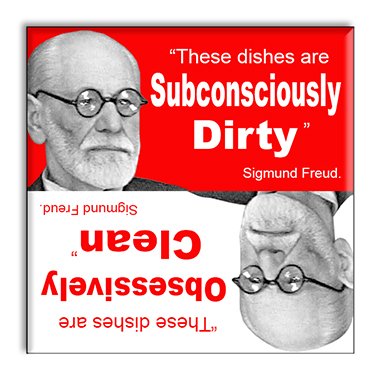
I want to begin by making sure that we all know what I'm talking about.  If you have a dishwasher in your home, sometimes you can't tell if the dishes are clean or dirty.  Why is that?  Because they all go into the dishwasher upside down.


They go in upside down because if  you put them right side up, then they'll fill full of water, and be useless to you except as a way of collecting dirty water.  That's it.  Now, if everything is upside down, and the dishwasher is full, how do you tell if it's clean or dirty on the inside? 

Good question.  Probably some of you have fancy dishwashers from the future, where it can sense if it's clean or dirty, and will sound some sort of klaxon if you try to remove a dirty dish, but for those of us with turn of the century dishwashers, you can't tell just by looking which dishes are clean, and which are dirty.  The stock pots, the saucepans, the cups, the bowls, they're all upside down, and impossible to distinguish clean from dirty just by giving them a glance.  The outside is always pristine.


That's the situation with humanity, you know.  That's how we are as people, which is that we all look fine on the outside.  The outside of the cup, the outside of the bowl, it always looks fantastic, clean as a whistle.  And human beings, we're all hiding behind a thin veneer of respectability.  We all look great from the outside, very few of us look genuinely terrifying, not many of us are immediately identifiable as a dreadful person, that sort of thing, so we've mastered the art of cleaning the outside of the cup, and of the bowl, and making sure that it's plenty presentable.


So, in order for you to see what is clean and what is dirty, you have to open the dishwasher, and pull out one of the cups, and look inside.  If it's still marked and filthy, then you know for sure that this is a load of dishes that needs to be done.  But you can only tell by looking.


But there's another snag, which is that sometimes, when you run your dishwasher, things dont' get clean.  There are certain things that, like, never get clean.  Eggs in a frying pan is a good one.  If you fry or scramble eggs in a frying pan, there's a real slim chance that it'll come out clean, you know.  But you try anyway, thinking that this will be the time in which things are different. This time, things will be clearly different, so not to worry.  And when you run the dishwasher, the same thing happens as always, which is that the egg stubbornly clings to the pan, and you're left with egg slightly more baked on than before.  So what do you do?  You run it through the dishwasher again.  Which doesn't change anything.  Unless you do something different, that egg is going to be stuck on that pan forever. 

So, you have a couple of choices, really.  You could decide to just keep on running the pan through the dishwasher, and saying that the pan is just like that now.  It's an egg pan, both made of eggs, and made for it.  You can say that with cups, bowls, plates, whatever, that this cup is just like this now, and that's all there is to it. 


Your other option is to do the only thing that will actually make that item clean, and that is to handwash it.  Take the plate, or the cup, or the bowl, or the frying pan, or whatever, and clean it manually.  Wash it clean by hand, because running it through the diswasher won't do anything after a while.  This brings us to baptism, baptism in which we focus on Christ's baptism, as well as ours.  Jesus, upon his baptism, goes down into the baptismal waters, echoing the Old Testament reading where he promises that when we go through the waters, he will be with us.  This is good news, precisely because of what it represents.  After all, what is handwashing if you're not willing to put your hands into the water to clean the vessels?  If you're not willing to get your hands wet, then you may as well just use the dishwasher, but it won't clear off the problem.  Christ descends into the depths to ensure our cleanliness, because he knows another dishwashing principle, which is that you can't clean something without making something else dirty. 

Jesus descends into the depths of baptismal waters to take the sin that washes away from us onto himself.  In the same way as your hands become stained by beets, or your washcloth becomes clogged with bits of egg and crumbs, the sin has to go somewhere.  Just like food refuse, it doesn't go anywhere.  It doesn't disappear.  It just has to be attached to something else, and that something else is Christ.  Luther's small Catechism states that it isn't water that effects this amazing miracle of rebirth of the spirit, washing clean of sins, and generation of faith, but rather water in conjunction with the word of God.  It's the same with doing dishes, which is that it's not water alone that effects any sort of cleanliness, it's water combined with soap, with a cloth, with scrubbing that removes the dirt.  Water in conjunction with the word of God, that is spoken at baptism, and was also physically present in the waters of baptism, too.  Our confidence stems from the fact that Christ has been in the waters, and emerges from the waters of his baptism with our sins clinging to him.  Meanwhile, we are washed clean indeed.

How clean?  Good question.  Good question asking about the cleanliness of us as human beings.  For you see, clean has different definitions.  I can't find it right now, but there was an excellent commercial for the swiffer a number of years ago, in which a drill sergeant yells to his troops 'You call this clean enough?'  Inspection got tough for those troops, I assure you.  And there are different standards of cleanliness that abound in our world.  Parents have different standards from their children for example, as we do for our children.  When our boys wash their hands, we've been known to send them back as their hands aren't even slightly damp.  When they brush their teeth, they're sometimes sent back due to the tooth brushing exercise lasting about five seconds total.  When they go to clean their rooms, we have to remind them, however subtly, that cleaning their room is more than just tossing everything onto or under their beds. And pretty much all children are like this, you know.  This is just how they do. 


So too, do we have different standards of cleanliness from God.  We look at ourselves, and say that we're good enough.  In the same way that a child, when washing a cup or a bowl, would say 'eh, good enough,' even though there is still food clinging to it.  They'd be tempted to say that it was good enough, close enough, clean enough for us to work with.  And they'd be wrong. The grown adults would insist on cleaning it again, making sure that it was suitable for them to use to eat from.  To paraphrase the scriptures, if the son makes you clean, you will be clean indeed. 

How does baptism work?  Not just as a physical washing of dirt from the body, but as a washing clean of our sins.  Whose sins?  All of ours.  And the well known idea of having to clean the inside of the cup is even more important as we consider a fairly divisive issue, that of infant baptism.  There are a great number of churches that don't baptize infants, that have you wait until you're a certain age before you can be baptized in their churches.  In the Lutheran church, we baptize babies all the time (we have one coming up this week, actually).  Why do we baptize babies?  We do so because of what the Bible tells us baptism does, which is to wash away our sins, and to make us clean.  Now, this applies to us as adults, as teenagers, as people whose sins are obvious, and are well known to them and to everyone else.  But we believe that even babies need to be washed clean of their sins.

At this point, many of you may sputter and protest, and may claim that babies don't have any sins, and therefore have nothing to forgive.  It does us little to talk at this point about whitewashed tombs, but it is still useful to talk about cleaning the inside of the cup.  For you see, from the outside, the babies of this world look pristine, look perfect and tiny and wonderful, and seem to have zero problems whatsoever, just like a new mug just removed from its box.  But if you were to get a mug for Christmas, as I'm prepared to believe that many of you did, what do you do with it as soon as you get it, and before you use it?  You wash it.  You wash it first, and after washing it, to get rid of anything that might be on it, then you can use it.

This is why we baptize babies, you know.  Because they have a sinful inclination, which is why you don't need to teach them to lie, steal, to be selfish or rude, they have a natural proclivity towards such things.  They have sins and marks and a sinful nature on them that you won't discover for years to come.  Why do we baptize them, it is to have Christ wash them clean of their sins, of their sinful nature even, to ensure that they are clean as he would demand.  Every time you wash a mug, or a cup, or a bowl, you are bringing it back to the state when it was at its cleanest.  Not when you first got it, but right after when you first washed it.  We as confessing Christians, every time we confess and are forgiven, spiritually we return not to the point of our birth, but the point of our baptism.  Part of our insistance on remembering our baptism as often as we do, is to recall that our God is a God of precedence, and if he forgave us and washed us clean of all our sins once, he can and will do so again.

Tuesday, January 5, 2016

Swallowing pride.

King Herod is a bad guy. I'm glad we got that out of the way early.  He's a bad guy, and nothing I can say from this point onwards is going to alter anyone's perception of it.  He's a bad guy because his hatred for the possiblity of Christ was so powerful that he decided to wipe out an entire village's population of toddler boys in order to make sure that nobody was going to take his top spot


Had the Magi not shown up, I'm not certain that the massacre of the holy innocents would have ever happened.  I'm not convinced that the bodies would have piled up in that part of the world had it not been the Magi who showed up.  Why are they so important?  They're so important to this story because it shows that the word of God, the newborn king, the God of the Hebrew people is bigger than the Hebrew people.  And when Herod heard this, he was troubled, and all Jerusalem with him.

Why wouldn't he be troubled?  Herod had lived his life content in his position as high ranking vassal of the Romans in Judea.  He was content to believe that although he'd never be as powerful as Casear, he outranked all his fellow Hebrews, and was certainly bigger and more powerful than they would ever be.  A big fish in a small pond, if you will.  And as a big fish, he was comfy with his place as the best there was in his space.


But there was a problem.  The problem was that there were wise men coming from the east, who had followed a star to bring gifts and to laud and honor a king in Israel.  And it wasn't Herod.  It had nothing to do with Herod at all.  He was being passed by and passed over for a real king, the one who was bigger and grander than Herod himself.  The newborn king was such a big deal that even people from outside the nation, people who weren't Jews were asking to worship the King of the Jews.  And that's a problem for Herod.

If anyone is going to be in charge, to be getting the credit and gifts from surrounding kings, Herod believes it should be Herod.  In the same way that we all want to be the big deal, want to be acknowledged, want to be well thought of, and so on.  And this triggers our pride.

After all, what is pride?  CS Lewis had a lot to say about pride, which he rightly identified as being the great problem in our time, and honestly, even since his time, it has gotten worse.  Why is pride such a big deal?  Well, if you take Lewis seriously, and why wouldn't you, pride is a big deal because of how it can never be satisfied.  Pride is a hungry monster, a devouring fire, which seeks to consume and nothing else.  It cannot be satiated, as it will always want more.  You know that feeling that you get when you have Christmas dinner, and you can see that there are seconds still on the table, but you're not even hungry but you still want to eat?  That's what pride is like - you don't want the food, you're not hungry for it, but because it tastes good, you'll eat more than you need.  Pride is like that - Even if you don't want the things that are out there, you want to stop other people from having them.  even if they don't want what they're taking.  This is our pride at work, and it will stop at nothing but being the best.  We don't just want to be good, that's okay, I suppose, but we want to be better than anyone else.
You dont' want the house itself, but you want it because it's bigger than the house of your friends.  You don't want the car for itself, you want it because it is bigger and better than the cars that belong to your relatives.  This is how children think, you know.  They will grasp and want and take just to stop someone else from having more than they do

Pride is the killer, it's the disease.  So what's the cure?  Well, the Magi found the cure way out in a backwater of the Roman province of Judea.  They went to a nowhere place, they left their homes and nations, journeyed a long way from the East to Judea, and then, after meeting with Herod, chose to leave him in his opulent palace, and to voyage further to meet up with the Newborn King. 

There's something about worship.  The worship that the Magi wanted to do was to bow down before the Newborn King, and to worship him.  In worship, you acknowledge something, which is that God is in every way superior to you.  And you owe him everything.  There's something about worship, in which you bow before the Lord your God, realize your sin, realize that you're not who you want to be, and that he is your redeemer.

Ask yourself about the people you know whom you like speaking to the best.  Who is it in your life whom you like to talk, who is it that you like visiting with?  Almost universally, we would say 'good listeners.'  Nobody ever says 'you know who I like to talk to?  Someone who constantly talks about how great they are.  They're wonderful to visit with.'  Nah, we don't like talking to pople who only ever talk about themselves.  We find it tiresome and boring at the best of times, and at the worst, it makes us feel hopefully inadequate.  This is part of the burden that comes with having social media open, which is that you look across the vast wealth of excellent progress everyone else is making, and your pride kicks violently against them.  Honestly, it's hard to be genuinely happy for someone.  It's happy to delight in someone else's achievements, and to be pleased for them. 

Everyone except one.

The one person on earth that you want to sit there and listen to, the one person on earth that you'd love to is your child.  You want to sit there and listen to them, to hear them talk about the day that was, to talk about how they're feeling, what they're doing, heck, if anything, you wish they'd share more!  Why is that?  Why is it that you can happily listen to your child, even your grown up child, talk about themselves for hours on end and it doesn't trigger your pride?  For two reasons.  First of all, because their acheivements are an extension of your own.  What your children accomplish is at least partially due to you and your activity in their world.  Secondly, because there is no competition with your children, and what they accomplish doesn't threaten what you do. 

This is what happens with God.  He is here to listen.  Think about how he showed up in the world, how he was manifest in our universe.  He didn't show up to hold court, he didn't arrive in the Temple, teaching and leading.  He showed up as an infant, an infant who can't talk, who can't communicate.  An infant who can only listen.  When the Magi showed up, Jesus listened to what they had to say, listened to their worship, listened to their prayers.  When the shepherds arrived on the night of his birth, Jesus listened to them arrive, listened to their prayers, their concerns, heard everything they had to say.  Babies, honestly, are amongst the best listeners in the entire world, since when they're not crying, they aren't able to talk back.  And they absorb everything that you say, listening to it with attention and precision that you don't get from anyone else.  In fact, when it comes to how babies listen, they listen with more attentiveness than you want.  They absorb what you say, remember it, repeat it, and internalize it.  What you say will become what they say in the future, because they are so intent on your words that they will inform the babies about what normal speaking is. 

Jesus is here to listen.  He listens to every word we say, and is desperate for more and more.  Sometimes we don't share enough.  Sometimes we want to be the centre of everything, and be thought of as being the best.  We want everyone to listen to us, and to pay attention to our words only.  We want to be thought of as the best and brightest, king Herod style, to make sure that if someone is going to bring gold, frankincense and myrrh, that they'll bring it to us only.  But that's not what this is all about.  In worship something amazing happens.  You get to speak to the one and only individual who will always listen, who will rejoice in your accomplishments, and who will work with you in your weaknesses.  You have someone in worship who will be attentive to your words, who knows your needs, and who loves to hear from you.  Someone who loves you like parent to child, and who wants to hear what troubles you, and help as much as you will let him.

Understanding that relationship for what it actually is is key to understanding worship, and your place in it.  For in understanding your place in worship, in saying about Christ 'he must increase, and I must decrease,' in working through that we understand what place our pride has at the manger, or at the house that the Magi went to.  It has no place.  You have no place for your own sense of self when you journey to a child, and bow down and worship him.  What can you possibly offer to him when he is the king of all creation?  Can you speak of yourself highly when you meet the creator of your very atoms?  Unlikely.  So what we do in worship is to pray ardently to the creator of everything, the sustainer of life down to the very cells, and to realize with awe and wonder that the maker and redeemer of the universe wants you to talk to him.  He grants and bestows life and strength, he is God in the flesh, he forgives sins and gives everlasting life, and yet he still wants to hear from you. 

The Bible is quite clear on this topic.  Humble yourself, and you will be exalted.  When you go to a feast, don't take the place of honor, lest you be asked to move down when someone more important arrives.  Empty yourself of any pretention, do not esteem yourself to be better than you are.  Do nothing out of vain conceit, but think of others as better than yourselves.  Have you ever thought what a wonderful world it would be if we were busily speaking well of each other, and then talking about ourselves to God, knowing our sins and thanking him for our blessings?  It's when we dont' do that, when we want others to know how great we are, and only thinking of ourselves, that we turn into Herod, and turn into him quickly.  But with thanksgiving, we render offerings to Christ, trusting in his promises that even though he is immesaurably superior to us, he still loves us, cares for us, and wants to give us all the time in the world.  All the time in eternity.

Monday, December 21, 2015

(ginger) bread house.

What's in a name?


Good question.  I wonder what we can say about that, because the Bible really is, at least on first glance, all about names.  Part of our problem is that we read the names, and assume that these names just have to be that way just because.  Like, the town is called Bethlehem, because that's what the town is called.  In many ways, that treats this like Star Wars, where the home planet of both Luke and Anakin is Tatooine, because that's what it is.  There's no reason why it had to be there, had to be a desert planet, or had to be called Tatooine.  That name doesn't mean anything, it's just a Star Wars-y name.  You could call it something totally different, and it wouldn't change anything.  We feel that same way about the places in the Bible, like they're just Bible-y names, so that's the way it is.  And the more often we hear names, like Bethel, Bethphage, Bethlehem, Nazareth, Galilee, all those names just seep into our brains, and leave us thinking that that's just the way names are don't you know. 

But here's the thing.  Bethlehem means something.  It means, literally, house of bread. Gosh, why is this important?  Why is the pastor wasting our time with ancient place names?  What does this have to do with real life? Well, I'll tell you, because it's actually important.  Here's the thing, folks, you need to think about why Bethlehem is a big deal.  Why is it important?  Well, its importance is related to what happens there.  David and Jesus are from there.  That's it.

Bethlehem, on its own, actually isn't too interesting.  It's the bread house, to be sure, it's in a fertile area, a farming centre, nice and all, but that doesn't make it the centrepiece of history.  The thing that makes it important is because Jesus was born there, and ironically enough, he was born there precisely because it was so unimportant.  It was a nowhere nothing place, a podunk backwater (sort of like Tatooine, if there was a bright centre to the galaxy, this is the planet that it's farthest from) full of nobody people.  Not the glittering jewel of the ancient near east.  And yet, and yet, this is the place that Jesus came to, to be incarnate in.  This is the environment that Jesus appeared in, to begin his ministry from this unassuming place.

The message that he sends is obvious.  Bethlehem is a backwater nothing place.  It's a farm town in the middle of nowhere, with people in it who are just people, nothing overly special.  And if this is what Jesus can do for them, imagine what he can do for everyone else.  For you see, in the real world, we're not the highest and best.  We're average, common scrubs.  We're everyday people who eat too much, spend too much, pay our bills late, tell off colour jokes, and forget birthdays.  This is who we are.  Where would Jesus come to earth if he came to earth today?  Bethlehem?  Or Regina?  Or Winnipeg, Ogema, Frankslake, or any of the other places that God's peopel gather around word and sacrament.

And this is the other thing.  Now that Jesus has convinced you that on earth he would be surrounded by the average common people of the world, it's time for his greatest statement of all - that he elected to come to a place that even the Bible recognizes as a nowhere place.  Bethlehem is important because it's important to us, not beacause it was important to begin with.  It's important because of what God did there, marking it as important to us for all time; it definitely wasn't a vital centre of the universe for decades before that.  That space was special because Jesus was born there.  He wasn't born there because it was special.

And that brings us to church, as most things ought to do.  It brings us to church and our time there.  What is it that makes that space special?  What is it that makes church into a sacred space?  Perhaps you've never thought about it too much, perhaps it's just an arbitrary holy ground, that people just decided to put somewhere, and say 'okay, let's worship God here.'  Perhaps.  Or perhaps there's something bigger behind it.  When Jesus came to earth, he did so at Bethlehem.  At the house of bread.  And if you were ever thinking to yourself that you wish you'd been there, that you wish you'd been there to worship that newborn king at Bethlehem, to have that certainty to see and be sure of the messiah, well, I have good news.  The church is still, for you, Bethlehem.  It is a house of bread. 

What makes church special?  Because Jesus is there.  The same thing that made Bethelem special. Because Jesus was there.  The holiest part of the church is the altar, not because that block of wood is by definition special, nor does it have magic properties, but it is holy because the body and blood of Christ are actually there, in with and under the bread and wine.  This church is still a house of bread, and every time Holy Communion is celebrated, we encounter Christ again.  He is every bit as present as he was in the original Bethlehem here in this new one, and his body and blood are truly present.  If you're excited for Christmas, for the coming of the savior, then we have good news, which is that he has promised to be present where two or three are gathered together in his name, and physically present where the body and blood of Christ are. 

People miss this, you know. We talk a lot about Catechesis, about getting things right from the beginning, and folks roll their eyes, complain, and feel as though we probably spend too much time
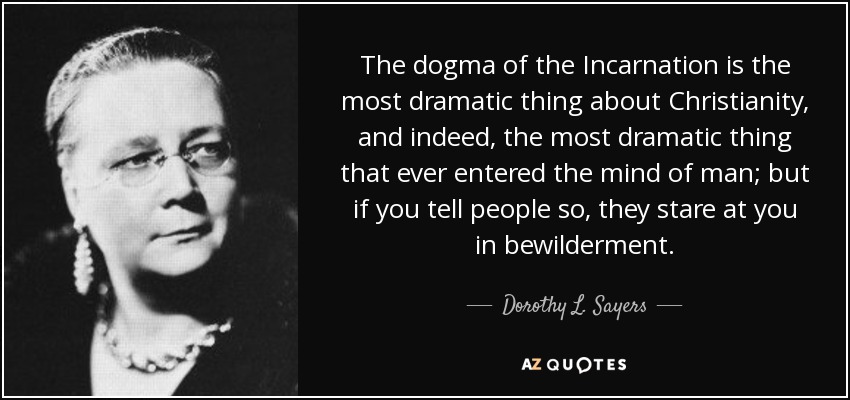
talking about the Catechism, and Holy Communion, and the real presence, and all that.  They look at all that stuff, and say to us 'why can't we just talk about God without all that dogma?'  Ah yes. But to quote Dorothy L Sayers, the dogma is the drama.  If you thought it worth celebrating the arrival of Jesus in a house of bread two thousand years ago, then prepare to celebrate the arrival of Jesus in a house of bread today, wherever his people are gathered around the bread and wine. All Christianity is incarnational Christianity, and as such, we need to remember that the big deal about Christmas is not that a baby was born, it's what he does in life.  And what he continues to do.


It's sort of like the birth of a baby in your own family.  If you have a child in your family, your relationship doesn't stop there.  It continues onwards.  If there's a baby born into your lives, you don't just celebrate, applaud, then see them again in a year.  Birthdays are a way of marking your continuing relationship, your growing family, where you've come from, and where you're going.  It's the same here.  We celebrate Christmas not as a day in a vacuum, not as just a day, but as a reminder of how things got started, how this incarnate word came into our world, and a way of continuing to celebrate his presence, not just at a Bethlehem two thousand years ago, but at a Bethlehem very near you on a weekly basis.  Take courage and confidence in that, that the light of the world came to us, and didn't leave.

Sunday, December 13, 2015

Rejoice!

Hot off the heels of repentance, comes rejoicing!  This is something that, God bless us, as human beings, we aren't really used to.  We'd like to hope that we are, of course, but we really, desperately aren't.  Joy is something that, unless you're Riley, you're not used to.  That is, we aren't used to the feeling, the experience of joy, and we try to make up for it.  We try to make up for it by making do with happiness instead.

But happyness is not joy.  You'd never know it, but that's the real deal.  Happinesss and joy are two different things, and they don't meet up always.  They're easy to mistake for one another, but as Denis
Leary says 'happiness comes in small portions.  It's a cigarette, or a chocolate chip cookie.  You smoke the butt, you eat the cookie, you go to sleep, you get up in the morning, and you go to work.  There you go.'  Cynical, but there you go.  And as such, the happiness that we seek is by definition fleeting, and it gets away from us pretty quickly.  And what we do when we substitute happiness for joy is to swap the permanent for the fleeting. No wonder we're all so frustrated!

Rejoice always, says Philippians, Again, I say rejoice!  What do we rejoice in?  We rejoice in the Lord.  We rejoice in his presence, and in his promises.  And his promises are what makes this time of year have a veneer of joy.  It's what makes this time of year a time of joy instead of a time of drudgery. 

Otherwise, it would be the opposite.  Have you ever pondered what this time of year is all about, really?  It's all about a bunch of really heavy things.  You have so much to do, and so little time.  And as the things that you have to do this year close in, you can be forgiven a distinct lack of joy in your life.  It seems unlikely that any of us can sustain happiness in the face of the responsibilities of this season.  But the pressures the difficulties, that's where we end up missing the forest for the trees.

I'll elaborate.  At this time of year, there are a great many things to do, lots of stuff to take care of, and these things that we end up doing, well, they're like the anchor, the bailing bucket, the rope, the steering wheel, the oars and the fishing rods, all of which are great as long as you're in a boat.

The way the Bible talks about it, we are to seek first the kingdom of God, and his righteousness, and all these things will be added unto us, and that all sounds hopelessly backwards, doesn't it?  Doesn't it sound topsy turvy to imagine that God would ask us to seek first his kingdom, then the joy, the happiness, the family, all that will follow?  Well, that means that getting the first detail right makes all the rest of them matter.  Think of that like the boat, like the canoe, in that if you have that, then the anchor, the bailing bucket, the oars, the fishing rods, they're all wonderful helps, but without the boat, you'll just drown faster trying to hold them all.


The baby in the manger colours everything.  He changes how we feel about everything, how we relate to everything, what everything in our lives means.  It provides us with joy, the real joy that surpasses all understanding.  Christ provides us with the promise of eternity, gives us the guarantee of forever.  In him, and with him, we have the promise that we are and will be forever people.  That makes not just this holiday season, but all year round, into more meaningful, impactful times. 

As the offertory says 'grace our table with your presence and give us a foretaste of the feast to come.' That's what this time is, that's what this is all about, which is a foretaste of the feast to come, the feast everlasting.  The promise of eternity, of paradise, is what makes what we do here so meaningful, it's what changes our Christmas dinners from being a family gathering to a foretaste of heaven.  It's what changes our office gift exchange from being a fumbling awkward swap of trinkets, to the bestowal of gifts from the Magi to Christ.  It's what changes the interaction with the waitress at the fifteenth meal out this week from drudge and small talk, to talking with the saints of God.  I'm not overstating the case, either.  This is real, and it's what really happens. Once the rock of Christ has been built up on, then everything else means more.  The people you see are eternal, your decisions consequences, the gifts you give, though quickly forgotten, will be an act of eternal charity.  The meals you prepare, though tasted albeit briefly, have fed the saints of God, and no one who gives one of these little ones a cup of water in Christ's name will lose his reward.

Jesus is the reason for the season, the reason for our joy.  And like all things that bring us joy, he spills the bounds that we have set for him, and colours everything else.  All other things in our lives are made more meaningful and impactful due to his work on the cross.  Because he lives, we shall live also, baptized into his death, we are also baptized into his resurrection.  Bear that in mind when you sit down for Christmas dinner - this is but a glimpse, a foretaste, a picture of everlasting life that Christ offers.

That's what lets us rejoice.

Thursday, December 10, 2015

Repent!

When you go to a buffet, no matter how good your intentions, there is a still, small voice at the back of your head that is demanding you get your money's worth.

This still small voice is a jerk.

For this still, small voice will whisper to you 'Hey, you know you paid $17.99 for this chinese food. you'll eat until you feel sick.
Don't you think you should have another egg roll? If you don't you're just throwing money away!' Thanks, small still voice for convincing me to eat more than I wanted in the first place!  Now, if you were eating at home, this wouldn't be a problem.  You could just tupperware the leftovers up, and sneak back downstairs in the middle of the night to eat more.  But if you're at the buffet, there are no doggy bags.  You can't take any of it with you.  You have to eat what you've got whilst you are there present.  And this means that if you're like me,

Yes indeed.  To quote an obscure comedian, the meal isn't over when I'm full.  It's over when I hate myself.  And if I'm at an Indian buffet, or a chinese buffet, I will assuredly be hating myself in the near future.  This is when I send my wife a text letting her know that I'm never eating again.  And she responds with an eye-roll emoji, because we both know how I ended up in this particular situation.

And that feeling, a half hour after you're done at the buffet, when you get the meat sweats, and you find it hard to move around, when you want to undo the top button of your trousers, that feeling is the best feeling I could come up with to try to communicate to the secular world the concept of repentance.

After all, what is repentance?  It's understanding that you have done what you didn't want to do, that you don't like what happened, and you're sorry for having done it.  Many is the time after a Christmas or thanksgiving dinner, when a great number of us have regretted eating what we ate, and have promised to never do it again.  Until next year.  When we repeat it all over again.  This festive indulgence is what the Christian conception of sin and repentance is all about.  And I'll illustrate it with this page from Frog and Toad.

This is the way of sin and repentance.  Even while you're in the throes of doing something you don't want to do, you're doing it.  We must stop eating cried toad as he ate another.  No truer words have ever been spoken.

I know repentance is one of those churchy words that people don't take too seriously, but really they ought to, because they are used to moving through repentance fairly regularly.  With the Christmas season approaching, most of us are going to go through probably several hangovers that we can absolutely see coming.  You know for sure that you're spending too much on Christmas, but it doesn't
sink in until the Visa bill comes in.  Then the repentance starts.  You know for sure that you shouldn't have that fourth glass of wine, but everything still seems to be going fine until the next morning.  Then the repentance starts.  You know you're not hungry anymore, but you keep on eating at Christmas dinner, and everything is going okay, that is, until you get to about an hour after Christmas dinner.  Then the repentance starts.

Regular as the tides. You know how predictable this is because unlike talking about 'sin' and 'repentance,' we can talk about the real world things you know, and how your overindulgence in the face of Christmas always leads to that moment, at least, of repentance, in which, like frog and toad, you know you need to stop, and yet you keep on going.

This is what this season is all about though.  Advent is the season of repentance.  John the Baptist says as much when the people come to be baptized by him.  When the crowds assemble, John calls them vipers, snakes, and asks who warned them to flee from the wrath to come.  He runs down with the various people what they have to do if they want to flee from the wrath that is to come, and he's heavy on the repentance.  

Repentance which, as you may have realized, is absent from most discussions about this time of the year.  But this is the time of year when we need to focus on repentance most of all.  It's all about repentance, absolutely all of it is!  This is the time of year, when the baby is to be born in the manger in Bethlehem, when we get to muse through what we are going to bring to him.  No, it's not going to be gold, frankincense or myrrh, it's not going to be the little drummer boy's song, none of that. We bring him our sin.

The angel on Christmas day echoes that same sentiment, telling the shepherds 'unto you is born this day in the city of David a savior, who is Christ the Lord.'  Unto you.  You who bring nothing to that manger but your sin.  Not your gold or ointments, not your performance, but the hangover of all the things that you don't want to do.  The hangover of all your bad decisions, promises broken, shame uncovered.  You bring nothing but the fruit of your repentance dragged forward through the Advent season.  For there is something amazing that happens at that manger in Bethlehem.

When someone tells you they have a newborn, or have adopted a new child into their family, you are happy for them, certainly, you enjoy said child, you are pleased because they are pleased, but it's not the same as bringing a new child into your family.  When a new neice or nephew is born into your family, when a new son or daughter is adopted into your household, there's a whole new impact that it has on you.  This is the difference that going through Advent in a spirit of repentance does. 

If you move through Advent whilst just buying and selling, baking and cleaning, you will hear the angel say 'for born this day in the city of David is Christ the Lord.'  Sure.  Jesus is born, and we are all the better for it.  But if you've been working through this season in a spirit of repentance, if you've been living in a repentant mood, and existing in repentant space, if you bring to the child in the manger your sin, then something else happens, which is that the child has come to take your sin.  Your hangover, the weight of the things you've done time after time that you'd rather not do the first time.  You know that hangover feeling, and you know that the worst possible hangover cure is the proverbial hair of the dog, right, to keep on drinking so you never sober up?  dreadful.

Your best bet is the same as all of ours.  In the hustle and bustle of this time of year, when everything is at a fever pitch, take time to repent.  Realize that you're not who you want to be, you don't behave the way you feel other people should behave.  You feel as though you should be better, and you ought to be.  So your best option moving forward to to do the work John has called you to do. Repent.  Bear fruit in keeping with repentance.  Trust not in a savior, but in your savior.  For he was born for you.