The musings of the Pastor from Good Shepherd Lutheran Church, Regina SK

Welcome. If you're a member at Good Shepherd, welcome to more thoughts and discussion of the week that was, and some bonus thoughts throughout the week. If you're not a member, welcome, and enjoy your stay. We are happy that you're here.

If you like what you see here, consider joining us for worship at Good Shepherd Lutheran Church. Sunday mornings, at 8:30 and 11:00. You can also follow us on Facebook.

Thursday, August 16, 2018

Sweep it under the broom tree

In the reading that we had from Sunday, Elijah is hiding out under the broom tree. 

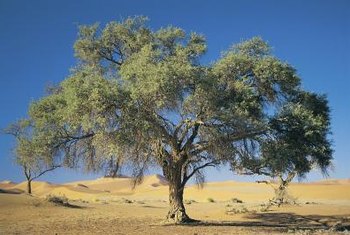
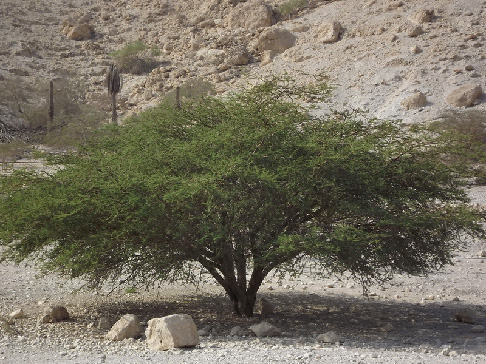
People asked me on Sunday what a broom tree is, and, here's one now.  Related to the juniper, it's actually a big old shrub.  Big enough to hide under.  Big enough to give up under.  Big enough to die under. 

Elijah had just moved on from facing down with the priests of Baal at mount Carmel, one of the banner moments in the life of this vitally important prophet, where he stands up against the hordes of Baal and calls down fire right in front of them, decimating them and having the presence of God being fully manifest before them. It's an amazing moment, and after that, unsurprisingly, Jezebel and her cohorts want him dead.  which they do.  So Elijah flees, and sits under the broom tree, and seeks to just sit there and die.  He's all done.  Everyone hates him, they want to kill him, and Elijah, having worked on overcoming the priests of Baal, having prayed for rain, is spent, he's done.  This is a matter of contemplating what the cost of doing the right thing actually is.

Most people don't really look at the Old Testament that often, they don't really look too deeply into what the content of the Old Testament actually is, but what we end up seeing more often than not is that proximity to God isn't comfortable, and it isn't easy. Being close to God, getting cozy with him, leads to more problems than it does solutions.  It's a scary, terrifying place to be essentially because he is so fundamentally good.  The better someone is, the more frightening they are to get close to.  They better they are, the more challenging, the more hurtful it will be to get up close to them and to work things out with them.  God's words, his commands, his edicts and his decrees are good and right, just and pure, but being close to them, trying to observe them, that's exhausting, tiring, and hazardous.  It's also unpopular.  If you're like Elijah, if you take a stand against people who are wrong, who are doing things that ought not to be done, if you're doing all that stuff you are going to find resistance.  In a sense, it's equivalent to swimming upstream, you know.  That's exhausting, and it always seems easier for the fish to just go with the direction of the water, but that's probably not where they want to go. 

Now, if you're going to do the right thing, the real right thing, it will be as tiring and taxing as swimming upstream, because you are, spiritually at least.  You're not supposed to be infants, tossed about by every wave.  You're supposed to know where you're going, and what you're doing, at least partially.  You're supposed to know what direction you should be moving towards, and to move in that direction.  Being tossed around by every wave only ensures that you're never going to really get where you want to go.  But if you stick with the right path, the correct path, it's going to involve swimming upstream for a bit.  And that is exhausting.

If you were to take the words that Paul wrote in our epistle reading and take them as divine edict, which they are, you'd be in trouble.  What Paul delivers are all things that we would agree with, we would all agree that these are things that are worth doing and should be done, but putting them into practice is a horse of a different colour. If you were to want to get that stuff done, you would rapidly find it exhausting, too much to possibly consider doing on your own.  It's too big, too hard, and too complicated.  It's impossible to get it sorted out all in one shot.  And if you're like Elijah, you're going to end up sitting under a metaphorical broom tree, knowing that even if you do what is right and good and just and pure, you're still going to be exhausted, broken down, and essentially waiting for death. 

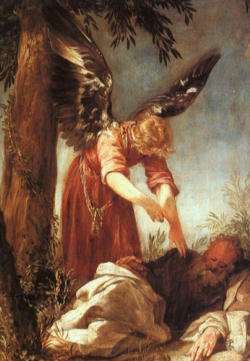
So when Elijah was sitting under the broom tree waiting to die, an angel came and fed him, a loaf of bread baked on coals and a jug of water.  And it's not just the food that the angel gave, but also the words that the angel spoke to Elijah: 'Arise and eat, for the journey is too great for you.'  Those words are true, not just for Elijah, that great lion of the faith, but also for you, too.  The journey of faith is too great for you.  It's too great for me, too.  It's not as though any of us can just through force of will decide to keep those commands that Paul recommends, that he encourages, that he tells us are mandatory and required in order to attain perfection.  If you look at that list for more than one second, you're going to find that it's essentially impossible for you to keep, to adhere to, and to get done.  This is the journey that is too great for you - the journey between your ideals and your actions, between your intentions and your results, between your reach and your grasp.  And this is why we come to church, and why we are fed by God there.  We need to be fed by him in word and sacrament precisely because the journey is too great for us, because we are not going to get things worked out all that well.  We aren't going to be moving on our own strength on this one. 

The Old Testament reading from Kings has Elijah eating the food, and going on the strength of the food for 40 days.  He is equipped with the food for the journey ahead.  And you need to think of church that way too.  The journey is too great for you.  The journey of righteousness, of perfection, it's too great for you to get done on your own.  You need to be refueled, or you'll just sit under the broom tree and wait to die.  But if you return to the Lord your God, if you are fed through word and sacrament, if your sins are forgiven, if you are renewed and equipped by the one who has overcome the world, then you can start to make this journey. You can start to get things done.


So that's where we get to churchy type things.  That's where we get to the purpose of church at all, really.  You're not there to socialize alone, not just to sing songs and hear some talking, you're there to be fed.  You're there to be equipped.  You're there to be forgiven, to be healed, and to be reinvigorated because the journey is actually too great for you.  Keeping pace with the morals and ethics of the Bible is too hard for you, which is why most people just give up and don't try.  Heck, keeping up with your own ethics  is often too hard, which is why people give up and don't try.  There's a real big metaphorical broom tree out there that people sit under and wait to die.  But God knows that the journey is too hard for you.  It's too hard and too far, which is why he visits, redeems and sustains you, guides you with his hand and equips you for his service. 

Tuesday, August 7, 2018

Leftovers

If you've ever met me, you'll know that my favorite genre of movies is horror movies.  Not that I get to watch too many of them these days, what with the small children and all, but when I get the chance, I still enjoy a good horror movie.  I enjoy them because they have a clear line between good and evil, demonic forces and their corollary are taken seriously, and violence is treated with the reaction that it should engender, ie. a bad one.  And one of the all-time sleeper classics is the film called 'parents,' which is a film that should be called 'leftovers.'  In this film, a small child has the idea that his parents are sneakily turning him into a cannibal by serving up nothing but mystery meat.  And when the child asks his parents what the deal is, asking them what the leftovers used to be, his father responds by saying 'before they were leftovers, they were leftovers to be.'


What a great little sleeper hit it was.  But aside from waxing elegaic about horror movies from the eighties, I do wonder if a lot of my contemporaries not only saw this film, but saw it and were profoundly affected by it.  That is, I wonder if people saw this film and developed a natural, or unnatural revulsion to leftovers.  Here in North America (I've only seen stats for the USA  but I refuse to believe that they can be much different for Canada) we hate hate leftovers.  The consumption of leftovers has dropped precipitously over the last 50 years, to the point where so much food is being tossed in the trash that it's frankly shocking. 

What's going on?  Simple stuff, really.  It's fairly simple to understand that in the 1950s when the movie Parents is set, the adults from that time had lived through or grown up in the great depression.  They were spendthrifts, they had learned to hold tight to their items, to get the most out of absolutely anything that they could find.  Every meal had to be stretched to ludicrous levels, in order to get the absolute most out of every purchase.  Nowhere was this more prominent than in the United Kingdom, my ancestral homeland, in which rationing was still going on into the 50s after the second world war, and boy, you had to scrimp and save and make your one egg a week really last.

I mention this because now that things are plentiful, now that times are good, we are hooked on not just eating more, but on variety.  And variety is a real issue for the average Canadian.  I've brought this up before, but there's a moment from family guy in which Peter comments that he can almost see into Bonnie's room from where he is standing, and Stewie is incredulous as to why he would want to.  And that's when Stewie figures something out, and it's profound, at least for a talking baby.  Stewie says 'Oh, I get it.  It's worse, but different.'  This fairly simple statement drives a lot of the misery that the Israelites suffer in their wilderness wandering.


Picture this - In the Old Testament, in the book of Exodus, the Israelites have finally departed from Egypt, from the land of slavery, and are set to journey out to the promised land.  And because they're human beings, the grass on the side of the fence of slavery starts to look awfully green.  Not that it was, you understand.  Slavery is a horrible, brutal thing, designed to chew up as much human capital as possible for zero payoff.  The slaves that exist are gobbled up in the mouth of the overseers, who crush them in pursuit of riches and an easy life.  The Egyptians could only keep their place of relative ease if they had a proverbial army of slaves working for them who would do all the drudgery that they didn't want to do in order for them to be able to do what they wanted.  But in order for the slaves to do the work that you don't to do, they have to be well fed enough to accomplish it. You have to put gas in your tractor if you want it to run, and you have to feed your slaves with all kinds of nutritious food if you want them to keep working.  If all you want to do is kill them, you don't have to worry about what you're feeding them, but if you want them to work, you've got to feed them something.  Apparently, the Egyptians didn't give their slaves their freedom, but they sure gave them a lot of tasty snacks.

And wouldn't you know it, when they reached a point of freedom, they all of a sudden started longing after not what was better, but what was different. They started lusting after the bread of captivity, seeking the sweetness of novelty over the burden of freedom, and that's a situation that functionally continues until today.  And friends, this is us.  This is us when we constantly seek what is new instead of what is good.  We seek what is novel, and not what is right.  You may have things just right, you may have things 100% where they should be, but there will always be that wanderlust built into you that will seek what you do not yet have.  You will always be looking for that one next purchase, that one new career, that one affair, that one relationship, that next thing that will lead you to the happiness that you so fervently want but cannot have.  You can't ever have it because it is always just one step out of reach, will always be just that little bit unattainable.

That's why the illustration from Philippians of their gods in their bellies is so completely apt.  Think about the way your belly works.  You know how it works, come on.  There's a good chance that you went to church on Sunday, and if you did, there's a good chance that you went to brunch on Sunday afterwards, and there's a good chance that as the final hymn was playing, you may have been seriously thinking about the brunch you wanted to have.  All good so far.  But here's the issue, which is that the brunch that you wanted to have, no matter how good it is, no matter how wholesome and filling it may have been, it was imperfect in one key way - you were hungry again later. That is, even if the food is perfectly satisfying, nutritionally adequate, it will be used up, and you will need to eat again.  If your god is in your belly, it will never be anything other than momentarily satisfied until you die.  That's it.  The best you can hope for is to be pleasantly plump after you eat, and hope that that feeling will last as long as possible, but know that it will eventually drop off and fade away and you will be hungry again. In the wilderness, the Israelites wandered around in the wilderness, and kept on eating mana day after day.  They ate of the mana in the wilderness which comforted and filled them for that day, but was not enough to satisfy them long term.  They grew hungry again at the end of every day, and more mana had to fall every day to fill them.  Their daily bread was being satisfied every day that went by, but they were still anxious and concerned, wanting more and more variety, wanting their stomachs to be satisfied with exotic things, wanting the gods in their bellies to be fully silenced.  But Jesus, our Lord, he doesn't work like that.  He tells his disciples, and indeed us as well, that he is the living bread that came down from heaven, and everyone who eats of this bread will never be hungry again.  A bold claim to be sure, and it's not the only time that Jesus says it.  He says quite clearly that he is the living bread, and that he is what satisfies.  He works differently than all the other gods and messages that float around out there, he works differently than all the miasma of other voices.  But to understand how that works, you have to ask a different question: What are you looking to gain from Christ? 

This is where people get confused, and I can't really blame them. The messaging has gotten all fuzzy on this, the same as it has gotten fuzzy about food, too.  For these days, people eat food for enjoyment, for pleasure.  Many have been the times where someone has asked 'are you hungry?' and my response has been 'why does that matter?' For us these days, I don't think that not being hungry has ever stopped me from eating.  Do I eat because I'm hungry, or because I'm bored, or tired, or emotional, or anything like that? Do I eat because I'm hungry, but because I feel like eating? Knowing this goes a heck of a long way towards understanding how the god in your belly works too.  He wants to be satisfied by novelty, he wants to be satisfied by taste and flavour, but more than anything else, he can only be satisfied momentarily.  Christ works differently.  He isn't one who needs to be satisfied, he is the one who satisfies.

Why are you a Christian? Why church ,why Christ, why baptism, why communion, why any of it? You should know that this is all done for the forgiveness of sins, that's why it's there.  That's why we have church and Christ, not for good ideas, not for good direction, not for prophecy, not for guidance, but for forgiveness.  And this is why it works in a completely satisfying way.  Think of your past, and all the things you wish you hadn't done.  Think about your regrets, all the things you should have done and didn't and all the things you shouldn't have done yet did.  If you consider and contemplate all of these things, and work through all that matter, if there was a way for all of that to be blotted out in one moment, and if that one moment could continue to be powerful and effective no matter what you had done, wouldn't that be permanently satisfying? Honestly, after you work out what church is for, what the faith you hold is all about, then you understand why Christ is what truly satisfies, why you will never grow hungry ever again.  It's because you are hungering and thirsting for salvation, for forgiveness, and that is what Christ genuinely and truly provides.  Anything else would just be a momentary reprieve, not true forgiveness, not true life, not true salvation. All the other efforts led to just more of the same, but after Christ, the temple curtain was torn down, the temple itself was smashed, and all the sacrifice was stopped.  It was stopped because, to quote Jesus directly, 'it is finished.'  His work completed, and the hungering and thirsting was stopped, and truly satisfied. 

Tuesday, July 31, 2018

Water walking

Jesus walked on the water.  You can't.


Okay, good, we're done here.  Fantastic.

Maybe you want me to say just a little bit more? Okay, fine, but only just a little tiny bit more.  What is worth talking about is that the nature of water, and the nature of humans, is that we're just a titchy tiny bit too heavy for surface tension to keep us afloat on the surface of the water.  There are places like the dead sea, like lake Manitou, that have such a high solids count that you will float with little effort, but you certainly don't walk on the surface.  When you go to the dead sea, you float with very little effort, but you certainly don't walk on the surface of the water.

Now if you know that, think about how much more the disciples who are fishermen would know about this. Being in a boat, they'd know all about floating, and about how humans don't do it.  We don't sink like stones, necessarily, but we sure don't walk on the surface either.  For we humans aren't water animals, and so therefore we will always be out of place in the water, at least somewhat.  Our boats that we have are floating islands, because if we want to be out on the water for a long time, we would have to bring our land with us.  We do this because man does not adapt to his environment, he adapts his environment to him.  He has dominion over the earth and subdues it.  That means that if you're in an environment that is very cold, you don't grow more hair or more fat layers, you build a bubble of a house, and heat it all day and all night.  If you are in a very hot environment, you don't develop Dimetrodon sails, but you make a bubble for yourself, and cool it.  If you want to cross mountains, you don't grow wings, you dynamite through the mountains to make a tunnel.  If you want to cross an ocean, you don't develop gills and fins, you build a floating island, and you take it with you. 


Knowing this is vital to figuring everything else in this passage out.  You can understand and appreciate why the vision of Christ walking on the surface of the water was so offputting, and why people assumed that he was a ghost.  They assumed this because people don't walk on water. That's not what happens, and that's not how we operate.  We like to think that we're pretty much in charge of everything, mainly because the weather affects us very little on a daily basis.  Oh sure a rainstorm can sort of put a staple in your meatloaf, but it doesn't tend to wash you away.  You sort of go about your day as normal, and don't worry too much about it necessarily.  You carry on, and keep going, you just run your windshield wipers a bit, that's all.  But every once in a while, you realize how little dominion humans truly have over the natural world.  You realize in a moment, when your car won't start, or when the wind and waves are against you, that you actually aren't in charge of the natural world.  You can't direct the weather to do what you want it to do.  The natural world will do what it wants to do, it'll take care of what it wants to take care of, it will make all the decisions that it wants to, and you're along for the ride.  You can react to what is done, but you can't act.  You can't be active, all you can be is to be reactive.  That's it.  That sounds bad on the surface, and I understand that, but that's why this image of Christ on the surface of the water is so shocking.

We're used to the idea of Jesus on the surface of the water, we're really really used to it by now, but that's not the end of it all.  Rather, we have much more to talk about.  When Jesus is seen on the surface of the water, walking along, and the disciples are working hard against the wind, you see something incredible happen.  You see the interaction between the disciples who are subject to the natural world, and Jesus who is above it, who is not affected by it.  You see Jesus and the disciples not being affected by the same things.  The disciples are working hard against the wind because they have to, they have no choice, they have no options but to work hard against the wind and the waves.  But Jesus of Nazareth has the option of whether to be affected or not.  He can walk on the surface of the water, or he can go down into the water to be baptized.  He has that option, you don't.  He has the option to be hungry in the wilderness, or to make more food out of essentially nothing.  If you run out of food, you starve.  He has the choice to pass through crowds who want to arrest him, or he can voluntarily choose to be taken away.  He can choose to stay on the cross, or choose to get down.  This is a matter that has to be understood very carefully.  We react.  He gets to act.

Now when we talk about the story of salvation, we are talking about a God who steps into nature, into history, and chooses to take part in it.  He leaves the space where he belongs, leaves the place that he is naturally a part of , and decides to come to us here on earth.  And when the scriptures talk about him walking on the surface of the water, or working for the healing of the people, multiplying loaves and fish or anything like that, it shows Jesus having mastery over nature, mastery over the things of this earth, and not being subject to its rules.  He can choose to suffer, or choose not to.  And it's that volition that is so terribly important. 

If you have someone who can walk on the surface of the water, sinking is a choice, a choice only to his detriment.  If you have someone who can multiply loaves, a choice to go hungry and be tempted is a choice he can make.  It's not necessity, it's a choice.  If you have someone who could walk through a crowd and escape, being arrested, flogged and crucified isn't a necessity, it's a choice.  Jesus is showing himself, as he does, as being external to nature, and therefore in control over it.  He acts, and only chooses to react, not when it benefits him, but when it benefits us.

The story of salvation is the story of a man who can walk on the water but who chooses to sink into the water at his baptism to take our sins on him.  It's the story of a man who can multiply loaves into infinity, but who chooses to go without food in order to defeat the devil in a position of real temptation.  It's the story of a man who can pass through crowds who come to arrest him, but who chooses to be arrested in the fullness of time, in order that the son of man may be lifted up, so that whoever looks on him shall have eternal life.  This is hot, hot news, news that can't be overstated, news that is wonderfully good news.  The best news.  And this is how it works.

Think of it like saving someone who is drownding.  If you run across someone who is drowning, if they're flailing, and thrashing, you're not supposed to swim out to them, because they'll drag you down.  They'll pull you under, even if they don't want to.  They'll do it not because they want to, but because they can't help themselves.  If you're going to rescue someone, you have to reach out to them from the shore, to toss them a rope or a pole, that kind of thing.  You have to reach out to them from a position of strength, not from a position of weakness.  And this is where the choices of Jesus come into things.  We are drowning in our sins, thrashing and sinking in a situation that we have gotten ourselves into.  We have tossed ourselves into a disaster from which we cannot extract ourselves.  If Christ is going to rescue us, he is going to have to do two things at the same time
1 - go to where we are, and
2 - not be as vulnerable as we are. 

The only way you can do this is to row out to a drowning man, use a helicopter, or, in the case of Jesus walk out to them. Only he can do this because he is not subject to sinking in sin, nor in water, not subject to death or calamity, but someone who stands over and above all of it.  This is his work, his joy, and his delight.  And this is the work that he voluntarily does for us.  He didn't have to, he chose to.

Tuesday, June 26, 2018

A great calm

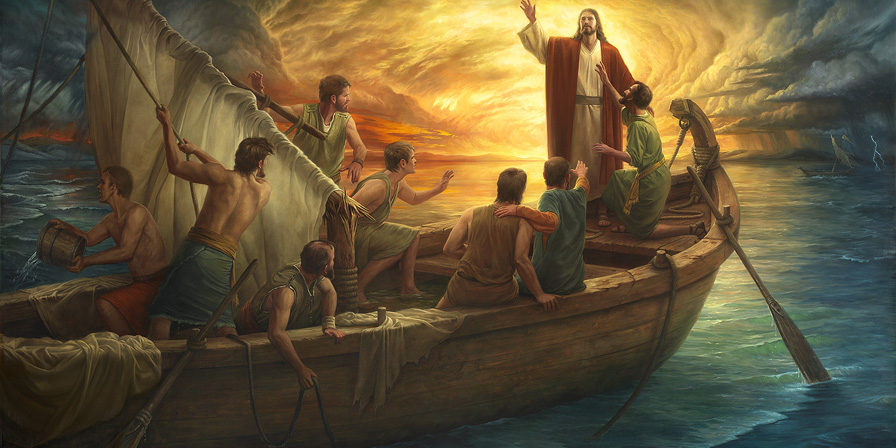
There are a number of obscure passages from the Gospel, but what we had from this weekend isn't an obscure one.  The passage that we had from the Gospel for this weekend is astonishingly familiar, one that almost everyone knows about.  Even if you're a real fair weather Christian, you know about the bad weather from the Gospel of Mark.  The passage where Jesus calms a storm. 

When Jesus calms the storm in the Gospel of Mark, he does so after waking up.  In the passage, he's napping in the stern of the boat, on the cushion, because he was awfully tired.  Don't forget, Jesus is fully man as well as fully God, he gets hungry, thirsty, heck, he even dies, obviously, which is the core of the Christian faith.  As a man, he's going to get tired, he's going to run out of gas, and he's going to have to sleep.  Which he does. 


But while he's napping, a storm starts up.  And the fishermen who are in charge of getting this boat moving, they start to lose control.  These are guys who are familiar with storms, they've been through this enough times to know how to move through storms, how to get through the squalls that arrive.  They know more about this than most of us do, which is why when they start asking for help, things must be bad.  This has to be a really rough storm, in order that the disciples, some of whom were previously employed by Zebedee and sons fishing LLC are going to wake up the napping carpenter to find out if he can help. Their call to Christ is a familiar one for most of us, we've all made this call out to him at a certain moment, either in these words or not, saying to him 'Don't you care that we're dying? Don't you care that we are perishing?'  I don't know how many people I've spoken to who have asked a similar question of God, asking either him directly, or about him 'why doesn't God care about my situation? Why, God, don't you care about me?'  So Jesus gets up, and he rebukes the wind and says to the waves 'peace! Be still!'  And immediately there was a great calm.  There was a great calm in the wind, there was a great calm in the waves, there was a great calm in the sea, there was a great calm in the clouds.

There was a great calm everywhere except IN the boat.

If you read the reading carefully, you'll notice something interesting.  Unlike that classic song that suggests that with Jesus in the boat you can smile at the storm, there are literally no smiles going on in that boat, neither during nor after the storm.  In fact, the disciples in the boat seem to be more agitated before the calming of the storm than after it.

Honestly, these disciples seem way too calm.


And that makes sense, of course.  It makes sense if you consider the magnitude of what happened, and who Jesus revealed himself to be in that moment.  For who is this Jesus? Well, the calming of the storm would have brought something to the minds of the disciples, one of those things that would have come to their minds would have been the reading from Job from Sunday.  The reading that we had from Sunday is from the 38th Chapter of Job, which is funny because there's a good chance that you didn't even know Job had that many chapters.  There's a good chance that you figured, as we all did, that Job only had two chapters.  God and Satan have a discussion about Job, about how he is a fair-weather friend, Satan tells God that Job only likes God because God has been good to him, God disagrees, and Satan takes things away from Job piece by piece until he has absolutely nothing left.

And that's the first two chapters, and those are the parts you know.  The rest of the book is a long conversation between Job and his friends about why this is happening to him, what he should do now, how best to live in the world now that God has taken everything away, that kind of thing.  And after a long enough time of talking back and forth with this, God finally deigns to come down and talk to Job directly. And what he tells Job is that Job is missing something that he'll need if he wants to take part in the remainder of the conversation.  He's missing perspective. When he considers the works of God and his majesty, Job is part of the picture, which means he can't see the picture.  It actually isn't possible for him to take it in.  Job, as a part of creation can't see all of creation, and he certainly can't see God and all his works from that perspective.  Not at all.

But God says to Job that he won't understand the works of God unless he has been engaged with all the works that God has done, including, but not limited to setting the limits for what the sea can do. The disciples would have known this, and that was why they were filled with fear, because they were in the boat with the one whom even the wind and the waves obeyed.  And that's way more frightening than a storm!

These are men who have likely been through plenty of storms. These are men who live on the water, who have had to navigate this area consistently, this is their world, and they know what a storm is.  They know how storms start, and they know how storms quit.  They know storms can come up suddenly, they can calm down suddenly, but they sure don't just cease, which is exactly what happened in the reading from Sunday.  The wind and the waves quit, and everything calmed down.  No wonder the disciples were agitated at that moment, for they had encountered, they had seen the living God incarnate, the creator of heaven right in front of them, he had demonstrated his awesome power, shown his mighty arm, and had shown them that he was able to command the wind and the waves.

And that's terrifying.

We often ask Jesus to handle our problems, we look to him to forgive sins, heal infirmities, to handle our issues and difficulties, of course we do.  But here's the deal, which is that when Jesus shows his authority over these things, it should cause us to pause, cause us to consider the magnitude of the power that we are playing around with.  God is big, he is wild, he is untamed and untamable, he is the consuming fire and the lion of Judah.  He's not your pal, he's not your chum, he is the Lord God, king of the universe, Lord of lords.  He split the red sea and drowned Pharaoh's army, this is the man whom the wind and the waves obey. The only thing worse than being in a storm is having the incarnate God, the power that made and created everything in the boat with you.  Awesome power is terrifying, thrilling, fills us with awe, certainly, and all the more so when we realize that it is working for us.

For you see, the essence of this issue is going to come down to the understanding of the power you invoke.  If you're expecting Jesus to handle your big problems, which you are, you're going to have to also understand that he's bigger than all the forces of this world, bigger than your sins, bigger than the forces of the universe, bigger than anything else.  He is the creator of the universe, the alpha and the omega, the one who flung the stars into space, the one who tamed the cosmos, who flooded the earth, that's him, and he is working to overcome your sins.  The God of the Universe who took on flesh, dwelt among us, and shed his blood on the cross of  Calvary.  That's what the God of the universe did, and he did that for you.  That should cause you to tremble, ever so slightly.  That should remove the great calm from you, you really ought to be thinking about the enormity of the power that you invoke so lightly.  You really should contemplate who this God is, understand what he is all about, and see how the Lord, the God of the Angel armies, is working for you.  It's really really big news, and if you take it seriously enough, that calm that you're looking for won't be there, but a healthy sense of awe, of reverence, of fear of the Lord and confidence and courage in what he does will be.

Monday, June 18, 2018

Mustard with that?

It's the parable of the mustard seed. And the parable of the mustard seed is all about small things growing into big things.  I made a point on Sunday that the biggest plant in the entire world, in case you didn't know, is a California Redwood named Hyperion. Hyperion is 380 feet tall, which is so big that I had to get a size comparative for it, and I was shocked to find out that Hyperion is taller than the tallest building in Regina.  This is an awfully big tree, you understand, a six hundred year old tree, and this tree was born from a seed that is exactly this big

The seeds of a California Redwood are the same size as a mustard seed - 3mm long.  That's not very big.  For a tree that gets to be so monumental, it sure starts out awfully small.  But that's the real trick behind the parable of the mustard seed, isn't it? The real trick of the parable is to know and understand that we're talking about something that starts off awfully small, and gets awfully big.  Jesus says that the kingdom of God is like this.  Like a mustard seed that is a teeny tiny seed that ends up growing into a massive plant. Now, of course, the mustard seed isn't the smallest seed in creation, that belongs to an orchid that has seeds smaller than a mm.  And the mustard plant isn't the biggest plant in the world, that would obviously be Hyperion.  But Jesus is going through this parable for the same reason that he goes through any of his parables - he is using the familiar to explain the foreign, the comfortable to explain the alien.  He is using what you know, what you can understand, to explain what you can't possibly conceive of (more on that next week).  He's talking about mustard seeds because, well, that was a seed that people actually used.  A parable doesn't work if it's about something you've never heard of as the referent, either.  The mustard seed is a seed that the people of the time of Christ planted, and also that they worked with in their kitchens. Just like using salt to describe the disciples, Jesus also uses mustard to describe the kingdom of Heaven.  They used mustard just like we use mustard, they were familiar with that awesome condiment just like we are.  And when Jesus brings up the mustard seed and the mustard plant, he's bringing up an immense disparity between the size of the seed, and the size of the plant.


That's a big old tree, isn't it?  And trees like this, every tree that there is grows from a seed much much smaller than itself. The California redwood and the mustard plant are just two examples of how that works, and we all know that this is how it works.  But here's what we might have forgotten about this parable.   Massive plants grow from tiny seeds, but they do this slowly.  Very very gradually.

For we are now in the throes of green stole time, and green stole time, common time, the time of the church, is when great growth happens.  We'd expect it to be in other times, which is why church attendance spikes at those times.  We'd expect growth to happen at Christmas, Easter, the Christmas Eve candlelit service, all that stuff, we don't expect growth to happen on the seventh Sunday after Pentecost, or whatever.  But on these weeks, these weeks that are in common time, those weeks that are just sort of there, not a festival, not a red stole, not a white stole, but a green one, those weeks are times in which great growth happens.  And you know this, because you've all seen plants grow.


Plants don't grow well if you only water them twice a year.  Plants don't prosper if you weed around them once, or if you fertilize them one time.  They don't mature and grow if they never get any moisture.  They have to be tended regularly, and if they are, then they grow growing slowly as they are tended.  You've seen this happen with plants, and you've seen this happen with people too.

It was also Father's day on Sunday, and on Sunday, it was time to think on all the work our earthly fathers have done, what they have done to make us, raise us, and turn us into the people that we are today, and the older you get, the more you understand that the work that your father does is heavily grounded in one vitally important factor - patience.  Patience is a hallmark of the work that fathers do, for they have to do the same things over and over again.  They have to go to the same job every day, they have to drive you to the same places every week, to buy the same groceries every week, to do the same things around the house all the time, they are vigilant, and they're patient.  And if you're a child of a father, you will know that you can't pinpoint the exact moment that you learned something, that you grew up, that you magically turned from a boy into a man.  Odds are your father didn't sit you down and tell you life lessons.  Odds are he lived them out day by day, minute by minute, by living out his values, by being the person that he needed to be for you, consistently and patiently.  And it's an accumulation of those tiny tiny moments, over dozens of days, a couple of decades, and it forms you and shapes you into a man, into a woman, who learned what it was to be a grown up over all that time through the presence of your father.

Which brings us back to the mustard seed.  Teeny tiny.  You look at that, and it doesn't amount to much.  You look at a baptism, and it doesn't look like too much.  You look at a Bible and it looks like a book, you look at communion and it looks like a tiny flat circle.  You look at a worship service and it looks like an hour, just by itself, isolated.  These things all look like nothing on their own, but live in them frequently enough, and boy oh boy, things start to happen.  The faith grows, the kingdom is revealed, God works through the means through which he promised to work, he is present in with and under the elements, he is in the waters of baptism with you, where there are two or three gathered there in his name, there he is in the midst of them.  None of this is magic, and it certainly doesn't work all in one shot Damascus style.  But if you allow that steady growth to happen, bit by bit, moment by moment, like a plant grows, first the blade, then the ear, you'll see that growth that you are looking for.


Don't see it yet? then echo those same words that we hear from the Scriptures 'Lord , I believe.  Help thou my unbelief.'  Then take your sins to Christ to have them forgiven.  Again.  Take holy communion.  Again.  Hear the word of God.  Again. Realize that this is just like watering a plant, tending to it, like teaching a child to walk, to read, to ride a bike or throw a baseball, or any of the other things our fathers taught us to do on the road to full grown adulthood.  Consistency.  Steady growth, until the result is a hundred thousand times bigger than the seed.


Friday, June 15, 2018

Unforgiven

We come, as we typically do, to the sin that will not be forgiven.

This is a sticking point for Christians, of course, because so much of what we do and say revolves around forgiveness.  The  essence, core and focus of the Christian faith has always been around the forgiveness of sins, the resurrection of the body and the life everlasting.  The Christian belief is the one in which you and I have, through our words and deeds, angered our God, and he is justly livid with our sinfulness.  We would be lost forever unless delivered from sin, death and everlasting condemnation.  But the God of all grace and mercy has sent his son, our Savior Jesus Christ, to shed his blood on the cross, to open the kingdom of heaven to all believers, and to forgive the sins of all who trust in him.

All the sins except one.

And this is the strangest thing of all, is that there is a sin that Christ specifies will not be forgiven.  Now, Jesus, in his ineffable wisdom, is always right, that's a function of being God, and when he says things, it's wise for us to listen to his dialogue, for he knows what's up.  And when he talks about how there are sins that cannot be forgiven, it's worth listening, especially in a universalist age in which we all assume that all dogs go to heaven.  But if all dogs go to heaven, if all sins are universally ignored, then who is God, after all?  Is he good? Or does he not care.


I hate to inform you that the universalist God doesn't exist. That's an idol, and you really ought not take him too seriously.  He's a forgery based on wishes and hopes.  As all idols are.  The idea and conception that you can possibly, happily have a God out there who doesn't care, who is happy to shrug his shoulders and not be too bothered about things, well, that should give you pause for consideration.  Even people who say that they want a universalist God, who doesn't care that much about sin, what they really mean is that they want a God that doesn't care about their sin.  That's about it.  They still know about right and wrong, good and evil, as long as it applies to other people.  We all know Trump is a dummy, that Hitler is a bad dude, and that Pol Pot was a disaster, but we get to be relatively laid back about our sins, and those of people like us.  But that's not a universalist God, that's a tribal god, and those two things are really really different.

The point I'm trying to make is, although we many kick and scream, we may get all agitated about it and pretend that we won't, we're looking at a matter of God actually caring about sins, and we all seem to agree with that.  That is, as long as you believe in God.  If not, you're a fool.  For the rest of us, we agree that God does seem to care about sins, and like it or not, if he cares about Hitler's sins, he cares about yours too.  They may not be equal in scope, but that doesn't mean he doesn't care about your sins at all.  He really, really does.  This isn't ranked on a curve, and as long as you've got a real dunce like Hitler the rest of us look okay.  He absolutely cares about everyone's sins as individuals, which is why he sent Jesus from the very beginning.  At the very beginning ,from the moment of The Fall, Jesus was promised, and came to the earth at the right time, the appointed time, to shed his blood and die for the sins of the world, to atone for everyone.  It was the good look, and one that prevented mass damnation.  All good so far, and that leads us to the unforgivable sin.  Or rather, the eternal sin.

This isn't the sin that God hates worse than the others, the one that he has hand-selected as the Bad One, but rather, sinning in this capacity ruins and destroys your ability to be forgiven in the first place.  The way that Jesus describes it in the Gospel is in the framework of a man's house being safe from plunder if he isn't tied up or incapacitated in some way, and we all know that this is true.  It's not that you want to steal the man in question, or his gun, but you can only steal anything else from him if he's not home pointing said gun at you.  If he is, the only thing you're going to end up stealing is a bullet.  To understand this is to understand what this passage is all about - you can't steal anything unless the strong man is tied up.  Once he is, then everything else can be stolen.  If the plunder of your house, your temple is not protected by the strong man of the Holy Spirit, then it is ripe for robbery.  Once the guard is down, once the wall is breached, it doesn't matter how nice everything looks, none of it can last. Think of it like military spending, which is to say that military spending seems expensive, of course, but if you don't have that part of your budget worked out, it's not going to matter where you're spending the rest, because someone, somewhere is going to take everything that belongs to you.

What happens when you blaspheme against the Holy Spirit, when you bind him, excise him, chase him away, is not that that sin won't be forgiven so much, as you have effectively removed the conduit through which your sins are forgiven.  You can't have the rest of the ugly sins forgiven if you've removed the means through which sins themselves are forgiven.  You've cut off the branch that you were sitting on, which was the means through which you were connected to the tree.  You've gone to all the effort of removing from yourself the means through which forgiveness of sins is given, and then you can't get too terribly confused if the forgiveness of sins doesn't show up.

Think of the creed for a second.  I know, nobody wants the dogma, I get it, but think of the creed.  What do you believe in?  I believe in the Holy Spirit, the Holy Christian Church, the communion of saints, the forgiveness of sins, the resurrection of the body and the life everlasting.  The Holy Spirit, the conduit through which sanctification happens, the means through which you are made Holy, the part of God that lives and dwells with you, who encourages, builds faith, and equips you for every good work.  To quote Dr. Martin Luther's large catechism, 'We believe that in this Christian church we have forgiveness of sin, which is wrought through the Holy Sacraments and absolution [Matthew 26:28, Mark 1:4, John 20:23] and through all kinds of comforting promises from the entire Gospel.'  It also says, in a question and answer session 'How does the Holy Spirit make me holy, what are his method and the means to this end?' 'By the Christian church, the forgiveness of sins, the resurrection of the body and the life everlasting.'

This is the best edition of this book. Because it's the one I grew up with.


This is the province and ability of the Holy Spirit, how he makes us holy.  If you blaspheme against him, if you reject him, deny him, turn from him and forsake him, then how is that forgiveness of sins supposed to happen?  Magic?  This isn't a matter of saying that this sin is worse than all the others, because if you break part of the law, you break all of it.  Rather, this is a rejection of the means of grace, the sanctification that God brings, the rejection of the promise of the Gospel, and the forgiveness of sins that the Holy Spirit brings.  It's not as though this sin is worse, but committing this one means that the rest cannot be forgiven.  Not that they won't. They can't.

So how to avoid committing this sin?  Daily and richly renew your Christian activity.  Remind yourself of the activity of the Holy Spirit in your life.  As much as I hate to keep on quoting Dr. Martin Luther's catechism, but he has you begin and end every day blessing yourself with the Holy Cross, saying 'In the name of the Father, and of the Son, and of the Holy Spirit.  Amen.'  He wants you to be immersed in the word and attending the sacraments.  He wants you to be mindful of the means of grace, and to be strengthened through them in your faith.  In other words, he wants you to be ever aware of the great gift of the forgiveness of sins that the Holy Spirit gives, to find Him where He promises to be, and to delight in his presence.  And above all other things, to bring to him all our sins and iniquities, and to delight in him taking them away.  To do otherwise is to live and dwell in our sins alone, and to stand before the Lord our God coated with them.  If you're in this frame of mind, receptive to our Lord's gifts and excited for his sacraments, then you're going to be in great shape.  When you find yourself seriously wondering if you even need this forgiveness of sins thing anyway, well, that's when you need it the most.

Monday, June 4, 2018

shabbat

The seventh day is a day of rest, thus says the Lord.

Great, fantastic, and that's good news even for the heathen and the rascal.  For everyone, no matter your beliefs, no matter what you may think about God, and the Bible, you probably don't mind having a day off.  A day off, a day in which you do no work, it sounds good, doesn't it?  Everyone wants one of those, perhaps more than one.  When you ask people how they're doing, do they say 'busy?' When you ask people how their weekend or their holiday was, do they say 'Not long enough?' 

This is the curse of the modern age, that we are too busy.  It wasn't always like this, but it's sure like this now.  and consider the elements that go into this fiasco.  For us, in the modern age, we have found a problem in which the weekends have all become every bit as busy as the rest of the days midweek.  There are really no other ways that people live these days, they're essentially always trying to move and work within a system that never ever gives up.  They're trying to work with their FOMO, trying to make sure they can cram the maximum into all their time, and they're working as hard as possible to make sure that their time is filled with buying, selling, and greasing the wheels of commerce.

For the merchants don't take a day off.  The merchants don't rest, you know, not on the sabbath or ever.  They are active wherever you are, following after you.  They know you have money, they can smell it, and they're not going to rest until you've given that money up.  They're not going to wait, not going to take it easy, until you've handed over every last penny to them.  And they're not going to want you to take a day off.  Things can't shut down for a day, you've got to buy, sell, and be engaged all day every day.  The ancient Hebrew people had a great way around that, of course, which was a mandated day off, mandated by the Lord their God himself, who told them in Exodus, as well as Deuteronomy, that they were to do all their work in six days, and in that seventh day, they were to do no work at all . No work.  None.  Zippo.  No buying, no selling, no engaging in commerce, no patronizing merchants, none of that at all.  Now, that's a good idea, a day where you have to rest from all that stuff, a day that, at the end of the week you would be mandated to rest, to take it easy, to do no work, that's a great idea.  There was one problem with it though, which is that people got really specific about what a lack of work would be.  For what is a lack of work? It's not enough to say that you shouldn't do any work, because not everyone views work the same way, so the Jews had to end up creating a big long list of what counts as work and what doesn't, and what they did was to set that list of things as a matter of things to be avoided, and they turned the sabbath into a passive experience.  That is, the sabbath observance was about what you didn't do, and not about what you did. It turned the most moral Sabbath into one that you did absolutely nothing whatsoever, in which you stayed in a coma, so nobody could accuse you of working.


And we learned that, and learned it hard.  We all believed in the sabbath so much that the concept of the weekend, of having a day off, became sacred to us.  We believed very hard in the concept of a day off, believe in it so thoroughly that we all internalized it, and grew very attached to time off.  But, the definition of that day as a day off, it became a mandated day off in which nobody was supposed to do any work, but the answer came back, loud and clear 'well then, what are we supposed to do?'  And that's a great question.  For what we had done was to create a vacuum, something that nature abhors.  We made a vacuum, where we weren't doing any work, and then the question came up, of what then should we do?  And people, in their desire to do nothing, and in their forgetting of God, elected to do what they always do, which is to consume, to buy, to brunch and to sport.  But if you're going to brunch and sport, if you're going to shop and peruse, then someone is going to have to sell those things to you.  And if you're going to go out a-brunching, you're going to use your car, and so is your waitress, your chef, and all of a sudden, you're in a world in which it's turning into a day exactly like any other.  You go to the store, buy linens, pick up a hat, go to the market for avocados, all that noise because, well, there are a bunch of things to do because Sunday isn't a Sabbath, it's just a day.

That vacuum has to be filled with something, you know. The people in the Gospel reading were so desperately holding onto the notion of not working, that they didn't realize that we were moving into making a vacuum that would be filled.  For every vacuum is, you know, even the vacuum of space.  And if the vacuum is going to be filled by something eventually, why not have it be filled with the right thing?


Christ, oft accused of being a sabbath breaker, was actually the only one who ever truly kept the Sabbath, you know.  Sure, while he was here on earth, he did wondrous works, healing, cherishing, gathering God's people together on the Sabbath, doing good and not doing evil on the Sabbath, being about the Lord's work, and comforting God's people on the Sabbath, which is wonderful work.  And after accomplishing that, the people looked upon him, and wondered how they might kill him.  They asked this because Christ was about his Father's work, of course, but they wanted to preserve that vacuum, telling themselves that the most important thing was to not work, not to worship God in his fullness, in his grace and in his grandeur.  The Sabbath had to be kept as completely passive, inactive.
So those who wanted to kill him succeeded.  They took him away, and had him crucified.  And Christ called out, loudly and clearly that it was finished, all his work was done.  But Christ had the temerity to not die right away, and the crowd became concerned, worrying that they might have to handle a dead body on the Sabbath, quite forbidden indeed.  So they made sure that Christ was lanced through his side, and that he was fully dead.  They took him down off the cross and ensured that he was buried before the sabbath started.  And Christ rested.

This man accused of being a Sabbath breaker, of taking the sabbath too lightly, he was the only man who had ever fully and completely kept the Sabbath in its entirety.  He quite literally did zero work on that Sabbath way back between Good Friday and Easter Sunday.  Rather, instead of doing work, he rested from all his labor, from all the work that he had done, from all the work he had completed and finished, which he did.  He rested so well on that Sabbath that he didn't even breathe, not even a heartbeat, not a motion, not a twitch, nothing.  He rested. 

And by resting, he fulfilled, he completed the Sabbath, and he gave his people a new day for worship. The first day of the week, the Sunday, the Lord's day. The day not when you are commanded to do nothing, but rather the day in which you are impelled and compelled to remember the work that Christ did on that day.  He rose from the dead that day, the Sunday, the most important event that has ever happened, the greatest thing that has ever been done, the most world-altering thing that has been done, and you and I get to come together to commemorate that every Sunday.  To remember that if we have been united with him in a death like his, we shall certainly be united with him in a resurrection like his.  Your job on Sunday isn't to keep a vacuum for the sake of just a day off, trust me, the merchants will get a hold of you one way or another.  But they can't get a hold of you if you are filling that time with something else - with prayer, praise, rejoicing, and celebrating the victory of Christ over death and the grave.  You're celebrating that great victory of Jesus of Nazareth over death, where he finished all his work by sundown on Friday, rested on Saturday, and rose back from the grave on the Sunday.  The Lord of the Sabbath fulfilled the Sabbath in a way that you and I would be incapable of doing.  He is truly the Lord of the Sabbath.  Listen to him on the day he has given you.  Fill your morning with his prayer and preaching, grow in your faith, push back against that vacuum that is there, and fill it with grace and truth.

I promise, the brunch will still be there when you're done.