The musings of the Pastor from Good Shepherd Lutheran Church, Regina SK

Welcome. If you're a member at Good Shepherd, welcome to more thoughts and discussion of the week that was, and some bonus thoughts throughout the week. If you're not a member, welcome, and enjoy your stay. We are happy that you're here.

If you like what you see here, consider joining us for worship at Good Shepherd Lutheran Church. Sunday mornings, at 8:30 and 11:00. You can also follow us on Facebook.

Monday, January 6, 2020

The new Herodians

In the Epiphany periscope, we hear about Herod's interaction with the Magi.  This interaction, from one king to the others, is very telling about Herod, and if we're being honest, about ourselves as well.  For Herod, when he hears of the birth of the King of the Jews, is troubled, and all Jerusalem with him.  On the surface, we can assume that Herod is a bad guy who doesn't want to give up his hold on power.  That is very likely true.  But it really isn't quite that simple.  I'll explain.

Herod doesn't want to give up power because Herod knows what's up as far as power goes.  It's easy to forget that the concept that we are all used to by now, that of a peaceful transfer of power, is relatively new.  Before that, and for most of human history, what would happen would be that you were in power, and on the throne, but your family would tend to go from the throne to the graveyard, or into exile.  You wouldn't do that thing where you retired from public life and retired to work on your chalk fossils.  The way it tended to go, was that your dynasty would take over violently from the one before it, and your dynasty would last until your family was murdered and another dynasty took over from you.  Lather, rinse, repeat.  If you want proof of that concept, think about the family who was in power before the Herodian dynasty, that of the Hasmoneans.  What happened to them?  A lot of executions..  And if Herod knows how his family came to power, he has every reason to be suspicious of an up and comer looking to take over from his dynasty.  Especially if this newfound king of the Jews is the real deal.


If this is the real deal, if this is the inheritor of the throne of David, if this is the real King of the Jews, then Herod is through, he and his whole family.  And if Herod is done being King, he's not going to go back to peanut farming.  If there were a Wikipedia at the time, probably carved into stone tablets or whatever, then almost every ruler's 'later life' section would just state that they were murdered, or died of a surfeit of lampreys, and then their heir or rival took their place. Herod had no intention of being added to that statistic, especially not to have a rival who had an actual claim to a throne that Herod himself had only through treachery and collusion.  So, Herod went out of his way to find out from the Magi, from the scribes, where this King of the Jews was.  And here comes the lie - "Go and search diligently for the child" said Herod, "and when you have found him, bring me word, so that I too may come and worship him."

That's a whopper.   It is absolutely, categorically untrue, and is violently so.  I don't use the word violently as a metaphor, either, for Herod seeks violence against the newborn king, to kill him and to bury his rivalry.  Herod is lying to the Magi, to try to get them to deliver the location of Christ, so that Herod can have him killed.  If Jesus is dead, then the threat to Herod's home, family, dynasty and life all go away.



But here's the thing.  This attitude has not changed at all.  Consider this: Christmas is the biggest racket of them all.  It's a glutton of a holiday that lasts from late October all the way to the end of December.  So, pretty much a quarter of the year, including boxing day, is devoted to the observance of this festive season.  Now, nobody I know loves and is attached to the Christmas shopping season, and the longer it goes, the less we all like it. I hope we can all agree on that.  There's a great essay from CS Lewis that talks about Christmas being separate from Xmas, which I've quoted before, and which still retains its poignancy.  And what we learn about the season is that everyone is dragged about, hither and yon, to try to make up the shortfall that retail outlets suffer through over the course of a year.  Profits start on Black Friday, if you will.  But the longer that goes on, the more we begin to understand that we are being played largely for suckers, but we don't seem to be able to stop.  And that's the key right there, that somehow, the celebration of Christmas became wholly co-opted by commercial interests.

Stop me if you've heard this one: "Go and worship this newborn king, and when you have done so, tell me when you are doing so, so that I may worship him too."  Oh, sure.  Different person, but same lie.  'Tis the same deception, the one that says that I too, would like to worship this king, when I have zero intention of doing so.  But I do want to co-opt his worship for the sake of power, wealth, and control.  And that's the punchline.  The punchline that says that the crowded marketplace, the modern Herod, ever had any interest in the worship of Christ.  They never did, and they never will.  It was all in aid of profit, and the increase of the same.  Many people have bemoaned the retreat of the words 'Merry Christmas' from stores and markets. Many people have been disappointed that the retail landscape is dominated by a profoundly secular ethic even and especially at Christmas, but the big question is to ask what you expected from the new Herod? What did you expect the new hegemon to do when his power is threatened?

For the only thing standing firmly against the weight of commerce is the one who flipped the tables and scattered the coins.  The system we have today views human beings as economic units, a resource to be used, and then discarded, while Christ focuses on the unique vitality and essential dignity of every individual human being.  But who else at this hour is intending to understand human beings as spiritual rather than economic units? That conversation is silent save for the voice of Christ who calls us by name, and tells us that our worth is not dependant on our output or on our utility.  He in fact warns us that we cannot serve two masters.


Herod knew that Christ's claim to the throne was more valid than his own, and were he able to take the throne, Herod would be deposed.  How right he was.  But the modern Herod knows the same - seeking to give the illusion that they wanted to worship Christ as well, they did so only to debauch and to destroy, to eliminate the presence of the one who transcends purchase at all.  Christ stands as the central figure of this debate, and stubbornly resists the reduction of humanity into a service to money, and reclaims the dignity of a creature born for eternity, and born for a world without the scarcity that drives the market.  He stands at the centre of it all, and makes you into more than a value on a balance sheet, more than a bottom line, and more than your economic utility.  And at Christmas, we ponder anew that what he gives isn't something that we, or the new Herod can buy, because we couldn't possibly afford the price that it cost.  The blood of Christ that purchased eternity for us.  It is worth more than the gold, the incense and the myrrh. The wise men acknowledged it, and wise men today still do.

Friday, December 20, 2019

Please wait

I bet you think you're easy to shop for.

I bet you think that you're the easiest person to shop for, and your friends and relatives who don't feel that same way are wrong, and probably fools.

I bet you're also the person who sees things that you would like to have everywhere you go.  I bet that you go into stores, shops, marketplaces, boutiques, and see things you would like everywhere.  That's why you think you're easy to shop for, because you see so much that you like.

And I bet that while you are out shopping, and you see those trinkets and baubles that you think are precious, that you pop them into your cart and buy them as a little treat for yourself, instead of telling someone about it right ahead of Christmas.

You should stop doing that.  You should stop shopping, or at least, stop shopping for yourself right before Christmas.  For Christmas is a time of year in which you will be surrounded by people who will want, or who will feel obligated to buy something for you, and even though you think that you're an easy person to shop for, if you're buying everything for yourself, nobody can possibly get to something that you want before you do.  And that might mean that you may have to exercise that most complicated of all things, you may have to exercise patience.  And we're not good at that.


If you're not great at being patient, well, take a number, because the people of the Scriptures weren't exactly hyper-patient either.  Think for a second about Abraham, who was promised by God that he would have children, descendants as numerous as grains of sand on the beach, or as stars in the sky.  Now, Abraham was already getting on a bit in years, and understood that there is a ticking clock when it comes to fertility.  So although God had promised him that he would be the father of a multitude, Abraham wasn't seeing a lot of movement on that, so he figured that since he knew where babies came from, he would just cut God out of the equation altogether.  Which he did.

This is not a rare story. God makes a promise to people, and people get tired of waiting for the promise to be fulfilled, so they either abandon the promise altogether, or decide that they can happily find another way around it.  When God promises a Messiah, a savior, the people get sick of waiting and appoint a few to be the messiah while they wait.  Again, this isn't new at all.  And as I say, you're in good company.

But part of being a Christian, especially being a Christian in Advent, is that you have to get used to waiting.  Things are not going to happen on your schedule. In fact, it won't even be close.  And of course, it's easy to want things on your schedule, why wouldn't you? It's easy to want things on your schedule, especially because the things promised in the scriptures are good things that you ostensibly want.  If you have been paying attention through this Advent season, you will have noticed that we have been looking at Isaiah a lot in the Old Testament readings.  And all the readings have been looking forward to perfection.  They have been looking forward to a return to the garden, a return to paradise.  Whether it be the swords into plowshares and spears into pruning hooks, lions eating straw like oxen, or streams of water flowing in the desert, all these things are looking forward to fulfillment of the end of all things, the new heaven and the new earth.

And that doesn't work until Jesus returns.  You may kick and scream and say that it should, but it doesn't.  Only once Christ returns will everything be set right.  Until that moment, in this world you will have trouble.  We are dealing with flawed ingredients, you know.  We are dealing with broken material, and the overall desire for justice, for perfection, for all of that will not happen while the ingredients are still of dubious quality.  Human beings are that ingredient, and from the moment they turned away from God, committed sins, and fallen from grace, they would be unable to have any kind of paradise, given that we, as humans, are fundamentally flawed.  There can be no perfection as long as we are a part of it.

I talk about the garden, because it was in the garden, while Eve was on her way out, that God gave a promise of a savior for the first time.  Right after the first sin, right after a need for a savior first appeared, the savior was promised.  But it would take a long time for that savior to arrive.  Even though Eve thought from the word go that a savior had arrived, it would take a long time to happen.  Generations of people would live and die in the promise, never seeing the presence of the Lord on earth.

Now, here's how to deal with the fact that there are tons of things you want, and you kind of want to buy them now.  Take a moment to think about the gifts you got last year for Christmas.  Think about all those things that you were given, and think about the fact that there are probably still all sorts of things that you haven't used yet.  There are still boxes you haven't opened, there are still books that you haven't cracked, all these things that you were super excited to get at the time, but haven't gotten around to since.  If you're starting longingly at what you want, maybe at this time it's the occasion to think about what you already have.

Take a moment to open that book that you were happy to get last year.  Take a moment to open that bottle of scotch, to play that game, to use that paint or that wool.  Take a moment to enjoy all those things, and to delight in them instead of only thinking about what you don't have yet.  And this works in the church as well, you know.


I know, you're looking forward to a time in which everything is made right, where those who died are alive again to die no more.  You're looking forward to a time in which all scarcity is gone, where all issues are resolved, and where tears are wiped away from every eye.  We all want that.  But you need to wait.  We're broken material, and you can't make perfect out of the imperfect.  For there to be perfection, we would have to be perfect. Which we will be, but not yet.  For now, you have to wait.  But while you wait, you get to think about, and take joy, in what you already have.  House and home, clothing and shoes, spouse and children, food and drink, all these things that you can enjoy this side of heaven . All these things that are gifts of God for you, that you can enjoy in the here and now.   Forgiveness, life, salvation, sanctity, salvation, a good conscience through forgiveness of sins, these things are all things to be enjoyed now, and will make waiting much easier for everyone.  For then you're not thinking only about what you want.  You're thinking about what you have.

Monday, December 9, 2019

Chaff

Let's discuss the nature of wheat and chaff.

This should be incredibly straightforward to everyone, but we are so divorced from the natural world from which we draw all our nutrients, that we have largely forgotten where our food truly originates.  Allow me to bring it to mind.  There was, or possibly is, a show that was on TV a while ago called 'alone.'  And that show has contestants living by themselves in hostile environments until all but one quits.  While you watch the show, you become painfully aware of something, which is that even when someone is doing their absolute level best to forage for food really efficiently, they will find that they can't eat the vast majority of what they see.

This woman is foraging a lot of food, and appears to be doing it very efficiently, getting the absolute maximum out of the world into which she has been placed.  But there's something that should drive you up the wall watching that, which is that she is surrounded by greenery, surrounded by plant life that is everywhere, but there is very very little of it that she can actually consume.  Some berries, fireweed root, mushrooms, that sort of thing, but all the trees, the grass, the moss, all of that is functionally worthless to her, because her body absolutely can't process it into nutrients. So for the berries that she picks, the berry itself is only one tiny part of the plant.  The rest of the plant is no use to her.

I bring this up, because I would like you to look at this image of wheat.

That's wheat, as you would know if you were from God's country of Saskatchewan, the breadbasket of Canada, etc. And wheat, or some kind of grain, is vital for civilization to exist, moving us beyond being hunter / gatherers and moving us in to being stable, and civilized.  Having grain and grain stored between harvests, allows you to specialize labor, not think beyond just your next meal, and to let you have a society in which people can have a bigger picture, and a better perspective.  It was grain storage that the Israelites were compelled to build in order that the Egyptians could have Pharaohs, armies, magicians, and so that every single role was not just one of subsistence gathering.

But look at that wheat, and you will realize something, which is that although things like grains are absolutely required, mandatory, and civilization is real hard to get without it, the majority of the biomass of that wheat is not useful for you as a human being.  The wheat grain is all that really matters for you, the rest of the plant is not useful at all.  You can't harvest your wheat by bringing an entire plant into the elevator, they'll throw you out for doing it.  All that the elevator wants, all that the market wants, is the grain, the part that you eat.  The rest is what we will call chaff.  And most of the plant, for human beings, is chaff.

I bring all this up because of John the Baptist standing on the banks of the Jordan river, calling out to everyone, compelling them to be baptized.  And as he does so, he brings stark warnings to the people who come to see him to be baptized.  The  axe is at the root of the tree, and every tree that does not bear good fruit will be cut down and thrown into the fire.  His winnowing fork is in his hands, and he will gather the wheat into his barn, but the chaff he will burn with unquenchable fire.

This is all stuff you know, of course, being wise and educated Christians.  But hold on a minute, because I would like to point out that if you are winnowing your grain, then you are separating out the majority, which is chaff, from the minority, which is the wheat grain itself.  Most of the wheat plant is straw, it is chaff, it is not usable for human consumption.  The majority of this plant, and almost every plant, is not usable for us.  If you have rhubarb, you're only eating the stalks.  If you have raspberries, you're only eating the fruit.  If you have potatoes, you're only eating the tubers.  There are very few plants that you are going to eat all of.

I'm bringing all this up because when it comes time to assess the life of the Christian, I'm not asking you to think too much about the sheep from the goats here.  Instead, I'm talking about separating people from their sins.  This is tougher than we think it is, primarily because we are living under the impression that people want their sins to be forgiven.  We tend to think about people as understanding that they are sinful, and that they would very much like those sins to be taken away, but the opposite is, in fact, true.  People in general have no desire for their sins to be forgiven, and in fact would very much like to hold onto them and cling to them forever.  Part of this is born out of an idea that you are good, and what you do is good per se, but another part of it is an inability to perceive that what you do is not who you are.  Those are different things.  An awful lot of people, perhaps including yourself, may think of their sins as being unforgivable, not because Christ is incapable of forgiving sins, but rather because they do not approach their sins as something to be forgiven.  They will approach their sins as something that make them who they are.  And if that is the case, people can and will ask the big question, which is that if all these things are sins, if what I have done is sinful, and so much of what I have done has been sinful, then if I were to be forgiven, what would be left?

That's a question that people ask themselves as they grow up, as they grow older, and as they start to take stock of their lives in general.  As a child, you are disciplined by society, by your parents, by your school, and you are expected to repent, and to repent pretty sharpish.  But when you grow, you end up thinking about yourself as being generally pretty good, and as your decisions as forming you into who you are.  And thinking about your decisions that have made you who you are, that have formed and fashioned you into the person that you are today, thinking about those decisions as things you should repent of is a hurtful thing . For if you repent of those, cast them off, repent and are forgiven of them, then what will be left once that threshing is done, and the chaff has been burned?  

Well, the answer is you.  You're left.  You are what continues to exist after all this has been divided from you.  It may seem like there would be nothing left at all, but look at the wheat, and marvel at how little of that plant is kept vs how much is discarded.  The grain is very small.  There is a lot of chaff.

When it comes time to divide the wheat from the chaff, to separate out sin from saved, that's work that involves purging away an awful lot of what you have fooled yourself into thinking is you.  But it is not.  These sins are not you, these bad decisions are not you, and you don't have to be captive to them.  Rather, you can be forgiven, and can begin to understand who you actually are.  Not the layers that you have cased yourself beneath, not the dross surrounding the silver, not the stains on the cloth, not the chaff that is all around the wheat.  

No, you are the part that is worth saving.  Not your sins, not your misdeeds, but you.  When John the Baptist, after calling out all these things as problems to be addressed, continues by pointing out Jesus the Lord, and saying with a loud, clear voice, what the Christmas season is all about:  
'Behold, the Lamb of God that takes away the sin of the world.'


Tuesday, December 3, 2019

Swords into plowshares

We have finally had the reading from Isaiah that talks about beating swords into plowshares, and spears into pruning hooks.  And it's a nice reading.  It's a nice reading because it speaks to what everyone wants when they talk about wanting peace.

But true peace, world peace, it isn't as straightforward as you might think it is. For example, it isn't as though all the governments of the world just haven't thought of trying peace out yet, if you see what I mean.  It isn't as though humans just haven't considered the idea or the concept of peace.  Honestly, we all want peace, but we don't live in a peace universe.  We live in a war universe, governed by war rules.  Competition reigns.  There are not enough resources to go around, and there never will be.  It seems as though there will always be too little for everyone to have, and as people tend to bring up frequently, if we were all to live in the manner to which we have been accustomed in North America, we would need something like three earths to make that happen.  But we don't have three earths, we just have the one.

Given that there is only one earth, and only so much to go around for an ever increasing number of people, you can understand that this condition isn't going to get any better, I can guarantee that it's going to get worse.  If there wasn't enough to go around then, there sure won't be enough to go around now.  Look at the oft mocked stampedes for cheap goods and electronics that you find on or around Black Friday, or Cyber Monday or whatever.  These low level riots that you see are built around the fact that there are only so many doorcrashers to go around, and when they're gone, they're gone.  People will crush one another for the Nintendo Wii, or a cabbage patch doll, or a tickle me elmo, or whatever, because there are not enough of them to go around.

Given that this is for sure the case, I ask you as a question that we will all have to face one way or another, the question of why are we not beating our swords into plowshares, nor our spears into pruning hooks?  Well, honestly, the best tool that I have to talk about this is another 'mountain of the Lord' passage, which comes to us from Isaiah, talking about how the lion shall eat straw like the ox, and so on.  That passage, if you take it seriously, represents a far bigger issue than just what the lion chooses to eat at any one moment.  Do you think that lions chase gazelles just because they enjoy the exercise?  Why wouldn't they just eat the hyper abundant food source of grass that is all around them?  For that matter, your house is likely surrounded by a ton of grass all the time, why do you bother hunting, fishing, going to the grocery store, or whatever else, when you could just eat grass?  Well, it's not just the flavor of the grass, the lion can't just sit down and eat grass while getting any nutrition out of it at all.  Cattle, who stay alive by eating grass, have four stomach chambers, and are ruminants who chew the cud, which is designed entirely around grass consumption.  How many stomach chambers do you have? How many does a lion have? Do you really think that lions just haven't figured out that grass doesn't run away from them?  Or do you think that a lion eating grass would end in a dead lion because they can't digest the food?


I bring this up, because when we think about the nature of the swords into plowshares, we think about this as an ideal that we can and should strive towards, to make peace and to have people know war no more.  And that's a nice idea, but it's not as though people just haven't thought about peace yet, you know.  Everyone, including known warhawks, always say that they want peace.  Nobody says that a war would be totally fun, and we should just have one already.  At least in public, people claim to want peace.  But if everyone wanted peace the way they say they wanted peace, we'd have peace. The only problem with peace is you can't make no money off it.  We don't have peace because we are in a fallen world, a broken world, that operates on scarcity, and insufficient supply.  It is a war universe with war rules.  It's a sin universe with sin rules.


So what is this passage about then?  It's not about wasting your time, surely. What it is about, though, is about making a universe that is not based on war anymore.  It is about a world without the rules of war and the conditions of war.  It is about a world where scarcity has been abolished, where the military industrial complex has been dismantled, where all those problems have been fully and completely addressed and fixed.  And that's the return of Christ.  That's what his return looks like.

The reason it's impossible right now is because you know what would happen to a country that disarmed. It's not as though everyone would follow suit and the world would be at peace.  If Ukraine disarms, it stops being Ukraine. That is the same for literally every place on earth.  If you have the gall to stop defending yourself, or to not have a strong ally to defend you, then you will be subsumed, sooner rather than later.  Someone will take over, someone will take what you own, someone will drive you to poverty or death.  You many not think about it, but your property is preserved by guns right now.  They may not be your guns, but if someone threatens your home, your family, or anything like that, someone with a gun will show up to put an end to the problem. While we are still in a world where lions can't eat straw, they won't.  While we are still in a world where nation will fight against nation should it become undefended, swords will remain swords, and will not become plowshares.

Why do we talk about this, then? Becuase this is what the return of Christ will look like, and it's what we have to be prepared for.  We have to be ready for his return, and the accompanying beating of swords into plowshares, and spears into pruning hooks. And you have to be prepared for him to turn your sword into a plowshare, and your spear into a pruning hook.  That's the real trick now, isn't it?  The only thing stopping all of this is that we won't let it, so understandably the return of Jesus will be a horrible event in which everything is put right, and wars cease.  Given that we don't want to give everything away now, given that we don't want to share our entire lifestyles now, what makes us think that we're going to be very much into it upon the return of Jesus?  The return of Christ to make everything right and good will be a painful thing, it will be a hurtful thing indeed for the rich.  Which probably includes you.

The rich have much more to lose, because they have taken far more over time.  When we think about justice, especially end times justice, it is a matter where every hill will be brought low, and every valley raised up.  If you have taken over the course of your life, you will have lots to give.  When you ask about swords being changed into plowshares, ask yourself why you want to hold onto your swords, and why you want to keep your spears.  Then you will understand what it is that God will make right upon his return.  It will be a hard time, and a difficult time, mainly because it will involve us having everything returned to where it should have been from the beginning, and confronting that it was our sins that stopped it from being there.  That's why Advent is a penitential season, not a joyful one.  It's a time to reflect on our sins, on why ther is war on earth, why we have rules for wars, why we defend and protect our property and why we have so much more than everyone else.  When Jesus returns, and confronts you for your sins, will you let him take them away, or will you defend them as not being sins.  That is the big question about swords nd plowshares.  Do you want Jesus to make everything right? Do you want a course correction? Or are you comfy being rich, happy and full of yourself?

He is the prince of peace.  He will make peace for eternity.  The question is, for all of us, where do you align yourself with what he will do? Do you welcome him as king, or will you insist that you have nothing to forgive?

Thursday, November 28, 2019

The end

The church year operates on a different cycle than the calendar year.   Think of it like Rosh Hashanah, or Chinese New Year, these events that let you know that there are other ways of marking a revolution around the sun, that are not based on our traditional calendar that we view as normative now.  This last year, Rosh Hashanah bridged September and October, while Chinese New Year was in February.  The church observes its new year on the first Sunday in Advent, where the church year begins anew.

But the celebration of the church new year is always preceded with what the book of common prayer calls "the Sunday next before Advent."  You could also call it the last Sunday in the church year, but that lacks the same gravitas as the method mentioned above.  Gravitas is important for this conversation, because unlike other celebrations of new years, the church year is preceded by a discussion not of the end of the church year, but a discussion of the end of everything.

The church seasons are cyclical, to be sure.  Advent moves into Christmas which moves into Epiphany, and the calendar continues from there.  And every time we get to the end of the church year, the new church year begins, just like clockwork.  But there is a significant difference, because this is not a cycle in perpetuity.  This is a cycle that has written into it the idea that one day this cycle will end.  That is, what we think of as a permanent cycle of back and forth, in and out, day into day, is concluding, wrapping up eventually.  We are on a cycle now, of seasons and successive ages, but that isn't eternal.  Before we talk about the coming of the king of kings as a baby in a manger, we end up talking about his return.  And that ends everything.

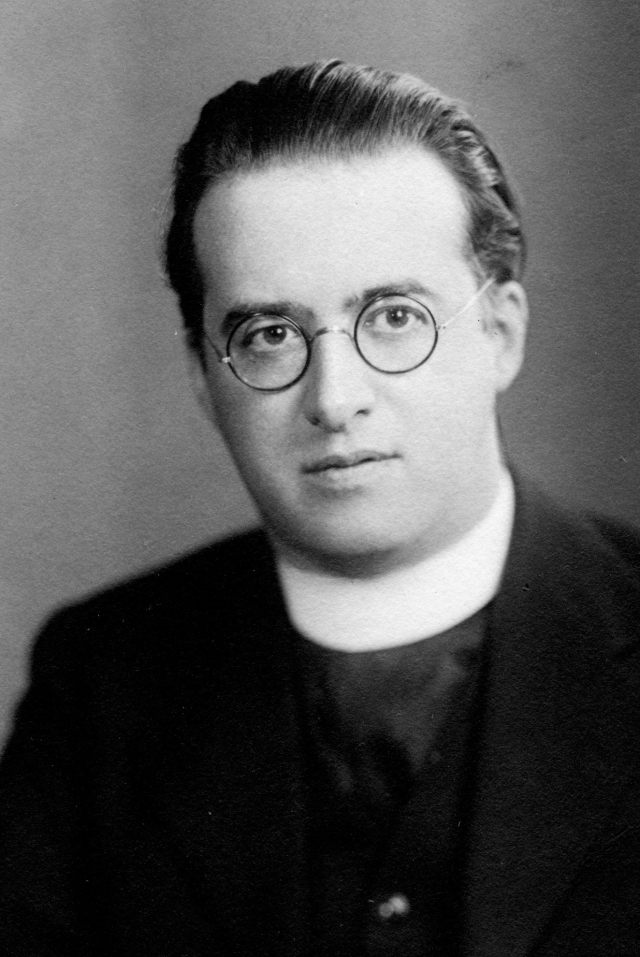
To understand this further, you have to understand that the universe that we live in had a definite beginning, and will surely have a definite end as well.  This is a topic that has not always been too terribly well considered by the secular world, who have resisted it for some time.  Sure, now we know about the Big Bang Theory, but there was a time in which that kind of theory was resisted, sometimes heavily, by the scientific world.  The scientists of the time (not universally, but certainly including some well known ones) pushed back against the idea of the Big Bang, precisely because it suggested creation.  It suggested that everything we see around us can be tied back to a single, creation moment, before which nothing could be known.  This was known not as the Big Bang theory at its inception, but as "The hypothesis of the primeval atom." And this theory, before it was taken seriously by Hubble, Einstein, or anyone else was discovered by this guy:

Does his shirt look familiar to you?  It should, if you're reading this blog.  That's Georges Lemaitre, a Belgian priest, soldier, and physicist who worked in the Vatican observatory.  And it was his calculations that drew the entire universe back to creation.  At the time, the scientific community believed that the universe simply had always existed, would always exist, and that there was no creation moment required.  Once Lemaitre had proposed his hypothesis, all that changed, and the world had to deal with the fact that the math checked out, and that there was nothing, then there was a lot of something.

I mention this because that's what the last Sunday of the church year reminds us of; not only that God made everything, which he did, but that the forms of this world are passing away.  This universe won't always be here.  It, by itself, is not eternal, it does not endure forever and ever, and both science and faith agree on that point.  Where they disagree, however, is what they have to say about the beginning and the end.  

In the faith, we believe that the universe began when God made the heavens and the earth, way back in the book of Genesis.  We believe also that the universe will have an end, and we think about it and ponder it every time the church year draws to a close.  Sure, the seasons, the years, it's all cyclical for now, but it's not an eternal cycle.  Eventually, Christ returns, and the cycle ceases.  When the director stands on stage to thank the cast and crew, the play is over, and cannot begin again.  That world is gone, and a new one begins.  As Christians, we believe in what the Bible says, that there will be a new heaven, and a new earth, for the flawed, broken ones will pass away and be gone.  And that means that the world that is running out of gas, where it will run out of heat, run out of time, will all be gone eventually, though nobody knows when.  But you're not basing your hope on the temporal universe that you see around you.  You're basing it on the fact that there is a force, a God who made the universe, who existed before it, and who will exist after it is gone.  Everything else becomes ultimately meaningless, because as much fun as you're having now, on a long enough timeline , everyone's life expectancy drops to zero.  


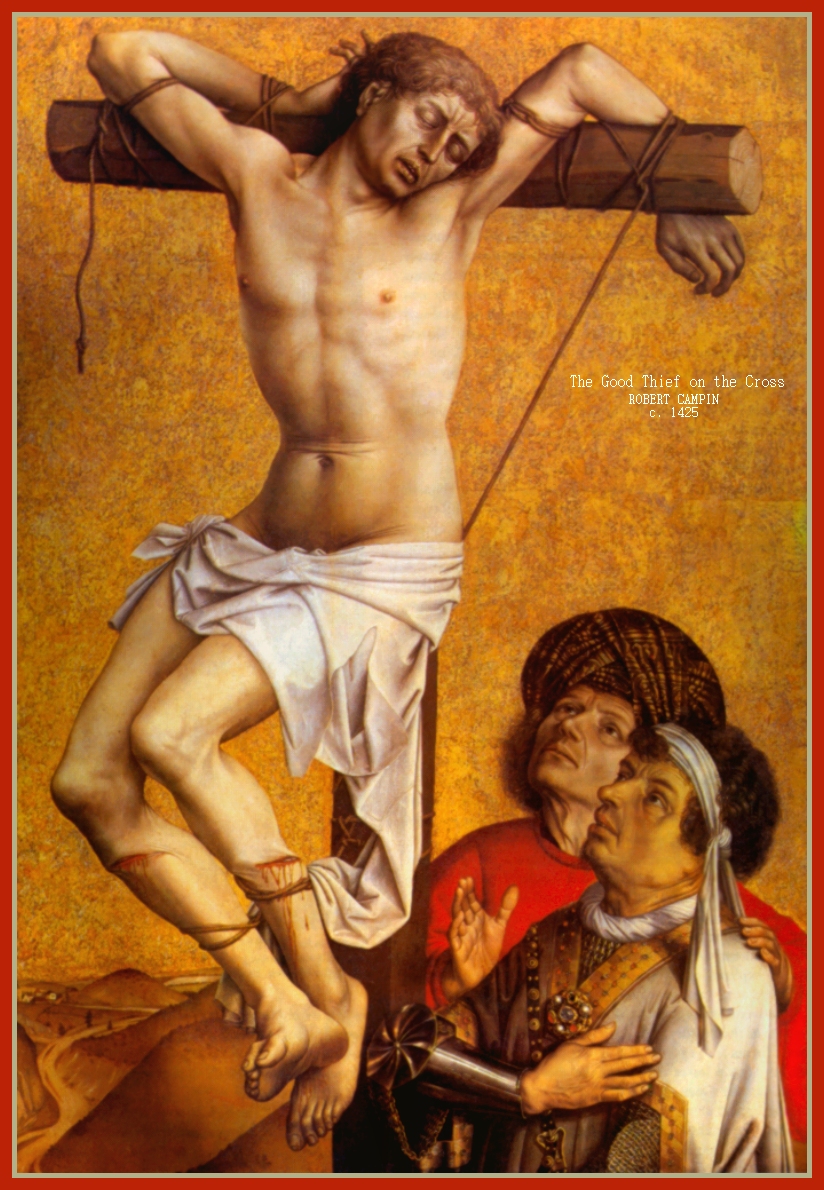
The thief on the cross next to Jesus of Nazareth got that time was running out.  He wasn't talking about a long timeline, he was talking about a very limited one indeed.  A couple of hours, maybe, then it's lights out.  When he reached out to Jesus, he did so as someone understanding maybe not that the universe was ending, but that his time in it was.  And his plea to Jesus was to say 'Jesus, remember me when you come into your kingdom.'  Your kingdom which is not of this world, which is not tied to the world that we have that is falling apart, grinding down, and wearing out.  Your kingdom which is outside of time and space and which is the only hope I have left.  For a modern, enlightened, scientific people who have the ability to look forward in time, to contemplate not only our own mortality, but to contemplate the eventual heat death of the universe, we have to figure out which kingdom we want to be a part of.  The kingdom of this world which is rapidly drawing to a close, or the kingdom that is not of this world, that exists outside it and is not subject to its rules.  The last Sunday in the church year gives us time to contemplate that, the presence of the cycle, and the fact that when the cycle draws to a close, it is He who makes the world who will still be around once it is gone.  He remembered that thief, and the promise that he made to the thief is the same as he makes to us - that we will be with him in Paradise.

Tuesday, November 5, 2019

All Saints

There are some things that become unavoidable if you live long enough.

All of a sudden, one day, your suit that you bought gets used a lot less for weddings, and a lot more for funerals.  All of a sudden, you notice that people your age have died.  They're not supposed to do that, are they?  That's for old people!  And then, one by one, the members of the generation older than yours start to pass away as well, and then, as may surprise you, an uncle or aunt somewhere dies, and you realize that you're now the older generation.  The generation older than yours is all gone now.

This is all quite shocking, and happens to most of us, once again, if you live long enough.  The longer you live, the more you will tend to outlive your peer group, to the point that no matter what a great guy someone is, if they're an octogenarian or better when they die, they're not going to fill the church up too much for their funeral.  A 17 year old who dies certainly will.  Now, this is because the older you get, the more people that you know and love die.  Death is a fact of life.


This is why a Christian celebration like All Saints' Day becomes more important as you get older.  For the younger person, it is intensely important to hear and know what Christ does for you - how he forgives sins, how he promises life everlasting, how he divides your sins from you as far as east is from the west, all that good stuff.  And this is all good and true, of course, but to be honest, there are  other things to consider on a day like All Saints' Day. And this is the one day where I don't talk about what God has done for you.  I talk about what God has done for them.

Them? Who?  You know who.  You know who because you have been told at some point, somewhere, that someone you love has been taken to the hospital, and it's not looking good.  You may have been pulled out of a hospital room by a doctor into the hallway for 'the conversation,' in which the talk has moved from treatment to comfort.  You may have spent hours at a bedside in a hospice, listening to machines beep until they stop beeping.  And you very probably have gone to a funeral.  You have walked into the church where there have been baptisms  and weddings, but now the tears are of sadness, because a loved one is not coming back.  You may have walked out to a graveside on a crisp autumn afternoon, and had the funeral director give you a flower from the arrangement on the casket right before it is lowered down into the ground, and then gone from sight forever.  You may have had the responsibility of placing the urn into the ground or into its niche, which is the last act of earthly service you can provide for that person, and then that space is sealed, and there is nothing left that you can do.  If you haven't had any of these experiences yet, you will. Just give it enough time.

And this is why we speak the way we do on this day.  This is why we have the sorts of conversations that we do around this day, in this space, because what God does for you is important, but so is what God has done for them. This needs to be a major guiding force for you, it needs to be a major consideration more now than ever.  Honestly, it's always better to deal with an issue before it becomes a crisis.  It's good to look at your roof before it rains.  It's good to deal with your blood pressure before your heart attack.  And it's good to think about what God does for those whom you love and cherish before they're gone.

Maybe you will, maybe you won't, but in all the ins and outs of life, you need to think about and consider the line from the middle of the beatitudes, where Jesus says 'blessed are those who mourn, for they shall be comforted.'  Well, how on earth is that supposed to happen? Honestly, I don't think we really truly consider this that often, but the only real comfort that you can get from the world when someone dies is to be told that they lived a good life, and they were a good friend.  But that will make you feel worse if it's true!  If it is true that someone you love lived a truly good life, that they worked hard, were a wonderful husband or father, wife or mother, friend, aunt, whatever, you'll just feel worse to hear that.  The best you can hope for is that you will eventually forget how great they were.

Or, you can turn to the one who gives peace as the world does not give.  Who forgives sins, and covers over unrighteousness. You can turn to the one who binds up the wounded, and who promises resurrection, and life everlasting.  And that is real, genuine comfort.  It's comfort that does not go away, and it works better the better the person is.  If you have someone who is genuinely good, who was a good person whom you loved and cherished, then the reality of the resurrection will be actually better and sweeter the more that is true.  And Christ knows this.  This is why the resurrection is the major point of the Christian faith, because all these humans on earth are unique, and cannot be replaced. The comparison that I made on Sunday was that although each person is unique, they all go into that great cloud of witnesses, just like a snowbank is made of a great pile of snowflakes, indistinguishable until you extract just one and realize that it is fully unique.  And for every single person about whom you have said that you would give up anything to see them again one more time, Christ did give up anything, in fact everything.  He gave up everything that he had for that solution to manifest and to be made real.  The cross of Christ was where that issue was fully and finally resolved, and life was guaranteed not for a while, but sealed for eternity.


So on All Saints' Day, we face these losses with confidence, with strength, and with vigor, remembering what we forget for most of the year.  We usually think about what Jesus does for us, but something of supreme importance for us to remember is what Christ does for them too.

Friday, November 1, 2019

Boo!

Happy Halloween everyone!


But if you're a Lutheran, the 31st of October has other meanings, you know.  It's the day when someone knocked on a door, with a hammer, and instead of getting candy, he brought down the corruption of the church.  The moment that Dr. Martin Luther nailed the 95 theses to the door of the Wittenberg Castle Church was a big moment.  It was the moment which began the reformation, but it was not the be all and end all of the movement.  What you need to know is that Dr. Luther did not go out of his way to start anything known as a reformation that day.  Do you know what he came to do? He came to dispute about the sale of indulgences.  

Go ahead and read all 95 of the theses.  I'll wait.  Most people, of course, haven't read them, and there's a good reason why not, which is the same reason that most of us don't read the book of Leviticus that often either - because it deals with something that is not so much of a pressing concern for us these days at all.  Luther's theses are there to dispute about indulgences and the sales thereof.  This seems like a minor issue, of course, since the last time you heard anyone talk about the sale of indulgences was probably 365 days ago.  But Dr. Luther, in nailing the theses to the door actually did something far more profound than just nailing a document or getting the sale of indulgences stopped.

The point that I have made before is that you can't pop part of a balloon.  If you blow a balloon up nice and big, then stick a pin in it, the whole thing blows out.  You don't just lose part of it.  In the same way, what Dr. Luther did was to poke a hole into one particular part of church teaching; the sale of indulgences.  What that did was to pop the whole thing.  He did so by nailing the theses to the balloon of church teaching, understanding that these people worshiped God with their lips, but their hearts were far from him. This wasn't really about the sale of indulgences, though it first appeared to be, rather it was about where the church gets its teachings and authority from.

In the Gospel reading, we heard from Jesus saying to those who were around him that if they would continue in his word, they would know the truth, and the truth would set them free.  Now, they fought him on that one, refusing to just say that his word was truth.  Instead, they fought him, pushed back, insisted that they didn't have to follow his word, and that, you know, their own rules were probably just as important as the word of God.  That happens so fast, and so regularly, that we almost don't even notice anymore.  Think of who it was who opposed Jesus the harshest, and realize that it was the Pharisees, the chief priests, the scribes and the teachers of the law.  In other words, the people who should have known the word of God the best. If you skip ahead to those who opposed Dr. Luther the most, it wasn't the Turks, you know . It was the Catholic church of the day, the Bishops, the Pope, the curates who all had the scriptures, and who all in theory should have known better.  Which they did not.  They did what people tend to do, which is to worship God with their lips, but to have their hearts far from him.  They value the traditions of men instead of the laws of God.  This is why the Jews in the New Testament opposed Christ, who is God in flesh.  They did so because Jesus was leading them back to the old morality, the old morality that didn't change ever.  But they kicked against him.  Do you remember the time where he made mud and placed it on the blind man's eyes?  He was immediately targeted by the Pharisees for having not kept the sabbath.  What did Jesus do to break the Sabbath?  Like a rogue, he combined solid and liquid ingredients which is very much not allowed according to the Mishna, which is the oral law.  And once you start having oral laws, you can have the position that although you follow God and his commands, well, you can only understand them through the lens of human rules which all of a sudden override the word of God.  Things like how on the sabbath you can't combine solid and liquid ingredients, or pluck a strawberry.  You can't pick up your bed and walk, you can't start or extinguish a fire.   

And you can't get married as a priest.  And you can't read the Bible in your own language.  

Stop me if you've heard this one, but this seems a lot like history repeating itself.  When Dr. Martin went to the Wittenberg Castle Church, it wasn't to start a new branch of the faith, or even to inaugurate the reformation.  But he essentially had to, because his position was going to lead there anyway.  His position of saying that the faith of the church had to follow what Jesus says in John 8, that we have to continue in the word to know the truth, and the truth will set us free.  But that isn't new.  It's old.  But our desire to veer away from it comes up every 500 years, you know.  You're on the same cycle you've always been on.  There are reasons why there are dozens of denominations out there who all claim some modicum of spiritual truth, but who say vastly different things. How is that possible? Some consult the word, others do not.  That's how they veered away from the truth 200 years ago, 500 years ago, and today.  But the injunction of Jesus stands.  If you continue in his word, you will know the truth, and the truth will set you free.