The musings of the Pastor from Good Shepherd Lutheran Church, Regina SK

Welcome. If you're a member at Good Shepherd, welcome to more thoughts and discussion of the week that was, and some bonus thoughts throughout the week. If you're not a member, welcome, and enjoy your stay. We are happy that you're here.

If you like what you see here, consider joining us for worship at Good Shepherd Lutheran Church. Sunday mornings, at 8:30 and 11:00. You can also follow us on Facebook.

Monday, May 25, 2015

dry bones

Allow me to get super mario on you for a second.  I promise it won't take long.  Back in Mario 3, they introduced an enemy called dry bones.  Here he is in all his glory


He's basically a mummified koopa troopa, and since his introduction in Mario 3, he's become a bit of a mainstay.  He's been in Mario Party, Mario Kart, and a great number of other Mario sidescroller or 3D games.  Now, why oh why are we talking about this mario brothers enemy?  Because this last Sunday, Pentecost Sunday, featured the story of Ezekiel at the valley of dry bones.

You'd think this was just an excuse for me to talk about an identically named enemy in Mario, but it's not, not really.  It's not because Dry Bones has one other trait that separates him from just being a re-skinned koopa troopa.  He doesn't stay dead.  Yes, you heard me correctly, that Dry Bones, after you stomp him, will stay down for a while, then will rattle, and come back together.  How perfect is that?  The story of Ezekiel at the valley of dry bones is very similar to that story, now, isn't it  Bones that are very dry, have been stomped flat by Super Mario, and then there is a great rattling, and the bones come together.  And they don't stay down, either.  Although Mario can stomp them into dust for forever, they will perpetually come back to life.


This is great, because it is exactly what happens in the valley of dry bones with Ezekiel.  The people that were thought to be dead are brought back to life.  Their bones come together, bone to bone, and then there is flesh, and muscle, and organs, and then they are standing there, a great army.  But Dry Bones from Mario tells us something else, which is that Mario can stomp them down all day, and they can come back together all day.  In other words, there is no such thing as dead.  Dry Bones will perpetually come back to life.

This is what happens in the valley of dry bones.  Ezekiel overlooks the valley, and sees that the bones are very dry.  So God asks him 'can these bones live?' Ezekiel responds by saying 'Oh Lord, you know.'  In other words, no, no they cannot.  But Ezekiel is instructed to prophecy to these dry bones, to speak God's word to them.  It is his job to preach God's word to the dry bones, to corpses long dead.  And you can best believe that Ezekiel probably thinks that he's wasting his time.  Why bother preaching to someone who is not only not going to listen, but cannot listen?  If you go with what you think, what you feel, then you're going to come to the conclusion that you probably shouldn't waste your time on preaching to bones that are, in Ezekiel's own words, very dry.

But Ezekiel goes, preaches, and the bones come together, bone to bone, with a great rattling sound.  Contrast that with the day of Pentecost as shown in the book of Acts.  In that story, the disciples were together,  and then there was a great rushing wind, and divided tongues of fire became seen over their heads, and they began to speak. And when they spoke, all the people who were assembled, no matter where they were from, were able to hear and understand the preached word, and take it to heart.  If the disciples had been looking at things from a limiting view, they would have been unlikely to preach to the people assembled at Pentecost, thinking, as they well might, that it would be a waste of time to do so.  Why bother preaching to a group of people who aren't going to listen, and so most of us, looking at it, would just as well not bother.  Which is what we do now, right?


These days, though, we're tempted to not bother not because of language barrier necessarily, but usually because we feel as though nobody is going to bother listening.  People have already made up their minds, so what's the point of talking to them about it?  The bones are very dry.

Right.  But what kind of God do you believe in? What kind of God do you believe in, and what does the spirit do?  Here. we see the word of God reanimating corpses, we see the Spirit of God making it so the disciples can be heard and understood in all the languages of the world.  You believe in a God who spoke the universe into existence, who spoke, and the world was formed, who spoke and the creatures of the world popped into being, who made everything from K2 all the way to the mitochondria in your cells, you believe in all that, but you don't believe that the Spirit of God, the word of God, can change someone's mind?

Really?

We have a way of limiting God's power in our own minds.  We have in mind what God can and can't do, we feel as though there are certain things that are impossbile with Him, and those things are usually based on what people are or are not feeling or thinking about their position vis a vis God himself.  Once someone has made up their mind to reject God, we tend to view that as dry bones.  Unfertile ground.  It's something that's not worth preaching to.  And if Ezekiel or the disciples had viewed things that way, then they would not have bothered preaching where God had told them to.  But they did.  And when they did, bone came together with bone, and the people who were there to listen at Pentecost, three thousand of them were baptized that day.

If you just wait to preach to what you think is fertile ground, then you'll never get anywhere.  God isn't asking you to do that.  He's asking you to go to the valley of dry bones, to go to an unbelieving world, and bring Christ to them.

It's that, and it's more.  It's more than that relative to what you think the spirit of God can and can't do.  Your life is full of dry bones, isn't it? You may not want to admit that it is, or that you have valleys of dry bones around you, but you do.  You have plenty of dry bones occupying your time, your space.  You have broken relationships, broken over time with neglect or hurt feelings, and after a while, you look out over them, shrug your shoulders, and say to yourself when God asks you to get back to work with them 'the bones are very dry.'  There's no point in working on these relationships, right?  Dead is dead, gone is gone, too late is too late.



But it isn't.  Back to Mario, you can stomp on Dry Bones all day, but it'll keep on popping back up. reconciled to each other; to go back to the valley of Dry Bones, and preach there, to speak God's forgiveness, to be humbled and to repent, and to not ever think of calling unclean what God has called clean.  You've been forgiven by God, so you ought to forgive each other.  You were enemies of God, and were reconciled to Him.  You were dry bones, dead in your trespasses. That's when Christ died for you.
 What is God in the business of?  He's in the business of forgiveness and renewal, of rebirth and new beginnings.  That's what He's all  about.  That's why he wants us to lay down our weapons, leave our gifts, and go and be

You think it's too late?  You think things are too far gone?  Ezekiel probably thought the same.  And then the dry bones came together.

PJ.

Tuesday, May 19, 2015

Duck duck goose.

The question that we ask ourselves, after a while, is 'why am I here?'  Granted, you don't have to ask yourself that question, and most species don't ever ask themselves that question.  Ducks don't ask themselves that question, they just get on with the business of being ducks.  But people, we do ask ourselves that question, and in asking ourselves that question, we need to think not just about the question 'why am I here,' but also the other question of 'why can I think about why I am here?'

And to get to the root of these questions, we have to talk more about ducks.  At this time of year, you're going to see a whole bunch of cute, newly hatched ducklings, waddling around being cute.  Aren't they adorable?  Yes they are.  And you know they're adorable, too.  You may say to me 'I don't really care about ducklings,' but I would consider that you're fibbing.  I know you're fibbing, mainly because of the phenomenon of the mammatus clouds.  Remember that day in Regina when the mammatus clouds showed up?  Remember that day that we all went outside, and all took pictures of the same thing?

You probably remember where you were that day, and you probably did what we all did, which was to take pictures, share them to facebook, and all of a sudden, everyone's wall was innundated with pictures of the exact same shot.  That shot.  With ducklings, it's the same.  You see a row of ducklings waddling after their mama duck, and you rush to snap a picture, tweet about it, facebook it to everyone you know, and all that.  We do this because ducklings are adorable.  Goslings are adorable.

But nobody snaps pictures of full grown Canada Geese and goes 'awwww.'  They have an adorable phase when they're tiny and yellow and fluffy and sweet, and then that goes away, and they become full grown monsters.  They get big, they get loud, and they get mean.  This is what the geese do, and how they mature.  And we say of them like we say of puppies, kittens, ducks, that we wish they would stay small forever.  We say that of puppies, kittens, ducklings, and gosh, human beings too.  Why can't they just stay small and sweet forever?

But they don't and they don't for good reason.  If a duckling, or a human being, was to stay small and cute forever, they would stay small and helpless forever.  They would require their mothers to do everything for them perpetually, forever.  That's the tradeoff.  Think of dogs, because that's always a good place to start.  People love puppies, but those puppies grow up eventually, don't they?  And when those puppies grow up, they become less cute.  You might love them all the same, but they're not as cute.  So what we've done is to make the dogs small and cute forever.  They remain tiny and small and purse-sized for all time.  And we want that for all our stuff.  This is why we have dogs like chihuahuas, which are companion dogs, toy dogs, dogs not designed for work, not designed for productivity, but just designed to hang out and be cute.

That's what puppies are for with us, not designed to work, designed to hang out and be cute and adorable.  And we've managed to do that with certain dog breeds for eternity.  So when we ask ourselves what is the purpose for us being here, well, what's the purpose for these dogs being here?  What's the purpose of ducklings?  For Goslings?

The puppies are there to grow into dogs, to be shepherds, to be guards, to be guide dogs, or hunting dogs, to get to work.  The ducklings are there to grow into ducks, the goslings are there to grow into geese, they're all there to get to work.  They're there to be productive, to work, to get down to business.  They do that when they grow, when they mature, and when they get kicked out of the nest.


When we think about ascension Sunday, it's the day when Jesus ascended to the heavens, and left his disciples there, still probably half covered with metaphorical yellow down, wondering what to do next.  They were so used to being with Jesus, so used to him doing everything, so used to him doing all the healing, all the preaching, all the evangelism, all of the everything, that like ducklings, like puppies, they had no idea what to do next.

But the disciples weren't there just to follow around after Jesus like ducklings after mama duck forever.  The great thing about ascension Sunday is that the readings stem from the end of the Gospel of Luke, but also the beginning of the book of Acts.  And they speak about the exact same event, the ascension of Jesus.  But in Luke, that's the end of the story, whereas in Acts, it's the beginning.  It's the start of it all.

When the disciples are standing there at the ascension of Jesus, it's both the end of one story and the beginning of another.  It's the conclusion of the chapter of Jesus being present here on earth, and the beginning of the chapter of the disciples getting to work, shedding the down, and moving out into the world to accomplish the work that they had been placed on earth to do.  Not being puppies anymore, but becoming the workers that they were designed to be.

We are God's workmanship, says the scriptures, created by him to do good works which he has prepared in advance for us to do.  We were made by God to get to work, to do his work in the world, to spread his gospel and to do the work that he has given us to do.  And this is the same with us today.  God has not given you a spirit of cowardice, but of power, and of love, and of self-discipline.  He has placed us here to do his work, and to carry the weight that he has given us to carry.  And we weren't going to do any of this if we still had in mind that Jesus was there, mama duck style, to do it all for us.  Then we were going to be moribund, weak, and disinterested in getting anything done at all.


So Jesus ascended into heaven, but gave his disciples a promise.  Because it wasn't just that he was leaving, but that he was actually going to be more present than he was before.  If you think about this, he told them that where two or three were gathered in his name, there he would be in the midst of them.  So not only does Jesus make it possible for us to get to work without becoming moribund, but he has also promised to be present with us all.  Whenever we gather together for worship, whenever we gather as Christians for devotional time, whenever we assemble together, Christ is there with us.  So his ascension comes with two benefits.  It gets us to work by kicking us out of the nest, and it means he can be in all places at all times, to be with his people whenever they gather.

So yes, why on earth are we here?  We are God's workmanship, created by him to do good works which he has prepared in advance for us to do.  How are we going to do this?  Getting kicked out of the nest, shaking off the downy fluff, and becoming wise as serpents, and gentle as doves.  Going out as lambs among wolves.

PJ.


Tuesday, May 12, 2015

Fruit vs Veg.

In case you were wondering, yes, we do like to play this game at home.  The ever-popular fun game of 'fruit or vegetable.'  It's a scream.  Here's how it's played: You look at a plant based thing on your plate, and say whether it's a fruit or a vegetable.  Hilarity ensues.

Now, you may very well claim something important here, which is that this isn't fun, and if you'd claim that, you don't live in my house.  We love this game, even though it only has one rule.  Does
the plant based item in question have seeds?  If it has seeds, it's a fruit.

That seems too simple, really, but it's not.  That's the definition for a fruit, period the end.  There is nothing else to say on the subject.  And I know, you may kick and scream, but it's true, that's what fruit is. Fruit is what the plant gives you that has a seed in it.

I'm aware that this all seems pretty simplistic, but it stands in opposition to how we use the things in question, which is why this game is so hard.  This game is so hard because how we use the botany in question.  We use fruit for tasty snacks, and we use vegetables as things to avoid because of how gross they are.  But that doesn't change the base botany of the situation as much as we might like to.  This is why, when it comes to Subway, when they offer you the chance to top your sandwich with fresh 'veggies,' there are only three veggies in the list.  The rest is fruit.  But you'd find it strange if they offered to top your sandwich with delicious fruit, wouldn't you?  Nobody goes into a steak restaurant and asks for a side of fruit, even though their seasonal veggies are primarily composed of fruit.  And as I say, there's only one rule here;  Does it have seeds?

As bad as you are at determining botany, you're every bit as bad at determining spiritual fruit as well.  You don't think you are, but nobody ever thinks they are.  Nobody ever thinks that they can't tell one from the other.  We assume we've got this figured out.  Now, when Jesus tells us to bear spiritual fruit, that's the question that we have to ask ourselves about what we're doing - is it fruit?  In other words, does it have seeds in it?  This is why the plant produces fruit to begin with, because it wants you to eat that fruit.  The plant wants you to eat the fruit, snacking on the fruit and dropping the seed somewhere else, which, when it is buried, will grow up into a new plant.  This is what is intended by the idea of spiritual fruit that Jesus wants you to bear - that it should feed people, and plant seeds.  That's what we're supposed to do when we do the things we do, when we do charity, when we care for God's people, when we nurture and cherish them, we are supposed to be nourishing them, and planting seeds.


It's that that we are designed for.  We are designed to bear fruit.  As Jesus tells us, he is the vine, we are the branches, and through him we bear fruit.  And the great thing about grapes, figs, tomatoes, other things that grow on vines, is that they can be harvested again and again, and the plant isn't harmed.  It can grow for years, continually bringing forth fruit, and that fruit is eaten, and the seeds are planted.  And this is what we are asked to do in the scriptures.  The charity we do, the good works that we offer up, those are fruit.  We bring them forth, they nourish others, they plant seeds, and we can keep on bringing forth fruit for decades.

But we don't.  We offer up vegetables.  And this is where we run into problems.  Because, as mentioned, if fruit is what the plant offers up voluntarily to get its seeds planted, then what are vegetables?  Vegetables are leaves, roots, stems, all those things that aren't fruits.  So, what happens to the radish when you harvest the radishes?  The radish dies.  You harvest the plant to eat not the fruit, not the part the plant wants you to eat.  You harvest the plant to eat the root, pulling it up.  And the radish dies.

This is what we do all the time, because we can't tell the difference between fruit and vegetables.  We don't stop to check to see if what we're doing actually has seeds in it or not.  Are we planting seeds of the Gospel, or are we not?  When we do the charity that we do, is it to plant seeds, or is it to draw attention to us?  Is it a fruit, or is it a vegetable?

The people that Jesus discusses, albeit unfavorably, in the sermon on the mount, they're not going out of their way to make sure that people aren't being fed, but they're not thinking about whether or not they're planting seeds.  When it comes time to think about how charity is done, about how prayer is done, about any of these things, the people that Jesus was talking about weren't pondering through whether they were planting seeds or not.  They were thinking about themselves.  They were offering themselves up as the centre of attention.  They were offering up the branches instead of the fruit.

So what happens when we present ourselves up as the best and brightest thing for people to consider? It's a vegetable situation.  We get chewed up, and no seeds are planted.  The absolute opposite of what we would want to happen.  Instead of the goodness of the fruit that nourishes and plants seeds, we allow people to devour us and our efforts, and no seeds are planted.  Nobody comes to believe in God because you tell them you're a great person.  They do so partially because of the planting of seeds that you do.  Jesus is no different.


We are told to love each other as Christ has loved us, and in keeping with the fruit vs vegetable theme, how was it that Christ loved us?  It was first and foremost through forgiveness.  As Jesus says in the Gospel reading from Sunday, we did not choose him, but he chose us.  He sought us out while we were still sinners.  He came to find us in our sin and in our shame.  It wasn't as though he waited for us to be good before he would love us.  He came and found us while we were still sinners.  He loves us through forgiveness.

We are called by Christ to love one another as he loves us.  And the only way to do that is to think about how it is that Christ loves us, and to do so accordingly to each other.  It means to love each other not because we are great, not because we are fantastic, not because we do well, but because the people we are called to love aren't that loveable.  And neither are we.  Christ loves us in spite of that.  He loves us in a spirit of forgiveness.  He loves us even in our sin; and this is how we are called to love each other.  Not because the people you're called to love are great.  They aren't.  Nor are you.  Not because the people you've been called to love are easy to love.  They aren't.  They're as disastrous as you are.  But this is how you bear fruit, and this is how you plant seeds.  We feed each other with charity and forgiveness, and we plant the seeds of the Gospel, culminating with the notion that we love becasue he first loved us.


Monday, May 4, 2015

There is no try.

Do you remember that book 'the secret?'  I remember hearing about it, but I didn't read it.  I only read the Bible anyway, not other books.  But regardless of that, 'the secret' essentially claimed that the power of achieving what you want is within you all along.  Wish it, want it, do it, that sort of thing.

Now, I'm not going to suggest that the solution to your problems is as simple as just thinking positively, but it is true at least that setting ourselves up for failure is a real thing that we do.  You don't succeed by thinking positively, but by presenting yourself negatively, you're almost guaranteeing yourself failure.  If you present your product by telling the person you're trying to sell it to that they don't want it, then they probably won't.  It's like selling yourself to a potential date.  If you start out by saying 'you probably won't want to go on a date, but in case you've gone crazy or have no other options, would you like to go out to a movie sometime, then ain't nobody going to want to go to that movie with you.

But we're bad for this.  We have a way of sabotaging our own happiness.  We have a way of desiring our own sadness, of authoring our own destruction.  People want to do certain things, they want to accomplish stuff, and yet at the same time, they seek to break their objective down.  This is a hard thing to hear, a difficult thing to go through, to realize that in many cases your own worst enemy is you.  When the question comes up 'what is to prevent me?' the answer is usually a bunch of stuff that
we bring up ourselves, which may or may not apply.  But we insist on following through with it anyway.  We tend to want to make sure that none of the stuff we want actually happens.  We stop it before it starts.  Call it good old fashioned self-destructive behavior.

Now, this carries over to all sorts of things, not just to baptism of other individuals.  Think about the message given to us from 1st John, where it tells us to love one another.  Great idea, right? It's a great idea that everyone is in favor of.  Everyone agrees with this as a principle, that we should love one another, and be good to one another, so the big question on everyone's mind is simply, 'why is that not happening?'  If absolutely everyone on earth believes that we should love one another, then what's stopping us?  Well, we are.  We stop us.  We put up barriers to make sure that won't happen.  We know we should love other people, that we ought to be kind and good and serve each other, but we go to a lot of effort to ensure that we block that out.  That will lead us to sadness, which we tend to feel is well deserved.

But here's the juice.  We are responsible for what we do, and the outcomes that result from that, they're our issue as well.  These problems, these issues we encounter, they're typically our own doing, really.  You know that part in 1st John where it tells us to love one another?  Well, that part isn't just in there for filler, and it's not easy enough for us to look at and claim that we were powerless to do anything about.  Why don't we love our brothers?  Honestly, because usually we don't feel like it.  We're not held captive in some machine forcing our decisions, usually we'd just rather not do what the scriptures tell us to do.  Why not?  Do we disagree with the Bible's insistence that we love one another?  Of course we don't.  Everyone, great to small, universally believes that we ought to be good to one another.  Everyone believes that we should love one another, that we should be kind and generous.  The people you conflict with on a daily basis believe this.  The rude teenagers who take your seat on the bus believe this.  ISIS believes this.  So, you know, why isn't it happeneing?

Simple question, simple answer.  This isn't happening because we get going on the wrong foot.  We start off in the wrong direction, then it's really tough to get going in the right direction again.  Almost impossible.  We start out believing that we should love other people, and so we shoulder that.  We bear that responsibility on our shoulders, and carry it forward.  And in carrying it forward, we realize that the people we are called to love, family and friends, neighbors and co-workers, the people who live in the apartment above or below us, the people who cut us off in traffic, the surly salespeople or distracted waitresses, they're all so desperately unlovable.  They have almost no redeeming features.  So when we read in the scriptures that we need to love each other, because if we don't love, yet claim to love God we are liars, it bothers us to our core.  It bothers us so much that we have to come up with excuses as to why it doesn't apply in this particular case.

Tough luck. It does.  It applies to everyone.  And you may complain and insist that these people are so awful that it ought not to apply.  It's not fair to expect you to love them, to be good and kind to them if they're so dreadful.  Well, that's where the foundational thinking comes in. We love, say the sciptures, because he first loved us, and gave himself as the atoning sacrifice for our sins.  What does this mean?  It means that he laid down his life for us, the godly for the ungodly, the righteous for the
unrighteous.  I know the Bible likes to hammer away at you for being a sinner, but in this case, you really, desperately need it to.  You need it to, because it's the only thing that lets the rest of this make any sense.  You need to know who you are before you can possibly hope to move that to someone else.  What do I mean?  I mean that we're all the heroes of our own narratives.  We all believe that we're in charge of our own destinies, that we are the central focus of the story, and the goodness and badness of everyone else is in relation to us.  But it isn't.  None of us are that great.  None of us are fantastic.  The Bible tells us that there is no one righteous, not even one, for all have sinned and fallen short of the glory of God.  We all have problems, and we all have people who find us to be desperately difficult to love.  We are all people who have those around us who would make excuses as to why Jesus would admit that we are the ones who are beyond loving!

In other words, we have to know about Christ's love for us.  While we were still sinners, while we were enemies of God, not neutral, not friends, but enemies of God, that's when Christ died for us.  He died for you not because you were so easy to love, but because you were so hard to love.  He died for you not because you had done a great job,  but because you were so dreadful.  Once you begin to realize that the stuff from the Bible actually applies to you, that you're not a beautiful, unique snowflake to whom the rules do not apply, then it actually makes it easier for you to love your neighbor.  Why?

Because you know you're no better than they are.

They're the heroes of their own stories, too.  They see themselves as the examples for everyone to follow.  And everyone, from the biggest to the smallest, genuinely believes that they are in great shape, and everyone ought to be like them.  Think of it in Star Wars terms for a minute - does it not seem strange to you that people would willingly join the Dark Side?  That they'd join the evil galactic empire?  Well, it's a matter of understanding that the people who are in the empire believe that they're fighting for goodness and justice, that they would sincerely belive that the rebels are evil, which seems insane to say, but there we are.  The forces of darkness don't see themselves as the forces of darkness, no matter how many skulls you pin to their uniforms.  When you disagree with them, they're not at home wondering how they can be more like you, but how you can be more like them!  In other words, to repeat the words of the Bible one more time, we love because he loved us.  In this is love, that Jesus died for us, to forgive us our sins.  This is what the Bible is essentially all about.  If you don't start from this position, love for each other becomes very difficult, if possible at all. But if you do, then all of a sudden, the people around you actually become loveable.  They do so not because they all of a sudden become better, but because of your perspective.  Why do they deserve love?  They don't!  And nor do you!  There's nothing that we do that makes us worthy of God's time or attention.  But if you work out that you are loved in spite of your sins and not because of them, then the love for everyone else becomes easier.

As usual, it's a matter of perspective.  Everything from a certain point of view.


Monday, April 27, 2015

I just wanna be a sheep.

It's Good Shepherd Sunday, and that's a good Sunday for us.  It's as good a Sunday as any other for us to consider what it means to be Easter people.  Consider the following - We are people who are living in the shadow of Easter, in the afterglow of the empty tomb, and it is at this time that we think about our relationshp with God the Son, Jesus Christ, as the Good Shepherd.  Seems like a strange time to think about it, but it's strangely apt.  But I'll get into that in a minute.  First of all, it's time to start talking about the sheep nature of things.

First of all, the nature of farm animals themselves - why do you raise farm animals in the first place?  Yeah, you know why you raise farm animals.  Unless that animal is a horse, you raise it up for one prime reason - for food.  As you all know, life is nature's way of keeping meat fresh, and farm animal life is no exception.  For you see, Whether it be dairy cows or egg laying hens, sooner or later, that cute fuzzy farm animal is going to end up being eaten.  At the end of its useful days, that sheep that you gained wool from for years, well, she's going to end up as mutton, and that's the end of it.  And gosh, if the cute little lambs were enough to get Lisa Simpson away from eating meat forever, we get to ask ourselves what we're doing with our continued snackage on them.  Any and all farm animals are raised to be eaten.  That's why we raise them, to be eventual food.

And so, if you read through this passage, where Jesus talks about being the Good Shepherd, it might alarm you, given that you know what farmers do with their sheep eventually.  They kill them and eat them.

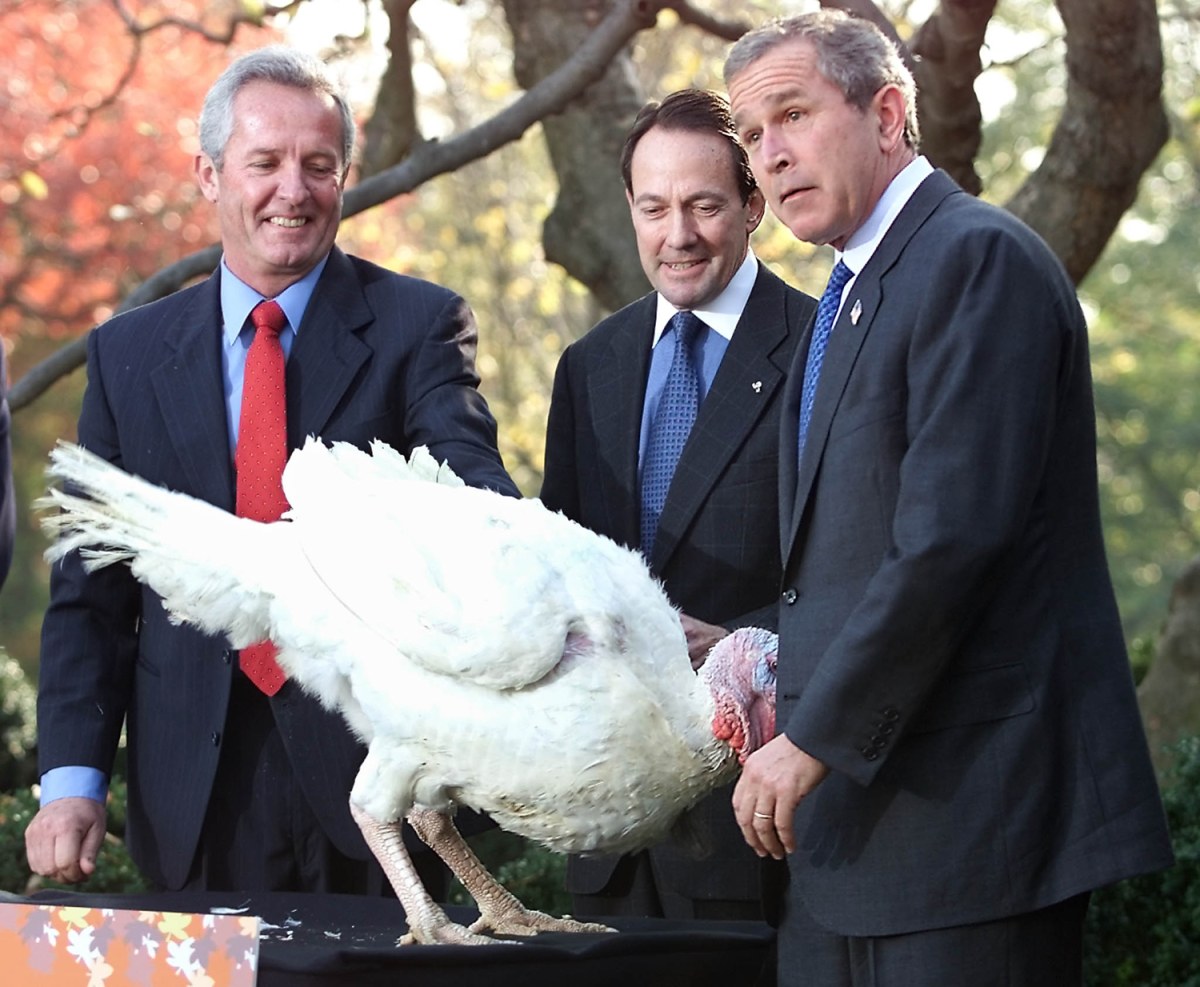
Are there any farm animals, bred for butchery, that are not killed, but are instead rescued, fed, and raised in comfort and peace?  Why yes, yes there are, and they exist in the happiest place on earth.  That's right - Disneyland.  What you may or may not know is that every year, the President of the United States of America, at Thanksgiving, is presented with just a massive turkey, and every year, the President officially pardons said turkey.  That turkey is allowed to live.  But here's the thing, if you're president for eight years, you're going to have eight turkeys strutting around the white house, gobbling in the oval office, and that just won't do.  So if you're not going to eat these massive birds, what do you do with them?  Well, you send them away to Disneyland to be the grand marshall in the Thanksgiving day parade, and then away to a petting zoo.  And that's the life of the pardoned turkey.

In every way, that's like us.  We are raised for destruction.  Conceived in sin, we as human beings are all destined for damnation, riddled with guilt and shame as we are.  Just like the 45 pound turkeys given to the white house, we are destined for destruction, to be broken down and consumed.  But this is where Jesus comes in.

He is the Good Shepherd. And the Good Shepherd reverses the order of things.  We're used to the sheep laying down their lives for the shepherd, but in this case, the shepherd lays down his life for the sheep.  He tends them, cares for them, and loves them entirely to his own detriment.  In this one particular case, they're not destined for death and consumption, they're like the presidential Turkeys, in that they're raised for life and prosperity.

But there's something else, something else that comes into the minds of people when they read this passage.  They look at this and say 'I'm not a sheep.'  Yes.  We look at the situation and say 'we're not sheep, we are masters of our own domain.  Sheep are dumb, they follow whomever, they are easy to herd around, and they just go the way that things seem to be going.

Yup.  And we are different how? Here's a sad truth that none of us want to hear, which is that we are sheep.  We're going to follow someone. we are going to be led around by someone.  It'll either be by God himself, or it'll be by each other.  And that's a hard thing to hear. We all want to think that we're forging our own destiny, but we really aren't.  We're just following one another around, to one extent or another.  We roam aorund, and we follow whoever seems to know what they're doing.  This is how trends get started.  It's not as though we all spontaneously decided that granite would make a good countertop surface, or that stainless steel was the best material was the best appliance material.  It's not as though we all spontaneously decided that bell bottoms were out, and then were back in, and then were out again.  We follow each other.  We are herd animals.  But, as the scriptures say, when the blind lead the blind, they both fall into a pit.  When we lead each other around, we all stumble and fall.  That's what we do.  We are going to lead each other into danger, into trouble, because instead of following the shepherd, we're following other sheep.  That's what we do.

Following the shepherd seems dull, but there's one thing it isn't, and that's dangerous.  It's the only safe place for us to be, the only security we have in a frightening, eternal existence.  The fact that the shepherd has our best interest at heart above his own.  Honestly, you're going to follow someone, so it might as well be the one who laid down his life for you.

Finally, we get to talk about what this means for us today. It's not as simple as just 'Jesus died for you,' thought that is a core message. No, it's bigger than that, because the next step is always 'now what?'  Well, the epistle reading talks about that, talks about what we are now to do since we are
forgiven, redeemed and blessed with life everlasting. The  Bible is funny, isn't it?  No, not ha ha funny, but funny interesting.  Funny interesting in that it seems to be obsessed with life after death, the life of the world to come, and at the same time seems awfully obsessed with the charity you do in this life.  Curiouser and curiouser.

Okay, here's how it works.  And it's not too hard to figure out, really.  Most of the time you can face the things you do on a daily basis, and convince yourself that they're not that important.  That your entire life is pretty mundane.  If you're going to do something important, you'd better be the president of the United States, pardoning turkeys and the like.  You, in your tiny sphere of influence, knowing the people that you do, doing the job that you do, you're not important enough to make any sort of difference, right?  Well, you're wrong.  You get to make all the difference. Who is it that Jesus tells you to love?  Your neighbor.  The person who is around you all the time.  The person who is in near constant contact with you.  And this is where the work of God is done, not in grand sweeping gestures, but moment by moment.  When you have the opportunity to care for the other sheep.  When you have the chance to be good to those around you.  That's what you are called to do, to not ignore the pleading of the other sheep, but to love them in deed, not just in thought and word.  We are called to love and care for those around us, those whom we know, those whom we encounter, and Jesus gives us a promise attached to that - No matter when we do that work, we are doing his work.  If we weren't forgiven, redeemed children of God, then it could be that these things we do for each other honestly wouldn't matter.  But they do.  They matter because the people we love and care for, the people we put up with, they are forever people.  The promise of life everlasting means that the decisions we make for each other, the help we supply each other with, that's the stuff that matters, that counts.  Empires come and go, nations rise and fall, but the human beings, the redeemed children of God, they're forever.  It's not what we would expect, but it's the way things are.  When you are present in kindness for a friend, when you do the best job you can possibly do in your employment, you're doing God's work.  You are caring for forever people.  You are making the only decisions that will matter.

It's funny, because we spend a lot of time working on the inanimate, and less time working on the animate, which we are called to do.  We are called on to care for each other, to build each other up, to not just love in thought and in word, but in deed.  And we are most especially called to do that by the Gospel, which gives us two promises.  First, that we are forgiven for not doing this well when we fail, and seondly, that through the death of Christ, our decisions have eternal consequences.  The charity that we do for those around us desperately matters.  For eternity.

PJ.

Monday, April 20, 2015

Good for you, good FOR you.

To set up what I'm about to talk about, please enjoy this commercial about Chef Boyardee.  If you remember this commercial, then get ready for a trip down memory lane.


Hector Boyardee, in this incredibly factual documentary, says what we're all thinking.  How come everything that's so good for us tastes so bad?  This is something that you learned as a child - that if something was going to be good for you, it was going to be revolting.  Here's a list of so called superfoods - do you like any of them?  

Many recent superfood lists contain common food choices whose nutritional value has been long recognized as exceptional. Examples of these would be berries, nuts and seeds in general, dark green vegetables (such as spinach, kale, collard greens, Swiss chard, Brussels sprouts, and broccoli), citrus fruits, fatty fish such as salmon, mackerel, andsardines, vegetables with bright, dark, or intense colors (such as beets and their greens, and sweet potatoes), many legumes (peanuts, lentils, beans), and whole grains as a group.

This is from the ever-accurate Wikipedia page on superfoods, and what it tells you is that fatty fish, dark green vegetables, and beets are the foods to go for.  Anyone down for  a plate of swiss chard, sardines, and yam?  No?  

Yes, you have to really force yourself to eat the stuff that's good for you, right?  It doesn't come easily.  The stuff you want to eat, that comes naturally.  Everyone loves to eat the stuff that's bad for them.  


Yes, that all looks delicious, and no swiss chard or brussels sprouts to be seen.  But here's the thing.  Every grocery store you go into, sardines and the like are for sale.  And no, it's not as though everyone is buying them as a joke.  At least someone is buying them on purpose, going through the effort of buying them because they want to.  That means that somewhere out there, there is someone who actually enjoys eating sardines.

Someone who would have been like that would have been our Lord and Savior Jesus Christ.  When he appears to the disciples in the reading that we had on Sunday, he asks for, and eats some broiled fish.  Delicious.  Most likely, Jesus would be eating some kind of Tilapia.  What do you know about Tilapia's nutritional value?

Tilapia have very low levels of mercury,[43] as they are fast-growing, lean and short-lived, with a primarily vegetarian diet, so do not accumulate mercury found in prey.[44] Tilapia are low in saturated fat, calories, carbohydrates and sodium, and are a good protein source. They also contain the micronutrients phosphorus, niacin, selenium, vitamin B12 and potassium.[45]

Eating this sounds good, right?  What's the downside? Oh right.

Tilapia is one of several commercially important aquaculture species
(including 
trout, barramundi and channel catfish) susceptible to off-flavours. These 'muddy' or 'musty' flavours are normally caused by geosmin and 2-Methylisoborneol, organic products of ubiquitouscyanobacteria that are often present or bloom sporadically in water bodies and soil.[42] These flavours are no indication of freshness or safety of the fish, but can harm the reputation of a product in the eyes of the consumer. 


I'm so happy that Jesus ate fish.  I'm so happy that he ate broiled fish in their presence, because that entire act tells us important things about our life, our faith, and about Jesus.  Jesus wants us to grow in our faith.  He wants us to love the law of God, and to meditate on it day and night.  He wants us to abide in his word, so we will know the truth, and the truth will set us free.  But what does he do with the disciples? Well, when they see him in this most recent post-resurrection appearance, they feel as though he is a ghost, or a spirit.  They don't immediately say 'behold, the risen Lord!'  Their minds are still focused on the way that things always have been; that you are born, you live, you die, and that's it.  The thing is that if something bucks that trend, then it has to be a ghost, a spirit, something like that.  It cant' just be the risen Lord.  That's not possible.  People don't rise from the dead.

Remember that these were guys who were moving around with Jesus, going with him wherever he was going, and moving with him.  They were listening to his words, and taking it all in.  They were familiar with the scriptures, and heard Jesus speak with his own mouth about how he would have to be crucified, and then on the third day rise again. They'd heard this, and yet still didn't manage to internalize it well enough to figure it out.  

Growing in the word is in every way like eating sardines.  It's the sort of thing that people know is good for them, you as Christians know it's good for you to get into the word and to hear, mark, learn and inwardly digest it.  You know it's the right thing to do.  But you don't want to do it.  Why does everything that's so good for you taste so bad?  Why is the stuff that's good for you to do hard for you to do?  Why, if you know that worship of God, growing in his word, is a good thing for you to do, why is it so hard to get it done?  Well, we're weak and frail people.  Even the disciples, who had heard the word that Jesus had proclaimed, even they didn't understand it, really.  They still had a hard time working through the issues with the resurrection, no matter how many times they'd heard  it.  So Jesus had to open their minds, and teach them everything that was in the scriptures concerning himself.  


He has to do that with you too.  This is the point behind the incarnation, is that we weren't going to get so deep into the word, we weren't going to meditate on God's law day and night, we weren't going to get our nonsense together, we were just going to continue missing the point, not being diligent, and getting things wrong.  So Jesus comes to us, both in terms of being in Israel in the first century, and in terms of being present when there are two or three gathered together, he is there in our midst.  And most importantly for us, he is present in the holy sacrament, in the celebration of Holy Communion, where we encounter the body and blood of Jesus.  He is here present, as the word of God made flesh.  And we make this word of God a part of us, not because we chose him, but because he chose us.  He does not wait for us to get ourselves straight, he comes to us here and now.  Being diligent in finding Christ, follwing his word, it's too hard for us, and we don't do it.  So he comes to us in word and sacrament, and gives the word of God to us in a form we can take.

Now, here's the thing.  Given how gross sardines are, how is it that people eat them and seem to like them?  How is it that people seem to run and enjoy running, or floss and enjoy flossing?  How is it that people look at liver or brussles sprousts and legitimately seem to enjoy the experience?  Well, like with many other things, you eat it until you like it.  Your parents told you to eat something because it was good for you, and after a while, you started not only to believe them, but to want to voluntarily eat the thing.  Once it becomes a part of who you are and what you do, all of a sudden it's not a problem anymore.  It's just what you want and crave.  So it is with church, with God's word, it's like eating that sardine.  At first you may only eat it because you feel like you should, but after a while, a switch gets flipped, and you start to do it because you want to.  

Thanks be to God for the fish, for opening the heads of the disciples, and our heads as well, to fill us in on the meaning of scripture.  And thanks for dying and rising again, breaking death, and restoring us to life.


Monday, March 23, 2015

Cheating

One of the things that will come to mind first when you start to watch Maury Povich (That's Jeremy Kyle if you're British), is that you should be doing something better with your life.

After you've come to that crushing realization, then the very next thing you should be doing is to check out what happens with cheating couples.  For it is always cheating couples.  It's all paternity tests, and lie detector tests, and hidden cameras and all that noise.  And here's the thing, is that in a
marriage type situation, in which people make vows, and promise to abide by them, and then don't, the relationship can go one of two ways.  Either the couple breaks up (usually unamicably), or the couple agrees to get back together.  But here's the thing about these couples in crisis - if you're the one cheating, and you want to get back together, if you want to grovel and seek forgiveness, you don't get to make the rules anymore.  You don't get to be the one who sets conditions and insists on who can and can't do things in the relationship.  Not anymore.  That province is the province of the person who was cheated on.  They get to decide if they're going to take you back, and they get to set the conditions.  They get to be the ones who decide how the relationship is going to go from now on.

The reading that we had from the Old Testament touches on that, talking about how Israel is God's bride, and he is her husband.  And this relationship explains why the Lord our God is a Jealous God.  we entered into a covenant relationship with him, we signed up for a covenant relationship with him, and we broke that covenant.  Time and time again, we broke the covenant that God set before us.  The rules weren't unknown, the contitions weren't too hard to work out, it wasn't as though you had a Ashley Madison isn't full of people who haven't realized that they're not supposed to cheat on their spouses, it's full of people who are happy to cheat as long as they don't get caught.
hard time figuring out what to do with things, no, it's a matter of knowing what you ought to do, and then not doing it.  In the same way as people who cheat know what their marriage is all about, they just choose not to follow through with it.

Now, this is our relationship with God.  We are his spouse, and he is jealous for us like we all are for our spouses.  And our unfaithfulness is best explained to us in the story of Hosea, the prophet from the Old Testament.  Hosea lived out the life we live with God in his own life, taking for himself a wife of unfaithfulness, taking for himself a prostitute and children of unfaithfulness.  And as you watch Hosea with his wife, Gomer, you feel like screaming at him "What are you doing?  Leave that woman, she brings you nothing but heartache and hurt!"  Yes, that's true.  And looking at that, it makes sense that Hosea should leave Gomer.  But he doesn't.  Because through him, God is teaching us all a lesson about what it is like to love us.

As it frequently does, it comes back to David. It comes back to David, who found himself a new bride in Bathsheba, and to get her, had her husband killed.  And after that happened, David went back to his bedchamber with his new bride, fat and happy, and relaxed, thinking that he'd gotten away with it.  But when Nathan the prophet comes to David, he does so to explain to David the problems with what he had done.  But Nathan is smart enough to realize that everybody believes that they're a hero in their own eyes.  Nobody using Ashley Madison believes that they're a cheating dirtbag.  Everybody believes that they were pushed into it, that they didn't have a choice, that they have a right to be happy, and so on.  This is what happens to us.  And when David broke God's law, Nathan knew that David wouldn't listen to a scolding based on what he had done.  Instead, David listened to a story about a man, and a sheep, and David was able to correctly ascertain that this was a problem.  And that's when Nathan was able to tell him 'you are the man.'  In other words, you are the person who is the problem here, whether you see it or not.

When you read the story of Hosea, you look at a man who is being played for a chump by his wife, his cheating, unfaithful wife, you get angry.  You get angry at her for cheating, and you get angry at him for sticking around, the schlub.  If he had any self respect, he'd be gone.  But this is the story of
us and God.  It's the story of someone sticking around through all our unfaithfulness, the story of someone putting up with our cheating, and realizing that based on the old rules that we signed up for, that our marriage was never going to work.  So instead of that, he made new rules.  A new covenant. A new covenant was going to be set up based not on our ability to keep God's laws, but on his capacity to forgive.  The new covenant was to be based on God forgiving our iniquity and remembering our sin no more.

How is this miracle to happen?  Through the work of Christ.  As he says in the Gospel reading, that the one who is going to be the first, must be the servant to everyone.  Whoever wishes to be the first among us must be the slave of all of us.  They have to drink the cup that Christ is to drink, and be baptized with the baptism that Christ is baptized with. Can they do it?  No.  Nobody can except Christ, who takes our sin upon him, and walks it all the way to the cross.  He is going to be drink that cup that is only for him, the cup of service, the cup of suffering, the cup of sour wine at the cross.  And in doing so, he changes the relationship between us and God.  No longer about good going to heaven and bad going to hell, no longer about us keeping our covenant with God in order that we might be blessed - it's about God's sacrifice for us.  Because we aren't faithful, if we are to continue in this relationship, we must by definition play by the rules of the faithful spouse, and that faithful spouse is God, who will keep on taking us back again and again, just like Hosea to Gomer.

Because he loves us.  There's no reason to do what he does, nothing compels him to do it, objectively he shouldn't, but he does.  Because he loves us.

Blessings on your Lenten journey.