The musings of the Pastor from Good Shepherd Lutheran Church, Regina SK

Welcome. If you're a member at Good Shepherd, welcome to more thoughts and discussion of the week that was, and some bonus thoughts throughout the week. If you're not a member, welcome, and enjoy your stay. We are happy that you're here.

If you like what you see here, consider joining us for worship at Good Shepherd Lutheran Church. Sunday mornings, at 8:30 and 11:00. You can also follow us on Facebook.

Monday, April 25, 2016

A little while

Waiting is bad.

If there's one thing we all universally know it's that we hate waiting.  If this wobsite took a while to load, then there's a good chance that you got anxious and jittery, because you had no desire to wait. 
We hate waiting in line, hate waiting for the internet, and we especially hate waiting in traffic.  One of the worst things about travelling is the standing about and waiting in line for things to progress through the torturously slow lines, waiting to be searched, waiting to get on the plane, waiting to get off the plane, wait wait wait.  It gets compounded, of course, when you have smaller people with you, who have zero perspective on what a little while is.

For me, a little while can be as long as a few years.  I think about my time spent in the city of champions, and I would refer to that as a little while.  I would feel as though I lived there for a little while, though it was three years in a row.  Now, for my younger son, a little while isn' three years.  That's almost his entire lifespan.  It doesn't count as a little while when it's that long.  I bring this up because in the scriptures, Jesus talks about his death and his resurrection, and tells his disciples that in a little while they will no longer see him, and then in a little while they would see him again.  And that sounds like a good thing, to be sure, that there would only be a little while until they saw him again, but the disciples didn't have the benefit of eternity.  They didn't have the same persepctive of time that Jesus did.

So what happens when Jesus dies?  Well, reality matters.  Reality matters, and as the shepherd is struck, the sheep scatter.  They scatter and they run, dashing away to safety, to hiding, back to obscurity.  Now that Jesus is gone, keep your head down, and don't rock the boat.  And speaking of boats, go back to them.  Get back to fishing, get back to your life, make catches, haul those fish on board, and don't cause any metaphorical ripples in the water.  Jesus spoke a number of times about how he had to die, and about how he was going to rise again, and the disciples, well, they heard his words, but then the real world got in the way, and they sort of forgot to keep hold of that word.  In other words, they heard what Christ had said, and they considered their own lives that they could see around them, and promptly decided that the one was more pressing than the other.

This is how we operate, you understand.  This is how the good people of the world operate, how they get things done.  For we, people of the book, people of the cross, people of the Gospel, we've heard the words of Jesus for decades by now, surely.  But even though we've heard the words of Jesus, we have it in our minds that those words ultimately don't count for anything too important.  They aren't all that binding to us when faced with the reality of the world around us.  Oh, sure, Jesus tells us to turn the other cheek, but what if the guy is being really mean to us? Jesus tells us to love our enemies, but what if they're intolerable, and insist on putting us down at every opportunity.  Jesus tells us to give to any who would ask of us, but surely he doesn't want us to become suckers, right?

This is where the disciples were, too, you know.  They were told by Jesus that he would die, and would rise again, and the disciples were happy to believe him when he said that, until such a time as they saw it happen.  Then, their faith in his words was tested, and fell apart.  Just like us.  Reality matters, and like the disciples, for us it matters more than the faith we've been given.  When you read this, please don't shrink, or hide from this, and insist that you don't do this, because if you didn't then there would be no sin in you. And if you say you have you sin, you decieve yourself, not God.  The great thing about the disciples scattering, about them not believing that the resurrection would happen, about them not understanding what Jesus meant when he said 'a little while,' is that the discples, the closest inner circle of followers of Jesus, the OGs, they fell apart like we do.  This is a matter of prime importance, of realizing that we have the same problem that the disciples did, in staring down what we see around us, and holding fast to the promise and law of God in the midst of it.

The reading that we had from Revelation stands at the heart of all of this.  The reading from Revelation is the end of everything, the time in which all the sadness and hurt is gone, when every tear has been wiped from every eye. when the people of God have been raised from the dead, there is a new heaven and a new earth, when everything is exactly as it should be, that's what we are presented with at the end of Revelation, and staring at that causes us to ask when it is going to happen.  And the answer is, according to God, in a little while.

When is that?  Nobody knows.  How can God say that it's a little while?  Because it is, for him.  For us, it is forever.  The people of God have lived and died for centuries waiting for Jesus to return, and he still as of yet has not.  We are still waiting for him to arrive and to put everything right as he has so promised to do.  And this little while, with us living in the last days, could last a long time.  How could God consider this to be a little while?  Well, we think about the end of the book of Job, where God talks to Job, who rightly has questions about why his life has been in the toilet lately, and says this to him.

The Lord answered Job out of the whirlwind and said, 'who is this
that darkeneth counsel by words without knowledge?  
Gird up thy loins like a man, for I will demand of thee, and answer thou me.
Where wast thou when I laid the foundation of the earth?
Declare if thou hast understanding.  Who hath laid the measures therof, if thou knowest?
Or who hath stretched the line upon it? Whereupon are the foundations thereof fastened, or who laid the corner stone thereof?  

God goes on like this for a while (several chapters, actually), with the understanding that though Job is seeking answers, he can't quite get to the perspective that God would require for discussion.  In other words, if you don't have God's perspective on eternity, then you're probably not going to understand what he means when he says 'a little while.'  Just like my children can't understand that for me, a little while can be ten minutes, or several years.


Ultimately, the question comes down, as it typically does, to trust.  That God has made promises, and we are people who are living in those promises.  We are people who are living in trust and hope that Jesus will do what he promised to do, that he will put right the things he promised to put right, and see through what has to be seen through.  He will do what is required, when the time is right.  When will that be?  In a little while.  We base our trust on his words that he said 

Let not your hearts be troubled, believe in God, believe also in me.
In my father's house are many mansions.  If it were not so, I would have told you.

In other words, he's been trustworthy and true so far, he's told us the truth about life, about faith, about good and evil, right and wrong, if he's been trustworthy and true this whole time, perhaps we can take him seriously when he talks about eternity and everlasting life, and the purpose behind his work.  Yes, the world will get in the way for us, as it did for the disciples too.  But when Jesus talks, he says to us to fear not, for he, he himself, has overcome the world.  

Tuesday, April 19, 2016

Bland

I'm going to date myself pretty hard here, but I tend to like to refer back to the Matrix as a pretty hot cultural reference.  I think that it's pretty up to date.  It isn't, mind you.  The Matrix was a long long time ago now, so long ago that we are dealing with flip phones as a pretty neat thing.  Now, if you haven't seen the film lately, you can be forgiven for not remembering the issue of tasty wheat.  Tasty wheat is a way of talking about food in the Matrix, a food that they all ate while in the simulation, but not outside it, obviously.  And they talk about all the various kinds of foods that they ate in the simulation, and what they tasted like, all the while eating the slop that they have to eat now, given that there is nothing left for them to consume.  All they have is the sort of amino acid, single cell protein thing that they can eat which has everything the body needs except flavour.

Now, I bring this up partially because I still feel as thoug the Matrix is a fresh happening film, but secondly because it reminds me of eating hospital food forever.  If you know hospital food, you'll know that it has one major thing about it that overshadows everything else, and that is that nobody likes it.  There are some exceptions, but pretty much everyone else is opposed to hospital chow, and all for the same reason.  Now, as you may know, I like spicy hot food, my wife likes sweet foods, the
kids enjoy mac and cheese, that's all good, and you can all pretty well find people who will fall in line with any of those tastes, some more than others.  Some people like salty snacks, some people like sweet snacks, all that stuff, but there is pretty much nobody who likes bland snacks.

And there's the rub.

The reason that even globally almost nobody likes hospital food is because of its inherent blandness.  There's nothing wrong with it, but there's nothing right with it either.  It's  designed to be as inoffensive as possible, but that's its fatal flaw.  There's nothing in there to like.  There's nothing in this kind of food for anyone to like, so even though it's inoffensive, there's nothing there to set people on fire either.

Now, you can understand the reason for the Hospital to do this, because they have a lot of people to feed in a given day, and feeding them is going to be a big project, a big job, and you can't make food that will fit the tastes of all the people all the time.  So given that you can't meet those needs, then the next best thing you can do is to make the entire thing super duper bland, so that it never affects anyone negatively.  Now, my goodness, that works for the hospital because you're only going to be there for about three days, but we have a desire to do this with a bunch of things, including but not limited to the Gospel as well.  With the Gospel, you have something that you're trying to bring to the entire world, to an entire collection of people who aren't on the same page, and in doing so, you're going to end up with an issue where you are going to try to 'hospital food' the Gospel.  That is, you know that not everyone is in the same space about everything, and so we want to file off all the rough edges, sand them down, and make the pill a little less jagged, and a lot easier to swallow.

This desire is what drove St. Peter, when he went to go and bring the Gospel to the Jews.  This was his province, and in going out to those people who were keeping kosher, keeping the sabbath, all that, he wanted to make Jesus and his gospel as soft a landing as he possibly could.  And so, when he approached the Jews, he told them that since they had been keeping kosher this whole time, and they thought that it was important to keep kosher, then it was absolutely a requirement of the Christian faith to keep Kosher.  And to be circumcized.  And to keep the sabbath.  And basically to be fully and completely Jewish.  I can get what Peter wanted to do, he wanted to make the Gospel as easy to hear and to understand as possible, but in doing so, he empited it of what it was all about.  What makes Jesus so important, obviously, is his fulfilling of the law, and his accomplishing all things perfectly, thus being the full and complete sacrifice for our sins.  In doing so, he freed his people from the burden of keeping kosher, and of being bound to all the Old Covenant laws.  But Peter, for all his good intentions, was essentially telling the good people of the New Testament that what was most important was for them to keep doing what they were doing, and not to change anything.

And that's our approach these days too.  When we bring the Gospel message out to the world, we are keen to say to the audience that they should keep on doing whatever they're doing, and faith in Christ is something that just sort of slots in around where you already are.  Though this is well intentioned, it falls down on the problem that Christ our Lord, he has come to change people.  He has come to make us perfect as our heavenly father is perfect.

That brings us to the problem of the Good Shepherd.  The central problem and conundrum of the Good Shepherd is that he exists to tend sheep.  That's what he's all about.  He came to call his sheep by name, to bring them into his fold, to cherish them with his love, and to guide them always.  And why do the sheep need this?  Because sheep are notoriously bad at making good decisions, and will tend to wander far far way from safety.  They'll follow each other, even into danger, because they need to follow something.  They crave it.  On their own, they are defenseless in the face of a cruel
and uncaring world.  That's the major problem that faces us as sheep, you know.  The fact when we end up in troubles, it's almost always because we have made decision that have brought us into those difficulties.  We are the architects of our own disaster, we are the masters of our own destiny, and we tend to follow each other to destruction, into dreadful decisions and situations that hurt us and damage us, because we are prone to wander, and we can't take care of ourselves.

Nobody wants to hear that about themselves.  Nobody wants to think of themselves as sheep, as herd animals that wander all over the place.  We all want to think of ourselves as being bold and confident, as being people who can figure our lives out, who can wander away from the shepherd, and follow other sheep, because they know where they're going, right?  And somehow, we are perpeturally surprised when we wander into the jaws of waiting wolves.  What good does it do to tell someone to keep on going the way they're going, to not change a thing, if they're moving rapidly towards complete destruction and ruin?

Well, here we are.  Here we are, and we are moving towards the truth of the Gospel, and that's what Paul brings forth in the reading from Acts from Sunday.  He says quite clearly that he is interested in not shrinking from the full Gospel, not hiding from what it actually says, but in bringing it forward in its fullness.  I know it's tempting to bring the Gospel to people as though it doesn't say what it says, to tell them that it doesn't matter if they sue each other, or if they hate their neighbors who were asking for it anyway; we want to tell people that it doesn't matter if they live their lives in sullen anger and fear, as long as they add Jesus as a rider at the end of that, then it's all good.

But it isn't. The fullness of the Gospel tells us that we are sheep, and we are in need of a shepherd.  It tells us that we have wandered far away from where we know we should be. It tells us that we are likely the authors of our own destruction, and that we will perpetually follow those who seem to know where they're going even though they're no smarter than us.  It tells us that we're a long way away from being perfect, and that we hurt others by what we do.

In other words, it tells us the truth.

So what we need to do more of is to be in the business not of conforming Christ to people, but in conforming people to Christ.  I talked about the tasteless hospital food right off the hop, and it's worth considering here once again - that what we find is if we make the Gospel message bland and palatable for everyone, it will be loved and cherished by nobody.  The Gospel fullness, that we are weak sinners who need salvation, that we are people who require help and aid, that Gospel message is one that if you present it to people, they may not believe it, but they ought to at least see in it something worth believing.  They may look at it and wish they believed.

And that's the beginning of faith. The barrier that a great number of people have is that they've been given a version of the faith that says nothing whatsoever, that cannot move them, tastes like nothing, and that they spit out because it is neither hot nor cold.  We ought not be surprised that people reject this crude image of Christian faith, but it is up to us to replace it with what the Christian faith actually is. 


“It is the dogma that is the drama -- not beautiful phrases, nor comforting sentiments, nor vague aspirations to loving-kindness and uplift, nor the promise of something nice after death -- but the terrifying assertion that the same God who made the world lived in the world and passed through the grave and gate of death. Show that to the heathen, and they may not believe it; but at least they may realize that here is something that a man might be glad to believe.”
― Dorothy L. Sayers, Creed or Chaos?: Why Christians Must Choose Either Dogma or Disaster

Tuesday, April 12, 2016

Butt out and call it even.

As I said in church this morning, I'm a dreadful fisherman.  Really bad.  And the thing I don't get about it is that I can't tell what it would take to be a good fisherman.  Honestly, I can't pick up the differences between good fishing and bad, and that's the problem.  I'm sitting next to a capable fisherman, and gosh, it looks like I'm doing the exact same thing, but she's pulling fish after fish out of the lake, and I'm sitting there with a hook deep in the lake doing nothing whatsoever.  What on EARTH is the difference?  I can't figure it out!


Now, me being a garbage fisherman is good for the fish, of course, but it's bad for me as a sport fisherman.  If I go out fishing, it's like golf, where I'm happy to mess up all day, and I realize that I'm never going to get any better.  But this would all change were I to walk out on a pier, and start giving advice to people who are really good at fishing.  They would be perfectly entitled to look at me all strange, and say 'you don't know anything about fishing.  Why don't you sit down over there, and I'll handle the fishing, and you can do all the, you know, religious stuff.'

That's the sort of attitude that we'd expect from the disciples of Christ, who were professional fishermen.  Peter, Andrew, James and John, they fished for a living.  They lived and died on the seas, on their catch that they could bring in.  They were people who were beyond the hobby fishing that we typically do, the angling that we get up to, and were men who lived salt and sand, brine and fish, bringing in catches every day in order to sell them and survive.  I know the bumper sticker that says that a bad day fishing is better than a good day at work, but when they're one and the same, you can't claim that anymore.  There is no hobby fishing.  If you go out fishing, and catch nothing, you don't just pack up your cooler and go home.  You starve. 

Given that this is the case, Peter and the disciples, in their trips out fishing, must have been reasonable at the craft, else they would have been forced to stop some time ago.  Forced by hunger and failure.  But, they seem to have figured it out okay, or at least well enough to continue for the forseeable future.  And continue they did.  So when they went out fishing, catching nothing was problematic.  Unusual, and problematic.  Jesus, then, appears on the shore, and tells them to let down their nets once more, to which they respond that they've been doing this stuff all night, and haven't caught anything, but why not let their nets down and see what happens.

The attitude of telling God to butt out of what we're doing is not a new one.  Most of us in the modern age have so thoroughly compartmentalized our lives that we now sincerely believe that our faith has little to no bearing on our everyday lives.  That is, what we believe doesn't affect in any way, shape or form our lives on a daily basis.  We have a bunch of things that happen in our daily lives, and though the scriptures speak at great length about that type of situation, we treat it as though God couldn't possibly know what we're into, what our lives are all about, so we'd rather church stayed at church, and life stayed where we live.  But the scriptures have a great deal to say about how we live.  They have a lot to say about how we live, and how we operate.  Everything in our lives has hints and tips on how to do things from the Bible, and they're not hard to figure out.  When Jesus gives to us the golden rule, he tells us that we should do for others as we would have them do for us, and that's really simple.  Let that principle guide you, and you'll be in great shape, obviously.  But we, as humans, though we know this to be true, we're bad at doing it.

That should be no surprise.  Go ahead and check through the Bible, and you'll see dozens of stories of people hearing what God wants them to do, and purposefully not doing it.  Look at Naaman the Syrian bathing in the Jordan, look at Jonah being told to go to Nineveh, look at Moses being told to hold his staff over a rock, all these things should show you that people have been abundantly told by God what they should do, but they almost always say to him and about him, that they know much better than he does.  Come on, God, you don't know anything about my life or what I'm all about.  You just stay over there, and do religious things, but don't tell me how to treat people, how to conduct business, how to act at work or at home, or anything else.  But without all that, what is left?  What is it for? 

Jesus is not interested in staying in a box on a shelf, and being a compartmentalized part of your life.  He's interested in all of it.  He's interested in you, not in part of you or just you while you're at church.  He's interested in the whole thing.  And this is where we realize that the tips and tricks, the advice on what we ought to do, how we ought to behave, what we should be doing daily, that's all found in the scriptures.  Not in specifics, but in broad brush strokes, large enough to last all the way through human nature.  

It's an old problem, as old as people and their interaction with God, as old as the Garden where Adam and Eve were given only one thing that they weren't allowed to do, and they decided to do it anyway.  People perpetually saying that they know better than the Lord their God what they should be doing, and that he doesn't know what we're dealing with.  But that's the greatness of Christianity, which is that it is incarnational.  All Christianity is incarnational Christianity, and what sets the faith apart from everything else is the incarnation of Christ, God in flesh.  And his presence in the world showed
that he wasn't isolated to the Temple, that he wasn't stuck in the synagogues waiting for people to come to him, but he went to them.  He went to them where they were, and blessed them in what they were doing.  This is the trouble with being a Christian, is that God blesses your vocation, your job, your family, your home, but that means that he, his word, and his influence spill over to there too.  You can't switch this off, but he won't switch that off either.  He wants to bless your life, to go where you go, to be part of your life, and to go before you always.  There is nowhere you can go that you won't find him, because he has made everything, and then lived all the way through it.  He was born into a family, blessing families.  He showed the holiness of work by working as a carpenter, serving people through the work of his hands.  He both went to the temple and away from it, he went to that place and then went back home to live with his family, with his disciples, and his friends.  To tell God that he should just stick to his temple and not interfere with the rest of everything is to miss the point of the incarnation altogether.  It's more that just a faith where you go to where God lives and find him there, but rather the faith where God goes to where you are, and stays there always.  If you can switch him off, then you're not really coming to grips with who God is and what he's all about.  He lived, loved, grew, taught, preached, shared, died, and even descended into hell, before ascending into heaven, showing us that there is nowhere that we can go that he won't be. 

Tuesday, April 5, 2016

I did not know you

One of the more troubling things that you find in the scriptures is the presence of a dark warning from Jesus Christ about the afterlife.  For you see, we have a way of looking at our faith as a form of fire insurance, looking at it as a way of avoiding damnation, as a sort of 'you never know' kind of thing, where you have the kids 'done' just to be sure.  Just in case.


But there's a problem with that, and that is that it's not how it works.  The warning from Jesus is that not everyone who says 'Lord, Lord,' will enter the kingdom of heaven.  That's troubling for us, because we assume that we are a sure thing as soon as we get baptized, confirmed, whatever, then you're done.  But you're not done.  Jesus tells us that if we deny him before men, he will deny us before his father in heaven, and that's hard to hear.  It's hard to hear, because most of us have had that experience at some time or another, of denying Christ, whether actively or passively.  We've had the experience of encountering a situation which would be made slightly more awkward by mentioning or discussing our faith, and we caved.  We have almost all done this.  Either we didn't speak up when we could have, or we admitted to things that aren't true, or whatever we did to try to smooth over the situation that we found ourselves into.  If you have ever done that, if you've ever just let something go, or acted quiet when religion came up, or said that you weren't all that into Jesus when the opportunity came up, think on these words from Jesus.

If you deny me before men, I will deny you before my Father who is in Heaven.

Hard words.  Hard words, made harder by the fact that they're in the confirmation liturgy.  These words are spoken to the young people in our congregation, and they are young people who, as they mature, as they go to parties and soirees, they will deny Christ whether actively or passively.

How do I know?  I know because they're human beings, and they don't outrank the disciples as far as holiness goes.  And the disciples, as soon as there was a cost to following Christ, caved as well.

The situation that the disciples found themselves in was that Jesus had been taken away, and was going to be crucified. He was nailed to a cross, left to die, and stabbed with a spear designed to end human life efficiently and brutally.  Jesus had bled out, and there was no life left in him.  They took him down from the cross, and buried him, and upon that happening, the disciples deserted, ran away, and hid.  They treated their faith as we do when it becomes uncomfortable to mention.  We hide it.  We hide it behind locked doors, free and comfortable to practice it when it's just us, but quite disturbed to do so when we're surrounded by people who may not agree with us.  We are embarrased by our faith, treating it like a girlfriend or boyfriend that we're ashamed of.  We're happy to call him or her up in the middle of the night, but we don't want anyone to see us together. 


Jesus, though, is quite serious when he says that if we deny him before men, he will deny us before our father who is in heaven, and that should trouble us.  It should trouble and bother us, because whom among us can honestly say that we have never denied Christ, have never fled from our responsibilities, have never turned from what he says and commands for the purpose of saving face.  We do all the time. It's who we are.  We like to keep our heads down as the disciples did, because if we speak up about our faith, then we may very well have something to lose.  There will be a cost to speaking up about our belief.  Peter found that out, when he promised, swore up and down, that he would never leave nor forsake Jesus, and yet immediately upon being called upon to back that up, folded instantly.  There was a cost, and Peter was unwilling to pay it.  If you're going to posit yourself as a great bastion of faith, who has never denied Christ, who has never turned your back on him and shrugged when asked, then you have put yourself above St. Peter and the rest of the disciples who, upon learning that there was a cost, were unwilling to pay, and fled.

So, what's to be done?  Are you sure you're not going to be denied before your father in heaven?  Have you fled and denied Christ?  Are you, and can you be 100% sure that Jesus, based on what you've done, will loudly and boldly announce you before his father?  Are you sure? 

And that gets to the heart of what the Christian faith is really all about, and that is certainty.  The way that Jesus did things here on earth was designed to give us certainty, to make us sure about what is going on based on what he does for us.  Why do we have baptism?  Why do we have the Lord's Supper?  We have these things because we need a sign, a physical sign of what Christ has done for us.  We need and crave that certainty.  Why do we have the vacant cross and the empty tomb?  because we need to see the reality of grace and resurrection in action.  We are frail people who, even in the presence of God, get nervous and frightened, who are concerned and perturbed by the way the world goes.  we are frightened and weak willed, and get really bothered by the cost that the Christian faith asks.  But the wondrous thing that Easter teaches us is that it's not about us.  If it were about us, then we'd be in a lot of trouble.  We'd be stuck in that perpetual loop, where we promise lifelong commitment to Jesus, fail, get disheartened, reflect on how far we've gone wrong, and then try to vault back into his esteem.  Complicated, and likely leading to frustration and despair.  But it's not about us, it's all about Him.  Our commitment is frail, his is great.  The disciples turned and fled, denied him, ran away naked if they had to, they deserted him and abandoned him, and yet Christ's commitment to them as secure.  He was nailed to the cross, dying for the sins of the whole world, including, but not limited to, those who had denied and deserted him. 

This is what the scriptures mean, and this is what we take heart in, when we hear them say

'Though we are faithless, he remains faithful, for he cannot deny himself.'

Monday, March 14, 2016

Clutter

What's up with the clutter, and where does it come from?

I mean, that's a solid question, right?  It's a solid question to ask, because it seems to plague us no matter where we are, or what we do.  We seem to have a perpetual problem with this, no matter who we are or where we're from.  And the problem with clutter is that it is things of no importance, no value, that takes over and monopolizes.  Clutter is the stuff that we voluntarily bring into our lives that takes up space, spills over the bounds that we'd set for it, and takes over. 


But the thing about clutter is that it, as said before, takes over.  It's of no value, and it gets in the way.  None of us want it, it doesn't improve anyone's life, so why is it so ubiquitous, and why oh why does it take over so harshly?  Well, these are the things we bring in, the things that we have around, that we genuinely believe are going to be of value someday.  We can't toss them out because we spent money on them, or because they may come in handy later, or because we can't just waste them.    It becomes such an issue that we are going to face, the notion that we have added a million little pieces to our lives that don't help, that don't make anything better, and that actually get in the way of us doing what we want. 

It's the lack of value that makes things into clutter.  Countertops consumed by papers, basements swarming with broken toys, bedrooms crammed with clothes that either don't fit or are out of style, this is the life that we are choosing day by day, and something that we may want to be rid of, but to do so, the first thing to confront is the person who brought all that into your home. 


Yes, the clutter is what we bring in ourselves.  We fill our houses full of tat, we cram them full of gubbins, and there's nobody else who brings that in for us.  So given that that's the case, what do we want to do about it?  Well, step one is to admit that you have a problem, as you must do with all problems.  And in this circumstance, we turn, as we often do, to St. Paul, who writes to us in his holy Epistle to the Philippians:

Indeed, I count everything as loss because of the surpassing worth of knowing
Christ Jesus my Lord.  For his sake, I have suffered the loss of 
all things, and count them as rubbish, in order that I may gain Christ
and be found in him.

...One thing I do, forgetting what lies behind and straining forward to what lies ahead,
I press on towards the goal for the prize of the upward call of God in Christ Jesus.

Whatever you may think of Paul, you must admit that he has this together.  He has worked out how to cut through the spiritual clutter that he's had clogging him up for a long time.  Who was Paul, after all? A Pharisee of Pharisees, a Hebrew of Hebrews, from the tribe of Benjamin, circumcised on the eighth day, someone who had invested himself in the Hebrew ethos for a long time, and had advanced quite far in it.  However, as tends to be the case, the mark of a bright person, a smart person, a wise person, is that they can admit when they are wrong, and can make better choices in the future.

Sometimes, the best way forward is the way back.  Sometimes the best way to advance is to distance yourself from and to get rid of what has led you to this state.  Sometimes, the best way to have what you want is to get rid of what you don't.  Think of the physical clutter, and think of the kind of space it occupies in your home.  You brought it in, and you don't want it, and it stands between you and what you do want.  So why not just, you know, get rid of it?

That's what the Pharisees in the Gospel reading found so hard to do, they found it so impossible to distance themselves from their bad decisions, their ignoring of God and his messengers for so long.  You've heard people say 'I'm spiritual but not religious?' Well, these guys were religious but not spirirtual!  They were so religious that they had forgotten about God altogether, had blotted Him from their minds, and were just plain not that interested in Him, so focused were they on their own righteousness.  Every time a prophet would come from God, that prophet would have a message for the people to return to the Lord their God, to repent, to rend their hearts and not their garments, and the good people of the Old Testament would reject that message, and turn their backs on the man who would dare to tell them that they weren't perfect.  They resisted, rejected, and insisted that they were doing a great job, and don't worry about it.  And they'd added so much spiritual clutter to their lives that there was no space for God in their hearts.  And clutter it was, too.  Their own self-righteousness, their own self-worth, the layers and layers that they'd added for themselves over every surface, making sure that there was no space to be found for the Lord their God.

Jesus comes to strip the clutter away.  All that stuff that you think and believe makes you fantastic, all that stuff that you have sticking around that you sincerely believe makes you great and wonderful, all that is clutter.  It's worthless.  It is, as Paul says, rubbish.  It gets in the way. And the more of it you accumulate, the less space there is for anything else.  But the great thing about the season of Lent is that the focus on what is important sharpens.  Gone is the decor, gone is the clutter, gone is any sign of what may get in the way, and instead, all we see is the cross of Christ, looming large, and hovering over everything we do.  The Cross of Christ that, at the end, is what really matters. 

Paul says in his letter to the Corinthians that he resolved to know nothing while he was with them except Christ and him crucified.  If you will, this time, this lenten period is our time for spiritual spring cleaning, to refocus ourselves, to refine that vision, to focus on what is important, to dispense with all the rest of the spiritual clutter that we have going on, and to focus on the cross of Christ, where the work of redemption is done.  All that other stuff, it's rubbish.  Let Jesus sweep it away.  And as Lent continues, we rest not on our own righteousness, our own worthiness, our own clutter that we've added for all this time, we recognize that our hope, our salvation, rests purely on the cross of Christ.  We know nothing else save Christ and him crucified. 

The current trend in decluttering is minimalism, that is, the less you have, the less there is to clean.  In our spiritual lives, occasionally, it's good to get some minimalism in there too.  To know nothing but Christ, and him crucified.


Monday, February 29, 2016

Stuck in a rut

This winter was exceptional in Saskatchewan.

Wait a minute.  Was?  Surely, it's february still.  How is pastor Jim saying that we're talking about the winter like it's in the past tense?  Well, true believers, that's been the year that we've had.  We've had a quite exceptional winter, to the extent that it sort of never showed up.  This entire winter has been a long series of thinking about plowing streets, and instead allowing God to plow them for us every time it snows.  Seriously, it snowed yesterday, and the snow is almost all gone already.  This must be what winter is like in the United States.  Like, you need a scarf and that's it.


This is unusual, you understand.  Unusual to the point of being downright strange. We're not used to there being little to no snow, and to there being warm temperatures and the like.  It's not what we're used to in the slightest; but here it is anyway.  And with this being the way things are, it's worth us having an incredibly brief discussion about winter driving, and about being stuck in ruts.  For on our street in Regina Sk, it's on the 'do not plow' list, which is great in this weather, but sort of junky in an average winter, where more plowing is required.  Now, what are ruts?   Glad you asked.  Ruts are the parts worn down into the path, road, whatever you're driving on, that gradually grind the road down into a new path that is difficult to get out of.  For you see, the ruts that we make are the paths that we form for ourselves, that other people form along with us, and they make it incredibily difficult to deviate from that course.


On our street, I suppose on our last street, we had ruts in the wintertime.  Deep, icy ruts.  They were fine if you just wanted to drive in a straight line down the street, but if you wanted to do anything fancy like turn into your driveway, well, it was straight up impossible.  The little bitty Honda Fit that we drive proved itself to be incapable of mounting up and over the ruts.  So frequently, we would sail clear past the intended destination, and continue down the street, realizing that turning the wheel was doing nothing.

This is what happens with us and sin. This is where we are as sinners, trapped in the patterns that we have made for ourselves over decades. The same paths we go over again and again, those paths are the ones that become ruts over time, and in becoming ruts, inform where we will end up going from now on.  This is how things were in the time of Ezekiel, too.  Ezekiel was sent as a watchman to the house of Israel, to stand and to warn, to let them know that they were in the process of making for themselves ruts that they would be incapable of getting out of.  What were their ruts?  Well, they were into iniquity and evil ways.  They were deep into taking by robbery, murder, turning their backs on God, and avoiding any of the righteousness of our Father God. And how did this happen? Not all at once, to be sure.  Not all at once, but bit by bit, starting with thoughts, moving on to words, and going on to deeds.  And like with ruts in the road, which also get formed bit by bit, our spiritual ruts don't get formed all at once, nor do they get formed by just us.  We tread that path, and so do all sorts of other people, and as we go along together, it becomes incredibly difficult to get out of those ruts.  Thoughts, words, deeds, over a long enough period of time, those ruts will form the destiny of the people of Israel, who will inevitably be unable to get out of those ruts that they had made for themselves.  After a long enough time of making ruts for yourself, you will find yourself sailing right past the destination that you want, and towards where everyone else is going.

Going with the flow, going along to get along, following the crowds, that's getting into the ruts, and getting into them hard.  Moving from those ruts was essentially impossible for them.  No matter what warning that Ezekiel was going to give to them, they were going to end up in the ruts that they'd been following for a long long time. Ezekiel begged and pleaded with them to turn from their ways, to turn from their wickedness, to save their lives by turning out of their ruts, but they were not able to do so.  They could not.  It was a perpetual problem for them, as it is a perpetual problem for us.  You know your life, and you know your patterns, you are well aware of who you are and who you have made yourself into over a long long period of time.  If it were as simple as you just deciding to do something different, to decide to go another way, wouldn't you have done so by now? 

This is the conundrum as Christians, that we know what the right thing to do is, we are aware of the commandments, the statutes of God, what he would have us do, and yet we continue to drift right by, whether it be in ruts of our own making, or those that have been made by others that we have fallen into.  Either way, we end up cursing ourselves, saying 'the good I want to do is what I miss, but the rotten I want to avoid, that's what I keep on doing!'  Yes.  It's been a problem from the time of Paul until now.  Those of us who seriously think on this topic ask ourselves, if we want to be good and righteous, if we want to live for something and to do meaningful things, if we want to be kinder, better people, why do we keep on missing that target?

Well, ultimately, we end up in those ruts, and turning our steering wheels desperately, as Ezekiel asks us to do, to turn from our sin.  But those deep ruts compel us, no matter how hard we turn the wheel, to keep on going straight.  So if turning our wheels once we're in a rut doesn't do too terribly much, what is the solution?

Jesus talks about this in the New Testament, in the Gospel reading, where he tells us about the parable of the landowner, and the vinedresser, where the landowner says to his employee, 'look, this fig tree has given us no fruit.  Cut it down and throw it away.  Why should it take up the ground like that?'  Great question?  Why bother watering and nurturing a tree that is unproductive? Of course, the tree doesn't go out of its way to be fruitless, as one of the main purposes of the tree itself is to bear fruit.  But if the tree has stalled out, has had a bad season or two, and has gotten infertile over time, it can't just snap out of it.  We forget pretty quickly that all the plants that we use now have been tamed by us, molded and shaped, to produce what we want them to.  Have you ever had wild strawberries? Or wild blueberries?  they're quite different from the varieties that we have cultivated for ourselves over centuries, getting the most out of them that we can.  And these plants, they require maintenance from us if they're going to do the thing that we want them to do.  In other words, the tree, the fig tree that is growing in the parable that is not producing anything on its own, so it has to be worked on.  The owner of the vineyard is right to say that it should cut it down if it is producing no fruit on its own, but the vinedresser, the gardener, says 'wait.  Hold on.  Let me dig around it, fertilize it, take care of it, then if by next year it has done nothing, then you can cut it down.' 


The patience of Christ can be seen.  Not only the patience of Christ, but also his realization that this is his job to do.  He is here to work on us, to bring us out of the state that we were in and towards where he would have us be.  The vinedresser is the one who works on the spent trees, those that have not borne fruit for a long time, those like you and me, who are not performing to the level that we need to perform. And if it were up to us to just grit our teeth, try harder, to do better, and get it together, then there would be no future for us.  But Christ is well aware that that is his job, his work.  He is the one who will do the work, to dig, to fertilize, to ensure that he can do whatever he can to coax fruit out of the plant.  He knows that the axe is at the root of the tree, of that there can be no doubt. It may very well be our desire to wish that it wasn't the case, to hope and to dream that it would not be this way.  It may be our fervent desire to wish with all our hearts that there was no axe at the root of the trees, that everything is fine and that there is nothing to worry about, but it just isn't true.  We know deep down that we aren't producing the fruit we should, and that there is no need for God to continue to give us resources of time and space where we continue to produce nothing.  Knowing all that, then why do we not follow the advice of Ezekiel, and turn away from our evil?

Well, the question in and of itself is wrong, really.  It comes down to not what we turn away from, but what we turn towards.  The promise that Jesus gives in the Gospels is that if we chase out an evil spirit and leave the space swept and garnished, then all that happens is that the evil spirit returns with seven worse than itself.  This is the eventual end ot this discussion, unless we replace that evil spirit, those bad habits, those ruts, with something worthwhile and good.  Unless we replace them with something that we need, that will keep us on the right track.  Unless we replace them with Christ.

In Lent, we have the opportunity to turn our eyes towards Jesus, to focus on him and what he brings to us.  We have the opportunity and the ability to focus more on the Lord of the Bible, and on his words and deeds. He is the author and pefecter of our faith, the Alpha and the Omega, the beginning and the end.  He is the one who, though he was tempted sorely, did not give in, who lived a perfect life on our behalf, and finally died to set us free.  And his words that echo throughout history are still heard by us today, whispered through the pages of the scriptures 'follow me.'  Follow him where?  Follow him all the way to the cross, and see the source of your salvation.  Follow him to the cross, and see his life poured out for you.  It is there that you can see the work of watering and fertilizing that Christ does, through the water and the blood poured out for you. Follow me, says Jesus, follow me where I lead. Fix your eyes on me, and go where I go.  Take my yoke upon you and learn from me, for my yoke is easy, and my burden is light.

Around this time of year, we usually ask ourselves if it's worth our while to shovel driveways anymore.  Even if there is snow now, there's a good chance that it will be gone shortly, since God clears my driveway far more effectively than I can.  All I can do is to move the snow around, but when it melts, it is gone.  In this image is found the escape from our ruts.  If we want to, we can try to push through them, to smash through the buildup of snow and ice.  We can dig and scrape just to get by. Or, we can follow the one who, as he does every spring, sets us free from the ruts and ice.  We can follow in the way of the plow, promising to clear our way.  We can follow Christ, fixing our eyes on him, and growing in him.  


 This is what is promised in Lent, not that we obsess over our misdeeds, but that we repent, that we turn from our sinfulness, and turn towards Christ.  He will tell you where he wants you to go, and that is to the cross, where in Christ, you are made into a new creation.  Behold, he tells you, I make all things new.  And all things includes us.  As winter turns to spring, we think about turning to Christ, and we remember that for all those times that we have failed to turn to him, where we have turned to ourselves and turned our backs on him, when we think about the axe at the root of the tree, we remember that though we are faithless, he remains faithful, for he cannot deny himself.  That ever-patient gardener is there, being faithful to that barren tree, and whispering to it 'Grow.  Produce fruit.  Find your growth in me.'

Monday, February 22, 2016

Belly God

The reading from Philippians that we had for Sunday was about how 'their gods are in their bellies.'  This is a bit of a conundrum, a bit of an issue, and we have to ask ourselves what on earth it is all about?  How are we to understand the idea that the god of human beings is in our bellies?

Well, as usual, this isn't a literal thing, that is to say that any of us believes that there is a real, legitimate divine being, and it is our tummies.  That doesn't make any sense.  But what it might mean for us, is that our god, the thing we worship, the thing we hold to high standard, the thing by which we measure everything else, that god is at the core of us.  And we become the measure of all things.

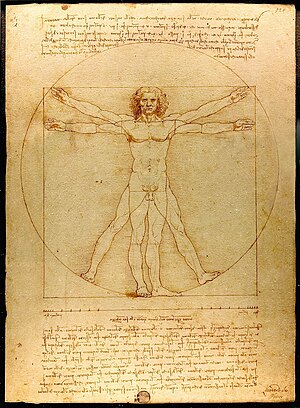
The Vitruvian man.  Man as the measure of all things.


Don't believe me?  You should.  You should believe me because there is something inside all of us that views our own vantage point as the final arbiter of right and wrong.  The Old Testament is full of this sort of activity, by the way.  It's full of the people of Israel who did what was right in their own eyes, which is almost always the barometer that we still use today.  The Old Testament reading from Sunday was all about the prophecy of Jeremiah, and the subsequent reception of that prophecy.  Now, the reading on Sunday didn't get into it, but what was it that Jeremiah said?  He said to the people who were coming to listen to him: 'Thus says the Lord: If you will not listen to me, to walk in my law that I have set before you, and to heed the words of my servants the prophets whom I send to you urgently - though you have not heeded - then I will make this house like Shiloh, and I will make this city a curse for all the nations of the earth.' 

It's a stark warning from Jeremiah, to change thy ways or perish.  To move from the way that you have been going, and to turn aside from your evil or to face the cup of God's wrath and everlasting condemnation.  But the people who were listening to Jeremiah had a different opinion of how things were supposed to be going.  The people who were listening to Jeremiah had a different idea of what the world was all about, and what the word of God was all about.  Their perception was that they were doing fine, they were doing a great job, and that Jeremiah should stop talking about how they weren't, thank you very much.  Their perception was that they were right, and any criticism of that should be met with extreme anger and potential bloodshed.  After Jeremiah speaks out against them, the people in the temple seize him, and say to him 'You shall die! Why have you prophesied in the name of the Lord, saying "this house shall be like Shiloh, and this city shall be desolate without inhabitant?'"  The sentence of death is going to fall against Jeremiah just for speaking God's word ostensibly to God's people.


Not much changed after that.  The Gospel reading deals with Herod seeking Jesus' life once again, with Herod seeking to have Jesus put to death, for Jesus' view and activity.  This should be no surprise either, given that Herod, that fox, had John locked up in prison for the crime of daring to speak out against Herod's relationship.  This chaining up of God's prophets is nothing new, whether it be among the people of God or not; nobody wants to hear the word of God's judgment against their many and various sins. Jesus is quite plain about what is at stake, too, agonizing about Jerusalem, saying that he had wanted to gather Jerusalem together as a chicken gathers her brood under her wings, but they were not willing.

This is one of those many things that is in the Bible because it is, and continues to be true.  In fact, perhaps it has never been more true.  Think for a second about something that happens later in the book of Jeremiah, where king Jehoiakim has a scroll read to him that contains words of God's judgment against Israel and Judah.  and every time they read through a few columns , Jehoiakim would take a penknife, and cut off the part that was just read, and casually toss it into the fire.  And neither the king, nor any of his servants who heard all these words, was alarmed, nor did they tear their garments.  Ho-hum, because when push comes to shove, we don't really care too terribly much about the word of God if it disagrees with what we have already decided is right.  If we are already doing what is right in our own eyes, then prophecy from God is not going to change that.

Today, the word of God is treated much the way Jehoiakim treated it.  Though it exists, though it is distributed, though it is read, it is largely ignored when it does not agree with what we have already decided.  It's not as though this is a problem for the outside nations, no no no, it's a problem within the church.  Many of us, good, Bible Believing Christians, will have to run up against this, where the word of God will speak out against our relationships, or our activity, or our inactivity, or our sloth or opulence, and at that point, we have a choice.  We can treat it like Jeremiah's peers, launching into a tirade against the messenger for daring to share the message.  We can treat it like Herod, locking it away so it can no longer speak.  Or we can treat it like the disciples.

In John 6, Jesus tells the massive crowd who has followed him up until now 'For this reason, I have told you that no one can come to me unless it is granted by the Father.'  At that, many of his disciples turned back, and no longer followed him.  And in a heartbreaking, poignant moment, Jesus turns to look upon the twelve, and asks them 'And you?  Do you wish to leave too?  Peter's response is beautiful.

Lord, to whom can we go?  You have the words of eternal life.

A moment so beautiful that it is part of our liturgy.  In that moment, Peter encapsulates the way we need to feel and behave about the word of God.  We aren't going to agree with it all the time, we aren't going to like it all the time.  It isn't always going to sound good to our ears, or wonderful in our minds.  It isn't going to be the sort of thing that we are delighted by, but none of that matters if it's true.

The Christian faith is worth nothing if it is false.  If the notion of the resurrection of the dead and the life everlasting is a big lie, then the Christian faith promises nothing, and we of all people are most to be pitied.  But if it is true, if Jesus is the Christ, the Son of God, then it doesn't matter how palatable his words, how easy they are to hear.  What matters is that they are true.  And if they are, then they are of paramount importance.   

So what are you, average Christian schlub, supposed to do with the words that you hate.  The words
you disagree with?  What are you supposed to do when you run up against the scroll full of words you don't want to hear, what are you to do with the prophets who speak out against you?  Do you want to shut the book and continue believing the comfortable lie that can and will lead to destruction?  Or do you want to embrace the truth, as painful and hurtful as it is?  Do you want to hold fast to the bare honesty of who you are, and why you are in the situation you are in?  Do you want to observe and look at the true portrait of yourself, not matter how ghastly it is, and upon seeing it, fall wholly and completely on the work of Christ to save you from it.

Ultimately, there are only two paths forward. The first is to double down on the lie, to assert as much as you can, no matter what else happens, that you've been right the first time, and you'd rather be dead than wrong.  Or, you can embrace the truth, hold fast to the words of Christ that, like a surgeon's scalpel, slice through us with precision, but also remove our sickness.

It's interesting that even though the Pharisees tried to silence Jesus, to put an end to his meddlesome preaching (given that a lot of it was agaisnt them) by having him killed.  Surely, that would put a stop to his pestering.  But in doing so, in having him killed, they ironically gave him his greatest pulpit of all, giving him a platform from which to speak his greatest sermon.  The words of Christ spoken from the cross accompany the work that he does, fulfilling his entire minstry at the mount of Calvary, where he spoke to anyone who would listen that it is finished.   All the sin, all the shame, all the disgrace of a vile, unbelieving people, slow to listen, quick to ignore and run, all that sin was taken upon Jesus, at the cross, and died with him there.  

Your job as an individual Christian, then, is to let the word of God speak in its fullness.  You don't have to agree with all of it, nobody does or ever will.  But you need to know and to be well aware that it is right, and you, when you disagree with it, are wrong.  And when that happens, realize that it was for those moments where you want to close the book, to kill the prophets, to run out from under the wings of the father hen, it is for those things that Jesus died.