The best parables always say more about the reader than they do about the cast of characters in them, which is the point. There's a bit in Monty Python's Life of Brian where Brian is trying to blend in with the manic street preachers, and begins to tell a parable of his own just to get the Roman guards to overlook him, and not notice that he was on the run from them. As he starts to tell his parable, the people who are listening ask him for the names of the people in the parable, and Brian says 'it doesn't matter!' They don't take it too well, and ask for the names again, to which Brian responds 'Simon and Adrian.' The crowd shouts back 'He's making it up as he goes along!'
Yeah, the names of the people in the parable don't really matter, because the parable isn't about those people, it's about you. That's why it's vague. These both aren't real people, but they are also absolutely real people, because they are you and me. They're both everyone and no-one all at the same time. And the parable about laborers in the vineyard is absolutely no exception. Think for a moment about that parable, about those who were hired by the owner of the vineyard, and what they agreed to. The first of the day were called into service and promised a denarius, that is, a day's wage for doing a day's work. But the harvest was plentiful, and the workers were few as they tend to be, so the vineyard owner recruited more people to go out to work in the vineyard. At the third, sixth, ninth, and eleventh hour. And everyone agreed that what they were being paid was fair.
When quitting time came around, everyone lined up to get what they had contracted for. The last guys to arrive, the ones who had only worked for one hour, each got a denarius, or a full day's wage for their work. When those who had worked all day saw this, they got all excited, got all worked up, got all thrilled, and thought to themselves about all the money they were going to make. After all, if someone gets a full day's pay for an hour's work, then how many days will you get paid for for an actual full day's work? That's a heck of a question, and they were no doubt rubbing their hands together in anticipation. And when the time came for the pay to be given to those who had gotten there first, they were paid.
One Denarius.
Now, that's exactly what they had contracted for, it was what they had agreed to, it was what they had said was fair, and it was what they were given, right on the money. That sounds good, right? Well, in this case, fair seems unfair, or to be more accurate, the unfairness that we saw last week seems really unfair now, to the point that those who had been there all day, working all day, were upset that they had earned the same denarius as those who had just arrived. And so, they complained.
Their complaints, though well understood and duly noted, unfortunately run aground at one particular point. They run aground on the virtue and understanding that they did actually get more than the late arrivals of one particular thing, and no, it wasn't the money. It was the work. They got to work for more time.
On the surface, that seems bad, right? Wow, what a thrill, they had to work eight times as long for the same wage? That seems bad. But that only seems bad if you understand work as something to be avoided under pretty much all circumstances. If you see work as something to be steered around, avoided, to be thrown beneath the bus of your own sloth and gluttony, then work is the thing you do to get the money. But hopefully, you have found yourself in a situation, in an understanding, where the work you do is worth doing, and worth doing well. If it's not, if you're essentially like a surly teenager just putting in the hours doing the absolute minimum to not get fired and cashing your paycheque at the end of the week then who's the sucker?
When we were younger, we all wanted an easy job. A job where we could surf the internet all day and do as little as possible while still being paid. it sounded great, right? Show up for eight hours, and then go home, and when you get home, you.....surf the internet some more? After a year of this, give or take, something bizarre happened to most of us, where we sorted out that the job we had, if we were going to spend eight hours a day at it anyway, that job was going to have to be something that was worth doing, because no amount of money is worth you throwing your life away eight hours at a time for your most productive years. And then you realize that the work you do has great potential in it, to do amazing, worthwhile things that will imbue those hours with meaning, that they might not be wasted, but might be productive. And no, this isn't a story where I tell you to do what you love and the money will follow, because that's not really true. Ain't nobody paying me for playing with slot cars, I tell you that. Except when I bring them to youth group. Then they do. But beyond that, it's not a matter of doing what you love and the money will follow necessarily, and those who say that are in a really cushy, really easy position where if everyone had their sort of job, the economy would collapse.
For most everyone, you have a job that you have to work at, and you can't afford to just quit and take off backpacking through Europe for a couple of summers. It's a job that you can stand, but likely not one that you like that much. So you have some choices with the work that you do. You can either mope through it, and survive each day, looking forward to the money only, or you can work through each day as an opportunity to partially define yourself through the output and the work that you do, to do it well, and to realize that you are able to do a job worth doing instead of sitting on the couch watching the price is right.
You know, if you're going to be working all day anyway.
And this brings us full circle back to the parable again, and the idea, the notion that the first men who arrived to work that day got to do more work than those who got there later. No, not had to work, but got to work. That is, they were allowed and welcomed to do more work than their tardy counterparts. This point is cemented later on where it says that the men who were found later on were found standing idle, not going anywhere or doing anything of note. So they were recruited into the service in the vineyard. They all got the denarius, but some of the workers weren't standing out in the marketplace all day. They were working. They were changing the land and having it change them. They were defining that day through effort, through struggle, through achievement, and through work and through output. For you need to know something about the beginning of everything, as well as the end. From the beginning of creation, work was something that humans were supposed to do, were created to do. They were made to work, they were designed for it, and placed in a space where they could do good, meaningful work. Work wasn't a punishment for sin, work tied to survival was. By the end of the scriptures, even in paradise, after the end of everything else, there is still the tree of life, still a garden, and still crops for people to bring in, though the curse of work to earn is gone. And that's what we need to understand, which is that the work isn't tied to the denarius. For us, as Christians, given the work that Christ has done on our behalf, the earning is done, it is accomplished, it is finished. We don't get any more pay based on how long we've been working out in the field, and I hope last week's sermon really served to get that across. It's not about the denarius, it's about the work itself. It's not that you have to work longer for the same pay, you get to work longer.
We are a people who are desperate for meaning in our lives, and we are living in a world in which we are constantly told to define ourselves by our consumption; our starbucks orders, our furniture, the car we drive and the clothes we wear. We are people who are less made up by the balance in our bank accounts, and more composed of the accumulation of things that we have . That's what we have been told to define ourselves by, brands and logos. But we all know that deep down, we are defined
by work . As redeemed people of Christ, we are defined by his work for us on the cross, and now that the denarius is earned, we get to also define ourselves by the work that we do in his field and in his kingdom. For God wants us to do quite a few things. He has in mind for us to accomplish certain things in his vineyard, he wants us love our neighbors as ourselves, to give to those who ask, to protect the orphans and widows in their distress, to stand for righteousness and faith and charity even and especially when it hurts. He wants us to forsake sorcery and fornication, to flee immorality, and to be at work in his kingdom. And he knows something important about us, which is to understand that this work is not punishment, for us as Christian people, as humans striving for meaning in a corporate world governed by purchase and brands, we are offered an identity not defined by what we are sold, but by what we do, output not consumption. And when you look at the work that Christ would have you do, you'll understand something else, which is that observing his laws and commandments, repenting where you have gone wrong, and rejoicing in what you have done right, your every day is imbued with meaning, with purpose and direction. You're not lost in a corporate morass, you're not fumbling in the darkness, you're guided by the light of Christ and being encouraged by his grace. It's not there to punish you, or tie you to earnings through your output, rather to encourage you to embrace the work, to hold fast to the challenge, and to realize that the work itself is the blessing.
That's why Jesus wants you to be at work, because it's good for you. Not so you'll earn more, for everyone receives the same reward through faith in Christ. The work itself, properly considered in the meaning and blessing it can give, itself is the reward. This parable is about those workers, of course, but it is also about you.
The musings of the Pastor from Good Shepherd Lutheran Church, Regina SK
Welcome. If you're a member at Good Shepherd, welcome to more thoughts and discussion of the week that was, and some bonus thoughts throughout the week. If you're not a member, welcome, and enjoy your stay. We are happy that you're here.
If you like what you see here, consider joining us for worship at Good Shepherd Lutheran Church. Sunday mornings, at 8:30 and 11:00. You can also follow us on Facebook.
Monday, September 25, 2017
Monday, September 18, 2017
Fair
I present to you a Calvin and Hobbes comic strip that I remember fondly from my own childhood. It spoke to me a great deal when I was younger, and hopefully you'll appreciate it now.
As you get older, as you have kids of your own, the strip of Calvin and Hobbes has a way of switching over. It worked when you were a child, enjoying the many exploits, real and imaginary, of Calvin and his tiger, but when you grow up, when you have kids of your own, you tend to find a new layer in the mix. You tend to enjoy the interactions and the personalities of Calvin's parents.
Now, that's a treat. It's fun to watch that happen, to see something from your childhood become new and interesting, to find a new appeal in it, and the strip above is something that ages really well. That is, as a kid you identify heavily with Calvin, with his desire to have things be fair, and to come to the conclusion that things are unfair, and yet stacked against you. However, as a parent, the answer of the world not being fair isn't dismissive, or trite, it's actually massively important. I'll explain.
Calvin, as the strip will show you, lives the life of an average child. He has a treehouse, plays outside, gets into mischief, has friends, goes to school, has a tiger whose company he enjoys greatly, that kind of thing. Here are some things he doesn't have.
-A Job.
-Responsibilities
-Bills to pay
-A family to feed
-Anything to do beyond just what he feels like.
I understand that from his perspective, Calvin feels as though things are phenomenally unfair, but things actually aren't fair, but it's in the other direction. Growing up, when we were told to help out with one chore in a while, that kind of thing, and it always seems horribly unfair, that sort of thing. . What we didn't realize was that it was amazingly, spectacularly unfair, but unfair in our favor. Doing the dishes is a pretty small price to pay in return for every single need being met in our entire lives. We were living an existence of super abundance every day that there was, but we still found time to insist that things were unfair because we were expected to help out every once in a while. And had we been thinking about it, had Calvin been thinking about it, we would have realized that the very last thing in the world that we would want is for things to actually be fair.
This brings us to the Gospel reading from Sunday. The reading in which Peter asks Jesus a sensible question, 'Lord, if my brother sins against me, how many times should I forgive him. Up to seven times?' That question on its surface is actually, even for us humans, possibly overstating the case. That is, if someone sins against you, and you forgive them, are you supposed to forgive them more than once? From a worldly perspective, we would say no. We would say that forgiving them more than once is a sucker's game, it's for mugs only. Why would you want to forgive someone who keeps on going back to you and keeps on messing up. Surely, after once, you can sort of cut that person off, and deal with them as a sinner and a tax collector. Fool me once, shame on you, fool me twice, shame on me. Fool me seven times, we're off the rails now.
As you get older, as you have kids of your own, the strip of Calvin and Hobbes has a way of switching over. It worked when you were a child, enjoying the many exploits, real and imaginary, of Calvin and his tiger, but when you grow up, when you have kids of your own, you tend to find a new layer in the mix. You tend to enjoy the interactions and the personalities of Calvin's parents.
Now, that's a treat. It's fun to watch that happen, to see something from your childhood become new and interesting, to find a new appeal in it, and the strip above is something that ages really well. That is, as a kid you identify heavily with Calvin, with his desire to have things be fair, and to come to the conclusion that things are unfair, and yet stacked against you. However, as a parent, the answer of the world not being fair isn't dismissive, or trite, it's actually massively important. I'll explain.
Calvin, as the strip will show you, lives the life of an average child. He has a treehouse, plays outside, gets into mischief, has friends, goes to school, has a tiger whose company he enjoys greatly, that kind of thing. Here are some things he doesn't have.
-A Job.
-Responsibilities
-Bills to pay
-A family to feed
-Anything to do beyond just what he feels like.
I understand that from his perspective, Calvin feels as though things are phenomenally unfair, but things actually aren't fair, but it's in the other direction. Growing up, when we were told to help out with one chore in a while, that kind of thing, and it always seems horribly unfair, that sort of thing. . What we didn't realize was that it was amazingly, spectacularly unfair, but unfair in our favor. Doing the dishes is a pretty small price to pay in return for every single need being met in our entire lives. We were living an existence of super abundance every day that there was, but we still found time to insist that things were unfair because we were expected to help out every once in a while. And had we been thinking about it, had Calvin been thinking about it, we would have realized that the very last thing in the world that we would want is for things to actually be fair.
This brings us to the Gospel reading from Sunday. The reading in which Peter asks Jesus a sensible question, 'Lord, if my brother sins against me, how many times should I forgive him. Up to seven times?' That question on its surface is actually, even for us humans, possibly overstating the case. That is, if someone sins against you, and you forgive them, are you supposed to forgive them more than once? From a worldly perspective, we would say no. We would say that forgiving them more than once is a sucker's game, it's for mugs only. Why would you want to forgive someone who keeps on going back to you and keeps on messing up. Surely, after once, you can sort of cut that person off, and deal with them as a sinner and a tax collector. Fool me once, shame on you, fool me twice, shame on me. Fool me seven times, we're off the rails now.
We all remember that bit from George W Bush, and though he's largely considered to be a figure of fun now, his line about not being fooled again sort of has some perspective when it comes to this Gospel reading. Surely, Jesus doesn't expect us to be suckers, does he? He doesn't expect us to do things that would be bad or difficult for us, does he? Because the people we don't forgive, those people don't deserve forgiveness, right?
Well, I have some bad news for you, fellow Christian. I have some bad news for you as fellow Christians who are going to have to hear something from the scriptures that you don't want to hear. You're going to have to hear the following words.
Forgive us our trespasses
As we forgive those who trespass against us.
That's from the Lord's prayer you know. Straight from the horses' mouth. And in the Lord's prayer, Christ makes it clear to us that we need to forgive one another if we expect to be forgiven. Of course, our usual understand of prayer is that it is a list of things that we expect God to do for us, but there is a separate aspect from prayer, and that is that you will find in it things that you expect God to change about you. To soften your heart. To conform you to his will, and to make you more likely, and more eager to forgive. And lest we skip over that vital couplet in the Lord's prayer, think on this. The next two verses in the Gospel of Matthew after the Lord's prayer are as follows
If you forgive others who sin against you, your Heavenly Father
will forgive you. But if you refuse to forgive others, your Father
will not forgive your sins.
Gee, how nice. We look at that passage, and we realize that in the Christian faith, forgiveness is not optional. Peter thought it would be simple enough to say seven times of forgiveness, but Jesus ratchets it up to seventy times seven. And are you counting? Likely you're not. That number is so large it might as well be ten thousand talents, a number so big as to be impossibly, laughably huge. And you, as a Christian, are expected to go to all the effort of forgiving the same person who wrongs you seventy times seven times? Really? That's not fair.
Trust me, the last thing in the universe you want is fair. Oh sure, you may kick and scream and beg that the situation was fair, but you don't want that. You have no desire for fair. What you want is the situation you have, in which things are unfair, but they are unfair in your favor. Think of the debts in the Gospel reading, the debts the way they are listed have the servant owing ten thousand talents. Ten thousand talents is around seven billion dollars in today's money, which is a chunk of change. I know the servant said that he would pay it all back, but how on earth was he going to do that if he was staring down seven billion dollars. None of us will ever see that much money in our entire lives, it is impossible to even contemplate. The pit that this servant had dug for himself was so big that he was never going to get out of it. There was no way he was ever going to work hard enough, try hard enough, get another job to pay it all back. It would be impossible, laughable in the highest order. That was what the first servant owed. He owed an astronomical amount, so high as to be impossible. And what was he owed? A hundred days wages. Now, the amount that he was owed, rather than the one he was owing, it's still big, don't get me wrong. It's still an amount that should be paid back. It's still an amount that someone would be right in demanding, of course, if he hadn't just been forgiven a debt that would have crippled his own family for generations. Given that that's the case, the first servant, who had been forgiven an amount so big nobody can really imagine it, should have forgiven the small amount he was owed from his fellow servant. But he did not. He wanted things to be fair. It would unfair for his fellow servant not to pay him back. If things were fair, however, and he could throw his fellow servant in jail until the debt be repaid, then it stands to reason that that would be what would happen to him as well except for much longer, since the debt is much larger.
You see, that's how it goes. We want things to be fair, but that's not what we really mean. We want things to be unfair in our favor. We want to collect what is owed to us, but to have our own debts canceled. We want our sins to be forgiven by God, but we want to hold against others what they have done to us. We say that it's not about what we want, it's about what's fair, but it really, really isn't. For if things were fair, if everyone got paid what they owed, if the system worked the way we say we wanted it to work, we'd be in a hole so deep we would never get out of it. If you take seriously not just way the Bible tells you to behave, but also how you think other people should behave, then you'll realize that you're seriously behind where you should be, and getting further behind all the time. Essentially, every day that goes by you're doing more wrong than right, you're withdrawing from an account that gets closer and closer to overdrawn every day that there is, because you're making more withdrawls than deposits. It's getting out of control, which is why fair isn't what you want.
What you want is Jesus.
In the cross of Christ, you see the most unfair thing in all of creation, the godly dying for the ungodly, the righteous for the unrighteous. You see Jesus Christ, true God and true man, dying for the sins of the whole world, yours included. You see the lamb of God who comes to take away the sins of the world, the lamb of God who took on flesh, dwelt among us, and died for our salvation. This is what it means to be a Christian person, which is to have a massive debt wiped clean, paid for in blood by the only person who could possibly afford to pay it. It's unfair for sure, completely, ludicrously unfair that that debt should be absorbed by another person.
But it's not about fair, you know. It's about grace. And Grace is what God provides, because the last thing in all of creation that you want is fair.
Thursday, August 17, 2017
Walking on Water
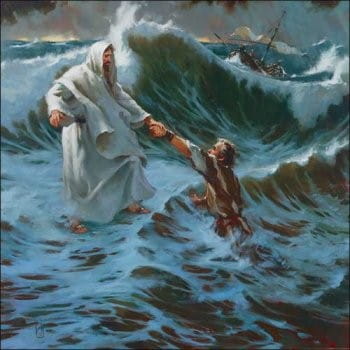
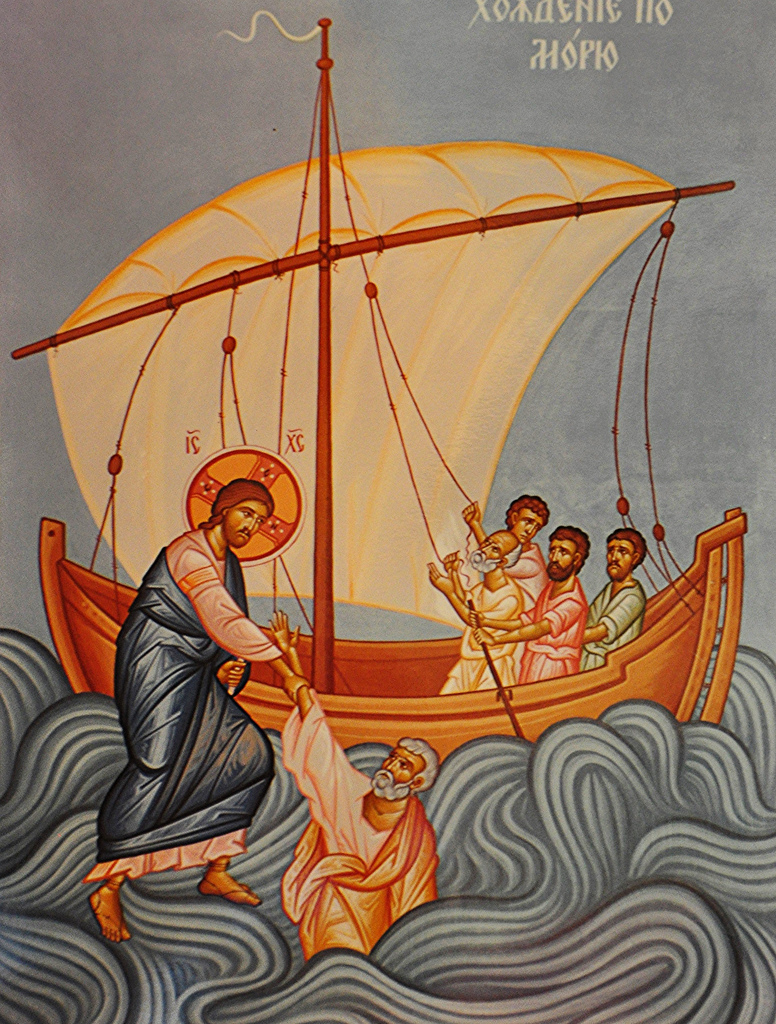
The moment of Jesus walking on water is absolutely amazing. And I'll tell you why.
In that moment, when Jesus is walking on the water towards his disciples, he does so towards people who know all about the water, who know all about the wind and the waves. He strolls towards people who know all about drowning, who know that a boat is just a mobile island, and is the only thing standing between you and a watery grave. Now, we all know that you can't walk on water, you can't drive on it, you can't really move all that well on the surface of it outside of a boat, but if we know that, imagine how much better than you the disciples knew it. These were men who made a living on the water, they lived and died on the waves. These are men who spent every day out on the water, and they sure knew all about what it would be like to be caught in a storm, and they probably knew what it would be like to be in a storm so bad that they might sink. They knew all about this, and were well versed enough in it to be less than secure about what might happen if a storm got too rough. If the boat sinks, it's likely lights out for you.
So when they see Jesus walking on the waves, this is a moment for them. It's a moment for them for sure, something that you can't possibly conceive of is happening, where men who make a living on the water, who make a living on the waves, who exist as people who are absolutely fully versed in what it is to live and die on the water, when they see Jesus walking on the water, they are perturbed ,bothered, terrified because what they see is something impossible. That is, faced with water, and someone walking on the water, they know what water is and what it does with people who try to swim in it, therefore Jesus himself must not be human. That's the conclusion that they reached, and one that we would too. After all, which is more likely, that someone can walk on the water, or that ghosts are real and one might be strolling towards you? For most reasonable people, the idea that it's the ghost is more likely, because the water is real.
The water is real. It sure is. For us, water governs everything, more than we think it does. Sure, you know that you have to drink water every day, maximum like three days without drinking and you'll die, that kind of thing. But it's more than that, because the average person uses far more water than that. We use water for drinking, washing, fracking, cleaning, bathing, sanitation, and everything inbetween. But it isn't just that, of course, because we are people whose lives are still ruled by tides caused by the moon, who think about food in terms of calories (a unit of food energy enough to raise 1 gram of water 1 degree) and who think about temperature in terms of degrees celcius (based on when water freezes and when it boils). Water rules everything, rules every day, without water nothing is possible. We know what water is, and we know how real it is. It is desperately, dangerously real, it makes up the majority of our planet's surface, it makes up the majority of every human body, too little is fatal and too much is fatal, it's a matter of survival every day that there is. Water is fundamental to every day, and you know how real it is.
So when the disciples see Jesus strolling on the waves, their reaction is to assume that it is a ghost, it is a spectre, it is something non-corporeal, because humans can't walk on water, obviously. But Jesus makes it clear, saying to them 'take heart, it is I.' Peter, bold as ever, says to Jesus, 'Lord, if it is you, command me to come to you.' Jesus tells him to do, and Peter hops out of the boat, and begins to walk on the surface of the water towards Jesus.
Now, you all know the story, and you know what happens next. You all know what happens next, which is that Peter looks down, sees the waves, sees the wind, and begins to sink. And as he begins to sink, he calls out for help to Jesus Christ, the other person walking on the water. Why does he sink? Well, you know why he sinks, it's sort of obvious. It's clearly obvious why he sinks, it's the same reason that you or I would sink too. Jesus tells him to walk on the water, Jesus, the one who can command the wind and the waves, the one who walked on water himself, commanded Peter to walk on the water, and Jesus had, by his actions, showed that it was possible to do it. And even after all that, Peter's faith was shaken, because faith in the word of God, faith in the word of Christ was less secure than his knowledge of water. For Peter, as for many of us, the water is real, the words are only words.
Jesus, in his magnanimity, as he pulls Peter out of the water says to him 'oh you of little faith, why do you doubt?' Oh you of little faith, why are you so much more secure in the water than in the words? Why, when you think about God and his majesty, are you so much more interested in the water than the words? And this question can be asked of any of us these days too. For us, we stand in our world full of real storms, real things that are happening around us. And often, the car crash, the cancer diagnosis, the funeral, the breakup, the poverty, all that seems to us to be more real than the word of God. We know what God has said, we know that he has promoted to us that he is in control of all things, that he formed the world, that he will give us a future and a hope, that he will give paradise to all who believe in him, and yet, and yet, our faith is weak. The words of Jesus ring awfully hollow to us when faced with the storms that he asked us to walk on.
And you know what? Jesus knows all about that. He is well aware of that issue. He knows what is in the heart of men, you know. And because he knows that, he took it upon himself to work within the limits that you have given. In other words, in the Christian faith, Jesus says to us, 'if you're so focused on how real the water is, why don't I use the reality of the water for confidence instead.' Why do we have baptism, after all? For the forgiveness of sins, the generation of faith, the adoption of us into the family of our father, all that. And we know that hearing the word builds faith, that the absolution forgives sins, Jesus told us all of that in his holy word. So what does baptism do? It gives us, you and me, as well as Peter, the certainty that we need as people who need a real thing to see, to touch, to taste, to wrap our hands as well as our mind around, we need that because our faith is frail and weak. Because we have a weak faith, because we are timid and cowardly, because the water seems way more real than the words, Jesus decided to combine the two.
If you know your catechism, and you probably should, when it talks about Baptism, it does so by asking the question 'how can ordinary water do such things?' and the response is 'It is not water alone, but water in conjunction with the word of God' Yes, the combination of those two things. The two things, the one that is real, that presses in around us every day, the one that is unmistakable, that governs how we think, how we behave, how we live our lives, and the other that is the divine, ethereal word of God, mystic and magnificent, and Jesus, knowing our weaknesses, decided to combine them together. He did so because we have weak faith, because we doubt, because we are inclined to doubt, to disbelieve, to have a hardness in our heart that finds the real stuff of this world to be more compelling than the word of God. And that's why he gave us the sacraments, to give us something real to taste, to see, to hold, to touch, to be embraced and covered with, in order that you and I, along with Peter, whose faith is weak, who trust in what we can see and touch, can be told by Christ our Lord 'you know that water that you know is real? The water that when it is poured on you or you are immersed in it you get wet? That water is the means through which I chose to bless you, that your weak faith that needs physical things might be satisfied, as my pledge of salvation finds its certainty in your eyes in that.'
In that moment, when Jesus is walking on the water towards his disciples, he does so towards people who know all about the water, who know all about the wind and the waves. He strolls towards people who know all about drowning, who know that a boat is just a mobile island, and is the only thing standing between you and a watery grave. Now, we all know that you can't walk on water, you can't drive on it, you can't really move all that well on the surface of it outside of a boat, but if we know that, imagine how much better than you the disciples knew it. These were men who made a living on the water, they lived and died on the waves. These are men who spent every day out on the water, and they sure knew all about what it would be like to be caught in a storm, and they probably knew what it would be like to be in a storm so bad that they might sink. They knew all about this, and were well versed enough in it to be less than secure about what might happen if a storm got too rough. If the boat sinks, it's likely lights out for you.
So when they see Jesus walking on the waves, this is a moment for them. It's a moment for them for sure, something that you can't possibly conceive of is happening, where men who make a living on the water, who make a living on the waves, who exist as people who are absolutely fully versed in what it is to live and die on the water, when they see Jesus walking on the water, they are perturbed ,bothered, terrified because what they see is something impossible. That is, faced with water, and someone walking on the water, they know what water is and what it does with people who try to swim in it, therefore Jesus himself must not be human. That's the conclusion that they reached, and one that we would too. After all, which is more likely, that someone can walk on the water, or that ghosts are real and one might be strolling towards you? For most reasonable people, the idea that it's the ghost is more likely, because the water is real.
The water is real. It sure is. For us, water governs everything, more than we think it does. Sure, you know that you have to drink water every day, maximum like three days without drinking and you'll die, that kind of thing. But it's more than that, because the average person uses far more water than that. We use water for drinking, washing, fracking, cleaning, bathing, sanitation, and everything inbetween. But it isn't just that, of course, because we are people whose lives are still ruled by tides caused by the moon, who think about food in terms of calories (a unit of food energy enough to raise 1 gram of water 1 degree) and who think about temperature in terms of degrees celcius (based on when water freezes and when it boils). Water rules everything, rules every day, without water nothing is possible. We know what water is, and we know how real it is. It is desperately, dangerously real, it makes up the majority of our planet's surface, it makes up the majority of every human body, too little is fatal and too much is fatal, it's a matter of survival every day that there is. Water is fundamental to every day, and you know how real it is.
So when the disciples see Jesus strolling on the waves, their reaction is to assume that it is a ghost, it is a spectre, it is something non-corporeal, because humans can't walk on water, obviously. But Jesus makes it clear, saying to them 'take heart, it is I.' Peter, bold as ever, says to Jesus, 'Lord, if it is you, command me to come to you.' Jesus tells him to do, and Peter hops out of the boat, and begins to walk on the surface of the water towards Jesus.
Now, you all know the story, and you know what happens next. You all know what happens next, which is that Peter looks down, sees the waves, sees the wind, and begins to sink. And as he begins to sink, he calls out for help to Jesus Christ, the other person walking on the water. Why does he sink? Well, you know why he sinks, it's sort of obvious. It's clearly obvious why he sinks, it's the same reason that you or I would sink too. Jesus tells him to walk on the water, Jesus, the one who can command the wind and the waves, the one who walked on water himself, commanded Peter to walk on the water, and Jesus had, by his actions, showed that it was possible to do it. And even after all that, Peter's faith was shaken, because faith in the word of God, faith in the word of Christ was less secure than his knowledge of water. For Peter, as for many of us, the water is real, the words are only words.
Jesus, in his magnanimity, as he pulls Peter out of the water says to him 'oh you of little faith, why do you doubt?' Oh you of little faith, why are you so much more secure in the water than in the words? Why, when you think about God and his majesty, are you so much more interested in the water than the words? And this question can be asked of any of us these days too. For us, we stand in our world full of real storms, real things that are happening around us. And often, the car crash, the cancer diagnosis, the funeral, the breakup, the poverty, all that seems to us to be more real than the word of God. We know what God has said, we know that he has promoted to us that he is in control of all things, that he formed the world, that he will give us a future and a hope, that he will give paradise to all who believe in him, and yet, and yet, our faith is weak. The words of Jesus ring awfully hollow to us when faced with the storms that he asked us to walk on.
And you know what? Jesus knows all about that. He is well aware of that issue. He knows what is in the heart of men, you know. And because he knows that, he took it upon himself to work within the limits that you have given. In other words, in the Christian faith, Jesus says to us, 'if you're so focused on how real the water is, why don't I use the reality of the water for confidence instead.' Why do we have baptism, after all? For the forgiveness of sins, the generation of faith, the adoption of us into the family of our father, all that. And we know that hearing the word builds faith, that the absolution forgives sins, Jesus told us all of that in his holy word. So what does baptism do? It gives us, you and me, as well as Peter, the certainty that we need as people who need a real thing to see, to touch, to taste, to wrap our hands as well as our mind around, we need that because our faith is frail and weak. Because we have a weak faith, because we are timid and cowardly, because the water seems way more real than the words, Jesus decided to combine the two.
If you know your catechism, and you probably should, when it talks about Baptism, it does so by asking the question 'how can ordinary water do such things?' and the response is 'It is not water alone, but water in conjunction with the word of God' Yes, the combination of those two things. The two things, the one that is real, that presses in around us every day, the one that is unmistakable, that governs how we think, how we behave, how we live our lives, and the other that is the divine, ethereal word of God, mystic and magnificent, and Jesus, knowing our weaknesses, decided to combine them together. He did so because we have weak faith, because we doubt, because we are inclined to doubt, to disbelieve, to have a hardness in our heart that finds the real stuff of this world to be more compelling than the word of God. And that's why he gave us the sacraments, to give us something real to taste, to see, to hold, to touch, to be embraced and covered with, in order that you and I, along with Peter, whose faith is weak, who trust in what we can see and touch, can be told by Christ our Lord 'you know that water that you know is real? The water that when it is poured on you or you are immersed in it you get wet? That water is the means through which I chose to bless you, that your weak faith that needs physical things might be satisfied, as my pledge of salvation finds its certainty in your eyes in that.'
Tuesday, July 18, 2017
Sow what?
On Sunday, we had the parable of the sower.
It's a great parable, a classic even, and one that gets better the more you think about it.
For in this parable, you will find the best explanation for why the word of God, even when preached in its fullness, doesn't always find a good harbor, and a healthy space for growth. For us in the church, it seems so obvious, that the word of God is lively, active, it is what divides bones from marrow, it is sharper than any two-edged sword, it's the bees' knees, all that. But hang on, you say. If the word of God is so great, then why isn't everyone a Christian? If it's so obvious that it's the way, the truth and the life, then why is there any opposition at all? Should not the entire world be faithful, loving, bible-believing Christians?
Well, certain things that are obvious to you may be complete mysteries to others. One man's junk is another man's treasure, one man's completely obvious is another man's obscure, that kind of thing. And ultimately, common sense is relatively uncommon. So things that should be clear end up being kind of not. And God's word, and the application thereof, is just one of those things. If you're in the church, then it seems obvious to you that this is all good stuff, that we are sinners, that Jesus forgives those sins and grants life everlasting, that kind of thing. But if you're not in the church, then these things will seem laughable, or foreign, or silly, or perhaps you're one of those people who will say 'I wish I could believe, but I just can't.'
If you're in the church, if you're a baptized, redeemed child of God, then you're fertile soil for that word of God to grow. If you're in the church, you're fertile soil, and a place where the word of God can, will and does grow. But if you're not, then something is keeping you from being there. What will those things be? Jesus helpfully explains. Perhaps you're a path, where the ground has been compacted down. You're a path where the birds can swoop down and pluck the seed up before they've had a chance to take root. Perhaps you're rocky ground, where the seed falls on the ground, and you're overjoyed, but you do too much too fast, you try to flower when you should be laying down roots, and all of a sudden, the lack of roots scorches you out, and your faith withers away. Or perhaps you are amongst thorns and thistles, weeds who take all your sunlight and water from you. Sure, you want to grow, you may be keen to do so, but the weeds crowd you out, the cares of this world, the pursuit of wealth, all sorts of things get in the way, and you don't quite get around to it. Your enthusiasm all gets misdirected, all goes in the wrong place, all gets sucked up by everything else, all those other cares, and leaves your faith choked out.
There's a good chance that if you're reading this, and you don't have faith in Christ, that you fall into one of those categories, which is both possible, as well as likely. And for you, that's some bad news. But if you're a Christian person, if you have faith in Christ, saving faith, if you believe in Jesus as your savior, the one who came to take away the sin of the world, then you don't have those problems. You just have a completely different set of problems. That is, you have to go out and sow the seed in these conditions. You have to go, sow the seed, spread the word of God on what would appear to be non-fertile soil.
That's less of a thrill for the individual Christian. Because, of course, what we want to do is to simply scatter the seed where we know it is going to work. We are less farmers in this capacity, and more gardeners. That is, we want to plant where the harvest will grow up with almost perfect certainty. We want to plant a garden in fertile soil, and if you're a hobby gardener, you're not going to waste a whole lot of time forcing the ground around you into working for you. You're going to do what we all do, which is to have a raised bed, or a garden in the back or front of your house, and garden in that. There may be rocks, there may be thistles, there may be all kinds of things on the rest of your property, but as long as your garden is fine, then the soil can be clay, or mud or sand or pea gravel, and it won't matter, because you can grow what you want to grow. But the sower went out to sow seeds, and in doing so, scattered them both where they were likely to grow and where they were not. Because the sower knows something that you and I seem to have forgotten, which is that the job of the sower is not to plant things where we assume things will grow, but rather to turn the soil where the seed is scattered into fertile soil.
Think of the command that Adam and Eve were given in the holy scriptures by God, that they should be fruitful and multiply, to have dominion over the earth and subdue it. We have been tasked with something special, something that we tend to forget, which is to subdue the earth, to work on the soil that is out there by preparing it for the seed. We tend not to, though. We tend to plant only where we think things are certain to grow. We tend to not bother planting among thorns, we tend to assume that birds will always plague the path, and we tend to think that the rocky soil will always be shallow and no good for planting.
In other words, we tend to think of a resistance to God's word, a turning one's back on God's word, as the last stop on the railroad. But it isn't.
Your job is to scatter the seed, to sow it, and to also prepare the soil to receive it ,as you would with any other field. Think of the situation that you may find in any field across this great nation of ours. What would have happened to us if the people who were setting up farms would have looked at the fields, and would have said 'oh. It looks like birds have taken away the seeds I tried to plant. Ah well, guess we're heading back to the Netherlands then.' Not likely. You know what happened, and why the pioneers were such a big deal. They were a big deal because they took the land that was at their feet, and wrestled it into shape, into doing what they wanted it to do. They took the land, and pushed and pulled it, grappled with it, sweat and bled into it, until it produced what they wanted it to produce. When encountering rocks, they didn't just plow around them, they picked the rocks out so the soil could be fertile. When they found that the birds were there to swoop down and steal the seeds, they had to chase them away. When there were thorns and briers, they had to uproot them, and make the soil clear to plant seeds that might grow to fullness. They took the soil and made it do what they wanted it to do.
This is our task, too. This is our task, to make the soil out there into something that might produce the harvest that we've been sent out to plant. It's no good for you as a Christian to shrug your shoulders and assume that just because ground is rocky, or has birds in the air, or is thorny that it cannot bear fruit. We assume that as soon as something stands in our way, that it cannot go back, and it can never go back. We assume that any incursion by thorns into our flower patch is a forever problem that will never go back to being fruitful. But you know what? We're wrong. And we've been wrong for a long time. And it's time to shake off that paralysis, to stop being quite so moribund, and to face the fact that the seed that we are planting is powerful and effective, that it causes springs to appear in the desert, causes the desert to bloom, it can make fertile ground, and to make it produce abundantly. This is good news, but this means that we are going into the world with something that can produce, something that can make a difference in the lives of people, and seed, being what it is, if planted and growing, makes more seeds. Scatter it on the path, all it needs is a crack. Scatter it among the rocks? Pick the rocks, and move them aside. Scatter it among the thorns, uproot the thorns, and have people see that the word that you are bringing them is something that they may be interested in following up on. What would people do if they saw birds eating the seed that they'd scattered? Do you think they'd just give up, stop planting? Or do you think they'd go through the effort of chasing those birds away? What would you do?
Scatter the word. Spread the seed. And don't do the thing that you might think you should do, which is to only scatter the seed where you think it would take root. Don't only approach people to be Sunday School teachers who have already done it. Don't only share the word with people who already know it and live it. Don't find elders or pastors out of those who have already been down that road, or who are guarantees. Spread the word, the seed, plant it and water it, let God provide the increase as he does. For he is the one with the powerful and effective word, the seed which can and will and does reclaim the path, breaks the concrete from underneath. The weeds can only choke out the weak plants, but if the plants are healthy, vigorous, growing well, then they can crowd out the weeds, that's the point. For evangelism isn't the end goal here, salvation is. Salvation of God's people, for people to realize that the word of God is powerful and effective, that it is there that forgiveness of sins is to be found, and righteousness is to be given. And that is wonderful, good news, life changing news, news of eternal consequence, and it carries something else with it as well.
For it carries with it something equally incredible. For there's a way plants work that we sort of forget, too. A way plants work that has made them incredibly important for us as humans who seek to use them for our benefit. That is, unlike almost everything else, they're self-replicating. Each plant carries with it the seed for many many other plants. They replicate like crazy, and if you want proof of that, then go outside in cotton fluff season, or hang out in the autumn under your crabapple tree. Take a few moments to walk past your raspberry patch, where you only planted one plant, but now you have a million. The ability of plants to bring forth more seeds cannot nor should not be understated. For the issue here, is that when salvation is proclaimed ,when the seed has been sown and the plant begins to grow, it bears seed on its own. This is part of the struggle, and part of the glory. That we see in the field the ability of the grain to bring forth more plants, it produces grain which is both seed and food.
Maybe, just maybe, Jesus knew exactly what he was talking about, and still knows what he's doing. Bear this responsibility carefully, and realize that the word that you are called to spread, called to share, called to distribute, is powerful, saving, effective and life-changing, that it can shatter through the limitations we place on it, all the more so if we do the work of prepping the soil first. We plant, we water, and God provides the increase.
It's a great parable, a classic even, and one that gets better the more you think about it.
For in this parable, you will find the best explanation for why the word of God, even when preached in its fullness, doesn't always find a good harbor, and a healthy space for growth. For us in the church, it seems so obvious, that the word of God is lively, active, it is what divides bones from marrow, it is sharper than any two-edged sword, it's the bees' knees, all that. But hang on, you say. If the word of God is so great, then why isn't everyone a Christian? If it's so obvious that it's the way, the truth and the life, then why is there any opposition at all? Should not the entire world be faithful, loving, bible-believing Christians?
Well, certain things that are obvious to you may be complete mysteries to others. One man's junk is another man's treasure, one man's completely obvious is another man's obscure, that kind of thing. And ultimately, common sense is relatively uncommon. So things that should be clear end up being kind of not. And God's word, and the application thereof, is just one of those things. If you're in the church, then it seems obvious to you that this is all good stuff, that we are sinners, that Jesus forgives those sins and grants life everlasting, that kind of thing. But if you're not in the church, then these things will seem laughable, or foreign, or silly, or perhaps you're one of those people who will say 'I wish I could believe, but I just can't.'
If you're in the church, if you're a baptized, redeemed child of God, then you're fertile soil for that word of God to grow. If you're in the church, you're fertile soil, and a place where the word of God can, will and does grow. But if you're not, then something is keeping you from being there. What will those things be? Jesus helpfully explains. Perhaps you're a path, where the ground has been compacted down. You're a path where the birds can swoop down and pluck the seed up before they've had a chance to take root. Perhaps you're rocky ground, where the seed falls on the ground, and you're overjoyed, but you do too much too fast, you try to flower when you should be laying down roots, and all of a sudden, the lack of roots scorches you out, and your faith withers away. Or perhaps you are amongst thorns and thistles, weeds who take all your sunlight and water from you. Sure, you want to grow, you may be keen to do so, but the weeds crowd you out, the cares of this world, the pursuit of wealth, all sorts of things get in the way, and you don't quite get around to it. Your enthusiasm all gets misdirected, all goes in the wrong place, all gets sucked up by everything else, all those other cares, and leaves your faith choked out.
There's a good chance that if you're reading this, and you don't have faith in Christ, that you fall into one of those categories, which is both possible, as well as likely. And for you, that's some bad news. But if you're a Christian person, if you have faith in Christ, saving faith, if you believe in Jesus as your savior, the one who came to take away the sin of the world, then you don't have those problems. You just have a completely different set of problems. That is, you have to go out and sow the seed in these conditions. You have to go, sow the seed, spread the word of God on what would appear to be non-fertile soil.
That's less of a thrill for the individual Christian. Because, of course, what we want to do is to simply scatter the seed where we know it is going to work. We are less farmers in this capacity, and more gardeners. That is, we want to plant where the harvest will grow up with almost perfect certainty. We want to plant a garden in fertile soil, and if you're a hobby gardener, you're not going to waste a whole lot of time forcing the ground around you into working for you. You're going to do what we all do, which is to have a raised bed, or a garden in the back or front of your house, and garden in that. There may be rocks, there may be thistles, there may be all kinds of things on the rest of your property, but as long as your garden is fine, then the soil can be clay, or mud or sand or pea gravel, and it won't matter, because you can grow what you want to grow. But the sower went out to sow seeds, and in doing so, scattered them both where they were likely to grow and where they were not. Because the sower knows something that you and I seem to have forgotten, which is that the job of the sower is not to plant things where we assume things will grow, but rather to turn the soil where the seed is scattered into fertile soil.
Think of the command that Adam and Eve were given in the holy scriptures by God, that they should be fruitful and multiply, to have dominion over the earth and subdue it. We have been tasked with something special, something that we tend to forget, which is to subdue the earth, to work on the soil that is out there by preparing it for the seed. We tend not to, though. We tend to plant only where we think things are certain to grow. We tend to not bother planting among thorns, we tend to assume that birds will always plague the path, and we tend to think that the rocky soil will always be shallow and no good for planting.
In other words, we tend to think of a resistance to God's word, a turning one's back on God's word, as the last stop on the railroad. But it isn't.
Your job is to scatter the seed, to sow it, and to also prepare the soil to receive it ,as you would with any other field. Think of the situation that you may find in any field across this great nation of ours. What would have happened to us if the people who were setting up farms would have looked at the fields, and would have said 'oh. It looks like birds have taken away the seeds I tried to plant. Ah well, guess we're heading back to the Netherlands then.' Not likely. You know what happened, and why the pioneers were such a big deal. They were a big deal because they took the land that was at their feet, and wrestled it into shape, into doing what they wanted it to do. They took the land, and pushed and pulled it, grappled with it, sweat and bled into it, until it produced what they wanted it to produce. When encountering rocks, they didn't just plow around them, they picked the rocks out so the soil could be fertile. When they found that the birds were there to swoop down and steal the seeds, they had to chase them away. When there were thorns and briers, they had to uproot them, and make the soil clear to plant seeds that might grow to fullness. They took the soil and made it do what they wanted it to do.
This is our task, too. This is our task, to make the soil out there into something that might produce the harvest that we've been sent out to plant. It's no good for you as a Christian to shrug your shoulders and assume that just because ground is rocky, or has birds in the air, or is thorny that it cannot bear fruit. We assume that as soon as something stands in our way, that it cannot go back, and it can never go back. We assume that any incursion by thorns into our flower patch is a forever problem that will never go back to being fruitful. But you know what? We're wrong. And we've been wrong for a long time. And it's time to shake off that paralysis, to stop being quite so moribund, and to face the fact that the seed that we are planting is powerful and effective, that it causes springs to appear in the desert, causes the desert to bloom, it can make fertile ground, and to make it produce abundantly. This is good news, but this means that we are going into the world with something that can produce, something that can make a difference in the lives of people, and seed, being what it is, if planted and growing, makes more seeds. Scatter it on the path, all it needs is a crack. Scatter it among the rocks? Pick the rocks, and move them aside. Scatter it among the thorns, uproot the thorns, and have people see that the word that you are bringing them is something that they may be interested in following up on. What would people do if they saw birds eating the seed that they'd scattered? Do you think they'd just give up, stop planting? Or do you think they'd go through the effort of chasing those birds away? What would you do?
Scatter the word. Spread the seed. And don't do the thing that you might think you should do, which is to only scatter the seed where you think it would take root. Don't only approach people to be Sunday School teachers who have already done it. Don't only share the word with people who already know it and live it. Don't find elders or pastors out of those who have already been down that road, or who are guarantees. Spread the word, the seed, plant it and water it, let God provide the increase as he does. For he is the one with the powerful and effective word, the seed which can and will and does reclaim the path, breaks the concrete from underneath. The weeds can only choke out the weak plants, but if the plants are healthy, vigorous, growing well, then they can crowd out the weeds, that's the point. For evangelism isn't the end goal here, salvation is. Salvation of God's people, for people to realize that the word of God is powerful and effective, that it is there that forgiveness of sins is to be found, and righteousness is to be given. And that is wonderful, good news, life changing news, news of eternal consequence, and it carries something else with it as well.
For it carries with it something equally incredible. For there's a way plants work that we sort of forget, too. A way plants work that has made them incredibly important for us as humans who seek to use them for our benefit. That is, unlike almost everything else, they're self-replicating. Each plant carries with it the seed for many many other plants. They replicate like crazy, and if you want proof of that, then go outside in cotton fluff season, or hang out in the autumn under your crabapple tree. Take a few moments to walk past your raspberry patch, where you only planted one plant, but now you have a million. The ability of plants to bring forth more seeds cannot nor should not be understated. For the issue here, is that when salvation is proclaimed ,when the seed has been sown and the plant begins to grow, it bears seed on its own. This is part of the struggle, and part of the glory. That we see in the field the ability of the grain to bring forth more plants, it produces grain which is both seed and food.
Maybe, just maybe, Jesus knew exactly what he was talking about, and still knows what he's doing. Bear this responsibility carefully, and realize that the word that you are called to spread, called to share, called to distribute, is powerful, saving, effective and life-changing, that it can shatter through the limitations we place on it, all the more so if we do the work of prepping the soil first. We plant, we water, and God provides the increase.
Friday, June 30, 2017
servitude
You know the stories about pet alligators, right? You all heard the
same things that I did, where families would get a tiny baby crocodile,
and it would do what crocs do,
which is to get bigger as they fed it, and then, after a while, it
would get too big for the family to handle. So, they'd flush it, but
after doing so, the croc would grow to massive size in the sewer. This, of course, is bad for essentially everyone.
Now, that idea of a baby croc, small enough to handle, small enough to tame, is a great illustration for what it is to have a pet sin that any of us may have. For we do have a pet sin, each of us does. And you, likely, know what your pet sin is, don't you? You know what it is as much as I know what mine is. Perhaps it's drinking. Maybe it's gossip. Maybe it's pornography, or cheating, flirting with people who aren't your spouse. Maybe it's your pride, your desire to be the best in the room no matter what. Whatever your pet sin is, though, we all have something in common with them, and that is that the sins that we have start small, and then we encourage them to get bigger.
It's like getting a puppy for your kids. Let's say you get a golden retriever for your child, your three year old girl. Now, when the puppy is a puppy, like a really little puppy, your daughter can take her for a walk. No trouble there so far. But, as the puppy and the girl both eat, sleep, and get older, one will grow faster than the other. What that means is that you could count on your daughter when she was three and the dog was a puppy to direct and guide that dog where it should go. She can control that dog. But a two year old dog and a five year old girl? Different story altogether. In that arrangement, with that leash, the girl will end up going where the dog wants to go, not the other way around. And if that girl and that dog are both tied together, then woe to her when the dog wants to run away.
Now, friends, your pet sins are just like that. Your pet sins being the things that you are for sure for sure that you can control. One more drink, one more link clicked, one more juicy gossipy story shared. One more mp3 stolen, one more drink with your married co-worker. One night spent with a girl you don't even like that much, but it beats being alone, right? One more fight with your spouse. One more comment with your girlfriends bashing your spouse. You know, our pet sins. The ones we think we can control. And like with anything else, these little sins, these pet sins, we feed them time to time. And when we feed them, they grow. And pretty soon, as we feed them, they get bigger than us. All of a sudden, that thing, that sin you thought was your pet, it pulls you around. How on earth are you going to compete with that especially when you keep on feeding it. It's a nightmare scenario, in which you feel as though you are being pulled around by your sins, almost compelled to keep on committing them, even though you hate yourself as you do them. Paul talked a lot about this, but most prominently where he said of himself that the good he wants to do is what he avoids, and the evil he wants to avoid is what he does! That's him, and that's the rest of us too. That sin that you fed for years and years and years, the thing that you were sure you could control, that you enjoyed because you were in charge and fed it bit by bit, it's a monster now, and now it's in charge.
They say that the first sign that you're addicted is when you can tell that you no longer enjoy feeding the addiction. The first sign that you're hooked is that you aren't having fun when you're doing those things anymore. If you're pulled to more and more extreme pornography, you're probably not enjoying it anymore. The thrill is gone. You're just feeding the monster. If you're an alcoholic, you don't actually enjoy drinking anymore, it's just to get you to the point of feeling normal. You know that this is the case. And if you're addicted to sin, if you're enslaved to it, if sin that you thought you could feed is in charge, then you're stuck feeding it over and over again. And that's a problem for you. And this is what Jesus meant when he said that everyone who sins is a slave to sin. He's right, you know; when you sin, it gets to be in charge, and you don't get to decide what you serve anymore. You serve your sins, and you chose your masters, shackling them to you, and ensuring that you would not and could not let go.
None of us wants to feel as though we are in servitude to anyone. None of us wants to feel as though we are in servitude to anyone or anything, we want to feel as though we have agency, and can do what we want. But you will find a master for yourself to serve, you really will. If you will not follow the edicts of Jesus Christ, you will find a master somewhere out of something. You will make it for yourself, you will choose who you serve, and you will serve that master. But nobody can serve two of them. And this is where Christ comes in.
Jesus knows our plight. He knows that we are in a situation in which we have lashed ourselves to certain sins, that we are fascinated and interested in serving masters that we think we can control, and so we do. And he knows that if he were to free us from one of those, we would instantly replace it with another one. This is who we are and what we do, every single time. So Christ, in his wisdom, decided to do something that would circumnavigate all this trouble - he lashed himself to you. If you read through the Old Testament reading from Sunday, when Jeremiah discusses his relationship with God, he refers to God as stronger than himself, as a dread warrior, which is phenomenal, fantastic, and worth remembering for any of us who are struggling with sin. For as we struggle with sin, it feels as though we have a monster that we are feeding pulling us down. We feel as though there is a millstone around our necks dragging us down. But that's not the entire story here. In the Christian faith, as opposed to all others, it's not the story of what you need to do for God, it's the story of what God has done for you. For any of you feeling dragged down, burdened, cumbered with a load of care, remember your baptism, and in your baptism, something amazing happened. You had the presence of Christ in your lives who lashed himself to you. In the same way as you chained yourself to your pet sins, Christ chained himself to you, he lashed himself to you in your baptism, and he is prepared to do the work necessary for your salvation.
It's all about who is stronger, you know. It's all about who is stronger, who is a dread warrior, who can drag whom. If you're lashed to things, one of your volition, one of God's, then you'd better hope that God is stronger than you, and you'd better hope that he can drag you to heaven. Which he does. This is exactly the work of Christ, to drag humans towards salvation if necessary, to pull them along, though they may fight, though they may kick and scream, though they desperately want to lash themselves to other thing in the way, but Christ will continue to pull us towards salvation, towards heaven. If left to your own devices, you will make destructive choices, harmful choice, because you feel as though you can be in control. And as you tie yourself to your sins, as you put a leash on them, you tend to feel as though you can and will always be in control. And as your sins get bigger, the thing you tied yourself to is now in control. It is bigger than you, stronger than you, and is pulling you, pulling you down. But Christ is stronger. He is stronger than you, he has battled and has prevailed. Your baptism is the pure and certain proof of that, where Jesus tied himself to you, and is pulling you towards the salvation he has earned for you. You're never going to find yourself getting your story straight 100%, you're never going to find yourself serving righteousness of your own free will. What you will find is that Christ will pull you, he will drag you towards what is good for you, towards salvation, towards heaven. That's the bond that counts: not the ones you make for yourself, but the ones he makes for you.
Now, that idea of a baby croc, small enough to handle, small enough to tame, is a great illustration for what it is to have a pet sin that any of us may have. For we do have a pet sin, each of us does. And you, likely, know what your pet sin is, don't you? You know what it is as much as I know what mine is. Perhaps it's drinking. Maybe it's gossip. Maybe it's pornography, or cheating, flirting with people who aren't your spouse. Maybe it's your pride, your desire to be the best in the room no matter what. Whatever your pet sin is, though, we all have something in common with them, and that is that the sins that we have start small, and then we encourage them to get bigger.
It's like getting a puppy for your kids. Let's say you get a golden retriever for your child, your three year old girl. Now, when the puppy is a puppy, like a really little puppy, your daughter can take her for a walk. No trouble there so far. But, as the puppy and the girl both eat, sleep, and get older, one will grow faster than the other. What that means is that you could count on your daughter when she was three and the dog was a puppy to direct and guide that dog where it should go. She can control that dog. But a two year old dog and a five year old girl? Different story altogether. In that arrangement, with that leash, the girl will end up going where the dog wants to go, not the other way around. And if that girl and that dog are both tied together, then woe to her when the dog wants to run away.
Now, friends, your pet sins are just like that. Your pet sins being the things that you are for sure for sure that you can control. One more drink, one more link clicked, one more juicy gossipy story shared. One more mp3 stolen, one more drink with your married co-worker. One night spent with a girl you don't even like that much, but it beats being alone, right? One more fight with your spouse. One more comment with your girlfriends bashing your spouse. You know, our pet sins. The ones we think we can control. And like with anything else, these little sins, these pet sins, we feed them time to time. And when we feed them, they grow. And pretty soon, as we feed them, they get bigger than us. All of a sudden, that thing, that sin you thought was your pet, it pulls you around. How on earth are you going to compete with that especially when you keep on feeding it. It's a nightmare scenario, in which you feel as though you are being pulled around by your sins, almost compelled to keep on committing them, even though you hate yourself as you do them. Paul talked a lot about this, but most prominently where he said of himself that the good he wants to do is what he avoids, and the evil he wants to avoid is what he does! That's him, and that's the rest of us too. That sin that you fed for years and years and years, the thing that you were sure you could control, that you enjoyed because you were in charge and fed it bit by bit, it's a monster now, and now it's in charge.
They say that the first sign that you're addicted is when you can tell that you no longer enjoy feeding the addiction. The first sign that you're hooked is that you aren't having fun when you're doing those things anymore. If you're pulled to more and more extreme pornography, you're probably not enjoying it anymore. The thrill is gone. You're just feeding the monster. If you're an alcoholic, you don't actually enjoy drinking anymore, it's just to get you to the point of feeling normal. You know that this is the case. And if you're addicted to sin, if you're enslaved to it, if sin that you thought you could feed is in charge, then you're stuck feeding it over and over again. And that's a problem for you. And this is what Jesus meant when he said that everyone who sins is a slave to sin. He's right, you know; when you sin, it gets to be in charge, and you don't get to decide what you serve anymore. You serve your sins, and you chose your masters, shackling them to you, and ensuring that you would not and could not let go.
None of us wants to feel as though we are in servitude to anyone. None of us wants to feel as though we are in servitude to anyone or anything, we want to feel as though we have agency, and can do what we want. But you will find a master for yourself to serve, you really will. If you will not follow the edicts of Jesus Christ, you will find a master somewhere out of something. You will make it for yourself, you will choose who you serve, and you will serve that master. But nobody can serve two of them. And this is where Christ comes in.
Jesus knows our plight. He knows that we are in a situation in which we have lashed ourselves to certain sins, that we are fascinated and interested in serving masters that we think we can control, and so we do. And he knows that if he were to free us from one of those, we would instantly replace it with another one. This is who we are and what we do, every single time. So Christ, in his wisdom, decided to do something that would circumnavigate all this trouble - he lashed himself to you. If you read through the Old Testament reading from Sunday, when Jeremiah discusses his relationship with God, he refers to God as stronger than himself, as a dread warrior, which is phenomenal, fantastic, and worth remembering for any of us who are struggling with sin. For as we struggle with sin, it feels as though we have a monster that we are feeding pulling us down. We feel as though there is a millstone around our necks dragging us down. But that's not the entire story here. In the Christian faith, as opposed to all others, it's not the story of what you need to do for God, it's the story of what God has done for you. For any of you feeling dragged down, burdened, cumbered with a load of care, remember your baptism, and in your baptism, something amazing happened. You had the presence of Christ in your lives who lashed himself to you. In the same way as you chained yourself to your pet sins, Christ chained himself to you, he lashed himself to you in your baptism, and he is prepared to do the work necessary for your salvation.
It's all about who is stronger, you know. It's all about who is stronger, who is a dread warrior, who can drag whom. If you're lashed to things, one of your volition, one of God's, then you'd better hope that God is stronger than you, and you'd better hope that he can drag you to heaven. Which he does. This is exactly the work of Christ, to drag humans towards salvation if necessary, to pull them along, though they may fight, though they may kick and scream, though they desperately want to lash themselves to other thing in the way, but Christ will continue to pull us towards salvation, towards heaven. If left to your own devices, you will make destructive choices, harmful choice, because you feel as though you can be in control. And as you tie yourself to your sins, as you put a leash on them, you tend to feel as though you can and will always be in control. And as your sins get bigger, the thing you tied yourself to is now in control. It is bigger than you, stronger than you, and is pulling you, pulling you down. But Christ is stronger. He is stronger than you, he has battled and has prevailed. Your baptism is the pure and certain proof of that, where Jesus tied himself to you, and is pulling you towards the salvation he has earned for you. You're never going to find yourself getting your story straight 100%, you're never going to find yourself serving righteousness of your own free will. What you will find is that Christ will pull you, he will drag you towards what is good for you, towards salvation, towards heaven. That's the bond that counts: not the ones you make for yourself, but the ones he makes for you.
Monday, June 12, 2017
Trinity
Everything in the creation account is true.
This simple, relatively orthodox statement is controversial these days, as it is usually to be found when Christian teaching deviates from cultural safeties. It always strikes me as strange that the church is frequently chastised for marching too closely in lock-step with the cultural and social norms of the past, and yet is castigated for being counter-cultural today. You would think that if the church was expected to hold permanent truths no matter what happened elsewhere, then the church would always be at odds with the culture. But the culture constantly requests, nay demands, that the church march in lockstep with it, and then hates it when it does. There's a lesson to be learned somewhere in here.
Point being, that back in the day, the Christian church held to the view that the world was created in six days by the Lord our God, and that he looked at it and saw that it was good. Fine fine fine, and the culture outside was there as well. Everybody saw that it was fine, nobody really had too much of a problem with things, and the world proceeded as it was intended to. But things changed, they developed, and the world that was content to have a six day creation no longer found that to be sufficient. They had looked into things, dated the world by stars and glaciers, had checked fossils and tree rings, and had determined beyond a shadow of a doubt that the world certainly didn't take six days to make. That can be argued. What can't be argued is what happened next.
For we, the clumps of atoms and stardust that we are, made of dirt and with the breath of life in our nostrils, we need to know something about ourselves from the story of creation. When God makes everything, and places us as the crown of creation, the most important aspect of it, the shining star and glittering symbol at the top, he breathed into our nostrils the breath of life, told us to have dominion over the earth and to subdue it. He told us not to sin, and then we sinned. And that's what you need to know about the origin story.
I'll put it another way. They're bringing back the Universal monster movies for reasons that I can't quite identify, and the old Universal monster movies worked for a good reason, and have continued to be worthwhile for the same reasons. Setup and payoff. Of course, when looked at from the outside, without suspending disbelief, then the story collapses right away. Naturally, vampires don't exist. We all get that, of course. But if you accept as the subject matter of the film that there are vampires, that drink blood and die upon exposure to sunlight, well, then you would expect the vampire in the film to fall in line with that. If the setup is given that vampires die on exposure to sunlight, and they drink blood, and then for the rest of the film the vampire just wanders around during the day, drinking sodas, then you would find the film to be ultimately unsatisfying. He's not a vampire if he doesn't fit with the setup, and if he does, then he is.
Now, as human beings, indeed, as all of creation, we have a setup in the Old Testament. We have a setup there, where it tells us that God made everything, he created the universe out of nothing, made it, formed it, fashioned it, spoke everything into being, and finally made us as the apex of creation. We were created in a world that God looked at and saw was good. And we were placed in creation, told to tend it and take care of it. And then we fell, we fell and all creation with us. And after that, the world became a dangerous frightening place, and we were going to have to work to make it work for us.
That seems to fit, doesn't it? We keep on forgetting, as we do, that the creation account is true, and uncomfortably true. And when we toss it out, assuming that we are now too smart for it, we have advanced too far, and now no longer need it, well then, we are going to find ourselves missing the most important point. And that point, clearly, is who we are, and why we are here. And that is a moment that is hard to figure out, really, and for some reason we miss that more than we miss anything else. Oh sure, we can get to how we arrived at this point through the scientific method, but the world has continued to clamor for meaning even though science has progressed. We keep asking ourselves who we are, and what it is we're all about.
Understanding that we are people, made to be good, tasked with having oversight over all of creation, and that we fell from grace, that's not only important to know, but that setup explains almost everything else that we see around us. We think we're pretty well okay, but keep on getting into trouble. We think that the world is improving, but people are still petty, bitter and dangerous. We feel like things should be better than they are, and we are surprised that they aren't. Though we shouldn't be. The creation account has already set that up for us. People were created good, fell from grace, and became sinful people, passing sin down from parents to children this entire time. There is no substitute for this, for understanding this element of the human condition that makes everything else make sense. Everything you see around you is the payoff for this setup.
Now, the thing is, the creation account tells us what we need to know about the human condition and the human situation. But what it doesn't do, of course, is to go into great detail about what it is that God did to create everything. It tells us that he told the earth to bring forth plants, but the scriptures don't tell us exactly how that happened, nor what it looked like. And for good reason. Are you looking into the scriptures to find a blow by blow of names and dates and facts and figures? No, of course you're not. And do you know how I know? Because you know certain Biblical stories pretty well, don't you. You know the Biblical account of creation, of Cain and Abel. You know the story of the flood, and Noah with the Ark. But do you know what happens between those two things? Let me share Genesis 5 with you.
Did you read all that? I bet you didn't. I will wager that you skimmed that at best, even if you did click the link . I would wager that if you looked at that link, you rolled your eyes, and decided not to read it too terribly deeply. Funny, isn't it? The part of Genesis that does what you say you want, tells you names and dates and numbers, and you skip it to 'get to the good parts.' The good parts like what it means to be human.
Now, the massive numbers of humans stacked up here are what we skip over, and as you know, it comes up a couple of times. The begats, the numbers, the bits you skip. But these parts are incredibly important, because they tell you who you are. For it isn't just this part in Genesis that tells you who all the generations of people were all the way up to Noah. Instead, you get this in the New Testament as well. And in the New Testament, it traces the ancestry, the family tree of Jesus all the way back to Adam. The parts that you skip tell you something really important about not jus who you are, but who Jesus is. And Jesus' family tree goes all the way back to the beginning, back to Adam, back to the garden. This is the family that Jesus came to save.
Remember how I said that the setup leads to they payoff? Well, this is it. If the setup is that we were created, that the garden was made when God created everything, that we were formed as good and then fell, and that tells us what we need to know about who we are and what we're all about. And then in the New Testament, when it tells us about the work of Christ, it tells us that he took on flesh and dwelt among us. He took on flesh to bear our sin and be our savior. He took on flesh, and was the flesh of a very particular family. Your family. If Christ goes all the way back to Adam, if the savior of the world goes back to one particular family, it's worth noting that he died to save that family, and that it's your family.
Have a hard time believing all this? This is where the third part of the trinity kicks in. We were made by God in his image, then fell from grace. And we were redeemed through the work of Christ, who took on flesh in your family to redeem your flesh and your bloodline. And if this is tough, that's why we have the third part of the trinity. That's why we have the third part of the trinity, the Holy Spirit who gives us faith, sanctifies us and makes us holy. All of us have trouble believing all of these things, as we do with any hard concepts. But this is where you get to trust in God, and lean not on your own understanding. This is where you get to say to Christ 'Lord, I believe, help thou my unbelief.' And this is where through your baptism, through the scriptures, through communion, and through the preaching of God's word, faith is created, sustained and restored in the Holy Spirit. The person of God who knows that we are weak in our faith, and will need to be sustained in our belief. And because he knows this, he's not going to give us truth, and then just count on us to figure it out and to get with it. Rather, he is going to give us truth, and then work through word and sacrament to increase our faith that we may find comfort, solace and strength in that truth, that our faith may increase and our trust in God who creates, redeems and sanctifies may increase.
And that's what Trinity Sunday is all about. Now go say the Athanasian Creed.
This simple, relatively orthodox statement is controversial these days, as it is usually to be found when Christian teaching deviates from cultural safeties. It always strikes me as strange that the church is frequently chastised for marching too closely in lock-step with the cultural and social norms of the past, and yet is castigated for being counter-cultural today. You would think that if the church was expected to hold permanent truths no matter what happened elsewhere, then the church would always be at odds with the culture. But the culture constantly requests, nay demands, that the church march in lockstep with it, and then hates it when it does. There's a lesson to be learned somewhere in here.
Point being, that back in the day, the Christian church held to the view that the world was created in six days by the Lord our God, and that he looked at it and saw that it was good. Fine fine fine, and the culture outside was there as well. Everybody saw that it was fine, nobody really had too much of a problem with things, and the world proceeded as it was intended to. But things changed, they developed, and the world that was content to have a six day creation no longer found that to be sufficient. They had looked into things, dated the world by stars and glaciers, had checked fossils and tree rings, and had determined beyond a shadow of a doubt that the world certainly didn't take six days to make. That can be argued. What can't be argued is what happened next.
For we, the clumps of atoms and stardust that we are, made of dirt and with the breath of life in our nostrils, we need to know something about ourselves from the story of creation. When God makes everything, and places us as the crown of creation, the most important aspect of it, the shining star and glittering symbol at the top, he breathed into our nostrils the breath of life, told us to have dominion over the earth and to subdue it. He told us not to sin, and then we sinned. And that's what you need to know about the origin story.
I'll put it another way. They're bringing back the Universal monster movies for reasons that I can't quite identify, and the old Universal monster movies worked for a good reason, and have continued to be worthwhile for the same reasons. Setup and payoff. Of course, when looked at from the outside, without suspending disbelief, then the story collapses right away. Naturally, vampires don't exist. We all get that, of course. But if you accept as the subject matter of the film that there are vampires, that drink blood and die upon exposure to sunlight, well, then you would expect the vampire in the film to fall in line with that. If the setup is given that vampires die on exposure to sunlight, and they drink blood, and then for the rest of the film the vampire just wanders around during the day, drinking sodas, then you would find the film to be ultimately unsatisfying. He's not a vampire if he doesn't fit with the setup, and if he does, then he is.
Now, as human beings, indeed, as all of creation, we have a setup in the Old Testament. We have a setup there, where it tells us that God made everything, he created the universe out of nothing, made it, formed it, fashioned it, spoke everything into being, and finally made us as the apex of creation. We were created in a world that God looked at and saw was good. And we were placed in creation, told to tend it and take care of it. And then we fell, we fell and all creation with us. And after that, the world became a dangerous frightening place, and we were going to have to work to make it work for us.
That seems to fit, doesn't it? We keep on forgetting, as we do, that the creation account is true, and uncomfortably true. And when we toss it out, assuming that we are now too smart for it, we have advanced too far, and now no longer need it, well then, we are going to find ourselves missing the most important point. And that point, clearly, is who we are, and why we are here. And that is a moment that is hard to figure out, really, and for some reason we miss that more than we miss anything else. Oh sure, we can get to how we arrived at this point through the scientific method, but the world has continued to clamor for meaning even though science has progressed. We keep asking ourselves who we are, and what it is we're all about.
Understanding that we are people, made to be good, tasked with having oversight over all of creation, and that we fell from grace, that's not only important to know, but that setup explains almost everything else that we see around us. We think we're pretty well okay, but keep on getting into trouble. We think that the world is improving, but people are still petty, bitter and dangerous. We feel like things should be better than they are, and we are surprised that they aren't. Though we shouldn't be. The creation account has already set that up for us. People were created good, fell from grace, and became sinful people, passing sin down from parents to children this entire time. There is no substitute for this, for understanding this element of the human condition that makes everything else make sense. Everything you see around you is the payoff for this setup.
Now, the thing is, the creation account tells us what we need to know about the human condition and the human situation. But what it doesn't do, of course, is to go into great detail about what it is that God did to create everything. It tells us that he told the earth to bring forth plants, but the scriptures don't tell us exactly how that happened, nor what it looked like. And for good reason. Are you looking into the scriptures to find a blow by blow of names and dates and facts and figures? No, of course you're not. And do you know how I know? Because you know certain Biblical stories pretty well, don't you. You know the Biblical account of creation, of Cain and Abel. You know the story of the flood, and Noah with the Ark. But do you know what happens between those two things? Let me share Genesis 5 with you.
Did you read all that? I bet you didn't. I will wager that you skimmed that at best, even if you did click the link . I would wager that if you looked at that link, you rolled your eyes, and decided not to read it too terribly deeply. Funny, isn't it? The part of Genesis that does what you say you want, tells you names and dates and numbers, and you skip it to 'get to the good parts.' The good parts like what it means to be human.
Now, the massive numbers of humans stacked up here are what we skip over, and as you know, it comes up a couple of times. The begats, the numbers, the bits you skip. But these parts are incredibly important, because they tell you who you are. For it isn't just this part in Genesis that tells you who all the generations of people were all the way up to Noah. Instead, you get this in the New Testament as well. And in the New Testament, it traces the ancestry, the family tree of Jesus all the way back to Adam. The parts that you skip tell you something really important about not jus who you are, but who Jesus is. And Jesus' family tree goes all the way back to the beginning, back to Adam, back to the garden. This is the family that Jesus came to save.
Remember how I said that the setup leads to they payoff? Well, this is it. If the setup is that we were created, that the garden was made when God created everything, that we were formed as good and then fell, and that tells us what we need to know about who we are and what we're all about. And then in the New Testament, when it tells us about the work of Christ, it tells us that he took on flesh and dwelt among us. He took on flesh to bear our sin and be our savior. He took on flesh, and was the flesh of a very particular family. Your family. If Christ goes all the way back to Adam, if the savior of the world goes back to one particular family, it's worth noting that he died to save that family, and that it's your family.
Have a hard time believing all this? This is where the third part of the trinity kicks in. We were made by God in his image, then fell from grace. And we were redeemed through the work of Christ, who took on flesh in your family to redeem your flesh and your bloodline. And if this is tough, that's why we have the third part of the trinity. That's why we have the third part of the trinity, the Holy Spirit who gives us faith, sanctifies us and makes us holy. All of us have trouble believing all of these things, as we do with any hard concepts. But this is where you get to trust in God, and lean not on your own understanding. This is where you get to say to Christ 'Lord, I believe, help thou my unbelief.' And this is where through your baptism, through the scriptures, through communion, and through the preaching of God's word, faith is created, sustained and restored in the Holy Spirit. The person of God who knows that we are weak in our faith, and will need to be sustained in our belief. And because he knows this, he's not going to give us truth, and then just count on us to figure it out and to get with it. Rather, he is going to give us truth, and then work through word and sacrament to increase our faith that we may find comfort, solace and strength in that truth, that our faith may increase and our trust in God who creates, redeems and sanctifies may increase.
And that's what Trinity Sunday is all about. Now go say the Athanasian Creed.
Thursday, May 18, 2017
Mother's day
We have a problem in God's holy church.
Okay, we have several problems in the church, but there's one I'm thinking about specifically today. That problem is the problem, the difficulty of living in the world, but not being of it.
At no time is this more pronounced than at the moment of a worship service on Mother's day. For mother's day, as you may know, is not only a secular observance (which it is), but is also always on a Sunday. And in case you weren't paying attention, the readings that we have in our lectionary don't have much to do with Mothers. In fact, this Sunday, the reading from Acts was all about the stoning of Stephen, the first Christian martyr. Not really one of those coddly mother's day readings.
Now, that's the eternal struggle, isn't it? The eternal struggle that says of us as Christian people that we are looking towards Christ, that he is the be all and end all, but then we find ourselves in a situation in which we look to the culture to tell us what is important. What is important on Sunday? Moms! What's the pastor going to speak about on Sunday? Well, either not moms, or moms if he changes the readings. That's about it.
The Gospel reading isn't about moms though. The Gospel reading was cryptic instead, and featured a line from Jesus that ought to make us at least a little bit uncomfortable. For we as Christians are used to the idea of Jesus as the greatest man who has ever lived, the only person to ever be perfect, flawless, the only person who has ever fulfilled the law, who has ever consistently done what is right and good, who has ever done what is right 100% of the time. That's Jesus for sure. And the rest of us, well, we can't even compete with that, can we? None of the rest of us can hang with that kind of history. The best we can do is to do what Paul does, which is to repent, because the good we want to do is what we avoid, and the evil that we want to avoid is what we end up doing! And yet, Jesus says something in the Gospel reading from Sunday, where he says that those of us who believe in his name will do greater works than him.
Could this be true? This seems like a bit of a problem for us, given that Jesus is top dog who saved all of creation through the redemptive power of his death on the cross. He raised the dead, healed the sick, restored sight to the blind and hearing to the deaf, he did all these things, was right all the time, and still told us that we were going to do greater works than him. Possible how?
Well, what does greater mean? For those of you who were wondering how this would be possible, think on this: The greek word μÎγας is great, of course, but means literally 'Any extension in space and in all directions.' Now that's interesting. For it means that we are able to do a larger work than Jesus, not a better one. What could this larger work be, in terms of size and scope? You've noticed by now that there was a Greek word earlier in this paragraph, and it is there because the New Testament was written in Greek. Why was it written in Greek if that wasn't the language of the speakers who were transcribing it? Because it was the language of the intended audience. There is a moment in the Gospels where some Greeks come to see Jesus, and as soon as they do, instead of holding court with them, Jesus begins his journey towards his death. He is set to die at that point, and does not go and minister to the Greeks. His mission is, as he has said, to the lost sheep of the house of Israel, and as soon as the opportunity arises to minister to those outside the house of Israel, outside of the community, the gentiles, he goes to his death. Because Jesus knew something important that we have all assumed.
While he is still here on earth, the faith he is here to create cannot be a global one for all people.
We've all heard it, of course, which is that the stereotypical picture of Jesus that hangs in a great many churches doesn't look like what the real Jesus would have looked like. No kidding.
So that's not what the actual man in Israel would have looked like? I had no idea. Well, of course he wouldn't have looked like that (likely). He also wouldn't have been speaking English. Why do we have the Bible in English if Jesus wasn't speaking English? Because that's the language of the intended audience. Why do we have Jesus looking white in this picture that hangs in North American churches? Because that's what the majority of parishoners look like. And the average suburban church in North American doesn't have a monopoly on this, you know. Consider the following images, all of Jesus.
How many of these pictures are authentic to what Jesus would have actually looked like? Well, none, I would expect. But that's sort of the point. We obviously want the Bible to be in the languages of Africa, and Asia, and North America, and viewing Jesus as the same race as you, as the same culture as you, as your personal Lord and Savior, that's exactly what that is. He wouldn't have been speaking English, but we translated his word so it means something to us. He wouldn't have been a white guy, but in our art, to be our savior, he appears thus, the word made flesh has been translated for this audience, without losing the message. That's a greater work. Jesus, being middle eastern, being Jewish, was only ever going to reach the Hebrew people of the middle east, he said as much himself. But if he dies, if he rises, and if he ascends, then the Gospel becomes not about the middle east, not about Israel and Palestine, not about light vs dark, but becomes about the Word of God made flesh, dwelling amongst us.
Okay, we have several problems in the church, but there's one I'm thinking about specifically today. That problem is the problem, the difficulty of living in the world, but not being of it.
At no time is this more pronounced than at the moment of a worship service on Mother's day. For mother's day, as you may know, is not only a secular observance (which it is), but is also always on a Sunday. And in case you weren't paying attention, the readings that we have in our lectionary don't have much to do with Mothers. In fact, this Sunday, the reading from Acts was all about the stoning of Stephen, the first Christian martyr. Not really one of those coddly mother's day readings.
Now, that's the eternal struggle, isn't it? The eternal struggle that says of us as Christian people that we are looking towards Christ, that he is the be all and end all, but then we find ourselves in a situation in which we look to the culture to tell us what is important. What is important on Sunday? Moms! What's the pastor going to speak about on Sunday? Well, either not moms, or moms if he changes the readings. That's about it.
The Gospel reading isn't about moms though. The Gospel reading was cryptic instead, and featured a line from Jesus that ought to make us at least a little bit uncomfortable. For we as Christians are used to the idea of Jesus as the greatest man who has ever lived, the only person to ever be perfect, flawless, the only person who has ever fulfilled the law, who has ever consistently done what is right and good, who has ever done what is right 100% of the time. That's Jesus for sure. And the rest of us, well, we can't even compete with that, can we? None of the rest of us can hang with that kind of history. The best we can do is to do what Paul does, which is to repent, because the good we want to do is what we avoid, and the evil that we want to avoid is what we end up doing! And yet, Jesus says something in the Gospel reading from Sunday, where he says that those of us who believe in his name will do greater works than him.
Could this be true? This seems like a bit of a problem for us, given that Jesus is top dog who saved all of creation through the redemptive power of his death on the cross. He raised the dead, healed the sick, restored sight to the blind and hearing to the deaf, he did all these things, was right all the time, and still told us that we were going to do greater works than him. Possible how?
Well, what does greater mean? For those of you who were wondering how this would be possible, think on this: The greek word μÎγας is great, of course, but means literally 'Any extension in space and in all directions.' Now that's interesting. For it means that we are able to do a larger work than Jesus, not a better one. What could this larger work be, in terms of size and scope? You've noticed by now that there was a Greek word earlier in this paragraph, and it is there because the New Testament was written in Greek. Why was it written in Greek if that wasn't the language of the speakers who were transcribing it? Because it was the language of the intended audience. There is a moment in the Gospels where some Greeks come to see Jesus, and as soon as they do, instead of holding court with them, Jesus begins his journey towards his death. He is set to die at that point, and does not go and minister to the Greeks. His mission is, as he has said, to the lost sheep of the house of Israel, and as soon as the opportunity arises to minister to those outside the house of Israel, outside of the community, the gentiles, he goes to his death. Because Jesus knew something important that we have all assumed.
While he is still here on earth, the faith he is here to create cannot be a global one for all people.
We've all heard it, of course, which is that the stereotypical picture of Jesus that hangs in a great many churches doesn't look like what the real Jesus would have looked like. No kidding.
So that's not what the actual man in Israel would have looked like? I had no idea. Well, of course he wouldn't have looked like that (likely). He also wouldn't have been speaking English. Why do we have the Bible in English if Jesus wasn't speaking English? Because that's the language of the intended audience. Why do we have Jesus looking white in this picture that hangs in North American churches? Because that's what the majority of parishoners look like. And the average suburban church in North American doesn't have a monopoly on this, you know. Consider the following images, all of Jesus.
This is a bigger issue than you think it is, and it's the greater work that Jesus would have us do, as people who believe in him. We are called to be great commission people, and we honestly don't really realize how big of a job that is. For we, as great commission people, are called upon to do the work of evangelizing the world, and it frequently happens one person at a time. Sure, you have moments like you do in the book of Acts, where three thousand came to faith in one day, but you also have moments like that in Timothy, where we hear about Timothy's faith that was passed on to him through his mother and grandmother. And that second one is usually where the heavy lifting of evangelism actually takes place. For it's one thing if you're trying to evangelize a world, a disbelieving world, to bring them into the fold of your faith, but it's quite another to bring those who are of your family into your faith. And if you're one particular type of evangelist, then you evangelize harder than anyone else, because you have so much to lose.
If you're doing door-knocking evangelism, then the people that you meet, who are all presumably nice people, well, if you don't know them then if they reject your message then it doesn't mean that much to you. You tried, you failed, and you move on. If those random strangers reject paradise, well, it just doesn't make that much of a difference to you. But if you are a mother, and you are rabidly, dangerously protective of your child, if you gave birth to that child, and if you are living for that child, to give it life and health and strength, if that child's tiny hands and shell like ears dominate your thoughts, if you would pour your life into that child an hour at a time, if you want them to have everything you could never have, to live better than you do, then you'd do something really important for them.
You'd want them to live forever.
It's usually our mothers, our grandmothers who bring us to baptism in God's house, and more than that, it's our mothers and grandmothers who tend to do the hard work of evangelism, not just getting us 'done,' but also bringing us to the services at God's house, leading us in prayer in the home, praying with us and for us, insisting that we say grace, helping us to read the scriptures, encouraging us in confirmation, and so on. In other words, fulfilling the words of the great commission, to not only baptize, but to teach us to obey everything Christ has commanded us. And that's the greater work. The kind that Christ, by definition could not do, because he cannot and never will be called into that vocation as a mother. It's a greater work in the sense of it being a bigger, a larger work, not a better one. Obviously, we cannot do better work than Jesus Christ of Nazareth, who saved the world, but we can be part of a larger work. Instead of bringing the gospel to 12 men in Israel, we can take it to the ends of the earth. Instead of bringing it to Jerusalem and then to all of Judea, we can bring it to everyone. And instead of going door to door with the message of Christ for a moment, we can go into our own doors, and build the body of Christ in that place, person by person. And that, if it goes to the end of the earth, is a greater work.
Subscribe to:
Posts (Atom)