The musings of the Pastor from Good Shepherd Lutheran Church, Regina SK

Welcome. If you're a member at Good Shepherd, welcome to more thoughts and discussion of the week that was, and some bonus thoughts throughout the week. If you're not a member, welcome, and enjoy your stay. We are happy that you're here.

If you like what you see here, consider joining us for worship at Good Shepherd Lutheran Church. Sunday mornings, at 8:30 and 11:00. You can also follow us on Facebook.

Monday, September 23, 2019

Cox and Box

whew lad.

This Sunday's epistle reading was a grenade, and if I'm right, as I frequently am, it's a reading that quite a few churches likely wouldn't bother touching, if they read it at all.  What I mean by that is that there are a few things in the Bible that, even two thousand years on, still have the power to move, bother, and offend.  That stands to reason, of course, because in the big picture, you must understand that the Bible is and always has been a countercultural book, but it is more than that.  The Bible has always been a countercultural book that people desperately want to be cultural. That is, most everyone wants to be on the side of the Bible, and to permit themselves to believe that they are squarely in the camp of the right side of both the scriptures, and of history.  But here is where things fall apart, as they do.

Often, you can get yourself to thinking that you do fall in line with the scriptures.  You can believe that no matter what a rude, unforgiving, covetous old sinner you are, that you are perfectly in line with an interpretation of the Bible.  It will be vague enough for you to skate on by assuming that you're fine and you'll be fine for forever.  If the Bible says not to steal, and you're a thief, you can always redefine things to say that your theft really isn't that bad.  It's not the same as real theft, you know.  Or perhaps, if you're an adulterer, you can consult the relevant Biblical passages that will say that you're not a real adulterer, that's other people who commit real adultery.  But this passage, well, it blows the lid off of all of that by saying the words 'I command no woman to teach or hold authority over a man.'  Well, what do you do with that?


Well, you get to do the thing that modern Christians are exceedingly bad at, and you get to say conclusively that there are parts of the Bible that you don't particularly like.  (caveat: if this is a part of the Bible you do like, then stay tuned, pops, I'm sure I'll find something you don't like next week).  Now, I'm going to assume that a lot of churches talked about the parable of the dishonest manager, and did their best to explain that in the lens of justice or what have you, but with the epistle reading, you are presented with the rare opportunity to talk about things that people don't much care for, and their desire, however much they've tried to hide it for a long time, to serve two masters at the same time.

At first, serving two masters is easy enough.  The schedules line up pretty well, the demands are not too onerous, and you can fool yourself into thinking that you can manage to work both these jobs at the same time.  After all, as long as they don't conflict, two paycheques, and you can keep on being the hardest working candy in town.  But the schedules do conflict.  You can't work at both jobs forever.  Eventually one will make a demand on you, that will conflict with the other, and then you will have to choose.  Which master will you serve?  Honestly, we've been happily somnambulating through this ethical choice for a long time, figuring that we will never have to pay the piper.

This is what I will call the Cox and Box effect. In that one act comic opera, a landlord rents a single room to two different people, one who works at night, and one who works during the day.  He figured that he could rent the same space to both men forever, and he figured wrong.  The men eventually have a day off at the same time, and find one another.  "Hilarity" ensues.  I bring this up because this is what we're trying to do with our heads.  We are renting it to two forces at the same time - God and the forces of the world.  They don't often head home at the same time, but this last Sunday, they did.  They came home at the same time, occupied the same space, and we all had to deal with it.  When they're at home at the same time, you have to factor in that they both want the same space. They both want your adherence.


When Paul is writing to Timothy, he is telling you something that you something that you may not necessarily like, mainly because it conflict with what the world is currently saying.  And the question that comes to you is 'what do you do when there is this conflict?'  I'm not going to necessarily read the scripture from Sunday to you, but what I will do is to point out that if you are going to be a Christian, and you are going to be in the world, you will have to reconcile things, and will have to have them work together.  And when this pulls you in two directions, you get to think of something else that is also important.  That is, you get to think about all those other times where the scriptures were speaking against you as well; and there are lots of those times.  There are lots of times where the scriptures give you the Cox and Box, and you have to deal with the disconnect.  And the only real way of doing so is to understand that you cannot serve two masters.  You can't do both.  You can't both be of the world, and of God.  Where there is a disconnect, where there is some degree of conflict, you have to ask the big question that of these two forces that are in conflict, which one will you serve? You will have to come to a conclusion, but the one thing you cannot do is to pretend that these things can exist at the same time and space.

But you're not going to want to choose God, you know.  You're not going to want to choose God, his word or his decrees.  But Christ Jesus does something that is truly and wonderfully revolutionary.  He comes to save even the people who don't put him at the centre.  For if the Gospel only went so far as to say 'Jesus died for those who always put him first,' there would be no point.  If there was any possibility that you were going to be able to choose God all the time and every time, if you could get to the point that you were going to hear God's word and love it, and embrace it fully every time, you wouldn't need it at all.  You need Christ because you're not that person.

You're a rebel.  You need to know that that is the prime cause of sinfulness.  Rebellion.  Rebellion against God's word and his decrees.  You are in the process of rebelling against Jesus of Nazareth and what he has commanded.  You are renting his space to other forces, to other powers, thrones, dominions, and expecting them to continue to coexist forever.  They can't coexist forever, though.  They will conflict, they will push against one another, and will be immoveable and implacable.  Your job now is to embrace the feeling that you have right now about the reading from Timothy, and to understand that the Scriptures are veritably dripping with passages that should make you just as uncomfortable.  You've just gotten good at compartmentalizing, and in handwaving these issues away.  But when the scriptures talk about the rich, the wealthy, and the fat sheep, when it talks about those who use their laborers for an unfair wage, when the scriptures talk about how you should have dominion over the world and tend it, these things are spoken against you, you know.  You're just assuming that Cox and Box will only be in your space at alternating times.  But they aren't.

These passages are written against you.  The people of John the Baptist's time worked that out, you know.  They heard the word of God preached from John, and were afflicted as they should have been. They didn't respond by saying 'thank goodness Mr. Cox is out while this is being delivered to Mr. Box.'  No, in panic, they said to John 'what shall we do then?' And John tells them what to do, obviously, running through tips with the people on what would be good to do for their particular positions, but culminating with saying 'bring forth therefore fruits worthy of repentance.'  Repent and believe.

More often than not, even as Christians, we can forget that we have anything to repent of.  Only once in awhile does the Bible jar us with the fact that we actually do not agree with Christ.  But when it does, we would do well to remember that feeling, that desire to fight back against the scriptures.  And if you can figure this out, understand that you are a rebel against God and his word, that you don't want to do what his word suggests yet figure that you can still appeal to him for forgiveness and peace, then you can work out how the other passages can exist for you as well.  You can run into passages against the wealthy, against the adulterers, and against the cruel. And once you understand yourself as a rebel, as rebelling against the Lord your God, then you can understand what repentance is all about.  It's about putting down your weapons, about admitting that you are wrong, and are in need of salvation.  It's about understanding that you are trying to rent the space to both Cox and Box, and assuming that you can get away with it.  You can't forever.  Repent and believe in the Gospel, and remember that the king died for the rebels. Not for the ones who don't follow his word, not for the ones who can't follow his word, but for the ones who don't want to follow his word, and who openly rebel.  Repent and believe, and rejoice that the king of kings and lord of lords dies for the rebels, the master dies for the servants who refuse to serve him.

Monday, September 9, 2019

Digging a hole

If you're from Regina, I can tell a joke by way of only a punchline.  Ready?

Capital Pointe.


There you go.  That's the joke.  Not funny? Then you're not from here.  If you need an explanation, get this.  Ten years ago, permits were issued for the construction of a new hotel / residential tower that was set to be the tallest building in the province.  Now, of course, if you're downtown, you may find yourself short of real estate to build the tallest building in the province on, so you would have to knock down existing buildings, dig a foundation, that kind of thing.  So the old Plains Hotel was knocked down, the spire was saved to be put on top of Capital Pointe, and the foundation was dug.

And that's where the activity stopped.

For about five years, there has been a massive hole right on some of the most valuable real estate in the city.  Where the largest tower was supposed to be, there is a cavern now, and because the hole has been there for so long, the company that was working on building the tower has now been ordered to fill the foundation hole in.  So they've made zero progress total.  Or, I suppose, negative progress since the foundation was dug, and then filled back in, so negative progress indeed.  What a waste.

And it's that sort of thing that gives the Gospel reading that extra bit of punch, you know. As I mentioned, the massive hole where Capital Pointe is supposed to be is a massive joke, you know.  Here in Regina, everyone thinks that it's hilarious that nothing was done. A sign of this was that there was an event put together where "we gather to point at the Capital Pointe hole and say 'wow' like Owen Wilson."  This is a real thing that actually happened, you know, where hundreds of people showed up and said 'wow' and pointed at the hole where nothing had been built. And the Gospel reading speaks directly to that, you know.  In the Gospel reading from Sunday, Jesus turned to the massive crowd and said to them 'Which of you, desiring to build a tower, does not first sit down and count the cost, whether he has enough to complete it? Otherwise, when he has laid a foundation and is not able to finish, all who see it begin to mock him, saying ,"this man began to build and was not able to finish."'  Yes.  And you know that this is true because when you see a project, particularly the biggest, grandest building in the entire province not being completed, you better believe that you laugh.  The level of hubris is off the chain.  You thought you could get it done, you thought you could build a monument to yourself, you thought that you complete the biggest building, and you didn't have enough in the tank to finish the job. Let's all gather and say 'wow.'

There was obviously a cost to building Capital Pointe that was not met, and we all had a giggle at the project. And Jesus talks about this in reference to the cost of being a disciple.  And this is where things get interesting, because the cost of being a disciple is very very big.  Being a Christian, a disciple of Christ, is a heavy investment, it really is.  Most of us think about being a Christian as being as complicated as choosing a place to go to on Sunday mornings, when you feel like it, sometimes, twice a year.  We think of it as a thing you do, a choice you make that is no more consequential than choosing Avengers vs Justice league, Star Wars vs Star Trek.


 We don't think about it as the matter of grave seriousness that Jesus presents it to be.  And in this passage, the cost of being a disciple isn't hidden you know, it isn't concealed.  It is there, large as life, in easy to understand words, where Jesus of Nazareth says to the great crowds who accompany him 'If anyone comes to me and does not hate his own father and mother and wife and children and brothers and sisters, yes, and even his own life, he cannot be my disciple.'

Were you expecting those kinds of family values from Jesus? Were you expecting him to say that you have to hate everyone if you are going to be his disciple? Because that's where this goes, you know. That's what he ends up saying, that the cost of discipleship is the hatred of all that we are taught to hold true and dear.  In our lives, these things are frequently seen as the most important things we have, and here, Jesus is saying that we have to hate them. That seems at odds with the sort of message that you would expect, but in reality, it is exactly in keeping with what the Gospel is all about. I will explain.

If you take the opposite tack from where Jesus is heading, if you say about your wife and children and father and mother and even your own life that these are not things to be hated, but to be embraced, to be loved, and to be loved above all other things, then you will end up in very curious places indeed. You will end up in a world in which you will do what you are absolutely forbidden as a Christian to do, which is to end up altering the scriptures, and the meaning thereof, to fit your circumstances.  And this is what people do, and I've seen them do it, where they have very strong, Biblical views about sex outside of marriage, cohabitation, intoxication, whatever you'd like, and when they, or someone the love decides to go against those views they will change their views to fit the paradigm they've found themselves in.  And this is how Christians get lost, you know.  This is how Christians stop believing in God at all, this is where standards flip and fall apart, when you change your morality to fit your behavior, instead of changing your behavior to fit your morality.  People do it all the time precisely because they forget that this is the cost of being a disciple.  Not that Jesus is saying that he won't let you be a disciple otherwise, but that by the virtue of behaving and believing this way, you will by definition no longer be a disciple. You can see it happen too, bit by bit, and moment by moment, people rejecting the scriptures, rejecting the truth because it conflicted with themselves, their views, their activity, and their behavior.  With nothing new under the sun, people looked at their place next to God, and instead of listening to God's word as presented, began listening to the devil, who has never changed his argument, saying 'Did God really say.....'

You can be very sure that the majority of people who believe something sideways about God got there not by a deep reading of theology, the scriptures or the church fathers..  It wasn't that they read or reasoned into a space that went wherever the scriptures would take them.  More often than not, that space was found by wanting a conclusion to be the case, and finding their way there.  And this is what must be resisted.  The cost of being a disciple is to place all these things, house and home, wife and children, parents and caregives second, and second always to Christ. He must be the centre, he must increase, and we must decrease.  If that happens, then something curious also happens. That is, if we want to change morality, virtue and truth to keep our family, we will lose them anyway.  Thanks to the fallen world, your family will leave you one way or another, guaranteed.  But if you have Christ at the centre, change nothing, allow him to say what he says and believe in his promise of salvation, then you will keep it all.  If you seek first the kingdom of God, and his righteousness, then all these things will be added to you.


It doesn't work by cheating, though.  If you cheat, if you try to 'put God first' as a way of only keeping those things that he said to hate, then you will find yourself sacrificing God's word all the way, because you'll want to do something that all humans want to do, which is to make sure that the people you know are justified.  But you'll want to do that with them being perfect, not forgiven.  Which isn't going to work.  Christ comes to forgive.  If you hold that as the highest esteem, then the rest of those things that you are told to hate, to consider second place, will be given to you as well, and given to you for eternity.

With Christ at the centre, you keep everything.  With Christ at the fringes, you lose everything.  As usual, we let scripture interpret scripture, and so we let Jesus speak for himself as he does in John 12.

"Whoever loves his life loses it, and whoever hates his life in this world will keep it for eternal life.  If anyone serves me, he must follow me, and where I am, there will my servant be also.  If anyone serves me, the Father will honor him."

Thursday, August 15, 2019

Count the stars

The Old Testament reading from Sunday had God taking Abraham out of his tent at night, and giving him an idea of what the fulfillment of His promise to Abraham was going to look like.  He took Abram outside, told him to look up, and said to him 'count the stars in the sky, if you are able. Your descendants will be more numerous than the stars in the sky.'  I'm sure that would have been a big ask for a guy like Abraham, in the wilderness of the middle east, but it would be a pretty easy shot for you, as a North American or European or whatever, to go out of your house at night, and count the stars.

Are there fewer stars?  No, we probably have the exact same number of stars in the sky that Abraham would have seen.  But these days, most of the stars in the night sky are completely invisible.


Where did they go? Well, they didn't go anywhere. They're still there, you know, still there, still hanging around, still shining in the darkness.  The light shines in the darkness, and the darkness has not overcome it.  Would that the stars only had to worry about shining in the darkness, though.  Which they don't.  For it isn't the darkness that keeps you from seeing the stars, it's the light.

Canadian musician Mike Ford penned and performed a song called 'Stars Shone on Toronto,' and in this song, he brought up in an extremely moving way the strangeness of never seeing the stars, or what he calls in the song 'that great eternal firmament.'  You don't see the stars because of the light from the buildings, roads and cars.  Cities have gotten so big, so full and so vibrant that you can't actually see very many stars from where you're sitting at any given moment.  So if God were to take you outside and get you to count the stars tonight, you'd probably say 'I dunno... fifteen?'  You can't see the stars because you've made too many things to be able to see them.  To quote 'the gods must be crazy': "They're there!  You cannot see them, but they are there."

In Abram's time, there was very little man-made light.  A torch, a fire, that sort of thing, but nothing more.  When Abram looked up, all the stars were visible. He could see all the rich tapestry of stars flung out into space, and any attempt to count them was laughable. So he moved himself, and his entire family to a land that God would show him, through dangers and trials, in order to live out the promise that God was giving him.  Good so far.


Now, why are we bad at this? Why are we bad at trusting what God has promised to us? In many ways, it consistently comes down to our inability to see the promises of God for what they are.  And it's not because things are too dark, or too difficult to see in, that kind of thing.  It's because of the weight of what we have made.  Think on it carefully, and muse upon it.  In the life of the average person, what is it that prevents them from seeing God, from trusting in his promises or holding fast to his laws.  There's too much in the way that you have, for whatever reason, held fast to and prioritized, making it impossible for you to see God's promises anywhere you look.

And this is where the Gospel reading comes in.  People have a hard time with what seems to be a dismissive attitude from Jesus Christ, where he glibly says to people 'just don't be anxious.  About anything.  Don't worry, don't fret, don't get too worked up about much of anything.'  It seems dismissive, especially coming from the son of God who can manufacture more loaves and fishes and wine out of essentially nothing.  What does he ever have to be anxious about?  But if you take the time to get to grips with the reading, not just dismissing it wholesale, then you can see how it is that Christ wants to deal with your anxiety.  He wants you to deal with it not by thinking about what you don't have, about what you need, about what you want, but about what you already have. That's really the only path out of this, you know, is to think on, meditate on, and ruminate on what you have already been given.  Anything else will lead to you spinning into more anxiety.  You'll be more anxious precisely because of how your brain works, yours and mine. Think about the way people shop, and this is especially notable with children.  They want something until they have it, and then once they attain it, they move on to the next thing they don't have yet.  Christ our Lord wants very much to break that cycle with you.  He wants you to stop, to take a moment to consider all the ways in which God has blessed you, and blesses everything else in creation as well. That's part of the reason we pray daily, part of the reason we say grace before meals, so that we can take stock of all the wonderful ways he has blessed us.  We do this not because He needs to hear it, but because we do.  We need to hear this all the time, we need to hear this daily. We need to repeat it to ourselves every day, thinking all the time about how many ways in which God has blessed us, and continues to do so.  House and home, food and spouse, clothing and shoes, all of those things that we forget really easily, thinking nothing of them until they're gone.  But your anxiety, your concerns will be gobbled up as soon as you realize two things - first, that you have been richly blessed here on earth, and secondly, that you have a place prepared for you in paradise.

Because sometimes counting your blessings is hard, or troublesome. Sometimes it's difficult to do because the world truly does get in the way. Sometimes people get sick or die.  Sometimes relationships fail and children get abused.  Sometimes things truly don't work out as they should, and there is death and calamity.  Trouble. But the good news of the scriptures is that Jesus flat out said that those times would come, that there would be trouble, that we would be scattered, but the work of Jesus Christ isn't just to keep us mollified and safe in this space, but in eternity.  If the days get to the point where it is hard even to look at the lilies, or the ravens and be emboldened by how God cares for them, then remember that in this life you will have trouble, but to take heart, for he has overcome the world.  The eternity that God has promised to you through his son isn't promised to the ravens, nor to the flowers, which are here today then are gone tomorrow, but they are promised to you.  Directly.  Take heart in that, even in the darkness.

Monday, July 29, 2019

As long as it's black

The moment where Abraham is pleading with God for the people of Sodom has a sort of negotiation element to it.  He starts off with a certain number of righteous people that he feels as though it would be appropriate for God to save, and keeps on making that number smaller and smaller.  Negotiating.

But this negotiation is very much the same as the sort of negotiation as Henry Ford's when discussing the colour palette for the Model T.

I'm not really confident that that's a real Henry Ford quote.  It's sort of apocryphal, and although it may not have been a thing Henry Ford may have said, it's a useful line to come up with when you're discussing that kind of negotiation.  The kind of negotiation that will have only one outcome. The kind of negotiation where you can talk all you want, but there will only be one answer.  There can only be one answer, and any kind of input you might want to give won't help that response.  

So, again, take Abraham. Please.  Abraham is pleading with God on behalf of the righteous people who may be in Sodom, starting with a relatively big number.  This is partially because Abraham is aware that his nephew, Lot, is there in Sodom, and Abraham really doesn't want his nephew and his family to be swept away with all the wickedness of Sodom.  So, Abraham starts out and says 'Lord, suppose there are fifty righteous in the city.  Will you then sweep away the place and not spare it for the sake of the fifty righteous people who are in it?'  God responds by saying 'If I find at Sodom fifty righteous in the city, I will spare the whole place for their sake.'  Good start, for negotiation purposes.  That is, Abraham has managed to have God admit that if there are a certain number of righteous people in Sodom, that God will spare it.  Wonderful.  Now, all Abraham has to do is to see how small that number can get. Abraham says 'behold, I have undertaken to speak to the Lord, I who am but dust and ashes. Suppose five of the fifty righteous are lacking.  Will you destroy the whole city for lack of five?' And God said 'I will not destroy it if I find forty-five there.'  Perfect, all going according to plan.  Abraham has leverage, and he will continue to use it.  So he says 'Suppose forty are found there.'  God responds 'for the sake of forty I will not do it.'  Abraham continues, saying 'Oh, let not the Lord be angry, and I will speak.  Suppose thirty are found there.'  God answers 'I will not do it, if I find thirty there.' Then Abraham continues the negotiation, wondering just how low this number can get, 'Oh, let not the Lord be angry and I will speak again but this once. Suppose ten are found there.' God answered, 'For the sake of ten, I will not destroy it.'


But you all know how this story ends, don't you? You know what happens to Sodom and Gomorrah, right? What God does there is the origin for the perhaps a bit hackneyed expression 'Fire and Brimstone.' Sodom and Gomorrah are destroyed by God, who evidently, based on the results of what happened there, didn't find the ten righteous people that he and Abraham had agreed on.  Obviously not.  The twin cities were demolished with fire and brimstone from heaven, and even though Abraham had asked for clemency for the people of Sodom if ten righteous people could be found there, ten were not found.  

Abraham could have had his model T in any colour as long as it was black.  And he could have pleaded for any number of righteous people, as long as that number was zero.  Because that was going to be the number of righteous people in the city of Sodom with or without Lot and his family.  It's not as though Lot and his family are paragons of virtue either, you know.  It's not as though Lot and his family have no problems. Some may argue that Lot and his family have even more of a messed up record than the people of Sodom who were obliterated.  Think on this - Very soon after fleeing Sodom, Lot's daughters are convinced that it the end of the world, which I can understand, if you consider the severity of the devastation that they had just witnessed.  And Lot's daughters get Lot drunk and seduce him, and bear him children, which is colloquially known as incest, and generally frowned upon by just about everyone.  So even had Lot stayed in the city with his daughters, whom he offered up to the riotous men for them to have their way with, it seems unlikely that God would have spared the city.  You can have any colour, so long as it's black, and you will find any number of righteous people, as long as that number is zero.  Which it was.

This isn't news to Christians though.  This isn't news to Christians, because we all know the reality of the book of Romans, where Paul helpfully details the number of righteous people that we could expect to find, not just in Sodom, but everywhere forever.  "None is righteous, no, not one.  No one understands, no one seeks God. All have turned aside, together they have become worthless.  No one does good, not even one.  Their throat is an open grave, they use their tongues to decieve.  The venom of asps is under their lips.  Their mouth is full of curses and bitterness.  Their feet are swift to shed blood; in their paths are ruin and misery, and the way of peace they have not known.  There is no fear of God before their eyes.'  This isn't just Sodom or Gomorrah, this is global. This is literally everyone.  If God were to destroy the world, and we were to bargain him down, saying to him, 'surely, God, for the sake of fifty people on earth? 45? 30? 20? 10? 5?'  That number could go down and down, and the answer would be the same, which is that you can pick any number you want, as long as it's zero.

Or as long as it's one.

When the Bible talks about Jesus, it is as someone who actually was righteous in all he did here on earth.  The book of Hebrews talks about him as 'holy, innocent, unstained, separated from sinners and exalted above the heavens. He has no need, like those high priests, to offer sacrifices daily, first for his sins and then for those of the people, since he did this once for all when he offered up himself.' Even the enemies of Christ, when they bring him to trial, say of him 'I find no guilt in him.'  And if you think about it long and hard, the Christian faith is absolutely all about this interplay between Abraham and God, taken to its logical conclusion.  For the sake of 50? 40? 30? 20? 10? 5? 1?  If you can find just one righteous person on Earth, God, will you relent from sweeping us all away?  And God responds by saying 'Yes.  For the sake of only one righteous person, I will relent.  If there can be found one righteous person, just one, in all of human history, I will save any who calls upon his name.  If I can find only one righteous person, then  I will spare all the people, and bring them to salvation.  But it isn't enough to find one, I will send one.  All who call upon his name, all who seek him while he may be found, and all who believe in his sacrifice for their sins can and will be saved.'  The conversation with Abraham and God came to the only possibly conclusion for this seeking for smaller and smaller numbers.  That God would be willing to spare us all for the sake of the one who was sacrificed for us.  

Don't you love it when these Old Testament stories mean a little bit more once you've seen Christ in them?  Me too.

Monday, July 8, 2019

Walking the beat

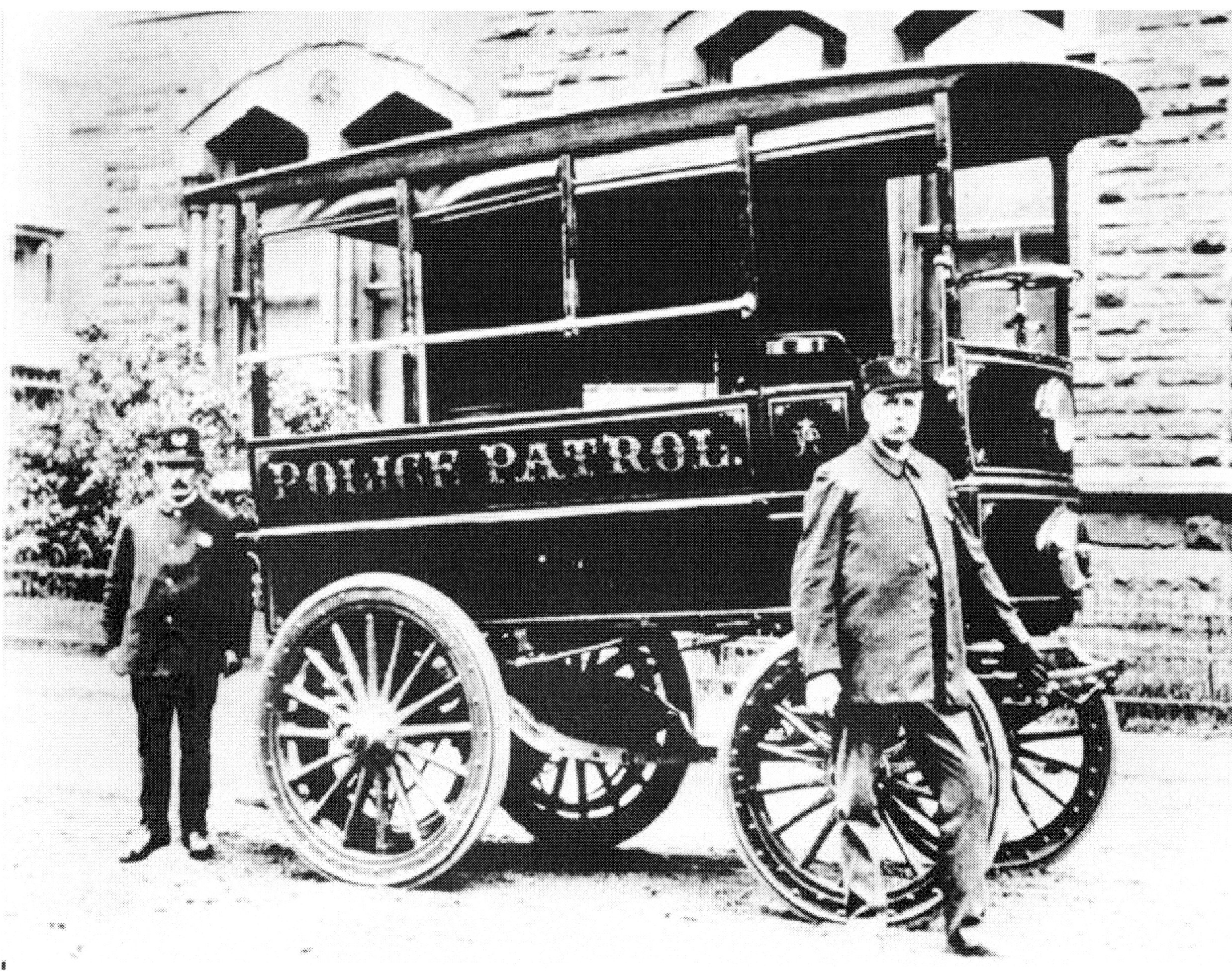
A long time ago, the police were a preventative service.  That is, they weren't what we have now, which is a force that reacts to crimes that have been committed.  A long time ago, you would find a lot more of police patrolling on foot, walking through neighborhoods, and dealing with the people who were living and working in that area.   What that would do, is that it would create a relationship with the people beyond just the idea that the police would only show up if there had been an offense already committed.


I've often thought about what things would be like if police continued to walk the beat in places like this.  What things would be like if you had a cordial, even collegial relationship with the police - where you understood far more of what was intended from the beginning of their formation by Robert Peel. That they were intended to be public servants.  And the most important thing that you can do as a constable would be to prevent crimes from happening in the first place, not just responding to crimes that have been committed already.

But that's not happening now.  What is happening now is that if you see the red and blue lights of the police behind you on the motorway, you tend to have a sense of dread in your chest, as you assume, probably correctly, that the best case scenario is that you will be ignored.  Maybe they're after someone else.  You know for sure that if they do, in fact, want to talk to you, it will be discussing an infraction that you have committed.  They aren't there to discuss pleasantries, nor to congratulate you for your safe driving.  Rather, they're there only to enforce laws that have been broken.  And they don't bear the sword for nothing.  My desire for a more cordial relationship with the police is based on my desire for a more cordial relationship with everyone.  You never want a relationship with someone where your only reward is not being punished.

But what you will find, largely, is that the majority of interactions you have with people will be that your only reward is not being punished.  The only positivity is a lack of negativity.  I'm convinced that this is a cause of things like marital breakdown, and the like, that the only interactions you have with a spouse, or with a relative, with a boss or a customer, will only be negative.  The positive reactions simply don't exist, and your only reward is not being punished.  And that's the source of the 'footprints' poem.  I know you all know it, but in case you don't, here it is.


Now, you all know this poem, and what it's about.  But the nugget at the heart of it is that where there is only one set of footprints, that's where you walk alone.  In other words, when things are bad, you get no help.  You have God strolling along with you when things are fine, but when they are hard, he's nowhere to be found.  And more and more people truly and genuinely do see things that way, seeing things from the perspective of only asking where God is when things are bad, when they're hard or difficult.  They don't think too much about where he is when things are going fine, during those times they're happy to forget about him.  But when things are bad and hard, they curse his holy name.


For us as Christians, we need to be the hands and feet of God in the world, and that is going to involve doing more than just correcting and scolding out of nowhere and having no other interactions with people.  If we only do that, people will spurn and reject our message, in the same way as we would if we believed that God only had negative interactions with us as well. If the only reward we had ever received from God was not being punished, then we would be angry with him with every interaction we have with him.  Just like we do with the police, revenue Canada, or anything like that.  It's perpetual.  If there is someone we only have either negative or neutral interactions with, we won't care for any of the interactions we have with them.


So then our job, if we are to go into the world and call sin what it is, if we are going to discern wisely and call people to repentance as we should, we are going to have to do more than just have negative interactions with them.  We're going to have to bear their burdens, and in so doing fulfill the law of Christ.  That's hard to do, of course.  it's no fun to do that.  It's all the harder when you consider how difficult it is for you to just bear your own burdens, to carry your own load.  When you think about how difficult it is to carry yourself towards the finish line, then you become much more reluctant to carry the burdens of someone else.  What can possibly help?

If you take Dr. Martin Luther seriously, as you ought to do, then you'll pay attention to the section at the end of the small catechism that talks about the daily prayers. The daily prayers that Martin Luther has in mind for you to engage in are there for your benefit, in order that you may be always mindful of what God daily and richly blesses you with.  If you go to the section on the Lord's Prayer, especially the part about daily bread, where every time you pray the Lord's Prayer (which Martin Luther recommends you do 8 times a day), you will be reminded of how much God gives you every day.  House and home, clothing and shoes, spouse and children, all that.  And what that does is to remind you that your only interactions with God aren't scolding and brimstone, he blesses you every day, gives you everything you need for body and soul, and wins your soul for everlasting life.  If you believe that, then you will be far more able to bear the burdens of others.  It all starts with being mindful of how much you have been given, and only then can you begin to bless others.  Any other way, and you will try to bear the burdens of others with bitterness and resentment, as you feel you are carrying your own load yourself.  But with Christ, because of what he has already granted you, you are free to bear the burdens of others.  


Monday, June 24, 2019

Demons

I'm afraid that demons have gotten a bad rap lately.

If you've been paying attention to the world of streaming video lately, there has been a very mediocre attempt to shut down the new Amazon Prime series 'Good Omens.'  20 000 people have petitioned Netflix, the company that doesn't carry Good Omens, to shut the series down.  Which I'm sure Netflix would love to do if they could, which they can't because they don't own it.  It's a lot like telling Dominos Pizza to stop the manufacture of Wingstreet Wings.  If that's too cerebral for you, then it would be like telling Bread of Life Lutheran church to stop handing out books of Concord.


Now, even though Netflix can't cancel the series, why are people upset about the show? They're upset because the show, in their opinion, normalizes the Devil and Satanists.  It makes the Devil, demons and Satanists into something cuddly, who just have a 'difference of opinion' to God and his glory.  I haven't seen the show, as I've been too busy watching children's flag football, but I would imagine that the theology is total bunk, but there's no surprise there.  What I have noticed, even without watching the series, is that the world has now moved towards taking demons, the demonic, even the devil himself as largely a figure of fun rather than a matter of vital importance.  We do that thing where we figure that because we don't see any evidence of demonic activity now, that there never was any.  We get to thinking that any idea or notion of demonic activity through the ages was just a manifestation of some kind of mental illness, be it schizophrenia, psychosis, or something else, and that what Jesus was doing was essentially giving the possessed some lithium.  Assuming that everyone displaying any sign of demonic possession was just mentally ill, though is short-selling the accounts from the Bible that talk about demonic possession, especially the account that we had from the Gospel from Sunday.

The key thing that draws a distinction between mental illness and demonic possession comes in the interplay between Jesus and the man who is possessed.  If someone is mentally ill, they may very well make assertions of matters that do not exist.  They may speak of things that most certainly are not happening, and that never were.  When you talk to people who are suffering from mental illness, who have all manners of hallucinations or delusions of any nature, you expect them to talk of things that don't exist, but you as the person engaging with them don't act as though these things were true.

As a practical, real world example, when I go and visit people suffering from some manner of dementia, they will frequently talk about a situation different from the one they are actually existing in.  People will talk about the one room schoolhouse that they attended as though they were still in it, instead of the institution that they are currently living in.  Even if you were to humor said people, to talk to them as though their perceptions were true, you wouldn't behave in yourself as though they were true.

Instead of being dismissive, or talking about mental illness, Jesus deals with demonic possession as though it was actually happening as described.  That is, Jesus speaks directly to the demons.  He commands them, and they do what he commands. Jesus doesn't say to the person afflicted in any of these passages that they have a mental illness, he acts always as though it was a spiritual problem that needs to be addressed spiritually.  As I'm fond of saying, if Jesus were to think something was important, he would address it.  He had the space in the book to do it (The Lutheran Study Bible is sitting at around 2500 pages).  If this was a mental health issue, and Jesus is God, he could have said something about it.  But he didn't.  In fact, he says of another evil spirit that it can only come out by prayer, suggesting very powerfully that this is a spiritual issue more than it is anything else.

Our big weakness right now is to think that spiritual problems, spiritual sicknesses just straight up don't exist.  Every problem that we have, every malaise, every ennui can be corrected by means physical not means spiritual.  We have the idea that we don't have to cure spiritual sicknesses because they just straight up don't exist.  And if they don't exist, they can't be cured.

The comparison that I made on Sunday morning was that years ago, people didn't know how the cold virus spread, and they assumed that you got a cold by being cold.  That, of course, is wrong now, and we all know today that the common cold is caused by a virus, and the best way to avoid it isn't to stay warm, but to wash your hands, and to wash them often. That will go a long way towards avoiding the spread of the virus towards your face, and keeping it out of your cells.  The cold virus likely spread a lot more virulently when people didn't know about germ theory, and were trying to avoid getting it by doing things that wouldn't stop its spread.


  This seems obvious now, but think about it in terms of spiritual sickness as well.  If you were just trying to stay warm, to avoid getting a cold, that would make the cold virus very happy indeed, because you were trying to fight a problem through means that wouldn't work. Now think about the demonic forces that are trying to split you from God, to drive you away from him, to convince you that what is right is wrong, and what is wrong is right.  Now think about how you're trying to treat that.  Are you turning to God for aid? Are you working with prayer? Or are you assuming that spiritual sickness just doesn't happen, and doesn't need to be treated.

Not washing your hands doesn't help you.  It helps the cold virus.  Staying absent from worship, from prayer, from scripture, that doesn't help you.  It helps the demonic forces that you would like to think don't exist.  But Jesus thinks that they exist, and he behaves in every way as though they were real.  And if he does, who are we to question that approach? Almost always the best step forward is to look towards Christ.  If he takes something seriously, then we should too. If he can isolate a problem, then we should look towards his solutions as well. And we should be always mindful of what he recommends - understanding that our spiritual sicknesses can only be treated with prayer.

Wednesday, June 19, 2019

Trinity

Okay, here's where we talk about the trinity.  And the trinity is something that people say is hard to explain, because it is.

Blog over.

Nah, I can explain the Trinity.  And I can explain it in a way that you can understand.  Watch me work.


There's a great bit right at the beginning of Star Trek 4, the voyage home, in which McCoy and Spock are talking about Spock's death.  McCoy asks Spock what it was like to be dead, Spock replies 'I'd like to discuss it with you, doctor, but I'm afraid you lack the necessary frame of reference.'  McCoy retorts 'So you mean I'd have to die to discuss your position on death?'  Sure enough.  But all sorts of things are relative.  They're relative in a way that doesn't make sense outside of their relation to you.  All sorts of things work like that.  I can't discuss colours without talking about colours that you see.  I can't talk about smells except in relation to things you've smelled before.  Things that are part of your senses can't really be experienced unless in relation to other things you've experienced. Make sense so far?  Good.  Now, let's talk about the Trinity.

God the Father, the creator of the universe, is the first thing that we perceive about God.  That is, the creative work of God the father can be seen and perceived by almost everyone.  This is something that should be relatively clear, even among the most hard hearted atheists.  For everyone who stands at the edge of a cliff and gazes out at the great salt sea will have an experience of the divine.  Everyone who looks up at the sky, at the milky way or at the sunset, will be awestruck by the majesty of it.  This is something that can give you an idea that all these things are made by the Lord our God who created heaven and earth.  Now, this is something called the natural revelation of God.  That is, you can see that things are made by God, but that's all that you can or will ever know about him.  You can know that God made things, but you can't know anything about him beyond that from just seeing the natural world. And this will lead you, almost inevitably to the conclusion that the crowd Paul was speaking to in Acts 17 as well as an awful lot of people that I get stuck talking to at parties. They all came to the conclusion that we could be 'spiritual but not religious.'  That is, they have an idea of a God out there somewhere, out that in the greatness of the void, but figure that they can't know anything about him.  And surely, if all you can do is to look at the vastness of the cosmos, you'll only get to an idea that there is a God, but you can never know him.  You will know that there is a God, but not anything about him in the slightest.

So, thus Jesus.  I understand that you may have an idea of Jesus as a person, or as the son of God, as a man who lived a couple of thousand years ago, and that's all true.  But there is more to the story than that.  Because the story of Jesus is the story of how we understand God.  You can know that there is a God out there by gazing at the vastness of his creation, but like with everything else, if you want to learn about someone, you'll have to do something every specific. When Jesus speaks, people frequently get upset, sometimes angry enough to kill.  And when he does this, it is because something very familiar to you is playing out. Have you ever witnessed an argument proceed like this:

"When you go to the store could you get some milk?"
"Yes, fine, I'll get the milk."
"Could you make sure that you get the 2%..."
"Yes, yes, I get it, 2% Milk, 4 litres, I got it.  Gosh, get off my case!"

And sure enough, when person B comes home, they do so without the 2% milk.  But they'll insist the whole time that they have the right thing.  Now, if they'd just listen, they would get things figure out, but we don't like listening, even to relatively straightforward conversations.  Think about things like this.  How often is more communication expected in collapsing relationships?  How many times have you heard someone complain about a friend, a lover, a co-worker or a boss, and then have the response come forward 'why don't you just talk to them?'

I can't talk to them!  If I do, then I'll know what they want, and they'll know what I want, and then things might work out properly between us!  Sure!  That's the idea!  And in the case of God, Jesus is the means through which we know the unknowable God.  Jesus Christ, the word made flesh, is the way we can understand the incomprehensible.  Because God exists outside of our immediacy, outside of time, outside of frailty, we can't wrap our heads around his enormity or his grandeur.  But we can absolutely understand Jesus in the real world.  We can understand God because we can understand Jesus.  I know we're used to understanding Jesus crucified, and that's going to come up later, I promise, but here's the deal:  the only way you are ever going to get past the unknown God is to understand Jesus as God.  The word of God made flesh.  The one whose job it is to make God understandable to us.  The massive God who formed and fashioned the milky way, that God is a bit too distant for us to come close to, to understand or arrive at.  But Jesus, we understand him.  His words are simple, succinct, and straightforward.  Sometimes too straightforward for people.  They may not like it at all when Jesus is as plain as he is.  They resist his words, as they do in the Gospel reading for today.  They hear his words, and pick up rocks to throw at him, to stone him to death, because he told them the truth about God, and about themselves.

Eventually they kill Jesus, they put him to death for this reason.  He tells the truth.  He is quick to let people know that they have the potential to be liars, to say that they understand God when they don't.  But Jesus is extremely truthful.  The word of God is always truthful, it is always accurate.  It cannot and will not deceive.  Even if the truth of it is too acute, and too severe for us.  Even if the word of God cuts us too deep, and we want to be rid of it.  And so they take Christ and have him crucified.  But the Christian faith, which rests on Christ and him crucified, is not the same as just knowing about what happened.  The crucifixion is a fact of history, and it is something that we can know about in the same way that we know about the murder of Julius Caesar on the ideas of March.  We can know about Jesus and his death in much that same way, but God works on us another way.


God the Father is what we perceive in the universe.  God the Son is how we know that God, but God the spirit is the way in which we experience God.  This is the presence of God in the world, working to sanctify the church.  It's what changes our understanding of the crucifixion of Christ from a thing that happens, to a thing that happens for you.  This is different than just historical knowledge, for even the demons know there is only one God, and they tremble.  This isn't historical fact, it's the working of God in your life.  Creator, redeemer and sanctifier, Father son and Holy Spirit.  God, his word and his spirit.  And the thing is, we can only really explain it in relation to you.  You are living in a world, in a creation that God made.  God came into this world to save you.  And thanks to God the spirit, you know and experience that it was all done for you, on your behalf.

The trinity isn't just a part of your faith, it is your faith.  This is what the catholic faith is, as the Athanasian creed tells us.  Your faith is the father, the son and the holy spirit.  The dogma is the drama.