The musings of the Pastor from Good Shepherd Lutheran Church, Regina SK

Welcome. If you're a member at Good Shepherd, welcome to more thoughts and discussion of the week that was, and some bonus thoughts throughout the week. If you're not a member, welcome, and enjoy your stay. We are happy that you're here.

If you like what you see here, consider joining us for worship at Good Shepherd Lutheran Church. Sunday mornings, at 8:30 and 11:00. You can also follow us on Facebook.

Thursday, November 28, 2019

The end

The church year operates on a different cycle than the calendar year.   Think of it like Rosh Hashanah, or Chinese New Year, these events that let you know that there are other ways of marking a revolution around the sun, that are not based on our traditional calendar that we view as normative now.  This last year, Rosh Hashanah bridged September and October, while Chinese New Year was in February.  The church observes its new year on the first Sunday in Advent, where the church year begins anew.

But the celebration of the church new year is always preceded with what the book of common prayer calls "the Sunday next before Advent."  You could also call it the last Sunday in the church year, but that lacks the same gravitas as the method mentioned above.  Gravitas is important for this conversation, because unlike other celebrations of new years, the church year is preceded by a discussion not of the end of the church year, but a discussion of the end of everything.

The church seasons are cyclical, to be sure.  Advent moves into Christmas which moves into Epiphany, and the calendar continues from there.  And every time we get to the end of the church year, the new church year begins, just like clockwork.  But there is a significant difference, because this is not a cycle in perpetuity.  This is a cycle that has written into it the idea that one day this cycle will end.  That is, what we think of as a permanent cycle of back and forth, in and out, day into day, is concluding, wrapping up eventually.  We are on a cycle now, of seasons and successive ages, but that isn't eternal.  Before we talk about the coming of the king of kings as a baby in a manger, we end up talking about his return.  And that ends everything.

To understand this further, you have to understand that the universe that we live in had a definite beginning, and will surely have a definite end as well.  This is a topic that has not always been too terribly well considered by the secular world, who have resisted it for some time.  Sure, now we know about the Big Bang Theory, but there was a time in which that kind of theory was resisted, sometimes heavily, by the scientific world.  The scientists of the time (not universally, but certainly including some well known ones) pushed back against the idea of the Big Bang, precisely because it suggested creation.  It suggested that everything we see around us can be tied back to a single, creation moment, before which nothing could be known.  This was known not as the Big Bang theory at its inception, but as "The hypothesis of the primeval atom." And this theory, before it was taken seriously by Hubble, Einstein, or anyone else was discovered by this guy:
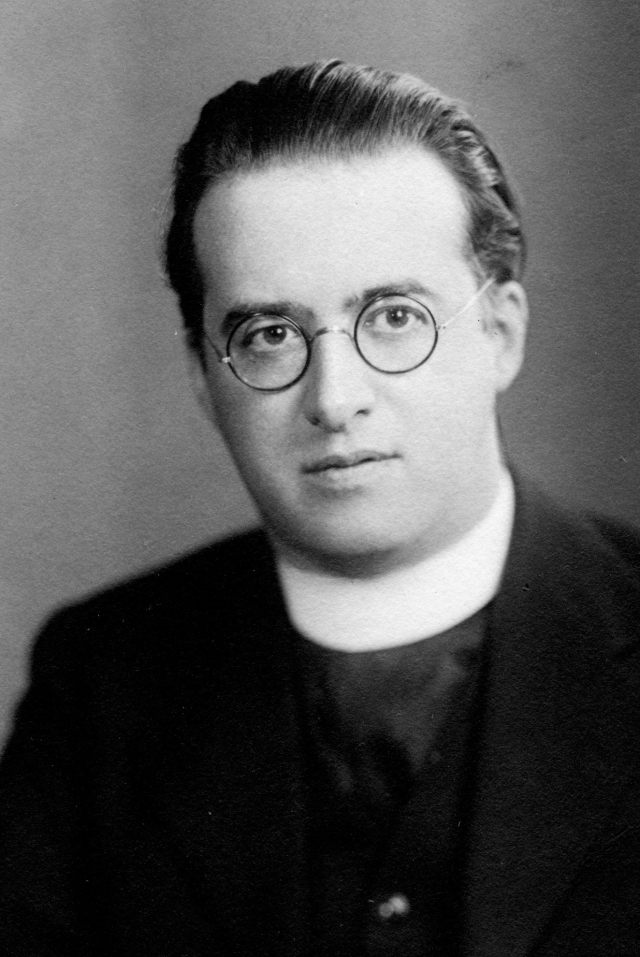
Does his shirt look familiar to you?  It should, if you're reading this blog.  That's Georges Lemaitre, a Belgian priest, soldier, and physicist who worked in the Vatican observatory.  And it was his calculations that drew the entire universe back to creation.  At the time, the scientific community believed that the universe simply had always existed, would always exist, and that there was no creation moment required.  Once Lemaitre had proposed his hypothesis, all that changed, and the world had to deal with the fact that the math checked out, and that there was nothing, then there was a lot of something.

I mention this because that's what the last Sunday of the church year reminds us of; not only that God made everything, which he did, but that the forms of this world are passing away.  This universe won't always be here.  It, by itself, is not eternal, it does not endure forever and ever, and both science and faith agree on that point.  Where they disagree, however, is what they have to say about the beginning and the end.  

In the faith, we believe that the universe began when God made the heavens and the earth, way back in the book of Genesis.  We believe also that the universe will have an end, and we think about it and ponder it every time the church year draws to a close.  Sure, the seasons, the years, it's all cyclical for now, but it's not an eternal cycle.  Eventually, Christ returns, and the cycle ceases.  When the director stands on stage to thank the cast and crew, the play is over, and cannot begin again.  That world is gone, and a new one begins.  As Christians, we believe in what the Bible says, that there will be a new heaven, and a new earth, for the flawed, broken ones will pass away and be gone.  And that means that the world that is running out of gas, where it will run out of heat, run out of time, will all be gone eventually, though nobody knows when.  But you're not basing your hope on the temporal universe that you see around you.  You're basing it on the fact that there is a force, a God who made the universe, who existed before it, and who will exist after it is gone.  Everything else becomes ultimately meaningless, because as much fun as you're having now, on a long enough timeline , everyone's life expectancy drops to zero.  
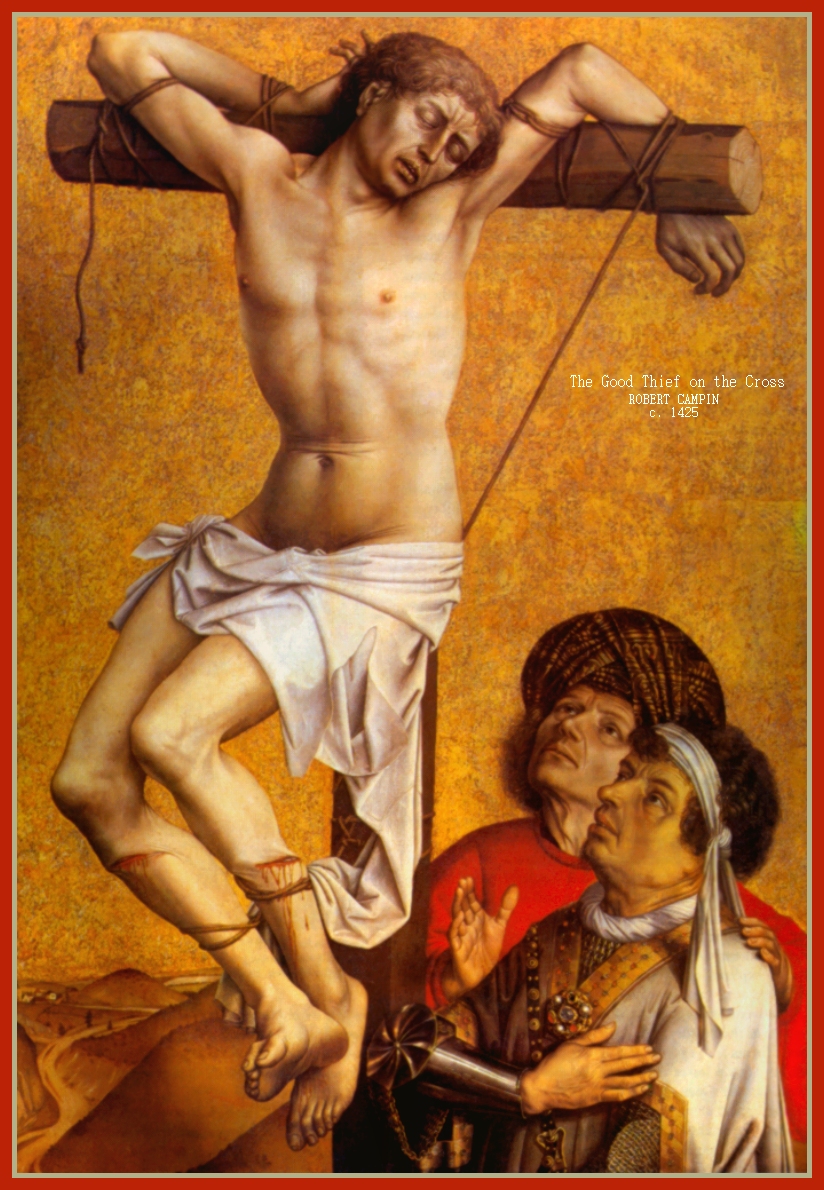


The thief on the cross next to Jesus of Nazareth got that time was running out.  He wasn't talking about a long timeline, he was talking about a very limited one indeed.  A couple of hours, maybe, then it's lights out.  When he reached out to Jesus, he did so as someone understanding maybe not that the universe was ending, but that his time in it was.  And his plea to Jesus was to say 'Jesus, remember me when you come into your kingdom.'  Your kingdom which is not of this world, which is not tied to the world that we have that is falling apart, grinding down, and wearing out.  Your kingdom which is outside of time and space and which is the only hope I have left.  For a modern, enlightened, scientific people who have the ability to look forward in time, to contemplate not only our own mortality, but to contemplate the eventual heat death of the universe, we have to figure out which kingdom we want to be a part of.  The kingdom of this world which is rapidly drawing to a close, or the kingdom that is not of this world, that exists outside it and is not subject to its rules.  The last Sunday in the church year gives us time to contemplate that, the presence of the cycle, and the fact that when the cycle draws to a close, it is He who makes the world who will still be around once it is gone.  He remembered that thief, and the promise that he made to the thief is the same as he makes to us - that we will be with him in Paradise.

Tuesday, November 5, 2019

All Saints

There are some things that become unavoidable if you live long enough.

All of a sudden, one day, your suit that you bought gets used a lot less for weddings, and a lot more for funerals.  All of a sudden, you notice that people your age have died.  They're not supposed to do that, are they?  That's for old people!  And then, one by one, the members of the generation older than yours start to pass away as well, and then, as may surprise you, an uncle or aunt somewhere dies, and you realize that you're now the older generation.  The generation older than yours is all gone now.

This is all quite shocking, and happens to most of us, once again, if you live long enough.  The longer you live, the more you will tend to outlive your peer group, to the point that no matter what a great guy someone is, if they're an octogenarian or better when they die, they're not going to fill the church up too much for their funeral.  A 17 year old who dies certainly will.  Now, this is because the older you get, the more people that you know and love die.  Death is a fact of life.


This is why a Christian celebration like All Saints' Day becomes more important as you get older.  For the younger person, it is intensely important to hear and know what Christ does for you - how he forgives sins, how he promises life everlasting, how he divides your sins from you as far as east is from the west, all that good stuff.  And this is all good and true, of course, but to be honest, there are  other things to consider on a day like All Saints' Day. And this is the one day where I don't talk about what God has done for you.  I talk about what God has done for them.

Them? Who?  You know who.  You know who because you have been told at some point, somewhere, that someone you love has been taken to the hospital, and it's not looking good.  You may have been pulled out of a hospital room by a doctor into the hallway for 'the conversation,' in which the talk has moved from treatment to comfort.  You may have spent hours at a bedside in a hospice, listening to machines beep until they stop beeping.  And you very probably have gone to a funeral.  You have walked into the church where there have been baptisms  and weddings, but now the tears are of sadness, because a loved one is not coming back.  You may have walked out to a graveside on a crisp autumn afternoon, and had the funeral director give you a flower from the arrangement on the casket right before it is lowered down into the ground, and then gone from sight forever.  You may have had the responsibility of placing the urn into the ground or into its niche, which is the last act of earthly service you can provide for that person, and then that space is sealed, and there is nothing left that you can do.  If you haven't had any of these experiences yet, you will. Just give it enough time.

And this is why we speak the way we do on this day.  This is why we have the sorts of conversations that we do around this day, in this space, because what God does for you is important, but so is what God has done for them. This needs to be a major guiding force for you, it needs to be a major consideration more now than ever.  Honestly, it's always better to deal with an issue before it becomes a crisis.  It's good to look at your roof before it rains.  It's good to deal with your blood pressure before your heart attack.  And it's good to think about what God does for those whom you love and cherish before they're gone.

Maybe you will, maybe you won't, but in all the ins and outs of life, you need to think about and consider the line from the middle of the beatitudes, where Jesus says 'blessed are those who mourn, for they shall be comforted.'  Well, how on earth is that supposed to happen? Honestly, I don't think we really truly consider this that often, but the only real comfort that you can get from the world when someone dies is to be told that they lived a good life, and they were a good friend.  But that will make you feel worse if it's true!  If it is true that someone you love lived a truly good life, that they worked hard, were a wonderful husband or father, wife or mother, friend, aunt, whatever, you'll just feel worse to hear that.  The best you can hope for is that you will eventually forget how great they were.

Or, you can turn to the one who gives peace as the world does not give.  Who forgives sins, and covers over unrighteousness. You can turn to the one who binds up the wounded, and who promises resurrection, and life everlasting.  And that is real, genuine comfort.  It's comfort that does not go away, and it works better the better the person is.  If you have someone who is genuinely good, who was a good person whom you loved and cherished, then the reality of the resurrection will be actually better and sweeter the more that is true.  And Christ knows this.  This is why the resurrection is the major point of the Christian faith, because all these humans on earth are unique, and cannot be replaced. The comparison that I made on Sunday was that although each person is unique, they all go into that great cloud of witnesses, just like a snowbank is made of a great pile of snowflakes, indistinguishable until you extract just one and realize that it is fully unique.  And for every single person about whom you have said that you would give up anything to see them again one more time, Christ did give up anything, in fact everything.  He gave up everything that he had for that solution to manifest and to be made real.  The cross of Christ was where that issue was fully and finally resolved, and life was guaranteed not for a while, but sealed for eternity.


So on All Saints' Day, we face these losses with confidence, with strength, and with vigor, remembering what we forget for most of the year.  We usually think about what Jesus does for us, but something of supreme importance for us to remember is what Christ does for them too.

Friday, November 1, 2019

Boo!

Happy Halloween everyone!


But if you're a Lutheran, the 31st of October has other meanings, you know.  It's the day when someone knocked on a door, with a hammer, and instead of getting candy, he brought down the corruption of the church.  The moment that Dr. Martin Luther nailed the 95 theses to the door of the Wittenberg Castle Church was a big moment.  It was the moment which began the reformation, but it was not the be all and end all of the movement.  What you need to know is that Dr. Luther did not go out of his way to start anything known as a reformation that day.  Do you know what he came to do? He came to dispute about the sale of indulgences.  

Go ahead and read all 95 of the theses.  I'll wait.  Most people, of course, haven't read them, and there's a good reason why not, which is the same reason that most of us don't read the book of Leviticus that often either - because it deals with something that is not so much of a pressing concern for us these days at all.  Luther's theses are there to dispute about indulgences and the sales thereof.  This seems like a minor issue, of course, since the last time you heard anyone talk about the sale of indulgences was probably 365 days ago.  But Dr. Luther, in nailing the theses to the door actually did something far more profound than just nailing a document or getting the sale of indulgences stopped.

The point that I have made before is that you can't pop part of a balloon.  If you blow a balloon up nice and big, then stick a pin in it, the whole thing blows out.  You don't just lose part of it.  In the same way, what Dr. Luther did was to poke a hole into one particular part of church teaching; the sale of indulgences.  What that did was to pop the whole thing.  He did so by nailing the theses to the balloon of church teaching, understanding that these people worshiped God with their lips, but their hearts were far from him. This wasn't really about the sale of indulgences, though it first appeared to be, rather it was about where the church gets its teachings and authority from.

In the Gospel reading, we heard from Jesus saying to those who were around him that if they would continue in his word, they would know the truth, and the truth would set them free.  Now, they fought him on that one, refusing to just say that his word was truth.  Instead, they fought him, pushed back, insisted that they didn't have to follow his word, and that, you know, their own rules were probably just as important as the word of God.  That happens so fast, and so regularly, that we almost don't even notice anymore.  Think of who it was who opposed Jesus the harshest, and realize that it was the Pharisees, the chief priests, the scribes and the teachers of the law.  In other words, the people who should have known the word of God the best. If you skip ahead to those who opposed Dr. Luther the most, it wasn't the Turks, you know . It was the Catholic church of the day, the Bishops, the Pope, the curates who all had the scriptures, and who all in theory should have known better.  Which they did not.  They did what people tend to do, which is to worship God with their lips, but to have their hearts far from him.  They value the traditions of men instead of the laws of God.  This is why the Jews in the New Testament opposed Christ, who is God in flesh.  They did so because Jesus was leading them back to the old morality, the old morality that didn't change ever.  But they kicked against him.  Do you remember the time where he made mud and placed it on the blind man's eyes?  He was immediately targeted by the Pharisees for having not kept the sabbath.  What did Jesus do to break the Sabbath?  Like a rogue, he combined solid and liquid ingredients which is very much not allowed according to the Mishna, which is the oral law.  And once you start having oral laws, you can have the position that although you follow God and his commands, well, you can only understand them through the lens of human rules which all of a sudden override the word of God.  Things like how on the sabbath you can't combine solid and liquid ingredients, or pluck a strawberry.  You can't pick up your bed and walk, you can't start or extinguish a fire.   

And you can't get married as a priest.  And you can't read the Bible in your own language.  

Stop me if you've heard this one, but this seems a lot like history repeating itself.  When Dr. Martin went to the Wittenberg Castle Church, it wasn't to start a new branch of the faith, or even to inaugurate the reformation.  But he essentially had to, because his position was going to lead there anyway.  His position of saying that the faith of the church had to follow what Jesus says in John 8, that we have to continue in the word to know the truth, and the truth will set us free.  But that isn't new.  It's old.  But our desire to veer away from it comes up every 500 years, you know.  You're on the same cycle you've always been on.  There are reasons why there are dozens of denominations out there who all claim some modicum of spiritual truth, but who say vastly different things. How is that possible? Some consult the word, others do not.  That's how they veered away from the truth 200 years ago, 500 years ago, and today.  But the injunction of Jesus stands.  If you continue in his word, you will know the truth, and the truth will set you free.  

Monday, October 21, 2019

Return to give thanks

This last weekend was Thanksgiving. Sorry, America, we have Thanksgiving too, and it is in October, as God himself intended.  But there's a reason that we have it in October, don't you know, which is that Thanksgiving is a harvest festival, and as a harvest festival, it takes place in October, close to harvest time, not in November, when the field are frozen and white.  But yes fine, dates aside, both sides of the border have a festival of Thanksgiving, and we turn to God and render thanks, perhaps one time all year, for the wonderful blessings we have received.

The bigger issue, of course, is that we are less grateful than we ought to be about every day.  You can see that in the meals that we eat at thanksgiving.  I'll explain what I mean.  For Thanksgiving, you probably have a fairly typical spread - something like Turkey, mashed potatoes, gravy, cranberry sauce, brussels sprouts, buns, gravy, all that good stuff.  But the thing is, no matter how big or small your Thanksgiving meal was, there's a good chance that it was bigger and richer than a standard weekend meal.  And this is where we get to start examining things in detail.

For our average meal that we eat in this nation, is far more luxurious, far more decadent than most anyone in human history could have hoped to consume.  For example, and I chose it because it is a well known example, the Romans in the time of empire are listed by Wikipedia as living 'very luxurious lives,' and yet their diet was 70% cereals and legumes.  White bread was an extreme luxury, as the poor ate tough bread made from barley, not wheat.  Sweetening was limited to whatever honey could be acquired, and cane sugar was an exotic ingredient.  Not in absolutely everything as it is today.  Food shortages were relatively common, and most things would have been tough and bland according to our modern palates, as salt in a pure form was a luxury.  And this is with a people who lived luxurious lives.  Can you imagine the poverty in diet of a nation, of a people that weren't luxurious?  In the modern world, we are used to food being so hyper-palatable, as so easily hitting our bliss point, than even food that would have been standard fare not so long ago in human history is deemed unfit for human consumption.  Consider the humble pumpkin, why don't you? These gourds are food, you know, and yet the average household here has them only as decoration, and tosses them out on the first of November.  You are considered strange if you actually eat your jack-o-lantern, which was a food long before it was decorative.  


So where to go if your  normal meal is several hundred times more decadent than what humans have eaten for centuries? Well, there's really nowhere to go, if you see what I mean.  The meal gets bigger and richer, with cabbage rolls and perogies, but ultimately, we fail to recognize that our standard meal is so rich and flaky that hundreds of generations would consider it beyond possible to have something so delicious, and yet we bolt that down almost without thinking.  People who are asking about the goodness of God will frequently ask me why God sought fit to take their mother, father, or grandparent right when they needed them the most.  Well, consider this, that the average life expectancy of people in Canada is now around 82 years, and for most of human history, it was far under 50.  Again, on the topic of the goodness of God, people will ask why God took their pet dog from them when they were ten, without realizing that peak decadence is having an animal in the house that does no work at all.  It isn't a hunter, a guard, or a shepherd, it's just another mouth that you brought into the house because it would be cute to do so.  Most humans couldn't possibly conceive of having livestock in your home that does nothing for you except hoover up food and vet bills, but here we are.

So yes, we aren't good at considering all the blessings that we have, and as usual, once you forget the magnitude of the blessings that you are enjoying on a regular basis, then you will grow fairly cold in your celebrations of them.  We are a species that tends to want to look for novelty, for the next thing, we consume and we move on.  Most of all, though, we forget what we have just done with alarming speed.  We forget the meal we have just eaten, the possessions we have just acquired, and the family we have just seen. The heart of the human grows cold unless it is enlivened purposefully with thanksgiving.

So consider the lepers who were healed by our Lord Jesus Christ. Consider the lepers who had to stand a long way off and shout to him, begging for salvation.  They had to stand a ways off because they were unclean, they would contaminate people by being close to them.  Their lives were reduced to existing in a world of only lepers, they were cut off from everyone, and suffering from a debilitating, disfiguring disease which would destroy them socially as well as physically.  They genuinely needed to have healing which would have completely changed their lives in almost every way.  Jesus did, of course, have mercy on them, and told them to show themselves to the priests, which they did.  Upon doing so, they were healed.  And this was a wonderful thing, to be sure.  It was a wonderful thing to be healed not just of an infection or a disease, but to be healed of social ostracization, a wonderful, blissful thing.  And after they were healed, they did what you would expect them to do, which was to, with overjoyed hearts, go back to their homes, their lives, their families and communities.  It was a joyous time.

And that's the thing, is that frequently, we are too busy enjoying our blessings to be grateful for them.  We have so much, all the time, that we regularly forget that these things exist, or are wonderful things.  Our regular meals are so good that we don't think much of the fact that we have access to more than humans have ever had in human history.  Our regular transportation is so good that we forget that not too long ago, people would never leave their immediate village.  Our regular healthcare is so good that we've stopped getting vaccinated.  You know the drill.  We get really used to things very quickly, which is why the thanks that was rendered to the Lord was as important as it was.  Not because he needed it, but because the leper did.

The grace you say before meals isn't so that God won't take your food away.  That's not how that works.  You don't say grace so that you'll get more food, or so that the food you have won't disappear. Rather, you say grace so that you are grateful with every meal for what you have, Thanksgiving dinner or not.  You don't say your prayers in the morning and evening because if you don't God will take things away from you.  Rather, you are there to be grateful so that you never get complacent with what has been given to you.  If you return and give thanks, as the one leper did, then you will be brimming with joy with what you have, not always looking to what you can have next.  Forgiveness, life, salvation, eternity, joy, health, family, clothes and shoes, all those things that are given to us from the Lord, who reminds us in his word that 'ever good and perfect gift comes from above.'

So don't get complacent.  Be always filled with gratitude, and then you will truly appreciate all the things that God has provided.

Thursday, October 10, 2019

Unreasonable

You should know right off the hop that Jesus Christ isn't who you think he is.


For what we think of Jesus is that he is a light cheerleader, but who doesn't cut in too much to what we want to do.  He's the supportive friend, the one who you call up and ask what he thinks about things, and he always says 'what do you want to do?' When you tell him, then he replies, 'Yes, I think that's what you should do, for sure.'  We love that kind of friend, because that kind of friend always finds a way to back us up, and our friendship with them seems to depend on them backing up our prior positions.  So if you're asking yourself what your position on who to date should be, how to vote, what to do with that neighbor who you are having a hard time with, whether to stay with your spouse or bug out already, if you ask that Jesus what you should do, curiously enough he will always seem to echo what you already think about it.

But that's not who Jesus Christ is.  Far from being hyper-malleable, he is hard as nails, and I do mean that very sincerely.  His positions are exacting, especially in a moral way.  And these exacting, moral positions are completely uncompromising.  Now, we have made a cottage industry of making Jesus Christ as compromising as possible, malleable and soft as marshmallow.  He's a bit of a cream puff, and we can rely on him to take on whatever form we need him to.  The thing is, though, a god who conforms himself entirely to your positions, whatever they may be, is an idol, nothing more.  That's what an idol is.  You can tell when Jesus speaks, though, because he is uncompromising, and he certainly doesn't conform himself to what you would like him to do.  Sunday's reading from the Gospel is a classic example of that.  In the reading from Luke 17, Jesus reminds his disciples that if someone sins against you, you must rebuke them.  Good so far, of course. But then Jesus rudely continues, and says 'if he sins against you seven times in a day and turns to you seven times saying 'I repent' you must forgive him.'  This is unreasonable.  We all sort of tend to follow the classic teaching from Tennessee, which says 'Fool me once, shame on you, fool me twice, won't get fooled again.'  If Christ were an idol, then he would say that if someone sins against you, you are well within your rights to cut them off, ignore them, spurn them and encourage your friends to do likewise. But that's not what Christ says.  He says that if someone sins against you seven times in the day, and seven times repents, you must forgive them.  Non negotiable.   


This is, of course, a hurtful thing to consider, which is what this GK Chesterton quote is all about.  That is, that the Christian ideal has not been attempted and found to be lacking anything.  Rather, it has been found difficult, and left untried even by Christians. Whom amongst us will look at these words of Christ and find them to be perfectly reasonable? Or even more so, who will look at these words, and put them into practice in his own life? To be honest, the majority of people will look at this, and say that there is no possible way that Christ actually intended for this to be the case at all.  Because Christ is only here to request not the good, but the possible.

But what else does Jesus say? He says 'Be perfect, just as your heavenly father is perfect.'  And he means it.  What he doesn't mean is that perfect is what you happen to be doing right now.  That's not what perfect is.  Perfect isn't where you happen to be at present, and that's the barometer of perfection. You know that from the words of Christ that you refuse to follow.  Rather, perfect is what is perpetually out of reach, but internally what you have always known to be good.  You may kick and scream against Christ's requirements to forgive, but ask yourself if the shoe were on the other foot, and you had wronged someone 7 times in a day, repented and came back over and over again, would you want or expect them to forgive you? Likely you would.  And I can tell how, honestly.  Because you're a Christian.

If you're a Christian, and statistically if you read this blog you are, then  you'll know something about how every worship service works.  You approach the throne of grace, and confess your sins.  And if you're a human being, you don't get forgiven of one sin and have that particular bugbear crossed off of things you do forever.  Likely, you are bringing the same exact issues to Christ over and over again.  Your sins, your issues, your disasters, all the sins you commit are sins you commit week in and week out.  You move to the throne of Jesus Christ of Nazareth over and over again, and you find yourself standing, cap in hand, before his throne with the same issues expecting the same forgiveness.  And you receive it.

This is how you know that your measure for what is good and bad, right and wrong is not based on where you are right now, because what Jesus asks of you is what you expect of him. It's what you expect of the one who is truly and wonderfully good.  That's what this is and always has been all about, you know, the reality that you don't define good based on what is possible for you, but based on what is true and right. And in the holy scriptures, Jesus of Nazareth levels a lot of heavy issues directly at you, and your job is not to take them and make them easier, but rather to say with a loud voice, with confidence, what the disciples said: 'Lord, increase our faith.'  Yes.  Do not change the definition of good to fit what I am capable of doing, rather make me more able to believe what you have said.  Help me to understand what right and wrong are, and believing that, to understand what it is that your grace covers.  Grace covers sins, the real sins that you have.  When you cheapen grace to cover essentially nothing, then you believe in nothing, and have nothing to hope for outside yourself.  


But if you believe in expensive grace, costly grace, the work of Christ that cost him his life, then something wonderful happens: the work that he came to do actually gets done.  His word does what it set out to accomplish, it does not return void.  If you believe in costly grace, then the enormity of what good is actually begins to mean something - you can see the gulf that exists between what you do and what good is.  And you can cling all the more to the cross of Christ because you can take seriously that Jesus doesn't just say things to fill space.  He tells you what good is, and more than that, that he dies to forgive you for when you are not good at all.


Thursday, October 3, 2019

The devil is a liar

This last Sunday was the feast day of St. Michael and all angels.  Good so far.  And as pastor Gust pointed out, even the people you know who have no time for Christ and him crucified will still have a nice chat with you about angels.  Because angels are nice, they're fun, and they're some of the more esoteric, mythological aspects of the Christian faith.  Angels are just mysterious to be fun, and the fact that they aren't spoken of that often in Christian worship services, it makes them seem even more mysterious.  Something inscrutable, something that cannot be known much about, yet are still an absolute part of the Christian faith.  You can't have the Christian faith without them, and they seem to show up at extremely important times.  They show up at the annunciation, at the garden of Gethsemane, at Passover and in the fiery furnace.  In fact, a lot of these are really really well known stories from the scriptures, and given that these are central to the story of salvation, you can't really excise angels from the faith.


So we must have angels, well and good.  But what do we do with them? Well, you're a Lutheran, right? And if you're a Lutheran, then you get to do what very few people get to do overall, which is to rely on the scriptures alone.  And if you rely on the scriptures alone, then you will be told what you need to know about the angels.  There are two angels spoken of by name in the Bible, they are named Michael and Gabriel.  And once you get these guys worked out, then you'll know what the angels are all about, and what they're up to.  I'll explain.

We will talk about Michael first, because it is his day.  St. Michael is the warrior of God.  He is the commander of the hosts of angels, the soldier, the mighty arm of the Lord.  When parts of the liturgy call God the "Lord of Sabaoth," it is referring to him as the God of the hosts of angels.  And Michael is right at the top of that.  Michael is the apex warrior in the armies of the Lord.  If the Archangel Michael is a brave soldier or fighter, though, who is he here to fight? And that is a very important question.  The presence of police admits the possibility of crime.  The presence of an army admits the existence of a rival army.  And the presence of a warrior angel represents the presence of rival spiritual forces.  You know what those rivals are, though, don't you.  You know that the devil and all of his angels who were thrown down from heaven, they represent a very real and present threat to you and to your wellbeing.  And this is where things get interesting.

If you have an warrior on your behalf, someone who is going to fight to protect you, then you have to understand what that person is trying to protect you from, and to understand what kind of adversary you are facing.  For most of us, we tend to figure that the devil is one of two things: either made up, irrelevant, a fable, or a roaring lion, prowling around, seeking who he may devour.  There is not a lot of middle ground, not really.  But the way the devil is described in the scriptures is a little different.  He does show up as a roaring lion as well, obviously.  But the way he shows up in our readings from this last weekend is wonderfully interesting.  He is described as the great deceiver of the world.  And that's fascinating.

And you don't know that you're being deceived while you're being deceived.  Nobody can tell that they are being deceived. You can tell if someone is trying to deceive you, for sure, but you have no idea if you are actually being deceived.  That's how deception works.  And when you are being deceived, there's a good chance that you're going to advocate for your deceiver. They seem like your friends, you know.  They always seem like your friends while they are deceiving you.  Manipulation works like that.  You'll always be advocating on behalf of someone seeking your destruction as long as they seem like they're on your side.  And if you believe them, then you'll make it borderline impossible for the police, the army, whatever authorities there are to fight that person.

So we, as Christians, tend to suffer from a sort of spiritual stockhom syndrome.  That is, we identify with, and defend our captor, our deceiver.  The one who is handing us everything that we say we want, the one who is giving us everything that we say we crave, which works against us, that's the one that we will fight to defend.  It's a lot like that bad news friend that you had as a child, the one that your parents didn't want you to hang out with. Your parents said that he was bad news, and they wanted to keep you away from his influences.  They were bad influences, but back in the day, what you wanted more than anything else was to defend that person against what your parents wanted.  Even if that friend was no good for you, even if you recognize them as bad for you now, at the time, you would have defended them to the moon and back. Even if they were using you.  Especially if they were using you.

People who want something from you are master manipulators.  They will turn you away from your friends, family and community.  They will drag you down until you identify with them only, even if they are harming you by doing it. Like it or not, this is a feature of being manipulated, of being deceived, and we tend to fall for it.  If you're going to fall for it in the world of flesh, why do you think you're immune from it in the world of the spirit? Think about the way that the devil first broke through human resistance - not by threats, not by outright war, but through deception.  When Eve assesses the situation after the fact (post-mortem, but also, hilariously, pre-mortem), she says 'the serpent beguiled me, and I did eat.'  Yes, indeed.  Deception, all the way along.  And if he worked that way then, why do you think he would change his tactics now? If anything, they work better than before, because you are easier to deceive, to beguile, than anyone ever has been.  This is the case because you are willing to believe absolutely anything.  You don't know God's word the way you should, so you're essentially ready to believe anything.

So Michael has his work cut out for him.  Even if he could take the shot, you're too busy advocating on behalf of the devil, showing sympathy for the devil, to let him.  If you want to resist the devil and have him flee from you, how are you going to do that? Well, you have to know what you are fighting.  And the only way to know that....is to get in touch with the other angel.  For you see, Michael and Gabriel work together, you know.  The word of God and the sword of God, they work in tandem to protect you.  For God is wise enough to know that you are tempted to follow the seductive voice of the devil.  He knows how easy you are to deceive, how you will follow the voice that seems good to you.  You'll follow the one that promises you the most.  But the reason that you were given the scriptures, and told to follow them completely, is so that the deception that the devil brings to you can be blasted through.  If you want a fun exercise, do a quick word search in your concordance for the words 'deceived' or 'deceive.'  In there, you will find all the tricks that the devil uses to deceive the people of God.  You will find all the times in which the devil thinks he can take advantage of you, where he can play to your pride or to your arrogance.  You will find him working subtly to trip you up, which will work as long as you are still advocating for him and his voice.  But if you resist him, he will flee from you.  To resist him, you have to know what it is you are fighting against.  And if you know what you are fighting against, then you will ask for help from the Lord your God to fight against him.  And that's where Michael comes in.


The word of God and the sword of God work together perfectly.  They work as a team, designed to bring you out of the clutches of an enemy that likely, you forgot you even had.  The devil is a liar, he is a deceiver, and he will work as hard as he can to make you believe that he is on your side, and all his suggestions are things you should very much like to do.  He practices to deceive, and you'll believe it all until someone reminds you very assertively that you are being deceived.  Until someone confronts you with the truth.  And that's why you need the word of God to identify the problem, and the sword of God to remove it.  Michael is happy to put the devil to flight, delighted even.  But you have to stop fighting and preventing him from doing so.  So when you find all those passages in the Bible that talk about being deceived, realize that these are ways in which you are being deceived.  And God wants to help you with these issues, with these hangups and problems.  And the first step, as it always is, is admitting that you do, in fact, have a problem.  Very few of us know what our problems actually are, which is why the scriptures go to as much length as they do to indicate how you are being deceived. 

The Bible tells you what you have done wrong, tells you how you have overstepped, and tells you how far you are from what you ought to be doing.  The bigger issue, though, is what you do with the fact that you have been deceived.  Most people won't readily admit that they have been wrong, and will essentially perpetually double down on their deceit.  That is, they will almost always insist that they were right the whole time, even though they were wrong, and just continued being wrong forever.  But the forgiveness that you are promised means that you can actually admit that you have been deceived.  You can admit that someone lied to you, and you believed it.  But thanks to Christ, you don't have to pretend that you were right the whole time.  As CS Lewis would say, sometimes the person who gets the furthest ahead is the person who turns back first. 

Monday, September 23, 2019

Cox and Box

whew lad.

This Sunday's epistle reading was a grenade, and if I'm right, as I frequently am, it's a reading that quite a few churches likely wouldn't bother touching, if they read it at all.  What I mean by that is that there are a few things in the Bible that, even two thousand years on, still have the power to move, bother, and offend.  That stands to reason, of course, because in the big picture, you must understand that the Bible is and always has been a countercultural book, but it is more than that.  The Bible has always been a countercultural book that people desperately want to be cultural. That is, most everyone wants to be on the side of the Bible, and to permit themselves to believe that they are squarely in the camp of the right side of both the scriptures, and of history.  But here is where things fall apart, as they do.

Often, you can get yourself to thinking that you do fall in line with the scriptures.  You can believe that no matter what a rude, unforgiving, covetous old sinner you are, that you are perfectly in line with an interpretation of the Bible.  It will be vague enough for you to skate on by assuming that you're fine and you'll be fine for forever.  If the Bible says not to steal, and you're a thief, you can always redefine things to say that your theft really isn't that bad.  It's not the same as real theft, you know.  Or perhaps, if you're an adulterer, you can consult the relevant Biblical passages that will say that you're not a real adulterer, that's other people who commit real adultery.  But this passage, well, it blows the lid off of all of that by saying the words 'I command no woman to teach or hold authority over a man.'  Well, what do you do with that?


Well, you get to do the thing that modern Christians are exceedingly bad at, and you get to say conclusively that there are parts of the Bible that you don't particularly like.  (caveat: if this is a part of the Bible you do like, then stay tuned, pops, I'm sure I'll find something you don't like next week).  Now, I'm going to assume that a lot of churches talked about the parable of the dishonest manager, and did their best to explain that in the lens of justice or what have you, but with the epistle reading, you are presented with the rare opportunity to talk about things that people don't much care for, and their desire, however much they've tried to hide it for a long time, to serve two masters at the same time.

At first, serving two masters is easy enough.  The schedules line up pretty well, the demands are not too onerous, and you can fool yourself into thinking that you can manage to work both these jobs at the same time.  After all, as long as they don't conflict, two paycheques, and you can keep on being the hardest working candy in town.  But the schedules do conflict.  You can't work at both jobs forever.  Eventually one will make a demand on you, that will conflict with the other, and then you will have to choose.  Which master will you serve?  Honestly, we've been happily somnambulating through this ethical choice for a long time, figuring that we will never have to pay the piper.

This is what I will call the Cox and Box effect. In that one act comic opera, a landlord rents a single room to two different people, one who works at night, and one who works during the day.  He figured that he could rent the same space to both men forever, and he figured wrong.  The men eventually have a day off at the same time, and find one another.  "Hilarity" ensues.  I bring this up because this is what we're trying to do with our heads.  We are renting it to two forces at the same time - God and the forces of the world.  They don't often head home at the same time, but this last Sunday, they did.  They came home at the same time, occupied the same space, and we all had to deal with it.  When they're at home at the same time, you have to factor in that they both want the same space. They both want your adherence.


When Paul is writing to Timothy, he is telling you something that you something that you may not necessarily like, mainly because it conflict with what the world is currently saying.  And the question that comes to you is 'what do you do when there is this conflict?'  I'm not going to necessarily read the scripture from Sunday to you, but what I will do is to point out that if you are going to be a Christian, and you are going to be in the world, you will have to reconcile things, and will have to have them work together.  And when this pulls you in two directions, you get to think of something else that is also important.  That is, you get to think about all those other times where the scriptures were speaking against you as well; and there are lots of those times.  There are lots of times where the scriptures give you the Cox and Box, and you have to deal with the disconnect.  And the only real way of doing so is to understand that you cannot serve two masters.  You can't do both.  You can't both be of the world, and of God.  Where there is a disconnect, where there is some degree of conflict, you have to ask the big question that of these two forces that are in conflict, which one will you serve? You will have to come to a conclusion, but the one thing you cannot do is to pretend that these things can exist at the same time and space.

But you're not going to want to choose God, you know.  You're not going to want to choose God, his word or his decrees.  But Christ Jesus does something that is truly and wonderfully revolutionary.  He comes to save even the people who don't put him at the centre.  For if the Gospel only went so far as to say 'Jesus died for those who always put him first,' there would be no point.  If there was any possibility that you were going to be able to choose God all the time and every time, if you could get to the point that you were going to hear God's word and love it, and embrace it fully every time, you wouldn't need it at all.  You need Christ because you're not that person.

You're a rebel.  You need to know that that is the prime cause of sinfulness.  Rebellion.  Rebellion against God's word and his decrees.  You are in the process of rebelling against Jesus of Nazareth and what he has commanded.  You are renting his space to other forces, to other powers, thrones, dominions, and expecting them to continue to coexist forever.  They can't coexist forever, though.  They will conflict, they will push against one another, and will be immoveable and implacable.  Your job now is to embrace the feeling that you have right now about the reading from Timothy, and to understand that the Scriptures are veritably dripping with passages that should make you just as uncomfortable.  You've just gotten good at compartmentalizing, and in handwaving these issues away.  But when the scriptures talk about the rich, the wealthy, and the fat sheep, when it talks about those who use their laborers for an unfair wage, when the scriptures talk about how you should have dominion over the world and tend it, these things are spoken against you, you know.  You're just assuming that Cox and Box will only be in your space at alternating times.  But they aren't.

These passages are written against you.  The people of John the Baptist's time worked that out, you know.  They heard the word of God preached from John, and were afflicted as they should have been. They didn't respond by saying 'thank goodness Mr. Cox is out while this is being delivered to Mr. Box.'  No, in panic, they said to John 'what shall we do then?' And John tells them what to do, obviously, running through tips with the people on what would be good to do for their particular positions, but culminating with saying 'bring forth therefore fruits worthy of repentance.'  Repent and believe.

More often than not, even as Christians, we can forget that we have anything to repent of.  Only once in awhile does the Bible jar us with the fact that we actually do not agree with Christ.  But when it does, we would do well to remember that feeling, that desire to fight back against the scriptures.  And if you can figure this out, understand that you are a rebel against God and his word, that you don't want to do what his word suggests yet figure that you can still appeal to him for forgiveness and peace, then you can work out how the other passages can exist for you as well.  You can run into passages against the wealthy, against the adulterers, and against the cruel. And once you understand yourself as a rebel, as rebelling against the Lord your God, then you can understand what repentance is all about.  It's about putting down your weapons, about admitting that you are wrong, and are in need of salvation.  It's about understanding that you are trying to rent the space to both Cox and Box, and assuming that you can get away with it.  You can't forever.  Repent and believe in the Gospel, and remember that the king died for the rebels. Not for the ones who don't follow his word, not for the ones who can't follow his word, but for the ones who don't want to follow his word, and who openly rebel.  Repent and believe, and rejoice that the king of kings and lord of lords dies for the rebels, the master dies for the servants who refuse to serve him.