The musings of the Pastor from Good Shepherd Lutheran Church, Regina SK

Welcome. If you're a member at Good Shepherd, welcome to more thoughts and discussion of the week that was, and some bonus thoughts throughout the week. If you're not a member, welcome, and enjoy your stay. We are happy that you're here.

If you like what you see here, consider joining us for worship at Good Shepherd Lutheran Church. Sunday mornings, at 8:30 and 11:00. You can also follow us on Facebook.

Monday, July 12, 2021

Yes, all of you

After something is in effect for long enough, it ceases to be surprising anymore.  Even if it is an absolute revelation, it stops being amazing.  Case in point, this scene from Bernard and the Genie, where a Genie (Lenny Henry) has been in a lamp for thousands of years, and upon being awakened, he has a fish-out-of-water time in 20th century England.  Much has changed, and so he finds that things aren't as he remembered.

 When the Genie runs out onto the street and loudly proclaims 'hey everyone, you won't believe this!  There's this thing that is cold and tastes completely of strawberries! It's fantastic!' Bernard comes out and says 'they've already tried it, it's nothing special to them.' The Genie then responds 'you're all crazy!'


For the Genie, strawberry ice cream was new enough to be fantastic and thrilling.  For the rest of us, we've long since gone past jaded.  Sure, ice cream is nice, but we're so used to it that we don't run out into the street and proclaim its greatness.  And so too it is with one of the most shocking parts of Christian doctrine.  Are you ready?

Christian laws apply to the wealthy and powerful as well as the poor and lowly.

Now, I know that none of you are going to run outside and let everyone know about the greatness of that truth, but I do want you to think about it for a second, because it really is an aberration away from normal human operating procedure.  What happened for most of human existence was that the wealthy and powerful set the rules and the tone.  It was the golden rule, you know: he who has the gold, makes the rules. 

And Herod was used to that idea - that is, Herod wasn't used to being told 'no.' By anyone. Herod was used to being told yes by everyone, whatever he wanted to do was fine, because he was in charge.  The rules would depend on who was doing something at the time, and if the people who wanted to do something were rich and powerful, they could do what they wanted.

Herod was used to that.  He wasn't used to anyone telling him no.  Especially not a wild man from the desert, a wild man in the wilderness, John the Baptist, the one who was clothed with camel's hair, with a leather belt around his waist.  John the Baptist, who ate locusts and wild honey.  John the Baptist who preached repentance, and preached it hard.

Of course, you could understand if John the Baptist only preached against the poor and the downtrodden, the workers and slaves.  After all, that's what you would expect religion to do, right, to be useful to the powerful, and to keep the peasants in line.  But after John tells soldiers to only take what they are offered as fair pay, he then harangues Herod and Herodias about their relationship.  Their relationship is illicit, according to God's law, and unlike everyone else, John would let him know about it.

And this is new.  This is new and shocking, the idea that the word of God would universally apply to everyone.  It wasn't just the poor and the workers who needed to be kept it line, it was the rich and powerful too.  And shockingly enough, the rules of God wouldn't bend just because you happened to be in charge.  You couldn't be rich enough or powerful enough or anything like that and hope to get by based on that.  No, you'd be equally called out for that, because God is no respecter of persons.  You don't skate on by because you're rich and powerful, you can't get away with things because you're wealthy.  Instead, the laws of God, the ten commandments apply to the rich and poor, the powerful and the peasant.  Kings and paupers, all of them are held by those same laws. It is equally wrong for a peasant to fornicate as it is for King Herod, and John the Baptist was keen to point that out.  He wasn't afraid to do so, even though to do so would cost him his life.  He didn't blink away, or hide from such a calling, but called it all out as loudly as he could.  Sin is sin, no matter who commits it.

And if you know your history of the middle ages, you'll know that instead of religion being a tool to keep the poor and the peasant in line, it functioned to keep the rich and powerful in line.  What else would keep the governors in line, given that they weren't elected nor did they report to an electorate ever.  They exercised power, and had very few constraints, except for that of the church.  For it was the church, the law of God, that acted as a powerful restraint on the rich, the wealthy and the powerful.  It was the law of God that stopped those with absolute power from running their power too far.  For they were reminded always that the law of God applied to them, and that the law of God enacted as a great level on all of them, rich and poor alike.  Though they had massive power, their power didn't overrule the law of God, which was outside their power to change.

John was locked up for bringing this up, that the rules applied to the rich as well as the poor. And Herodias would rather John die than to change her ways, so she found a way to have him killed.  But the law of God continues, whether you kill the prophets or not. Whether you lock up the prophets, kill them, slam the Bible shut, whatever, the law of God still applies. And you can't bribe him, cajole him, or scoot by because your your wealth, power or position.  He still knows who you are, and still assesses you accordingly. 

But the good news that Herodias didn't bother to contemplate is that just as the law of God applies universally, so does the Gospel of Christ as well.  The law of God applies to everyone, rich or poor, wealthy or peasant, but the Gospel of Christ applies to everyone, no matter what they have done, no matter how far they had gone. One of the great outrages that people had with Jesus was that he dared to welcome sinners and eat with them. How dare he! Of course. But people will almost always be rattled by the notion that Jesus Christ offered the Gospel to people who they thought should have been too far gone for God's grace.  But in reality, what we have to get our heads around is that the law of God applies no matter who you are, and the Gospel of Christ applies no matter what you've done. This wasn't always the way people thought it was, but it is the way that Christ wants us to know it is.  It is a great restraint on the rich and powerful, but is also a great building up of the poor and the broken. If you know you're a sinner, then the Gospel of Christ is a sweet balm. If you think you're doing great, then the Law of God is a great reminder to you that you have fallen short of what he wants.  

We frequently forget that these things are innovative and majestic, so every once in a while, we have to rediscover these things as though for the first time, to see them with fresh eyes, and to encounter the Lord who doesn't care who you are, but who also doesn't care what you have done. You're a sinner. Christ forgives.

Sunday, June 27, 2021

I believe!

 Way back in Seminary, back in a time when dinosaurs ruled the earth, we had to read a book called 'the hammer of God' by Bo Giertz.  He was a Swedish clergyman, who wrote the novel at least semi based on his experiences as a clergyman in Sweden.  Most of what was in that book has long since left me, but I do remember a passage that was especially resonant with a classmate of mine.  It was where a character named Fridfeldt has this conversation with a much older rector:


"I just want you to know from the beginning, sir, that I am a believer," he said. His voice was a bit harsh. He saw a gleam in the old man's eyes which he could not quite interpret. Was approval indicated, or did he have something up his sleeve? The rector put the lamp back on the table, puffed at his pipe, and looked at the young man a moment before he spoke. 

 "So you are a believer, I'm glad to hear that. What do you believe in?" 

 Fridfeldt stared dumfounded at his superior. Was he jesting with him? "But, sir, I am simply saying that I am a believer." 

 "Yes, I hear that, my bon. But what is it that you believe in?" 

 Fridfeldt was almost speechless. "But don't you know, sir, what it means to be a believer?" 

 "That is a word which can stand for things that differ greatly, my boy. I ask only what it is that you believe in."


Very simple, very straightforward, but laced with meaning. What does it mean to be a believer?  Great question.  For, you must understand, that you cannot simply be a believer.  You must, by definition, believe in something.  And in this case, Fridfeldt was gobsmacked.  He assumed, incorrectly, that being a believer would be, in and of itself, sufficient.  He was very wrong.  

For belief is like love - it cannot be unattached. It cannot be disinterested.  It must be attached to something specific.  You cannot love in a vacuum, your love must be attached to something, lest it be vapor and smoke.  You can love a person, a thing, a country or an idea, but you cannot love into the vapor.  That sort of love cannot exist.  It is much the same with belief.  You can believe in God, believe in yourself, believe in the power of prayer and whatnot, but you cannot simply believe.  It must be attached to something.  It's like that same riddle from professor egghead: How is a reptile like a number?  Neither one is real.  Oh certainly, you can have a box turtle or a garter snake, but take away the snake or the turtle, and what happens to the reptile? It doesn't exist.  It's a classification.  Similarly, if you have six boxes, and you take away the boxes, what happens to the six? It doesn't exist.  If you love a woman, and you take away the woman, what happens to the love?


And that's precisely what makes the Gospel reading so interesting for today.  The woman who had been bleeding for essentially the entire time that Jairus' daughter was alive was told by Christ upon her healing that her faith had made her well.  But faith isn't a thing that exists in a vacuum. You have to have faith in something. Now, these days, we tend to get a bit confused about faith.  This woman wasn't healed by her faith that Jesus existed, you know, nor by touching his cloak.  For at that moment, Jesus was surrounded on all sides, pressed in upon by a massive crowd who all a) could clearly see that he was right in front of them, and b) were touching his cloak all the time.  The bigger the crowd, the less personal space we all have, and the more likely we are to rub up against one another.  So, you have to understand that it's not just that this woman grasped a hold of the clothes of Jesus, but rather that she grabbed a hold of them in faith.  And that's a big deal.  

There's a difference, you see, in grasping the cloak of Christ, and grasping it in faith.  Anyone can grasp his tunic, some soldier even ended up keeping his tunic permanently, you know, and I highly doubt that he ended up immortal at that point just by virtue of having that cloak.  But there's a big difference between grasping it, and grasping it in faith.  Faith in what? Faith in Christ as the one who undoes the curse.

The Gospel accounts of the miracles of Jesus are beautiful, partially because they are stories that show the magnificence of Jesus not just as a healer, but as the one who undoes the curse placed on Adam and Eve after their first sin.  At the moment of their sin, Adam and Eve were not only cast from the garden, but they had a curse laid on them.  From that moment on, they would only eat from the sweat of their brow. Thorns and thistles would sprout up because of them, and eventually they would return to the dust, for they are dust, and to dust they will return.  That curse has dogged humanity from the time of that curse, and had that inevitability attached to it: Sickness and death will plague us always.  As certainties.  But when Jesus passes through the world, all of a sudden, there is evidence of the curse being undone. 

The scarcity and effort that governs eating by the sweat of your brow - undone at the feeding of the five thousand.  The sickness that plagues humans because of sin - dismantled when He heals the woman's hemorrhage.  The return to dust promised as the finality of the curse - smashed when Jesus says to the girl 'Talitha Coumi,' Little girl, I say to you, arise.

Faith isn't empty, it can't be.  For it to be faith, it has to be attached to something, and to something specific.  And you can't just say 'I have faith in Christ.' Faith in Christ to do what or to be what?  And the answer to that great question is to say that you have faith in Christ to undo the curse.  The woman who approached him didn't have faith in him as a doctor, but as the great physician who undoes the curse.  And when Jesus says to her 'your faith has made you well,' it's faith in him not as a doctor, or as a miracle worker, or a prophet, or a good man, but faith in Him as God himself, deciding to roll back the curse, and showing with every miracle that God is now on your side.


Tuesday, June 15, 2021

Plant

 Christians are called to be evangelical.  Not to be evangelicals, necessarily, but to be evangelical.  And that means to spread the Gospel, to tell people of the wonderful works of Jesus Christ.  And that involves scattering the seed.  Scattering the seed is what we do when we take the word of God, and toss it around, plant even where we don't think seed has any business being planted.  We are there to make sure that the word of God is as widespread as possible.


Now, we may very well say of this seed scattering venture, that if God wants that to be done, then God himself could do it.  Which of course he could.  So why doesn't he?  Why is it that God our Lord insists on involving us in this initiative?  Well, let's dive into that from the perspective of one of the people who we know for sure was directly evangelized by God himself.

St. Paul is possibly the best and best known evangelist of all time.  It was he who took the word of God and planted the seed, and planted churches, all over the known world.  He underwent famine, fire, shipwreck and sword.  And he did all this to spread the word of the Lord, to evangelize from near to far.  But the funny thing is, that Paul was someone who was directly evangelized by God.  There was no membership class with Paul, no conversation, no adult confirmation class, nothing like that. Paul, then Saul of Tarsus was knocked from his horse on the road to Damascus, and a voice came from heaven saying 'Saul, Saul, why are you persecuting me?'  Paul became blinded at that point, and had to spend time listening and not getting too far.  When he became a Christian it was as though scales fell from his eyes, and he was baptized.


Now, someone who had that experience, of all of us, could look at the evangelistic appeal that we receive from God, and dismiss it.  After all, if God can strike me blind on the road, and turn a persecutor of the church into its strongest advocate, then why shouldn't he do that to everyone?  Great question.  And to answer that, I want you to think about your garden.


In your garden, you plant carrots, strawberries, tomatoes, and the like, and you tend them, care for them, and watch them grow.  Day by day, you plant and water and tend to them, and they grow, you know not how.  But what you do know is that your fresh garden carrots taste about a billion times better than the store bought carrots. And that's strange, because the store bought carrots are huge, thick and long.  They are readily available for a cheap price, and can be obtained year round.  At any moment, you can go to the store, and buy a big bag of carrots, and have so many carrots they'll start to go bad before you can eat them all.  The carrots that you grow at home are so small, usually, that if you peel them there might be nothing left!  So you're not growing carrots because you need the carrots, are you?  You're not growing tomatoes because you can't get tomatoes otherwise - they're at the store and they\re as big as your fists.  You're not growing strawberries because you can't get strawberries - the ones at the store are as big as apples, and are super plentiful.  So why are you growing them?  They taste better.  Why do they taste better? Partially because they're fresh, yes.

But partially because they're yours.

That is, nobody feels accomplishment in driving to the store and buying carrots, but everyone feels accomplished in pulling their own fresh garden produce out of the ground.  Truly, if God wished to, every knee would bow and every tongue confess that he is Lord.  That's the end of the Bible, and the end of history.  We're not there yet.  Where we are is that we are God's workmanship, created to do good works, which he has prepared in advance for us to do.  We're in the in-between, between creation and conclusion, in which God in his wisdom has chosen to have us involved with the work that he would have us do.  Not because he can't do it, but because he wishes for us to be involved.  It's good for us, to be honest, even if we don't think about it that way.

But ask yourself something.  Is the carrot from your garden so wonderful because it's a carrot, or because it's your carrot.  Is your tomato so great because it's a tomato, or because it's your tomato.  And when you're called to pray with and for people, to uphold them and cherish them, when you're called upon to rejoice with them and mourn with them, and bring them to the sacraments, it means much more.  This isn't every knee bowing, after all.  These are the knees you care about.

Tuesday, June 8, 2021

But I followed all the rules!

 Something that comes up a lot during COVID is when people get the virus, they will immediately say that they were for sure following all the rules.  

The line goes like this "I was doing everything right, wore my mask, stayed 2 metres apart from everyone, and only went out for essentials, and somehow, I got COVID." 


Sure.  I bet.  Here's the core issue, though, which is that if you were following all the rules, how'd you get the COVID.  In reality, the measures that we have in place have been quite stringent, and especially at the beginning of the pandemic, if you were following all those rules, it would have been difficult to have contracted the virus.  But people way overestimated how well they were following all the protocols. And people got sick.

When people say 'I followed all the rules,' what that's code for is 'I did what was convenient, and thought that I would get away with it.'  Absolutely.  And you know who else did that?  Almost everybody! That's why the push for the vaccine has been so key, because the vaccine, once applied, doesn't depend on the effort of the one who has received it to remain valid.  It works in the background, and as long as you get stuck with two doses, it's effective enough.  But depending on the average person to follow through on the restrictions well enough to keep the variants at bay?  Yikes.

Now, in the Old Testament, you see the first example of this, really. You see Adam and Eve, fallen into sin, and being confronted by God who asks them what's up. And as soon as God skewers them, Adam and Eve begin to come up with excuses.  Because why wouldn't they?  As soon as God confronts them, they both immediately rush to shirk responsibility.  Oh no, God, it wasn't my fault!  I was following the rules!  But this woman that you gave me, she put the fruit into my hands.  Oh no, God, it wasn't my fault, it was this snake that you put here, he tricked me. If it wasn't for him, I would have done the right thing the whole time.


Of course.

But if you were all following the rules so well, how is everyone still sinning?  Or, more likely, is this a case of everyone claiming they're following the rules to a T, but somehow staying far far from them?  Is this a case of everyone assuming that they're doing a far better job than they're actually doing?  Because that would be tiresomely predictable.  

That's what we do all the time.  Not just with COVID you understand, but with everything.  All the time, no matter what, we look at the wreckage our sinful lives cause, and shrug, and say 'well, it's not really my fault.  I was doing my best.  I was trying my hardest.  It's one of a number of things that is someone else's fault.  Not mine.'  But if everybody in society does that, then how do things get better?

What it comes down to, really, is to understand that we have it almost completely backwards.  What we do is to hype up ourselves, and claim that all the problems are outside us somewhere, when in reality, it's the opposite.  Our sins are our own problem.  We do things that we want to do because it benefits us, at least in the short term.  We do what we want to do, and hope to get away with it, and sometimes we do.  But in reality, that's the cause of our misery. We do that, and so does everyone else.  And then we act surprised.  Not just that COVID cases are going up, but that there is so much misery in the world.  It should be impossible, if we're all doing the right things.

But as a Christian, you have to understand that the pointing outside you that you do should be about righteousness, not sin.  The sin that you have, that's in you, and is caused by you.  But the righteousness, that belongs to God. And what that means is that you don't have to pretend anymore.  You don't have to hold up the banner that say that you're doing the right thing, and have always been doing the right thing.  Instead, you get to hold up a banner that says that it's not the sin that exists outside you, but the righteousness does.  If you don't do that, then eventually, you will be found out.  Eventually, someone will ask the hard question as to why you are the way you are, what you do, and so on.  You'll be in the world where your sins will be on full display, and will be obvious.  And at that point, the only thing to do is to cop to them: Yes, I committed those sins, and I shouldn't have.  

And if anyone asks at that moment what kind of Christian you are, you can answer by saying 'a repentant one.  and a forgiven one.  In fact, the only kind of Christian that has ever existed.'  For there truly has never been another kind.  Look through the scriptures, and you will find example after example of even the closest disciple behaving badly, getting up to no good, being faithless, doubting, all that.  They do all that, and still come off as holy and blessed because the source of their salvation has already been taken care of.

And it's precisely because they don't do their best that they need Christ.  If you were as good as you think you are, you wouldn't need Jesus.  But you do.  Because your sins are your own, but the righteousness is Christ's.  And then something amazing happens. The sins that you caused get transferred over to him. That's how you can afford to say 'I know I shouldn't have done those things.  But thanks be to God that he took those sins away.  I made the mistakes, but I claim the righteousness that can't be taken away.'

I go back to this line over and over again, because it really stuck with me.  It was from the Swan Princess, a movie that essentially nobody has seen.  In it, the wicked sorcerer is trying to marry the princess to gain the throne.  When asked why he doesn't just take the throne by force and become king by force of arms, he replies thusly:

"Once you steal something, you have to spend your whole life fighting to keep it."


Our self-righteousness, our carefully crafted image is stolen. And because it is stolen, we have to fight to keep it.  The borders must always be patrolled, the ramparts must be monitored, because the image is stolen.  The only way for something not to be stolen is for it to be given or earned.  Look at yourself and your history, and ask if you have actually earned your righteousness.  I haven't and I'd wager that you haven't either.  Sure, you may be in the process of getting away with it, but earning it?  Unlikely.  But, it can be given.  And is.  And that means that your righteousness isn't a matter of skating by and trying not to be found out.  It means that your righteousness is stored in Christ, and can't be taken away.  Nobody is ever going to find out that he isn't who he says he is.  Nobody is going to find out that he isn't as good or as pure or as righteous as he claims to be.  And if your store of goodness rests and lies in him, and is given to you, then it is safe, unassailable, and rightfully yours.  

Pointing outside you to sin but inside you to righteousness is backwards, though it is what we have wanted to do since Adam. But pointing inside you to sin and outside you to righteousness is a path towards grace.  Which is the basis for the Christian faith.

Tuesday, May 11, 2021

Mother's day

 As is always the case, Mother's day falls on a Sunday.

And as is always the case, the readings aren't about mothers.  Or at least not directly.

That's too bad, of course, because the thing about the Bible is that it actually has quite a bit to say about mothers, the role they occupy and the work that they do.  It's not silent on the topic in the slightest.  But what does happen, though, is that the lectionary predates things like mothers' day, so we end up with readings that aren't about Mary, or the other Mary, or Lois and Eunice, or about Hannah or Sarah, or anything like that.  On Sunday, our reading from Acts was about Peter justifying his decision to baptize Cornelius.

Happy mothers' day!


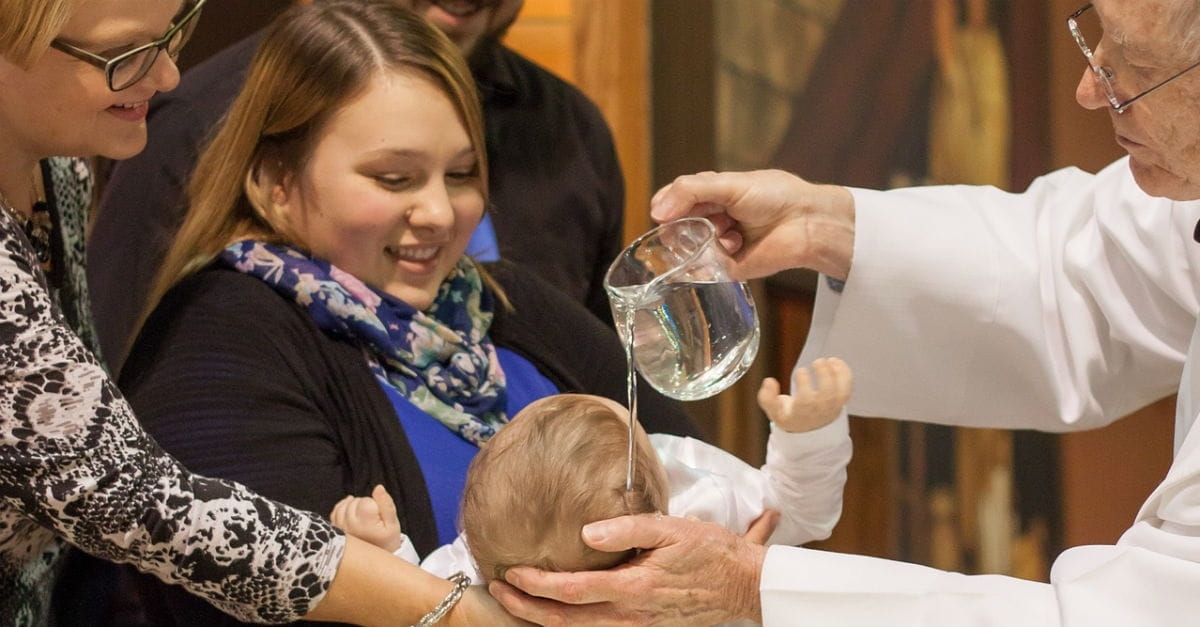
But baptism is an evergreen topic, and one that should be discussed all the more, and not just by those who want to be baptized.  Baptism should be discussed by those who are already baptized.  Martin Luther was keen to let people know that they should always be in mind of their baptism, not only in a historical sense, but in a practical one as well.  You're not supposed to just remember your baptism as a thing that happened to you, you're supposed to remember your baptism as regards what it still means.  And it means a great many things.

To be in mind of your baptism means that you have to think about what baptism is, and why it's there. And for us as Lutheran Christians, we practice infant baptism.  That is, if you're a tiny tiny baby, you can be brought to a Lutheran church and baptized there.  And you don't have to go through any instruction classes, profess your faith, or anything like that.  We do tend to talk to your parents about what our expectations are for them, but babies, adults, here is water, what prevents you from being baptized?


Why do we baptize babies?  We do so because of what baptism is. And you know about babies what I know about babies - they don't do too terribly much on their own.  They don't think, they don't move, they don't operate machinery.  Depending on how tiny the baby is, she can't even eat by herself.  Wee tiny babies require you to pop food into their mouths.  You have to feed them, bathe them, change them, snuggle them to sleep, gosh, all that, and they bring nothing whatsoever to the table.  In fact, they bring less than nothing.

For someone to bring nothing to the table would imply that there are no direct benefits to keeping them around. When it comes to babies, though, there are real costs.  All that a baby brings to you is need.  That's it.  They need food, clothing, cuddles, attention, affection, they need to be rocked to sleep and tucked in, and they can't do anything to help themselves.  And we take babies and baptize them for that reason - because they have needs that they can't meet themselves.

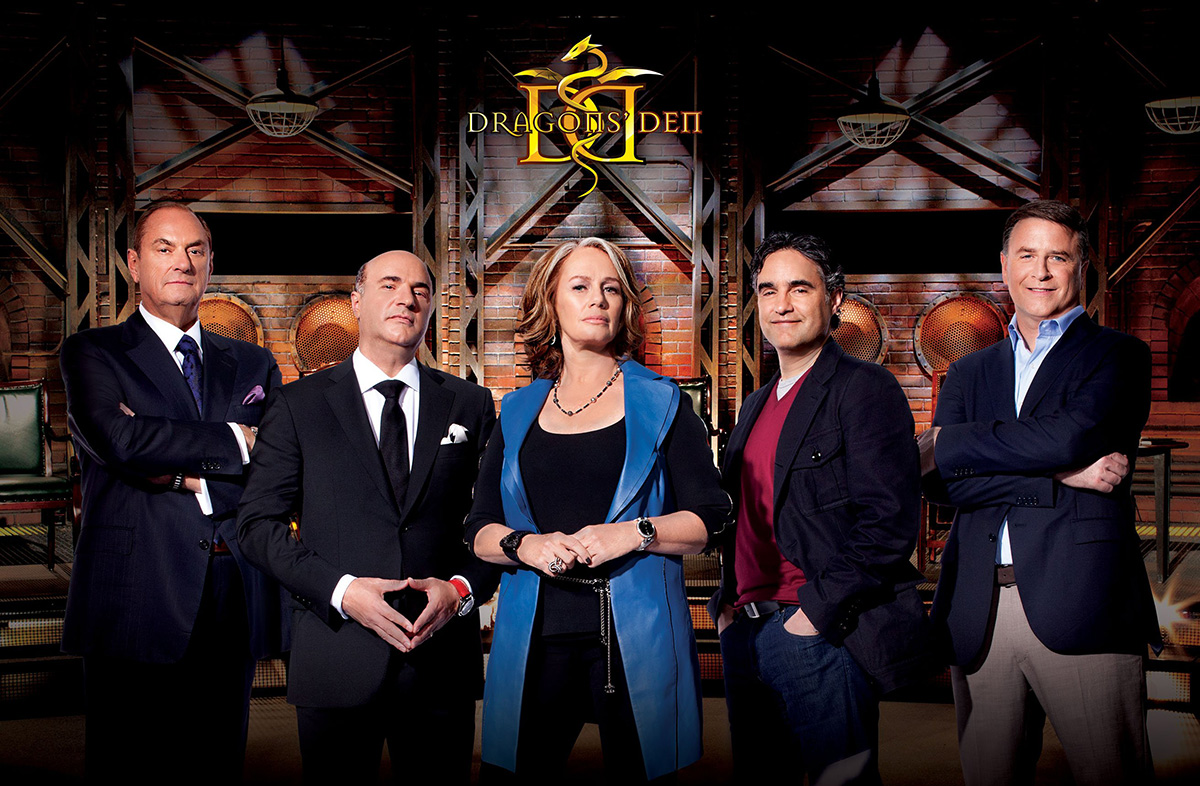
When Jesus says 'if anyone will not receive the kingdom of God like a little child, he will never enter it,' this is part of what he means.  You don't come to God as a full partner, or as an equal. You don't approach his throne of grace with some pretty interesting propositions for him.  Rather, you come to him with nothing but need.  You need your daily bread, you need the sun to come up in the morning, you need house and home, clothing and shoes, eyes ears and all your members.  And you need forgiveness of sins.  You don't go to God with some sort of business plan for all this, you know. This isn't dragon's den, where you make a proposition to God.  This is you approaching God with nothing but need.


And this is why we can talk about mothers' day through this lens.  That is, think about what you brought to the table so your mother would love you when you were born.  The first several mothers' days that you lived through you gave nothing to your mother except needs.  And, very likely, she met them.  Not because you chose her out of all the mothers, not because you had worked so hard and done so much, the reality is that you come to your mother with needs only, and she meets them.  She meets them because they are needs.

The precursor to your mother meeting your needs, the necessary condition, is that the needs exist. You are hungry, she feeds you. You are tired, she rocks you to sleep.  You are cold, she tucks you in. You are dirty, she bathes you.  And that, right there, is as close as possible to our understanding of baptism. Namely, small babies are baptized because they have a need for it. They have a sinful nature, they need forgiveness, and they are washed clean in the waters of baptism.  They come to God with nothing, they leave with salvation.  If we understand our relationship with our earthly parents like this, then we can also understand our relationship with our heavenly father, who meets our needs because we have them.

Sometimes, it really is just that simple. The precondition of meeting our needs is that the needs exist. That's why, when Peter cracks the case about God showing no partiality between the nations, and that everyone who does what is right and fears God is acceptable to him. Everyone who has need for baptism can be baptized.  Because what is important is that you have the need for God.  And that he meets it.

Sunday, May 2, 2021

Cut off

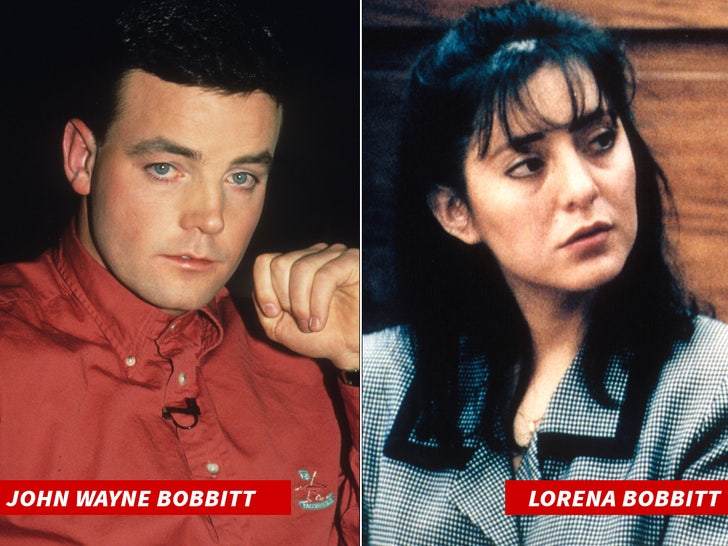
 Last night, the wife and I watched part of a documentary on John and Lorena Bobbitt.


Sure, you all know that story.  If you don't, go ahead and google it.  It's quite a ride.  But this story all about John and Lorena Bobbitt was all about spousal abuse, revenge, and dismemberment.  This story was sensationalized to the point that the Bobbitts became household names, and contrasting that with the reading from Acts that we had from Sunday was a bit of a trip, given that our reading from Acts features a Eunuch very prominently.

You see, the trip is that eunuchs were once sort of standard operating practice.  It wasn't that strange for eunuchs to be around, for them to have relatively high office, to be in charge of much, and so on.  And looking back through the scriptures, it's like looking at another world, where having people be eunuchs was de rigeur, instead of basically unheard of.  

Eunuchs were so well known, and so much a part of life, that their conduct is described in the scriptures.  There are several classes of people who are not allowed to be in the assembly in Jerusalem, and eunuchs are within those classes.  Deuteronomy 23:1 clearly states that if you're a eunuch, you're not going to enter the assembly of God.  And the thing is, that being a eunuch isn't something you can change.  There are rules in the scriptures about uncleanness, about how to become ritually clean again, but being a eunuch, that's a one way trip.  Bobbitt had microsurgery to repair him, but if you're a first century eunuch, well, that's just who you are now.  You're defined by that, you'll live like that, and you'll die like that.


Well and good.  But the Ethiopian eunuch was a worshipper of the Lord God.  He had gone to Jerusalem to worship, but would have assuredly been barred from the gates.  He doesn't get to go in.  He can stand outside, reading his scroll all he wants, but he can't go in.  

There are concentric rings of holiness in the Temple, and at each stage you have to be holier to get in.  There are layers and layers keeping the unclean, the impure, the maimed out.  Only the high priest can go into the holiest of holy places, nobody else. If you're going to stand in the highest holy place, you're going to have to be very holy, very pure, very clean indeed.  And very few people were. Pretty much nobody actually.  Only one person, and everyone else was going to be stopped at one of those concentric rings.


But then Christ.  Christ and his mission on earth, to be the hands and feet of God in the world. Christ comes to people not as a prophet, but as God himself, and everywhere he goes becomes the presence of God.  For the Ethiopian eunuch, that would have been quite the good news to hear - that God wasn't confined to a building built with human hands, but instead was out in creation, calling for his people.  

Up until that moment, the eunuch's life was a desert place.  Isolated and cut off from the assembly, there was no healing water there, and he was forever doomed to be on the outside looking in.  His fortunes weren't going to improve, and his circumstances weren't going to change.  This is his life now, and forever.  But traveling along with Philip, and hearing about the presence of Christ on earth, about his suffering and death as mentioned in the scroll of Isaiah, and about how Christ comes to his people in baptism, the Eunuch pointed to water and asked 'Here is water, what is preventing me from being baptized?'

Nothing.

There is nothing stopping you from being baptized.  Nothing at all.  We baptize babies, you know, as well as grown adults.  We baptize whole households.  And if someone were to come to me to ask 'what is there to prevent me from being baptized,' I would respond 'nothing.'  For his whole life, the Ethiopian Eunuch had been cut off from the assembly of God, and he would never get to enter into it.  The holiest site in the world was always going to be outside his reach, and beyond his capability.  But as Philip explained to him, the holiest site in the world isn't the Temple, it's wherever God is. 

So where is God?

Not in a building made with human hands, not in the Temple or on the mountain.  God is where he has promised to be - in bread and wine, in the water and the word, where two or three are gathered in His name.  So when the Eunuch sees water and asks to be baptized, for the first time in his life he gets to be where God is.  Instead of being cut off from the assembly, he is embraced into the family of God.  This is the Good News of Jesus Christ, you know.  The Good News that says that you are a child of God born of his will, not of your own. He has washed you clean so you can be in his presence.

If God kept a record of sins, none of us would be able to be in his presence.  But instead of that, he calls us, enlightens us, and forgives us.  And because of that, we are redeemed.  For someone who was cut off from the worship of God, that was good news indeed.  And for those of us who, due to our sinful nature rightly should be cut off, that continues to be good news.  The holiest place on earth now is no longer the Temple built with human hands, but the temples of God's people, where God's spirit dwells.  In paradise, there will be no temple, because God will be with people.  

And you know what?  In baptism, in the Lord's Supper, in the gathering of his people, God is with us now.  You can't be barred from entering God's presence now, because God comes to find you, instead of waiting for you to be good enough, or pure enough, or holy enough to find him.

Sunday, April 25, 2021

Marathon

 There is a place called Marathon, and the race known as a marathon is named after that place.

The importance of that place is that there was a battle that took place there, between the Greeks and the Persians.  A battle that was very much up in the air as to who would win.  As it turns out, the Greek forces ended up winning a fairly decisive victory over the Perisans, who were defeated and driven back.  

Now, back in the day, you couldn't just tune into the news, or follow Twitter to see what the results would be.  You had to wait for a messenger.


In the case of the battle of Marathon, the messenger was one Phippides.  Philippides was tasked with bringing the news of the win at the battle of Marathon to the Athenians.  Again, there was no twitter, no radio, no telegram, no telegram, no television, that sort of thing. You had to make do with runners and messengers.  And so Philippides was said to have brought the message all the way from Marathon to Athens, to let them know of the triumphant win.  Now, how far was Marathon from Athens?  Roughly 40km.  How far is a modern Marathon race?  Just a little over 40 km.  It's named for this event.  Now, Philippides was said to have collapsed and died upon completion of his famous run, and anyone who has run a marathon in their lives would largely relate to that result.  But that race, that run was vital to convey news to people who were desperate to hear about the results of the battle.  Philippides saying 'Joy, for we have won!' is a greeting that they were desperate to hear, and which they could only get through messengers.

The Bible asks a great question, which is to say 'how will they believe unless they have heard? And how will they hear with nobody to proclaim?' Paul communicates in Romans that if people are to hear news, someone is going to have to bring that news to them.  If people are to believe in something, someone must be tasked to bring that to them.  And for us, as Christians, that somebody is Mark.

Mark, the Gospel writer, gets his Gospel out to the world extremely quickly.  His Gospel is the one that is written first, submitted first, and is the first written account of the life of Christ known to exist.  It is Mark's Gospel that was brought to the ends of the earth first, and its length and structure embody that.  Mark's Gospel is the one that moves quickly, both in narrative and in global reach.  Mark's Gospel starts right away with John the Baptist proclaiming repentance.  It doesn't start with a family tree, nor with research notes, nor with the mystical pre-incarnate Christ.  It starts with repentance, and the arrival of Christ.

In our day, we have become accustomed to instant communication.  We are very used to the idea that if something isn't recorded right away, then it didn't happen.  And Mark's Gospel is a problem for that, given that the events that it describes (the life and death and resurrection of Jesus Christ) are recorded by Mark a good thirty years after they happened.  That's bad, right?  Like it's a really big problem that the most contemporary account of Jesus is 30 years after the event?  Well, to put it into perspective, Hannibal, the Carthaginian general who threatened Rome, is written about in Livy's 'Roman History.'  The Punic war featuring Hannibal was in 201 BC.  Livy wrote in 31 BC.  That's close to a 200 year difference, and Hannibal is considered to be well known, and well attested to.  Part of what you have to get over is writing the present onto the past, and making standards for the Bible that you wouldn't make for any other ancient information.  Writings about Socrates are typically in the same sort of timeframe as the Gospel of Mark, and we all consider those to be relatively authoritative, and that they speak of a real person who taught real things.  Mark's Gospel is actually insanely early, and very well distributed, especially given that it tells the story of a Jewish preacher from the backwaters of the Empire.

So why is Mark's Gospel so comparatively early?  Well, because Mark has important things to say.  Mark really wants to get what he has to say out to you remarkably quickly and efficiently.  He does this because of what is said in our Old Testament reading.

Just like Athens waiting for the news of the battle of Marathon, the world was waiting for news of the Messiah. Israel, but also the entire world, was waiting with bated breath for news of the victory won through Jesus Christ.  A world groaning in their sins, sitting under the weight of death, was waiting earnestly for news of salvation, and it came to them first through the Gospel of Mark.  Mark's message is too big to fit in a single tweet, of course, but it does come down to the same message: Joy, for we have won. Christ is victorious, sin and the devil are defeated.  A world that knows that it needs salvation is desperate for this news, and Mark brings it quickly out to a tired and needy world.


Just like Philippides' feet being beautiful because of the news they brought, not because they would necessarily be beautiful after a 42 km run, so too are the feet of Mark beautiful because of the message that they bring.  Good News of salvation!  Good news of life for a world that needs to hear it. The speed of Mark's gospel is equivalent to the marathon run, where someone is willing to run a message to the world all night if necessary, so that the watchmen, including you and I, can rejoice at the news.  Joy, for Christ has won.  Joy, for we have won.