The musings of the Pastor from Good Shepherd Lutheran Church, Regina SK

Welcome. If you're a member at Good Shepherd, welcome to more thoughts and discussion of the week that was, and some bonus thoughts throughout the week. If you're not a member, welcome, and enjoy your stay. We are happy that you're here.

If you like what you see here, consider joining us for worship at Good Shepherd Lutheran Church. Sunday mornings, at 8:30 and 11:00. You can also follow us on Facebook.

Sunday, December 11, 2022

Setup and payoff

Let's talk about my favourite kind of films just for a second.

Horror movies.

Yes, I know I know, these sinful things, but I like them for a few reasons. First of all, they're the only genre of movie that discusses the supernatural with any degree of seriousness. There can be demons, necromancy, devil worship, possession, witches, sorcerers, and all these things are treated with utmost seriousness. Secondly, they are the movie genre that treats violence with its necessary impact. Aside from the saw movies, if there's violence happening onscreen, unlike in action movies, you feel bad, scared, like you would if there was actual violence happening in front of you. 

But with all these supernatural issues, you have to set up how to deal with them. In an action movie, the solution to the problem seems to be 'use gun on man', but horror movies set up other expectations. You have to use a silver bullet on the werewolf, a wooden stake on a vampire, shoot zombies in the head, that kind of thing. If you feed a mogwai after midnight, it turns into a gremlin. This is all simple enough, and unlike in an action movie, you need some setup before the payoff. It would be strange if the setup was that vampires had to be hit with a wooden stake through the heart, then the end of the movie just had you stabbing them to death. It would be unusual if you set up that a silver bullet had to be used on a werewolf, but at the end of the movie you just ran it over with a car. And not even a rolls royce silver ghost, either.

The setup is what makes the payoff work. The payoff doesn't work in a vacuum. Unless you know that the vampire has to be killed with a wooden stake, it won't make any sense to just not shoot him, you know? And in the scriptures, you have a very very long setup. Thousands of years, in fact. In the Old Testament, there was a lot of prophecy about what it would be when the messiah arrived on the scene. And this setup, as I say, was thousands of years in the making. For thousands of years, the people of Israel would have been hearing and reading these words. The words about the messiah would have been clear and things that the Hebrews would have been expecting to see for a long long time. In fact, that's why the Christ was sent to Israel at all - because of the setup. 

You see, we happen to have access to the whole story already, the finished book. And we, in the church, don't tend to read through the Bible chronologically. So that means that we end up in a world where we don't give a lot of time to the setup and payoff, though we really should. The reason we should be taking this seriously is that the Old Testament spends a lot of time, and spills a lot of ink, on the topic of God. Who he is, and what he does. What his attributes are, and what falls within his purview. The Old Testament is crammed full of stories about God's activity, showing what is his responsibility, and demonstrating clearly the things that only he can do. 

And that's the setup, right? Say what you will about the Disciples, but they were not blindly credulous, you know. The Life of Brian bit doesn't hold water, when you consider that the people of that time followed leaders, sure, followed after strong men, followed the advice and guidance of prophets, but didn't consider them as gods. That really did set them apart from the rest of the world at the time. All sorts of people all over the world would elevate their leaders, prophets, kings and generals to being gods. Really only Israel didn't. Israel had a situation where they had a setup - only God can create, only God can forgive, only God can have power over the seas, over life and death, and then Jesus shows all those things. 

Setup and payoff, right? And the setup of the virgin giving birth to a child, and calling him Immanuel, is shown in Christ. It's not about predictions and prophecy so much as it is about spending hundreds of years telling a particular people who God is, and what he is like, then when God steps into the world, he does those things. He shows himself to be God, and if you know the setup, unmistakably so.

Vampire - Wooden stake

Zombie - destroy brain

Werewolf- silver bullet

God - Power over life and death, creation and salvation.

If the setup and payoff are there, then you don't have to believe it, but you at least have to see that the story is consistent.

Monday, December 5, 2022

cut it down

I've mentioned this before, but it bears repeating, especially in early Advent. As GK Chesterton put it, the accusation is almost always that Jesus had a simple religion of peace and love, and that the church corrupted it over time to be something hurtful and judgmental. When in reality, the opposite is the truth.  The church endeavors to be as forgiving and welcoming and tolerant of almost everything as possible, meanwhile it hides and conceals any time that Jesus may be slightly wrathful. The church conceals or downplays the anger in the Temple and the whips and shouting. The church doesn't dwell on the wrath directed at the "brood of vipers". So much easier to just discuss the nice parts of Scripture, where Jesus has the little children come to him, etc.

But Christ is wild and untamed, and refuses to be boxed in by us, and the God of the scriptures is being discussed in no uncertain terms by John the Baptist in the Gospel reading for today. Here we are in the Gospel, and John is being approached by a generous number of people who are repenting, and being baptized. All good so far. But there are some from the Pharisees and Sadducees who are coming to see the baptism as well. And that's when John lays into them.

You brood of vipers, who warned you to flee from the wrath that is to come? So starts John's address to the people who have come to witness the baptism, and we immediately take notice. For John, the wild man of the wilderness, demands attention. True, you could look at him in his locust-eating, Camel-hair wearing way, and dismiss him as a madman, but he doesn't talk like a madman. He talks like one who is obsessed. 


So let's talk about 'geek culture' for a moment. Yes, it's a bit more mainstream than it used to be, but I still think it works. So geek culture works like this, that the individual geeks or geekettes would be single-minded about their hobby, be it video games, art films, whatever, and would be so obsessed that they would abjure any grooming or niceties. That's about it. And when it comes to John, he is single-minded in his purpose to the point that the message of Jesus Christ is all he's interested in. He doesn't have time for niceties, greetings, politeness, nothing like that. He's really really into the Gospel, to the point where everything else seems like nothing. He's not going to put himself together, go through the rigmarole  of greetings, small talk, being presentable, nothing like that. He's going hard on the kingdom.

And boy is he ever. Man, We have a church, bills and all that here at the church. I can't go off like John goes off, and truly, when he goes off, he goes so hard that he goes to jail and gets killed. Every once in a while you see someone with nothing to lose, and John is one of those guys. Locusts, wild honey, and spitting straight truth. He fires at the crowds and holds nothing back whatsoever - Christ's winnowing fork is in his hands, he will gather the wheat into his barn but he will burn the chaff with unquenchable fire. Unquenchable fire? That's a lot. It's a lot to take in as people who assume that the concept of hell is rather out of date now, and that we don't have to worry about it. Well, apparently we do, because John certainly talks about it in.....glowing terms (glowing like an ember). 

The question that goes before the Christian, then, is to ask if John is right. Is John accurate in this, or is he wrong? It's almost always dangerous to put yourself in the position of assuming that you know far far better than John does. Oh sure, the Elijah who is to come, the greatest on earth, the one who was such a big deal that people assumed that Jesus was the second coming of him, you know better than that guy? Realistically, the story of the Bible works very well when it is allowed to speak for itself, far less well when we speak over it. If you're going to interrupt John and tell him, and by extension God, that there is no fire, no damnation, no wrath, none of that, then you have to make the rest of the story make sense. You have to understand that John feels as though the arrival of Christ is a big deal. When he points to Jesus and say 'behold, the Lamb of God who takes away the sin of the world,' there's a reason why it's a big deal. If all that stuff about the axe being at the root of the trees, the wrath to come, unquenchable fire, if that's all wrong and stupid, then why is it a big deal that Jesus is born? Why is it such a big deal that John would point to him and say 'behold, the Lamb of God who takes away the sin of the world?" Why is Christmas a big deal if we're not getting something very very important?

For any of you who are frightened and troubled by the words of John, ponder this: You can dismiss him out of hand as a crazy person, someone who is just a nutcase. But he sure doesn't sound like it. He sounds deadly serious, and is very convincing even now. You can talk over him, but the rest of scripture seems to agree, and you do too, if you're honest with yourself.

Or you can listen to him. When he says of Christ 'he must increase, and I must decrease,' that's exactly what happens. The increase of Christ is that he is the lamb of God. Enough to take those warnings from John and swallow them up in victory.

Tuesday, November 22, 2022

Corporate and personal

 There's a board game that I got for my birthday the year before last, called Nemesis. You don't have to know too much about it, save that it is one of those secret role games. At the start of the game, everyone appears as though they're on the same team, but as the game develops, people may or may not stay on that team. You are dealt two objective cards at the start of the game, and when you discover your first alien, you have to ditch one of those two objectives, and keep the other, thereby deciding which of those objectives is going to be how you win.


The objectives are divided into two categories: Personal and corporate. One of those will be a thing that you have to do for your own personal wellbeing, and the other is what you do for the bigger picture; for the team, for the company, for whatever. 

Now, I bring this up to you because of the interesting apocalypse that Jesus brings up in the Gospel reading - he moves from talking to the daughters of Jerusalem, to talking to the thieves on the cross. And that move is a move from a corporate apocalypse to a personal one. That corporate apocalypse is the apocalypse where everything ends. The sky rolls back like a scroll, the sun is like sackcloth, and the moon as blood. Dogs and cats living together in peace and harmony, mass hysteria. That's the one that you think of when you think of apocalypse, right? How Jesus comes back to judge the living and the dead. Everything finishes and wraps up, and it's all over. That's the corporate apocalypse, because it hits everyone, all at once, and nobody is spared.

Of course, there is a personal apocalypse too, you know. And the reading that we had from Sunday is jarring that way - the two thieves on the cross are not exactly all that concerned at that moment about the corporate apocalypse. It's not a big deal for you to work through exactly when the end of all things is going to roll around, if you're going to be dead in a few hours anyway. That is, unless the entire apocalypse is going to happen in the next 90 minutes, it's not going to matter too much. Jesus essentially gets two requests from the two men. The one says to him 'if you're the son of God, take yourself off this cross, and take us down with you.' Now, that's a request to get off the cross, yes, but to step back into the world that is leading you back to the same place. By stepping back into the world, you're not avoiding the personal apocalypse forever; you're delaying it for a while. There's a zero percent chance that stepping down off that cross grants you immortality permanently. But, that fear of the personal apocalypse is enough to drive you off that cross, and back into the world. In other words, you're not ready to die, but honestly, when will you be?

What's the right time for you, in your opinion. What's the right time for you to wrap it all up, to say 'yes, I'm good now. That's enough time. It's enough time with my family and friends, I've seen all I want to see, I think I'm good now.' Sadly, the one thief wanted to delay the personal apocalypse, but of course, even if you do, the corporate one is coming for you.

But what the other thief is asking for is a removal from the system altogether. He's well aware that escaping the apocalypse on the cross is not an escape forever, but just a delay. The fun is going to find you eventually anyway. There's no long term escape, nothing permanent while you're still in the system. Instead, he asked Jesus to remember him, when He comes into His kingdom. That request is one to not just get you off the cross for a few years, but to get you out of the problem permanently, eternally. 


I'm going to go back to this scene from the movie Tremors. The cast are in a bad state, and are going to have to get out of it by throwing a bomb the way they want to run. But they only have one more bomb, enough to get them to the rocks that they were sitting on, but not enough to get them to safety. The conversation between them was that even if they could get back to the rocks, they'd die of thirst in three days. You're going to have to come up with a better solution than that.

Ultimately, if you're looking to avoid the apocalypse completely, not just delay it for a while, you're going to look to not just get back to the rocks, but to make the problem to away altogether by killing the graboids. If you're looking to avoid being lost eternally, you're going to look towards Jesus bringing you into his kingdom, where rust and rot don't corrupt or destroy. Where the scarcity of this life is not something that can eat in. Where the apocalypse won't despoil nor ruin. If you're going to escape, you're going to have to escape completely.

Thursday, November 3, 2022

Reform

 Back in the 1990s, there was a political party in this great nation of ours called the Reform Party, brought to you by Preston Manning. Of course, I didn't understand much about politics back then, still don't to be honest, but I was aware of it as a political force. That party long ago merged with other right of centre parties, but it still seems like it's around, like a movement in your peripheral vision. Gone when you look straight at it, but almost visible in the background.

Reform for us in the church, though, always brings up Reformation, which is the festival that defines us as Lutheran Christians. For Luther did not seek or want to bring about a new faith, a new religion or anything like that, he sought to reform what was already there. And in reforming it, it was an effort to save and rescue what was good, and to abandon what had gone bad. And you know, you can get a lot more done that way than by pretending that everything is all good all the time.

For if you pretend that something is all good and needs no help, then you're going to find out very rapidly that the rot is going to spread. Unchecked problems lead to more problems, you know, and the more unchecked the problems are, the more of a problem they're going to be. Rot is rarely confined, you know. Decay does not understand limits. Once rot and heresy and false teaching begin to appear, they don't tend to leave on their own accord. Pretending that there are no problems to be addressed leads to the rot spreading and growing, and a reformation requires an admission that things are not the way they should be. 


A long long time ago, in web 1.0, there was a website that I went to called dieoff. It is long since gone now, partially because its prediction of the end of the world by 2010 did not manifest in the slightest. But the quote that the website presented was this one from Thomas Hardy 


We have to be prepared to look at the worst if we are to go towards the better. And in the case of Dr. Luther, it was an examination of the worst, to look fully at the rot that had gotten in in order to come out on the other side better. What was the worst? The church had lurched into non-Biblical teaching. And that church had to be reformed, not eliminated or forgotten. What was bad had to be removed, in order that what was good could be retained. And this process of reformation is a bigger picture of what happens in the individual Christian. For we, for the most part, do not live our lives strictly according to Biblical teaching, though we should. We do not do only what the Bible requires nor suggests. Instead, we frequently go against the word of God. We do what pleases us. As Christians, we should live according to the principles of scripture, but elect not to. And every week, we traipse back to the sanctuary of God's house, and make a simple demand - as the church was reformed, so too ought we to be. We have had a look at the worst, our scheming, gossip, unclean living and so on. We have had a deep glimpse at the rot, and you know what, we don't like it. That's why we come to church and say to God fully and clearly 'yeah, I did some things I don't like and am not proud of.' And that's when God, the real one, forgives those sins, strips them away, and leaves you behind.

Back in the days of dieoff, I was actually frightened by the concept of forgiveness of sins. Really. What I was frightened about was the notion that Jesus would actually take my sins away, as far as the east was from the west, and that I would get Ookpiked. In case you don't know, from Dennis Lee's book 'Alligator Pie,' there was a poem about the Ookpik, and it goes thusly.

Ookpik

An Ookpik is nothing but hair.
If you shave him, he isn't there.

He's never locked in the zoo.
He lives in a warm igloo.

He can whistle and dance on the walls.
He can dance on Niagra Falls.

He has nothing at all on his mind.
If you scratch him, he wags his behind.

He dances from morning to night.
Then he blinks. that turns out the light.

That concept of there being nothing left once the shaving was done was how I thought about my sin. If Jesus can take it away, and he does, then what's left? Is there anything left at all? And when Luther and his contemporaries looked at the church at the time, a similar thought must have occurred to them - if we remove all the rot and disaster, what's left? What's left indeed. But they did, and when they did, they discovered that there is still beauty, truth, joy and wonder left. What was there from the first place, brought out from underneath all the rot and decay, and presented as it should have been from the beginning.

You too, if you are to be reformed, once all the rot is gone, the sin and shame, is there anything left? You bet there is. And what's left is you, the You that God shed his blood to redeem. 


Sunday, October 16, 2022

Wrestling with God

 Jacob was alone, then he wrestled with God until morning.

This is the reading that we had from Sunday, and it's one of the most important ones for the modern context. That is, Jacob, whilst he is alone, must wrestle with God by himself. For a long time. 

In reality, we don't wrestle with God as much or as often as we ought to, precisely because we fear what would happen if we did. Jacob ends up changed after he is done, renamed by God, yes, but certainly change and different by the time it is over. He is not himself anymore, or not what he used to be. He is given a new identity, a new role, and a new image of himself, and his interactions with his brother change as of that moment. But we don't wrestle with God, and consequently, things don't go overly well for us. 

I'll explain what I mean. Picture math. 


Looking at that makes my head hurt. But math is a complicated thing, to be sure, but it comes down to small constituent parts very easily. And all math is built up off of simple concepts: addition, subtraction, multiplication, division. Those things add up and are used to make more and more difficult concepts, so that, by the time you have increased in complexity enough, you can do compound interest, land the space shuttle, whatever you need to do, because the math gets more and more complicated, but still requires those constituent parts.

Now, if you would have said as a grade schooler 'yes, I know multiplication, division, addition and subtraction, and now I don't have to know anything else,' like you'd be wrong, obviously, but you'd be wrong in a very particular way. Because eventually, you would come up against a problem that your four bits of math couldn't solve, and you'd have two choices - to buckle down and learn how fractions work, or to insist that math just can't explain this, because it doesn't fit with the math you learned as a child.

People learn about the Lord as children, in Sunday School. They learn about him, and the ten commandments, the Lord's prayer, that kind of thing. And it's not as though the God that you talk to as an adult is different in any material way from the God you talked to as a child, but you had to learn about him differently then as to now. Not because he was different, but because you were. The God of the Bible is infinitely more complex than you learned about as a child because you weren't up for the challenge, and your problems were much much smaller then. The mistake that gets made is that if you stop learning about God and wrestling with him, then you'll come to the came conclusion that people can get to with math.

What I learned about as a child doesn't cover this, therefore it doesn't work.

That's not true. It didn't stop working, you did. Math gets more and more complex to solve more and more complex problems. If you're counting to 12, you can get that done in a sesame street song, but if you're flying to mars, you're not gonna fit that into simple mnemonic lyrics. If all you know is how to count to ten, or whatever, you're not making it to mars anytime soon. If all you know is the lyrics to 'Jesus loves me,' it's all technically true, of course, but then grappling with the enormity of why bad things happen to people you like, or if your pets go to heaven or whatever, aren't covered in those lyrics. 

So you gotta wrestle. In the same way as Jacob, when all is calm and still, you have to wrestle with God until morning. It's a heck of a process, and one that must be done if you're going to get anywhere. Otherwise, nothing changes, especially you. You won't learn or grow, or be changed at all, because it'll be just you again, as usual. But if you wrestle with God, if you have problems, concerns, difficulties, and so on, you may find that wrestling with God answers a few of those questions. Maybe all of them. Maybe you need to grow, and the only way to do so is through conflict, at the end of which you're not yourself. You're something better.


Tuesday, October 11, 2022

Thanks

 Ten Lepers. 9 leave, one returns to give thanks.

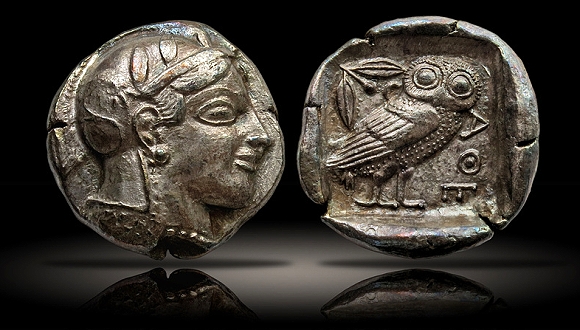
This is a story you know by now, so I don't have to hyper-explain it, but there is a peculiar turn of phrase that occurs in the English language printed text. A long time ago, I used to teach elementary school kids about Greek mythology, and in doing so, we talked about Owls as a symbol for Athena, being the goddess of wisdom as she was. And I would ask the kids why it was they thought that the owl was a symbol for wisdom, and they would invariably say 'Because owls ask a lot of questions.' You know, Whoo whooo? 


It's a cute idea, but one that doesn't scan, given that 'Who' doesn't mean 'who' in ancient Greek. Words and expressions don't carry one to one from one language to another. So when I talk about this turn of phrase, I'm well aware that it doesn't mean in Greek what it means in English. 

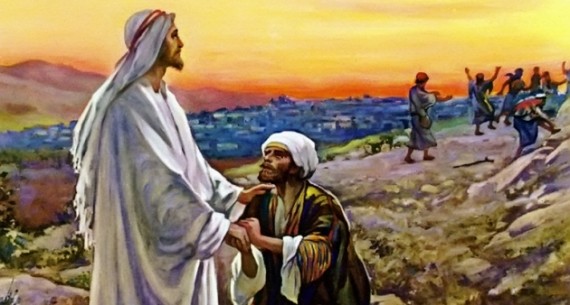
Ten Lepers, having to stand a distance away from Jesus even when they're begging for healing, and they call out 'Jesus, Master, have mercy on us.' And Jesus has mercy on them, and tells them to show themselves to the priests. As they go, they are cleansed. The one who comes back does so to give thanks, which he does. Then the text tells us 'Now he was a Samaritan.'

Now he's a Samaritan. Okay, so what was he before? The answer: A leper. Because being a leper is all you are, and all you can be. You're not a carpenter or a father, a wife or seamstress. You're not a patron of the arts, a lawyer, a patrician or a plebe. You're a leper. And lepers are grouped with lepers, for obvious reasons - lepers make more lepers, so the only people they can freely associate with are other lepers. And that's what you get. Remember social distancing, which is a trick that we used recently to try to curb infection rates of COVID-19, and realize that this tactic has been in use for thousands of years. Lepers make more lepers - the only way to keep that down is to have as little contact as possible with lepers. So you put them with each other. 


But when they went away and were healed, and as they were healed, the identity of leper was removed. The identity through which everyone else saw and perceived them, that was gone, replaced by who they were apart from their disease and diagnosis. When the one leper returns, the text says 'Now he was a samaritan.' Now. Yes, now. He wasn't before, he is now. What was he before? A leper. And that identity was so strong that it overruled everything else. More than being a man or woman, slave or free, Jew or Samaritan. And those are strong identities, because, as we know from the story of Jesus with the Samaritan woman at the well: "Jews have no dealings with Samaritans." Unless they're both lepers. Then they're equal in their diagnosis - equally bad. 

But the healing is a great moment in which the identity of sin is no longer considered by the Lord. That is, in the same way as people are all the same in their leprosy, they are viewed the same by Christ as well. He doesn't heal the Jews but abandon the Samaritan - he sees people afflicted and heals them equally. And this is a clear distillation of the idea that there is no Jew nor Greek, slave nor free, male nor female, all are one in Christ Jesus. Seeing that played out shows us that there are people who are equally afflicted, and equally in need of aid. And if you extrapolate that, we are all equally sinners, identified with that far more than we are our nationality or ethnicity. And we are all in need of a salvation that we can't get ourselves. And if being a leper is too esoteric for you, then I'd like to point out that we are all going to be equally dead someday, and that all skeletons tend to look pretty much alike. 

The Lord Jesus is the one who sees through all the petty differences that we erect for ourselves, and identifies our needs first and foremost. He sees the fact that we are desperately lost, that we are devastated in our sinfulness, and cannot free ourselves. On our own, all of us are just hurtling towards death anyway. So he sees the need, and meets it. And in that moment, we go from being equally damned, to equally redeemed. Just as in the grave there is no Jew or Greek, slave nor free, male or female, so too are those differences gone in paradise. All are one in Christ Jesus. 

Monday, October 3, 2022

Pay attention to yourselves

 I think what I enjoyed the most from the reading from Sunday was the little line in there where Jesus says "pay attention to yourselves." Yeah, about that. About that.

When Jesus says things about having to forgive, about not leading these little ones into sin, he says in there, in the sandwich of words 'pay attention to yourselves.' And truly, as Christians, it's a matter for us to consider - that is, how much of our focus on sin is focus on sin outside ourselves? The answer? A lot. But that's the human condition. 

It's normal to think of ourselves as being the baseline, the neutral, the base, and everything else is a variant around us. And when we think about sin, we think about the sin of other people as sin. That's what makes the world fall apart. That's what causes degradation and collapse. When other people do bad things, that's what sin is. But sin is like breath, as I'm fond of saying. That is, it's much much easier to detect someone else's bad breath than your own. And it's much much   easier to detect someone else's sin than your own. After all, how often has someone offered you a breath mint, or a life saver or gum or something, and you just sort of stared at them. What could they possibly mean by that?


They mean you stink. And believe it or not, your sin is perfectly on display to everyone you know....except you. All the people around you, they know that you have a terrible temper, that you're mean with money, that you're a gossip or a fraud, they know you talk about yourself far too much, that you don't bother thinking too much about anyone else's needs, and so on. They all know these things, even though you don't see them as being integral parts of yourself. 

But when Jesus makes a caution, and says that if you lead little ones into temptation, it would be better for you to have a millstone tied around your neck and for you to be thrown into the sea, he follows it up by saying 'pay attention to yourselves.' And that's a line that you really shouldn't skip over. For in reality, there's likely a lot of time that you spend thinking about the sins of others, what they should or should not be doing, how badly they've gone off course, why they should smarten up, that kind of thing, but Jesus doesn't tell you about that, does he? He says 'pay attention to yourself.' For if we are to be serious, and to assume that Jesus is being serious too, he means what he says. When he says that it is dangerous business to tempt others into sin, that we should be as concerned about that as we are about the sins that we easily identify in others. If we believe that sin is bad, as we do, then we run head on into the reality that we have, whether glibly or deliberately, convinced others to sin who would not have done so otherwise. We took people who were wavering on the fence, not sure if they wanted to go down a path or not, and talked them into going all the way. Sure, they were thinking of dishing out the new hot gossip, or telling you something that they should have taken to their graves, or whatever, and you and I persuaded them to do what they should not have done. In that moment, the conversation could have gone either way - they could easily have been talked out of sinning, but we became enablers, and talked them into it. We did so because it suited us to do so, and like it or not, that sin becomes our problem. Pay attention to yourselves indeed - this is something that we have fallen into on multiple occasions. 

So, if Jesus is truthful, if it matters that we lead others into temptation, then what is to be done here? And if Jesus is truthful that if someone sins against you and repents, over and over again, then you must forgive them, does this apply to us? Pay attention to yourselves, once again.

For in reality, we all know that this is true, do we not? Have we not cursed those who have led us into sin and temptation? Do we not think that they truly ought not have done that? Have we not desperately pleaded with divine providence to smite those who refuse to forgive us for our actions? We believe sincerely that people really, truly, genuinely should have to forgive us when we have gone far wrong. It comes down to the idea that even when we do not deserve to be forgiven, we still should be, because we're us. And that's typically where we can tell that something is true, you know? Like when we believe that other people should do it. And here we are, at the intersection of truth and effort, where we understand that the way we believe that other people should behave is not always the way we want to behave.

We can smell their breath. But they can smell ours.

Pay attention to yourselves, then. Understand that these are words spoken not to people who have long since become dust, but are words spoken to you, too. And that's the issue that we are all going to have to deal with - the things we know people should do are not things that we do, and once we acknowledge that, then we're going to have to deal with the fact that Jesus is pointing out to us our need for a breath mint. Which he provides.

Why be a Christian at all? It comes down to forgiveness of sins, you know. And the forgiveness of sins that we're looking for is the forgiveness of sins that comes through the blood of Jesus. And that is the only way you can ever get or find some solace in the midst of the gap between how you feel people should behave, and how you behave. The greatness of the faith that we have is it's not about telling you to be better. Jesus doesn't show up and tell you to get better breath, you know. Instead, he shows up and says to you 'you need a breath mint. You stink. But I'm going to provide you with one' and then does. The whole work of redemption, of salvation, is simply that. There are ways people should behave, and when you pay attention to yourself, you find that you have not done it, and Christ is the one who makes you whole through the cross.