The musings of the Pastor from Good Shepherd Lutheran Church, Regina SK

Welcome. If you're a member at Good Shepherd, welcome to more thoughts and discussion of the week that was, and some bonus thoughts throughout the week. If you're not a member, welcome, and enjoy your stay. We are happy that you're here.

If you like what you see here, consider joining us for worship at Good Shepherd Lutheran Church. Sunday mornings, at 8:30 and 11:00. You can also follow us on Facebook.

Monday, January 22, 2018

A whale of a good time

You know about Jonah, right?

Nice man, got eaten by a big fish.  All that.  But the story of Jonah is a bigger story than the story of fish, it really is. I know why we all know about the fish, and that's because the story of the fish is the story that we tell the kiddies, so that they can have a fun visual that is interesting and immediately involving.  They like stories involving animals, you know.  So people know about Jonah as a story with a whale, because they heard that story as a child.

And they stopped reading the Bible after that.


But the story of Jonah, if all you know about it is that he was eaten by a big fish, begs the question as to what he was doing to get fish-eaten in the first place. It's not an accident that he was eaten by a fish, it's not a story of a guy minding his own business and getting swallowed by a big old fish.  Or maybe it is.


Maybe it's exactly that, a story of a man who was minding his own business.  The story of a man who was minding his own business to the exclusion of God's business.  The story of a man who was focused with a tight laser focus on his business, what he wanted vs what he didn't want.  A man who knew what he wanted, and when what God wanted was different from what he wanted, he did what any sensible, red-blooded person would do, which is to immediately run away from his responsibilities.  God wants him to go to Nineveh, he hops on a boat to Tarshish.   If you know your ancient middle eastern geography (which I know you do), you'll know that Tarshish and Nineveh are not in the same area code.  They're not even in the same vicinity. Jonah is running away from God's decrees.  Why does he do that? You know why.  If God was to preach to you that you should go and evangelize ISIS, you wouldn't do it for a couple of reasons.  Firstly, that you would be afraid of being violently killed by ISIS, and secondly, that you would actually probably prefer it if God smote them.  If you know for sure that God was planning to wipe ISIS off the map, if you knew for sure he was going to microwave the thanksgiving leftovers, would you stop him? Or would you just let it happen?


If you want to go ahead and ask that question but under different circumstances, go and check out any one of a number of ISIS execution videos that are out there, and boy are they out there.  Lots of shots of ISIS militants murdering people, straight up beheadings, burnings, running people over with tanks, gunshots, all that.  Look at those people, and ask if you want them to inherit paradise.  Odds are, after watching a few of those videos, you'd be happy for them to roast eternally.  It's hard to look at those videos and think anything else.  When Jonah had received the order from God to go to Nineveh, he was clearly not into it.  He'd rather the Ninevites were not saved, he'd rather they were killed , swept from the earth and discarded.  And when the people of Nineveh repented, when they turned back from their sin, when his message was heard, Jonah wasn't happy; he was furious.  Once you get this, once you understand this, then you can understand the reaction of Jonah, as well as the injunction that we get in the epistle reading, which tells us to live as though we weren't attached to this world.



Now I'm going to ask you to think about something that you're not used to thinking about.  I'm going to ask you why you think the way you think about God's word.  If you're like the rest of us, you think about God's word in the frame and reference of the world you live in.  That is, the people you like are righteous, and the people you dislike are sinners.  And this kicks in really hard when you consider and contemplate how you make decisions regarding the faith.  Think about your judgment when it comes to what you think is right and wrong.  Ask yourself why you think certain things are right or at least ethically neutral.  Is it because God's word says so, or is it because it's what you see in real life?

This is where we hit maximum overdrive, you know.  This is when the scales hopefully fall away from your eyes, and you realize why it is that you  think the way you do.  For you and I, we like ourselves, we like our friends, we like our families, we like all them folks close to us, and we want them to be righteous.  We want them to be godly people, but the route that Jesus gave us to get to that point, by being redeemed by the blood of Christ, that's what they avoid.  They stay far far away from it, and avoid it like the plague.  And because we want our friends and family to be saved, instead of leading them to Christ, we try to make it as though the commands of scripture already fall in line with what they're doing.  And that's wrong.  Straight up.  It's the reverse of Jonah's story you know.  And you know this.  You can tell that Jonah's reaction to the Ninevites is wrong and bad, that he was wrong to wish destruction on all the Ninevites, to be sure, but that's just the other face of the mistake that we're making today.  Jonah felt as though God should hate the people he hated, while we feel that God should love the people we love, and that his love for them should be conditional on them just being who they are.

Did you get to that by reading the scriptures? Or did you just want the people you love to be spared? Did you do a lot of exegesis, or did you just look at the conclusion you wanted, and ask yourself what the fastest route to that would be? For this is why evangelism is in such a state right now, because we, like God, want all men to be saved, and to get to that point, we sort of had the idea that we could want all men to be saved, by changing the definition of what it means to be saved.  However, there is a second half to that Bible verse, which says that God wants all men to be saved, and to come to a knowledge of the truth.  These days, we want everyone to be saved by believing in a lie, by believing that they have nothing to change, and they're fine the way they are.  In reality, we all have a lot to change, we all have a lot to be different in, we've all  made decisions that are bad and wrong, and the worst thing we can do is to just assert that we're all perfect, nobody has anything to change, and we all just need to keep it up.  And then nothing gets any better.

The reality is that the word of God wants us to change, all of us.  And like Jonah, there are people we like, and people we don't.  The people we like, we want them to be saved, and the people we don't, we'd be happy for them to disappear.  But the injunction that God gives us is that he wants all people to be saved, whether we're too close to them or not.  It's not about changing the definitions to fit those whom you like, or to smash those whom you don't.  It's about the law of God, and the gospel of God applying to absolutely everybody.  The standards are there, the law doesn't change whether or not you like the people who are hearing it.  That's the hard news.  The good news is that the Gospel applies to everyone as well.  We don't like that the law applies to everyone.  Jonah didn't like that the gospel applies to everyone.   These are functions of being human, of being too close to the situation, which is why Paul impels us to live as though we were not attached to these things, to live as though we were not too close to these situations, and instead to live like people who can look at the law and the Gospel as right and good, and as things that are for absolutely everybody.  Whether or not you want the people around you to be saved, you need to remember that there are no exceptions to the law except the Gospel.  That's the big exception, the one way out, and the one way out that provides no other.

If you want all men to be saved and come to a knowledge of the truth, God wants that too.  And he wants you to take part in doing it, in accomplishing it.  Instead of dwelling as someone who is obsessed with the reduction of God's law, be someone obsessed with the amplification of his Gospel.  The only solution to the law's weight.


Tuesday, January 16, 2018

More sex.

Got your attention, didn't I? 

Well, this wasn't just a cheap stunt, it's actually part of the epistle reading that we had this last Sunday. Well, it wasn't, but it should have been.

The reading that we had from Sunday was all about fleeing sexual immorality, which is, of course, a good and proper thing to do.  Flee sexual immorality, get away from it, run from it as quickly as possible.  Don't put yourself in those situations, don't act like 'it just happened,' instead do as much as you can to stay away from where things go bad.  And you know where those things are. 

But there's a bit of a change-up coming, which is that fleeing sexual immorality doesn't really do much for you unless you're fleeing towards something.  It isn't worth a whole bunch if all you're doing is to run directionless in circles.  You see, you get the two edged approach, where Paul tells you to flee from sexual immorality, which is great, and then you have Jesus your Lord telling you what to do instead.  And he says to follow him.


Now, following Jesus means not leading Jesus around.  Stop me if I'm getting too technical.  If you're going to follow Jesus, that means that you're going to have to follow him wherever he leads.  And there's a good chance that you're not going to like where he leads you.  There's a good chance that where he leads you isn't where you want to go.  You want to go to the normal human places, right? You want to go to the spots where you get to do whatever you want.  You want to eat ice cream for dinner and stay up as late as you want, like a toddler.  That's what you want.  And we all want to move roughly in the same direction, which is why the road to destruction is broad, and so many people are on it.

But the narrow way, the way to salvation, is the one that Jesus leads you on.  That's the one that Jesus, our Lord wants you to follow him on.  And the advice from the scriptures isn't just a matter of telling you what not to do, as though the law of God consisted only in avoiding certain behaviors.  Rather, the law of God tells you not just what to avoid, but what to draw close to.  The law of God doesn't just consist of a matter of saying 'gosh, I should flee sexual immorality,' but rather 'I should run towards sexual morality.'  Righte-o.

So what does sexual morality look like? Well, the New Testament helpfully tells you, you know.  I know we had the reading from 1 Corinthians that tells you to flee sexual immorality, but the book of first Corinthians goes on after that point too, you know.  Here, I'll write it down for you so you can read it for yourselves.

The husband should fulfill his wife's sexual needs, and the wife should 
fulfill her husband's sexual needs.  The wife give authority over her 
body to her husband, and the husband gives authority over his body to his wife.
Do not deprive one another of sexual relations, unless you both agree
to refrain from sexual intimacy for a limited time so you can give yourselves more
completely to prayer.  Afterward, you should come together again so that Satan won't be able to
tempt you because of your lack of self-control.

That's the sexual landscape that Paul puts forward for a Christian marriage.  You're not just fleeing away from sexual immorality, you're fleeing towards a fulfilling sexual relationship in the bonds of sacred and holy matrimony, which ought to make everything better.  But there's a snag that comes up, especially now, in which the marital satisfaction that Paul is talking about isn't something that is always prioritized in a marriage.  

Especially in the church.

In the church, we got so far into the notion of flight from sexual immorality that we completely forgot to flee towards something.  All we did was run away from something, and then forgot to think about what way we should be going.  Paul even tells you specifically why he recommends this course of action, you know, that you may not burn with lust, that you may not be tempted.  Flee sexual immorality, and flee towards the kind of healthy sexual morality that God had in mind when he made them male and female and told them to be fruitful and multiply.  So what's the problem? What's the hangup?

Well, you tell me.  You tell me why this is one issue that you feel the need to lead Jesus on.  For a fairly generous chunk of his earthly ministry, Jesus told his disciples to follow him, and they did, up to a point.  They followed him until they disagreed with him, then they wanted to lead him.  They followed him only so far, then they got out in front of him, and decided where he could go.  The obvious example of this is the moment when Jesus tells his disciples that he has to go to Jerusalem, to fall into the hands of sinful men, to suffer and die, and Peter rebukes him.  Peter tells Jesus 'I know you told me to follow you, but I'm not going to follow you to a cross!'

Jesus says to Peter at that point, 'get behind me, Satan. You have not in mind the things of God, but the things of men.'  And Peter isn't alone.  You and I frequently do that.  When we hear God's teachings, we are happy for him to lead us, to follow him, until we're not.  Then, we want to be in charge. We are happy to let God lead until things get difficult, until we end up far enough off of the broad way, and then we want to lead him.  We want to put him in his place.

I do sincerely wonder in the marriages that are in the churches, if we are taking our responsibilities seriously enough.  I wonder if the directives for marriage that Paul gives are taken to heart, or if they are just more things that we look at and say that God doesn't know what he's talking about anymore, that our situation is different, and that we can now lead God where we want him to go.  And that's a fatal error.  

Jesus didn't come that you may be miserable, he didn't come to suck all the fun and enjoyment out of your life, he straight up says that he came that your joy may be full.  He wants strong families, fulfilled husbands and wives, he wants you to actually, shock of all shock, enjoy your relationships, and to live in a safe, strong and well space.  This is what the scriptures tend to be all about, and the issue that we're going to come up against is that we see his directives in the scriptures, and we don't want to follow.  And then we're surprised when things don't work out.  We're shocked when things don't go the way they're supposed to go.


Do we follow Jesus, or do we want to lead him? Do we follow in the world that Jesus wants us to go, or do we tend to want to have him follow us, to follow us where we lead, and to drag him around? That's a really really important question to be answered, and one that we need to consider all the way through.  When Jesus tells people to follow him, he tells them to do so wherever he might go.  He doesn't go the way they want him to, he doesn't say what they want him to.  He leads them to some of the worst places, to lepers, to crowded streets, to responsibilities, to crowds of the sick, the suffering and the dying.  He leads them to reeking tombs, to desolate mountaintops and to visions.  And finally, he leads them to the cross.  If you're someone who has been told by Jesus to follow him (which you have), then you need to know that you're not just being told to follow in his footsteps morally, you're called to follow him wherever he goes. And he walks from the manger through all those scenes above, all the way to the cross, where he sheds his blood for you.  And then if you keep following him, you'll follow him to the tomb, and to the resurrection.  The problem for most of us is that we only follow him so far, then quit when it gets tough.

But keep following him.  Keep following him through your failures, keep following through your difficulties, keep following him even when things get bad and hard.  Follow him through all that to the cross, and to salvation.

And yes, if you're married, you should be having plenty of sex.  You should be fulfilling each others' needs.  You should be serving your partner in the way they need to be served.  Tell 'em Paul sent you.

Tuesday, January 9, 2018

Water and the Word

We Lutherans have a good idea about what baptism is, and what it does.  Other churches don't really get it as well as we do.  There are a great many other churches that will look at baptism as a work you do for God in some capacity.  They'll look at baptism as a decision you make for God, that you are deciding something, choosing God, and marking that with a public ceremony in water.


But in the Lutheran conception, baptism is something done to you.  Baptism is a miracle accomplished to you, on you, and with you, but it's not as though you're the one effecting the massive miracle.  That is, Jesus is choosing you at that point, and washing you clean of all of your sins.  He is doing the amazing miracle that brings you to God's family, cleans you of your sins, and makes you right with the Lord your God, and you have a firm and known moment when that happened.  And the water itself isn't all of what accomplishes that miracle either.  It's necessary, sure, but it's not the only thing that gets the job done.

For that, we have to answer an ancient question that every single person has to answer when confronted by Jesus Christ. Jesus asks this question of his disciples, but he always seems to ask it off the page, and directly to the person who is encountering him, saying 'who do you say that I am?'  Now that's a good question, it's a fair question and an important question, and one that everyone has to answer in their lifetimes.  When you find Jesus, you have to answer that question about him, because that answer will make everything that he says and does brim with meaning, or be worthless to you.  When Jesus says to you 'who do you say that I am,' there are a couple of different answers that come up, especially at this time of year.  For there are four different Gospels.  One of them, Mark, doesn't address the birth of Jesus at all, so we'll leave it for now, don't worry we'll get back to it.  Matthew and Luke detail the birth of the baby Jesus in the manger in Bethlehem, and the census, Mary and Joseph and the Donkey, all that.  But the Gospel of John, well, that's a different matter.

Who do you say Jesus is?  Who does John say that he is?

John's gospel begins with the word made flesh, the word of God that was made flesh, and dwelt among us.  The immortal, invisible word that made all of creation, that was present way back in the first page of Genesis, that word of God became flesh, and dwelt among us. If your understanding of the man, Jesus Christ, is that he is a guy, a nice guy, and a good teacher, then you're missing a massive part of what's happening.  Jesus Christ isn't just a nice man, a good guy, or a powerful role model, he is the eternal word of God made flesh.  He is the word of God incarnate.  The powerful word of God that makes things happen, that creates, that makes, that forms and that sustains, that's a far far bigger deal than you might expect.  And the presence of Jesus of Nazareth in the water is a pretty big key to understanding how baptism works, and why he's there to begin with.

Who do you say that Jesus is? He's the word of God.

More questions and answers, this time coming from Luther's small catechism, that talks about the benefits of baptism.  Luther's catechism talks about the benefits of baptism being something that cannot nor could not come from water alone, but from the combination of water working with the word of God.  It is water combined with God's word that does amazing things, and what it manages to work out is the forgiveness of sins where God washes the baptized person clean of their sins through water and the word.  And if Jesus is not just the son of God, but also the Word of God, then this takes on a whole new meaning.  It takes on new meaning because the idea of the word of God combined with the water isn't figurative.  It's literal.


The word of God is literally in the water, at the baptism of Jesus Christ, that's exactly what's happening.  And that makes all the difference in the world.  In Holy Baptism, the word of God isn't just spoken over the water, the word of God is literally in the water itself.  And this word of God is the active ingredient in the baptism. 

The book of Malachi tells us that the messiah is going to be like a refiner's fire, or a fuller's soap, and that's awfully helpful for understanding the baptism of Jesus Christ.  For as good Lutherans, when we think about baptism, we understand it as being for the forgiveness of sins, which is right and true, but gives us pause to consider the baptism of Jesus.  He was born without sin, lived without sin, and spend his entire life without sin, so why the baptism?  The baptism was to mark the beginning of his public ministry, to serve as an example for us to be baptized as well, and also to activate the water, to be the active ingredient in the baptism.  When Jesus enters the waters of baptism, he does so as the Word of God, and the fuller's soap, and you know how soap works by now, I would hope.  When you plunge your hands into the water, and scrub up with the soap, it isn't you making the soap clean.  It's the soap making you clean.  And those are different things. 

If you tell a child to wash their hands, they'll likely respond by saying that their hands are already clean, and then they'll do that thing where they show you clean palms, and that's a nice thing, and would be amazing except for one simple thing, which is that those hands aren't clean.  They look clean to a child, sure, but they're covered with the things that make you sick, and that's not dirt.  Their hands are covered with germs.  And it's the germs, the viruses, the bacteria, the pathogens, that's what makes you sick.  That's what gets you infected, and that's what makes you sick. It's what's contagious, too, which is why you insist that your children wash their hands before they touch or handle food.  Wash your hands, and use soap, otherwise you're just moistening the germs. 

Well, when it comes time for baptism, you need to know a few things.
1 - You are spiritually sick.  This is true whether you acknowledge it or not.  You aren't the sort of person you think other people should be.  You make bad choices that you hide from everyone else.  And that means...
2- your germs are invisible.  Just like the pathogens, your germs are invisible, cannot be seen.  The average person, looking at you, won't know how sick and how contagious you are. They can't see your sickness nor your sinfulness, because if you're like anyone else, you do a fine job of hiding it.  That means that...
3 - You need to be cleaned.  You need holy Baptism.  And you need not just water, but water and the Word. You need to wash not just with water, but with the combination of water and the fuller's soap, that which cleans, that which makes good and right. That which restores and renews.  You need to be scrubbed, which is what the water in combination with the word actually does.

Eventually, as it turns out, you can't really talk about the baptism of Jesus without talking about your baptism too.  And if you're going to talk about your baptism, you're going to talk about why it's there for you, to forgive sins, to restore, and to make holy.  If that's the case, then the purifying aspect of the Word of God takes on new meaning, for when Jesus emerges from the water, and the heavens open, and the dove descends on him, the voice from Heaven says something intense.  A voice can be heard saying 'You are my beloved son, in you I am well pleased.'  Thanks to what Jesus of Nazareth is able to do, those words that are spoken at the baptism of Jesus by God himself are spoken to each one of us at our baptisms as well.  At that moment, when our sins are washed away, when we are adopted into the family of our Father, that is when we become part of the family of God, and when God looks at us, he sees Christ.  He sees a clean people, a restored people, a renewed people.  When he looks at you now, he says of you the same as he says at the baptism of Jesus, which is

"This is my beloved child, in you I am well pleased."

That's the good news of the scriptures, really.  Remember your baptism always, as it is the sure sign of your salvation, and remain confident in it always.  The presence of the Word in those waters is the pledge of your salvation indeed.

Sunday, December 31, 2017

Breakneck speed

So why is there so little about Jesus in the Bible?

Oh, sure, you may say that there's lots about Jesus in the Bible, but think long and hard about it, his life as recorded in the scriptures I mean.  For in the scriptures, you have the account of his birth, his presentation in the temple, a moment when he was a child in the temple, and then BAM, he's thirty.  That's quick. 


Sure, you will look at the scriptures, and say that of course, Jesus is very prominent, which he is, but hold on, because the Gospels deal primarily with Jesus after the age of thirty, and all the way up to thirty-three.  That's it, really, a three year period.  A three year period which is the most important three year period that has ever existed.  Think about this, though.  The Gospel of Mark, the shortest Gospel, the one that starts with John the Baptist's ministry, so Jesus is effectively beginning his ministry in it, and it lasts, in my Bible, for about 30 pages.  That's not that long.  But we know that there's an incredible silence there, an incredible silence that exists there, in which there is a massive gap between what happened at the birth of Jesus, and what happens when he turns thirty. 

We have tried at many times, as human beings, to try to fill in the gaps.  We really, really want to know what Jesus did in that time.  And because we want to know what Jesus did in that time, in that 30 year gap, we tend to want to fill it in . We want to speculate, to imagine what might have happened in that time.  We want to picture what it would have been like in Nazareth, growing up as the word made flesh.  But that almost always leads to trouble, as we see in the infancy gospel of Thomas, in which Jesus ends up killing one of his playmates because he doesn't know his own strength or power, and it's an absolute nightmare.  This obviously doesn't fit anything else that we know about Jesus Christ, and nor does most of the rest of the story of the infancy gospel,long thought to be a heresy by anyone reputable (except Mohammed).  I get the deal, I understand why you would want to do it, why you'd want to fill in the gap, because we are naturally curious about what happened in the life of the most influential man in all of history.  But the Scriptures remain staggeringly, unnervingly silent on the topic.


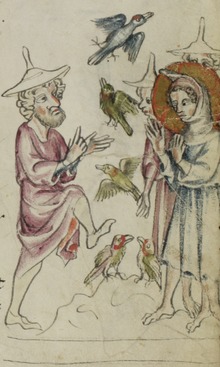
What's up with their hats?

This is where we kick and scream, and insist that we want to know more, of course we do. But there's a snag built into it, which is that our desire to know more is, and must always be tempered by the reality that more content doesn't always make a better story.  Sometimes, less is more. Sometimes, you know what you need to know.  Sometimes what you have is what you need.  Consider for a moment, the Gospel reading we had from Sunday, which is the reading in which Jesus is presented in the temple, and is recognized as the savior of the world by both Simeon and Anna.  Both Simeon and Anna are aware of the great and wonderful things Jesus will do, but they don't talk about animating birds, killing playmates or carrying water in his lap.  They don't discuss feeding five thousand, four thousand, or lengthening a beam in the carpenter's shop.  They don't talk about water into wine, or walking on the water.  Simeon goes straight to the crucifixion.

It may seem strange to our modern ears, to hear the words that Simeon speaks immediately after the Nunc Dimittus, where he talks to Mary and lets her know that this boy has been appointed for the falling and rising of many, and a sword would pierce her own soul too.  Not the words that we would want to hear at the dedication of one of our children, but Simeon wants you, and everyone else too, to keep their eyes on the prize.  The prize of the cross.

When Paul speaks of the work that he does, he says that he did not come with fancy words, or human learning, he came that they may know nothing but Jesus Christ, and him crucified. That's it, the beginning and the end of things.  I came that I may know nothing but Jesus Christ and him crucified. That simple sentence may just as well be the mission statement of the entire scriptures, the whole Bible reduced to that simple mission statement, that we may know nothing but Jesus Christ and him Crucified.  That's what the good news of the Bible boils down to, that's what it's all about, the presence of Jesus Christ, his work, his life, is all leading up to his death, which is why the narrative of the Gospels accelerates at such a breakneck speed.  The rapidity of the narrative, spending some time with the infant king but beyond that moving immediately to his baptism, to his ministry, because it hastens to what you need to know as a person who needs to be saved.  It's moving directly towards the cross.  The Gospel of Mark, the shortest Gospel, in my Bible lasts only 30 pages.  It moves along at an incredibly rapid pace, bringing you from the baptism of Jesus to his death in 30 pages.  Now, you and I, we may wish very earnestly that we had more knowledge about the early days of Jesus, but honestly, if the Gospel of Mark were ten times as long, at 300 pages, would that make you more likely to read it?

Well, how likely to read it at 30 pages are you?

Remember the end of the Gospel of John and what it says, that there are many other things that Jesus did that are not recorded here, but these things are written that you may believe that Jesus is the Christ, the son of God, and by believing you may have life in his name.  And what are you supposed to believe in? The crucifixion and resurrection of Jesus Christ.  You're supposed to believe that Jesus Christ, true God and true man, was nailed to a cross, and left there to die, and after doing so, rose triumphantly from the grave and broke death itself while doing so.  You are meant to believe that this was accomplished for you, that you may do likewise.  He came to earth to redeem it, to die for it, to be slain for it, and to give to all believers the power to transcend death itself.  That's the key story in the gospels, and that's what you need to know.  And if you took a lifetime to meditate on that story, the only one, thinking on nothing else, about the mystery of the eternal immortal God only wise veiled in flesh, working undercover to redeem his own broken creation, about the death of God himself and his triumphant rising from the grave, if you had forever to think about that it still wouldn't be enough. 

I know that Simeon, Anna, and the whole scriptures move faster than you want them to, that they get to the conclusion while you're still trying to catch your breath.  I know that you want to know more, but there are depths and majesty that you still need to plumb.  If you think to yourself that you would like 300 pages on the life of Christ, I have an alternate suggestion. 

The Gospel of Mark, the story of the baptism of Christ to his crucifixion, three years that shaped the world, is only 30 pages.

Read it ten times instead.

Thursday, December 28, 2017

The Holidays

There are three sides to every coin.  Heads, tails and the edge.  I know that we don't think of the edge as a side of the coin, but it's there, and believe me, it's important, because a coin isn't a two dimensional figure.  It's 3-D, which means that it has to have depth.  And the depth is the edge of the coin, and part of what the edge of the coin does is that it adds an additional identifiable factor to the coin.  That is, a ten cent piece isn't just the smallest coin, which it is, it isn't just composed of its constituent materials which it is, but it also has key ridges on its edge that are helpful for not only identifying the coin in your pocket, but also make it so that you can't shave the coin down to keep a bunch of its silver.
Why oh why am I, an amateur numismatist, talking about coin edges? Because the additional layer, the additional depth isn't often thought of, but it's there, and you need it to have a complete, spendable coin. 
Now, at this time of year, we have a situation in which we have the birth of the baby Jesus in the manger, which is fantastic, and is a story that the world knows pretty well.  We understand births, we understand babies, we understand families, which is part of the reason that the world, religious or not, feels all kind of warm and fuzzy when thinking about the baby Jesus in Bethlehem.  Babies are designed by our Lord to be incredibly cute, for pretty obvious reasons, because we are keen to protect them, even though they need near constant effort, care and supervision.  If they looked ugly, that might be a bit of a harder sell . But think about babies that need care. 

Look at this baby warthog!  It's insane!  How could this animal be so incredibly cute, given that the adults are so ugly?  It's the same thing with naked mole rats


That's not that ugly, especially considering the finished product. Point being, babies are by and large cute, which is why Ellen's baby ratings are completely pointless, as every single infant just gets over 10/10.  100% is the base score, so the entire thing is absolutely nuts.  Babies are cute, and have to be cute to survive.  Even if you harbor hate in your hearts, it's likely that infants of your enemies will melt your precious heart. 

So, we have a baby in a manger, a baby in a stable in Bethlehem, and he was likely cute, because most babies are.  And the world, when it looks at this baby in the manger, it sees an infant, it sees a child, it sees something it understands. And because the world's only interaction with Jesus Christ is at his birth and at his death, beginning and end, Christmas and Easter, because the world only ever understands Jesus in those spheres, it misses out on the bigger issue that comes up in the scriptures, which is that Jesus of Nazareth isn't just a baby, he is God in human form.  And this is bigger than just the birth of a cute kid.

For the remainder of this blog ramble, I'm going to be discussing GK Chesterton's thoughts on babies, which are important if you want to understand the baby in the manger, and the divine working right under the surface.

The essential rectitude of our view of children lies in the fact that we feel them and their ways to be supernatural while, for some mysterious reason, we do not feel oursleves or our own ways to be supernatural. The very smallness of children makes it possible to regard them as marvels; we seem to be dealing with a new race, only to been through a microscope. I doubt if anyone of any tenderness or imagination can see the hand of a child and not be a little frightened of it. It is awful to think of the essential human energy moving so tiny a thing; it is like imagining that human nature could live in the wing of a butterfly or the leaf of a tree. When we look upon lives so human and yet so small… we feel the same kind of obligation to these creatures that [God] might feel…

This is a quote from Mr. Chesterton, and it's a fascinating thing to think about, to contemplate.  Think about your reaction to babies, to small infants, and think about how you relate to them.  They are frightening, you know.  They are frightening, they are terrifying because, as he says, the essential human energy moves and operates such a tiny thing.  You know how you feel about newborns, about their tiny tiny fingernails, their little tiny eyelids, their tiny knees, their soft feet, all those things are moved and operated by the, as he calls them, the essential human energy.

Well, that is a powerful drawing card for the essential, key moment in the Christian faith to the outside world, a world that likes babies because they're cute, but it's bigger in the Christian story.  For the Christmas story begins with the birth of the baby in the manger in Bethlehem, but it carries on to the next day, Christmas day, and the discussion of the pre-incarnate word of God, the word of God that not only predates Christmas day, but predates everything else.  Let's indulge ourselves by going down memory lane, and looking at the very beginning of the Bible.

In the beginning, when God created the heavens and the earth,
the earth was a formless void, and darkness covered the face of the deep,
while a wind from God swept over the face of the waters.  And God said 
'Let there be light' and there was light. And God saw that the light was good.

As Christian people, it should be a matter of some interest that right there in the beginning of everything, page one of the Bible, back as far as things possibly go, before anything was made, we have the Trinity.  God, his Word and his Spirit.  The Holy Trinity, and that Word, the Word that makes everything, the Word that speaks everything into being, that Word of God that was responsible for everything, and as the New Testament says, through him all things were made, that is who Jesus is.  

The beginning of the Gospel of John tells us that Jesus was with God from the beginning, was the essential creative force behind all that we see around us.  He set and underpinned all the rules, all the mechanisms through which the world functions, and that was his role and his responsibility.  Through him were all things made, and without him nothing was made that has been made.  Now that we've gotten that out of the way, now we can think about Christmas day a little bit differently.  For in Christmas day, we have something going on that's bigger than you'd think.  Oh, sure, it's straightforward enough to consider the possibility that there was a baby born in a stable somewhere and he ended up being special, that's the feel good story of the year.  But the story is bigger and more important than that, because that baby born in a stable isn't just a baby, he's God.  And just like that Chesterton quote above, if we're a bit jarred by imagining the essential humanity moving tiny fingers, well imagine the essential creative force of the entire universe moving those same tiny fingers.  Imagine the creative force that made gravity being held down by it for the first time.  Imagine the creative force that made oxygen breathing it for the first time in hungry gulps.  Imagine the creative force that made the human digestive system being all of a sudden desperately hungry, and unable to do anything to satisfy that hunger.  Imagine the mind behind all of creation being brought low, being brought so terribly low, as to have to cry out for help to accomplish absolutely anything.

Christmas is a very humbling time if you consider who Jesus actually is, the word made flesh.  Not just a nice guy, not just a good or capable leader, not just a man who works hard and does his best, but the creative force behind everything that has been made, that's him.  If you understand things this way, then you'll understand Christmas a lot better, and why it's a big deal.


Monday, December 18, 2017

Joy to the world

The third week in Advent is the pink week.  The pink candle.  The one that stands out.

And the sentiment in that week is the one that stands out too, the sentiment, the theme of joy. And what is joy, after all? What is joy and why is joy so hard to get, and so hard to find? Well, part of it comes down to this quote from an episode of family guy that came out some time when family guy was still funny.  And not just degenerate propaganda.  Which it always was. Peter seems awfully interested in Bonnie, his neighbor's wife, and Stewie is confused about it.  And Stewie's reasoning goes as follows:


  • 00:08:49 What do you mean? Lois is prettier than Bonnie.
  • 00:08:51 Oh, I get it.
  • 00:08:52 It's worse, but it's different.
  • 00:08:54 Okay, all right, so that's something.
  • 00:08:55 Okay.


And there you have it.  Setup, joke, the end.  But that joke, that throwaway line of saying that Peter's wife is prettier than the woman he is interested in is notable, because it speaks to our essentially perpetual dissatisfaction with things, and with how elusive joy is going to end up being.   For why is it that we are going to always find something novel to be more enticing than what we already have.

If I may wax about affairs for a second, in the reading that I've done on extramarital affairs, the conventional wisdom seems to be for those involved that you can't parley your affair partner into your marital partner eventually and expect things to work out.  There's a reason why you're looking outside the relationship for companionship, and it tends to be because the drudgery of the day to day aspects of the relationship, the familiarity with your spouse and the daily grind of building a life together tend to sour things with your spouse.  It's a matter of understanding that the thrill of the novelty is enough to crowd out the comfort of the familiar.  The desire for what is new can despoil any real building that you might do in the long term.

Now, when the Bible talks about finding joy, as it does in our reading from Thessalonians, buried in there is the idea, the notion that we ought to rejoice always, but also to give thanks in all circumstances, and that's pretty key right there.  For in the average North American Christian life, there is a great deal, a massive amount of things to be thankful for, but the problem is that we forget it a lot of the time.  Essentially, the advice from Thessalonians only works if it's taken all together.  That is, you're going to find it hard to rejoice always unless you're being thankful in all circumstances.  Why is that? Because your brain is going to switch off the joy sensors in it unless the thankfulness centres are being lit up on a regular basis. 

Don't believe me? Consider the account of the ten lepers who were healed by Jesus of Nazareth, son of David, after they had stood a long way off, and had begged for help. Jesus healed them, and told them to go and show themselves to the priests.  They went and did so.  Only one came back. And if this is a bit too abstract for you, then think of yourself the morning after the cold that you caught from your child's kindergarten class lifts. Think about how great it is to breathe through both nostrils, to breathe without coughing, to swallow without agony, that sort of thing.  Then think about this morning, and how you didn't give your nasal health a second thought.  Very likely, you woke up breathed through both nostrils and didn't think for one second about how grateful you were for that ability.  You probably take your health pretty much for granted until it goes away, same with your house, your job, your car, your spouse, your children, your friends, all of it.

So why wait until then?

Why wait until your house has been burgled to get an alarm system? Why wait until your car has been stolen to get a club for it? Why wait until things are gone to appreciate them? Start by appreciating the blessings that God has given you today. Start by living in a state of gratitude for what you have now.  start by rediscovering the things that God has given you, rediscovering the wonderful blessings that you enjoy, that are around you constantly.  Start by praying through the Lord's prayer, being grateful for daily bread.  Start by saying grace and being genuinely thankful for the food you are about to receive.  Avoid the horrendous virus of complacency, the virus that saps you of any interest and fire, and replaces it with tepid vacuous misery.  You will get awfully used to your blessings and will find no joy in them unless you rediscover them day by day. Unwrap your house daily, your car daily.  Take joy in your job daily, be thankful for your food daily.  Unwrap your spouse daily, and rediscover all the blessings that God has already given you.  And one of the biggest and best of these is the Holy Scriptures.

In the scriptures, you will find the truth of God's word, what he wants to get across to you, what he wants you to know and see.  You will find the reality of Christ's love for you, how he wants to make all things new in your life.  You will encounter the treasure of knowing the love of Christ through the cross, his movement to restore you to life and salvation, his desire to ensure that your families and relationships might last forever.  You will find the inestimable joy of knowing even as you are fully known. 

Whatever else you unwrap this Christmas, unwrap your Bible.  It's a really good first step towards being appreciative of the blessings you enjoy already, and finding joy in them.

Merry Christmas, everyone.


Tuesday, December 5, 2017

Sheepin it real

Jesus only talks about the last judgement once, you know.  The rest of the Gospels are a last-judgement-free zone.  But in that one passage, where he finally and completely describes the last judgement, the last day, the resurrection and the judgement, he does so in such a succinct way that it's spooky.  For those of us who are reading it today, the division of the sheep from the goats is quite shocking, quite galling, because it has within it that uncomfortable issue in the Christian faith that never quite seems to go away.  The fact that if you're playing a game, it'll be possible to lose.  There's a heaven, and there is a hell.  This isn't a new addition, you know, it was in the Christian faith from the beginning, and Jesus talks about it not infrequently.  His advice tends to lead towards hell as a place to most definitely be avoided; you don't want to go there, and he doesn't want you to go there

Now, for a lot of people who believe that Jesus is just a nice guy, just a swell fella, and all that fire and brimstone stuff came into it later, thus corrupting the simple message of peace and love that Jesus had for his people, well, buckle up.  There are lots of things like that, where we think that the way things were originally is much more of how we want it to be today, and are surprised when it is the opposite.  Take, for instance Robin from the Batman comics.  People my age tend to like to say that Batman was a loner originally, and that Robin was added much later to get the kiddies reading the comics.  That's a nice idea, and it works for those of us who want to picture Batman as all dark and edgy,  but it's not really all that accurate.  Batman was a dark edgy loner between his first appearance in May 1939 until Robin showed up in April of 1940.  Yes, that supposed dark edgy period that was the way Batman was always supposed to be, it lasted for 11 months.  It turns out that Robin is a bit more integral, a bit more foundational than we had wanted or expected him to be. 


It's the same thing with hell.  If you think that this is a much later addition, I hate to tell you that Hell, from Jesus' words, shows up in Matthew chapter 7, as part of the sermon on the mount, which is the first public address that Jesus gives as part of his anointed, baptized ministry.  That's early.  That's really early.  And it doesn't stop.  Jesus mentions Hell quite a few times, and if Jesus talks about anything at all, it's worth us thinking about, especially if he mentions it often, which he does.

And Hell is one of those topics that, even if we discuss it, we discuss it in terms of good people going to Heaven, and bad people going to Hell.  When we talk about this, we almost always do the thing that we do, which is to look at ourselves, and say that we are good people, the people who are mean to us are bad people, and everyone else applies that exact same metric as well.  Everyone uses themselves as the barometer for good people, and that's as simple as that.  But the way we weigh out good deeds and our bad deeds tends to be only in terms of what we have done. This way, we can all convince ourselves that we have done enough, because we can call to mind all sorts of good deeds that we have accomplished, all the good things we have worked on, and all the wonderful things we have done for friends and neighbors.  Sins? Those are bad things that we have done, and those are fewer than the good things we have done, so it should balance out, right?

Well, in the Gospel reading, Jesus doesn't let you do that at all.  You think you can, because you think your righteousness is going to be measured in terms of positive actions, right? Who does good things, and who does bad things? But the last judgement seems to not be weighed out like that.  Instead, when Jesus talks to the sheep on his right, he does so by talking to them about how they had served him by doing things for one another, for the least of these.  The sheep are surprised by this, of course, and don't have any understanding that they were doing this for their Lord.  They were just doing what needed to be done.  But the goats on his left, they are in a bit of consternation, because they aren't those that we would think of as bad people, even in the context of the church.  We'd expect them to be adulterers, fornicators, sorcerers, the lewd and lascivious, idolaters, murderers, and all that.  We would expect them to be the Hitlers, Pol Pots, James Fields of the world, but that's not who they are in this account.  The truth that Jesus presents us with is far more shocking, and far more difficult for us to get our heads around, you know.  When Jesus approaches these people, he says to depart from him, because they didn't do all the things that they should have done, either for him, or for one another, which ends up being the same thing.  It's not about what they did that was so bad, but it was all the chances that they didn't take, all the good that they didn't do, all the chances for service that they didn't take, and that is what is damning them.

People these days think that they are good because of all the nice things they've done (or more likely because of all the right opinions and views they have), and all the bad things they didn't do.  But the way Jesus describes it, is that we will be held to account not just for all the bad things we did, all the sins we committed, but also all the good things, all the opportunities for service to God and our fellowman, that we did not take. Do you know what this means? This means that there is a zero percent chance that you are ever going to counterbalance this problem? There is no shot that you have of ever doing enough to counter all the opportunities you didn't take, and that you won't take in the future, because you don't see yourself in the way that God has told you that you are.  He told you that you are his workmanship, created to do good works, which he has prepared in advance for you to do.  If you understand this about yourself, and you probably should, then you'll realize that you are here to do those works that he has set up for you to do, and every time you turn away from doing anything for any of the least of these, you turn away from Christ your savior. 


Nobody comes out looking good from this.  I have yet to meet anyone who can with any kind of sincerity say that they are always looking to serve constantly, to give without seeking any reward or restitution.  Nobody is able to say that they give constantly until there's nothing left.  Rather, they do what they can, and avoid doing too many bad things.  But when Jesus talks about the last judgement, it's a matter of understanding that if you're not doing the works that God has prepared in advance for you to do, you are failing at the purpose for your existence, and all your right opinions won't count for much, given your dereliction of duty.

Understanding this really helps you to work out your need for a savior.  People don't think they need a savior because they feel as though they are good people based on the good they do, and the bad they avoid.  Understanding, though, that your missed goodness is counting against you means that the stack is so heavily weighted against you, the debt you have accrued is so great that you're never going to dig out of that hole.  And thus Christ. 

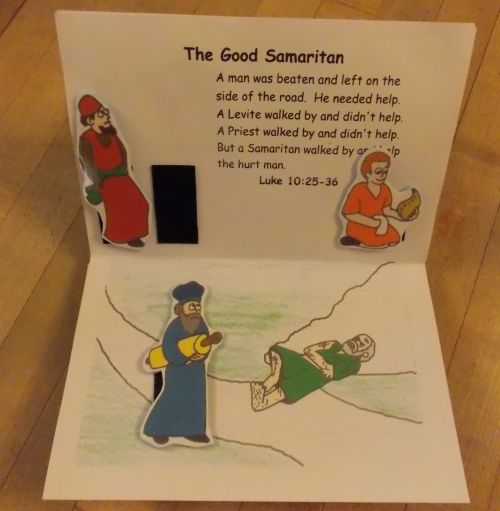
Think on him and what he does, how he gives consistently and tirelessly, how he provides daily and richly for us, how he supplies us all and doesn't refuse anyone of us. Think about how he loves and cares, how he is always present and prepared to hear from his creation, and how no matter how many times he wants to withdraw by himself, there are people who come to seek him out, and he hears them.  Think about how he gives his time, his work, his food, his clothes, and eventually his life, to a lost and fallen creation.  That's the person you need on your side, someone who never turns his back, and who understands that he did not come to be served, but to serve, and to give his life as a ransom for many.  Understanding who you are in this sort of big picture means that you can't turn your back on anyone, that every single person around you is important, that they are all forever, that they all matter in a vitally important, cosmic way.  And so do you.  The work of the cross, the work of making all things new is the work of ensuring that every single person matters, they all count, and you serve Christ by serving them, and likewise they serve Christ by serving you.  You don't serve Christ in an abstract sense, by having the right opinion, by thinking the right thoughts about the poor, that's what the Priest and the Levite did in the parable of the Good Samaritan.  No, Christ tells us that we serve him by serving one another. And this is so fundamentally key to understanding Christian morality - you can never do enough, you're never a good enough person because there are hundreds and thousands of moments and chances that you see Christ in the faces of friends and strangers, and refuse to help.  And the way it works is that in repentance of all those missed opportunities, in understanding that these are things you need to be forgiven of, it takes these issues away from being just things that you're avoiding, and into a world in which these are things that absolutely are commanded by the Lord your God. 

Working that out helps you to see what sin and forgiveness actually are.  You serve Christ by serving your neighbor, and you need Christ because of how often you don't.